Loading...
Franklin D. Roosevelt vs Qin Shi Huang
Qin Shi Huang leads by 14.2 pts · 2 figures compared
…
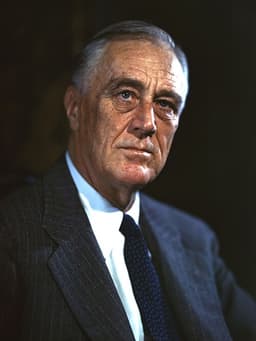
Franklin D. Roosevelt
Politician · Modern
71.0Total
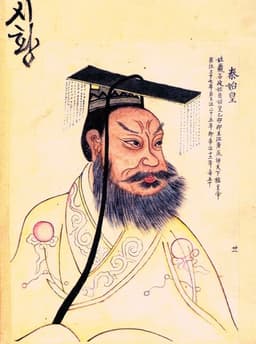
Qin Shi Huang
Emperor · Ancient
85.2Total
Basic Information
Born
1882
-259
Died
1945
-210
Era
Modern
Ancient
Nationality
United States
China
Occupation
Politician
Emperor
Civilization
Western
Eastern
Score Comparison
Military (10%)
45.0
80.0
Political (20%)
85.0
90.0
Influence (20%)
75.0
85.0
Legacy (20%)
65.0
90.0
Leadership (15%)
85.0
78.0
Strategy (15%)
60.0
82.0
TOTAL
71.0
85.2
Franklin D. Roosevelt — Complete Timeline
1933 AD
Inaugurated as 32nd PresidentOther◆ Major
Franklin D. Roosevelt was inaugurated as President of the United States on March 4, 1933, during the Great Depression. His inaugural address declared 'the only thing we have to fear is fear itself,' and he immediately called Congress into special session to address the banking crisis.
Great DepressionPresidencyInauguration
Impact: national
Enacted the New DealOther◆ Major
Roosevelt launched the New Deal in 1933, a series of federal programs including the Civilian Conservation Corps, the Agricultural Adjustment Act, and the Tennessee Valley Authority. These measures aimed to provide relief, recovery, and reform during the Great Depression, fundamentally expanding the role of the federal government.
Great DepressionEconomic PolicySocial Reform
Impact: nationalconstructive
1935 AD
Signed the Social Security ActOther◆ Major
Roosevelt signed the Social Security Act into law on August 14, 1935, establishing a federal system of old-age pensions, unemployment insurance, and aid for dependent children. This created the modern American welfare state and provided a safety net for millions of citizens.
Social WelfareLegislationNew Deal
Impact: nationalconstructive
1941 AD
Lend-Lease ActOther◆ Major
Roosevelt signed the Lend-Lease Act on March 11, 1941, authorizing the transfer of military equipment and supplies to Allied nations, particularly Britain and the Soviet Union. This program provided critical material support to countries fighting the Axis powers before U.S. entry into World War II.
World War IIForeign PolicyMilitary Aid
Impact: globalconstructive
Declaration of War on JapanPolitical Action◆ Major
Following the Japanese attack on Pearl Harbor on December 7, 1941, Roosevelt delivered his 'Day of Infamy' speech to Congress the next day, requesting a declaration of war. Congress approved the declaration, bringing the United States into World War II.
World War IIPearl HarborDeclaration of War
Impact: globaldestructive
1942 AD
Executive Order 9066Other◆ Major
Roosevelt signed Executive Order 9066 on February 19, 1942, authorizing the forced relocation and internment of Japanese Americans living on the West Coast. Over 110,000 people, mostly U.S. citizens, were incarcerated in camps for the duration of the war, a decision later widely condemned as a violation of civil rights.
World War IICivil RightsInternment
Impact: nationaldestructive
1944 AD
Elected to Fourth TermOther◆ Major
Roosevelt was elected to an unprecedented fourth term as president in November 1944, defeating Republican Thomas E. Dewey. This election occurred during the final stages of World War II, and Roosevelt's continued leadership ensured stability in the war effort and post-war planning.
PresidencyElectionWorld War II
Impact: national
1945 AD
Yalta ConferenceOther◆ Major
Roosevelt met with Winston Churchill and Joseph Stalin at the Yalta Conference in February 1945 to discuss post-war Europe. Agreements included the division of Germany, Soviet entry into the war against Japan, and the creation of the United Nations, shaping the post-war world order.
World War IIDiplomacyPost-War Planning
Impact: global
Qin Shi Huang — Complete Timeline
246 BC
Construction of the Mausoleum and Terracotta ArmyOther◆ Major
Qin Shi Huang commissioned a vast mausoleum complex near Xi'an, guarded by thousands of life-sized terracotta soldiers, horses, and chariots. The project employed hundreds of thousands of workers and reflected his obsession with immortality and imperial power.
Impact: global
230 BC
Conquest of the Six Warring StatesWar
From 230 to 221 BCE, Ying Zheng led the Qin state in a series of campaigns that conquered the Han, Zhao, Wei, Chu, Yan, and Qi states. This unified China under a single ruler for the first time, ending the Warring States period.
Impact: global
221 BC
Standardization of Writing, Currency, and MeasurementsReform◆ Major
Qin Shi Huang ordered the standardization of Chinese script, currency, and weights and measures across the unified empire. This facilitated administration, trade, and cultural integration, laying a foundation for future dynasties.
Impact: globalconstructive
Proclamation of the Qin DynastyPolitical Action
After conquering the last independent state, Ying Zheng declared himself Shi Huangdi (First Emperor), founding the Qin Dynasty. He adopted a new title to signify his supreme authority and initiated centralized imperial rule.
Impact: global
214 BC
Initiation of the Great Wall ConstructionOther◆ Major
Qin Shi Huang ordered the connection and extension of existing northern fortifications to create a unified defensive wall against nomadic Xiongnu raids. This project involved massive conscripted labor and became the precursor to the later Great Wall.
Impact: regional
213 BC
Burning of Books and Burying of ScholarsPolitical Action◆ Major
On the advice of Li Si, Qin Shi Huang ordered the burning of historical records and philosophical texts not aligned with Legalist doctrine. He also had 460 Confucian scholars buried alive to suppress dissent and consolidate ideological control.
Impact: nationaldestructive
Expert Analysis
Qin Shi Huang vs Franklin D. Roosevelt: Historical Comparison
Qin Shi Huang, the first Emperor of a unified China, and Franklin D. Roosevelt, the U.S. leader through Depression and World War II, represent two vastly different eras and systems—ancient autocracy versus modern democracy—yet both wielded immense centralized power to reshape their nations.
Dimension Analysis
**Military: Qin Shi Huang 80 / Franklin D. Roosevelt 60**
Qin Shi Huang conquered rival states to unify China and standardized armies, while Roosevelt directed the largest military in history during WWII but relied on generals and never personally led troops.
**Political: Qin Shi Huang 88 / Franklin D. Roosevelt 85**
Qin created a centralized bureaucracy and legalist state from scratch; Roosevelt expanded federal power through the New Deal and wartime mobilization within a democratic framework, facing checks and balances.
**Influence: Qin Shi Huang 82 / Franklin D. Roosevelt 72**
Qin’s standardization of writing, currency, and measures shaped Chinese civilization for millennia; Roosevelt’s New Deal and wartime leadership defined modern American government but had less enduring global institutional impact.
**Legacy: Qin Shi Huang 85 / Franklin D. Roosevelt 75**
Qin is both revered as China’s unifier and reviled as a tyrant, with his Great Wall and terracotta army as lasting symbols; Roosevelt is celebrated for social security and defeating fascism, though his internment of Japanese Americans tarnishes his record.
**Leadership: Qin Shi Huang 88 / Franklin D. Roosevelt 85**
Qin enforced absolute control through terror and efficiency, achieving rapid unification; Roosevelt inspired hope and resilience via fireside chats and decisive action, leading a fractured nation through existential crises.
Verdict
Qin Shi Huang leads due to his higher raw scores, particularly in military conquest and long-term civilizational impact, despite Roosevelt’s superior democratic context.
FAQ
Q: Who ranks higher? A: Qin Shi Huang ranks higher overall, driven by his foundational unification of China and more extreme scores across military, influence, and legacy dimensions.
Rankings
🥇
Qin Shi HuangLeader
Mil: 80.0Pol: 90.0Inf: 85.0
85.2
🥈
Franklin D. Roosevelt
Mil: 45.0Pol: 85.0Inf: 75.0
71.0
+14.2 behind
How This Comparison Works
Algorithm
Each figure is scored on 6 dimensions (0—100 scale) based on structured historical data: Military (10%), Political (20%), Influence (20%), Legacy (20%), Leadership (15%), Strategy (15%). The weighted total produces the final ranking.
Data Sources
Scores are computed from structured sub-indicators in the database. Scale factors adjust for era (Ancient ×0.85, Modern ×1.0) and civilization size (Eastern ×1.05, Other ×0.80) to account for differences in population and military scale.
Maximum 3 Figures
Comparisons are limited to 2—3 figures to ensure readability and statistical meaningfulness.
Error Margins
±5 points per dimension — Sub-scores are derived from historical records with inherent uncertainty. Two figures within 5 points on a dimension should be considered roughly equivalent in that area.
Total Score Accuracy
±3 points overall — The weighted combination of 6 dimensions produces a total score with approximately ±3 points of uncertainty. Differences of less than 3 points are not statistically significant— the figures are effectively tied.
Known Limitations
- Historical records are incomplete and uneven across civilizations
- Figures from oral-tradition societies may be underrepresented
- Occupation labels can misclassify multi-role figures
- Scores measure capability and impact, not moral character
- Quantitative scoring is a comparison tool, not absolute truth
Capability Radar
Military (10%) — Battles & Warfare
Battles
10
85
Win Rate
10
90
Expansion
10
90
Political (20%) — Governance & Reform
Reform
95
95
Diplomacy
90
75
Economy
95
90
Influence (20%) — Cultural & Global Reach
Cultural
80
95
Global
90
85
Legacy (20%) — Historical Impact
Historical
90
95
Longevity
85
95
Leadership (15%) — Power & Stability
Tenure
90
70
Stability
75
65
Strategy (15%) — Tactics & Innovation
Strategy
65
85
Tactics
10
80
Reform
70
95
Similar Comparisons
Comments & Discussion
HistoryHacker996/16/2026
Honestly, this comparison is wild but I kinda get it. Qin Shi Huang basically invented the concept of a unified China from scratch—standardized writing, money, even axle lengths. That's like building an operating system for a whole civilization. FDR had the New Deal and WWII, sure, but he was working within a system that already existed. Qin's 88 on political is spot on—he didn't just reform a state, he created one. The military gap (80 vs 60) feels right too: Qin personally conquered six kingdoms; FDR was more a commander-in-chief than a field general. But FDR's fireside chats? That's soft power Qin could never touch.
ScoreRadar6/16/2026
I'm calling BS on these scores. Military 80 vs 60? That's comparing apples to orbital lasers. Qin's 'conquests' were against feudal states with bronze weapons—FDR directed a global coalition against industrialized fascism. And political 88 vs 85? Qin ruled through terror and book burnings; FDR had to navigate Congress, the Supreme Court, and a free press. You can't quantify 'absolute control' the same as 'democratic leadership.' The weighting here is clearly biased toward ancient metrics. Influence (82 vs 72) is the only one that makes sense, but even then, FDR's UN and Bretton Woods shaped the whole post-war world. Rigged system.
ShuJuDian6/16/2026
政治分数88对85,这个差距我能接受,但军事80对60就有点离谱了。秦始皇的军事征服主要靠的是商鞅变法后的耕战体系和秦弩的技术优势,对手是战国七雄,战争规模在几十万级别。而罗斯福指挥的是二战全球战场,美军在1945年有1200万人,比秦朝总人口还多。再说说影响力:秦始皇统一文字度量衡,这个长期影响确实大,但罗斯福的布雷顿森林体系直接决定了战后70年的全球经济秩序。我觉得评分体系可能更看重'开创性'而不是'复杂性',这在比较古代和现代领袖时会产生系统性偏差。
DongXiShiKe6/16/2026
这个比较很有意思,但我觉得西方的评分标准低估了秦始皇在中华文明中的根本性地位。统一文字、车同轨、书同文,这些不是简单的'政策',而是塑造了中国人身份认同的基石。罗斯福很伟大,但美国可以换一个总统,而中国如果没秦始皇,可能就像欧洲一样分裂成几十个国家。军事上,秦始皇的军队确实更原始,但他面对的战争是生存性的——输了就是亡国灭种。罗斯福的二战赢了可以退居美洲,输了也有大西洋当屏障。不过我觉得秦始皇的残暴(焚书坑儒、连坐法)在评分里被轻描淡写了,这点应该扣分更多。