Loading...
Franklin D. Roosevelt vs Mao Zedong
Mao Zedong leads by 8.4 pts · 2 figures compared
…
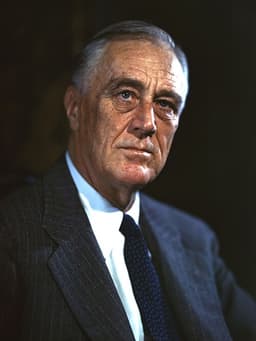
Franklin D. Roosevelt
Politician · Modern
71.0Total
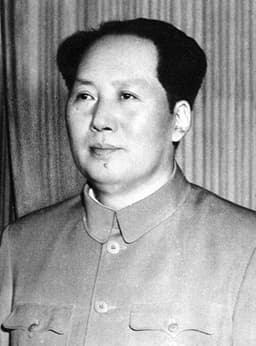
Mao Zedong
Politician · Modern
79.4Total
Basic Information
Born
1882
1893
Died
1945
1976
Era
Modern
Modern
Nationality
United States
China
Occupation
Politician
Politician
Civilization
Western
Eastern
Score Comparison
Military (10%)
45.0
75.0
Political (20%)
85.0
88.0
Influence (20%)
75.0
85.0
Legacy (20%)
65.0
70.0
Leadership (15%)
85.0
85.0
Strategy (15%)
60.0
72.0
TOTAL
71.0
79.4
Franklin D. Roosevelt — Complete Timeline
1933 AD
Inaugurated as 32nd PresidentOther◆ Major
Franklin D. Roosevelt was inaugurated as President of the United States on March 4, 1933, during the Great Depression. His inaugural address declared 'the only thing we have to fear is fear itself,' and he immediately called Congress into special session to address the banking crisis.
Great DepressionPresidencyInauguration
Impact: national
Enacted the New DealOther◆ Major
Roosevelt launched the New Deal in 1933, a series of federal programs including the Civilian Conservation Corps, the Agricultural Adjustment Act, and the Tennessee Valley Authority. These measures aimed to provide relief, recovery, and reform during the Great Depression, fundamentally expanding the role of the federal government.
Great DepressionEconomic PolicySocial Reform
Impact: nationalconstructive
1935 AD
Signed the Social Security ActOther◆ Major
Roosevelt signed the Social Security Act into law on August 14, 1935, establishing a federal system of old-age pensions, unemployment insurance, and aid for dependent children. This created the modern American welfare state and provided a safety net for millions of citizens.
Social WelfareLegislationNew Deal
Impact: nationalconstructive
1941 AD
Lend-Lease ActOther◆ Major
Roosevelt signed the Lend-Lease Act on March 11, 1941, authorizing the transfer of military equipment and supplies to Allied nations, particularly Britain and the Soviet Union. This program provided critical material support to countries fighting the Axis powers before U.S. entry into World War II.
World War IIForeign PolicyMilitary Aid
Impact: globalconstructive
Declaration of War on JapanPolitical Action◆ Major
Following the Japanese attack on Pearl Harbor on December 7, 1941, Roosevelt delivered his 'Day of Infamy' speech to Congress the next day, requesting a declaration of war. Congress approved the declaration, bringing the United States into World War II.
World War IIPearl HarborDeclaration of War
Impact: globaldestructive
1942 AD
Executive Order 9066Other◆ Major
Roosevelt signed Executive Order 9066 on February 19, 1942, authorizing the forced relocation and internment of Japanese Americans living on the West Coast. Over 110,000 people, mostly U.S. citizens, were incarcerated in camps for the duration of the war, a decision later widely condemned as a violation of civil rights.
World War IICivil RightsInternment
Impact: nationaldestructive
1944 AD
Elected to Fourth TermOther◆ Major
Roosevelt was elected to an unprecedented fourth term as president in November 1944, defeating Republican Thomas E. Dewey. This election occurred during the final stages of World War II, and Roosevelt's continued leadership ensured stability in the war effort and post-war planning.
PresidencyElectionWorld War II
Impact: national
1945 AD
Yalta ConferenceOther◆ Major
Roosevelt met with Winston Churchill and Joseph Stalin at the Yalta Conference in February 1945 to discuss post-war Europe. Agreements included the division of Germany, Soviet entry into the war against Japan, and the creation of the United Nations, shaping the post-war world order.
World War IIDiplomacyPost-War Planning
Impact: global
Mao Zedong — Complete Timeline
1934 AD
Long MarchWar
Mao Zedong led the Chinese Red Army on a strategic retreat from Nationalist forces, covering approximately 6,000 miles over 370 days. The march solidified Mao's leadership within the Chinese Communist Party and became a foundational myth of the Communist revolution.
Chinese Civil WarCommunist RevolutionRetreat
Impact: national
1949 AD
Proclamation of the People's Republic of ChinaPolitical Action
Mao Zedong declared the founding of the People's Republic of China from Tiananmen Gate in Beijing. This ended the Chinese Civil War and established Communist rule over mainland China, with Mao as Chairman of the Central People's Government.
Founding of PRCCommunist VictoryRevolution
Impact: global
1958 AD
Great Leap ForwardReform◆ Major
Mao launched a campaign to rapidly industrialize China and collectivize agriculture. The policy led to widespread mismanagement, resulting in a famine that caused an estimated 15-45 million deaths between 1959 and 1961.
FamineIndustrializationCollectivization
Impact: nationaldestructive
1960 AD
Sino-Soviet SplitPolitical Action◆ Major
Mao's ideological differences with Soviet leader Nikita Khrushchev led to a breakdown in relations between China and the Soviet Union. The split ended the Sino-Soviet alliance and reshaped global Cold War dynamics, with China pursuing an independent path.
Cold WarIdeological ConflictAlliance Breakdown
Impact: global
1966 AD
Cultural RevolutionPolitical Action
Mao initiated a sociopolitical movement to purge capitalist and traditional elements from Chinese society. The Red Guard youth groups attacked intellectuals and officials, leading to widespread violence, destruction of cultural artifacts, and an estimated 1-2 million deaths.
Political PurgeSocial UpheavalRed Guard
Impact: nationaldestructive
1971 AD
Ping-Pong DiplomacyCultural◆ Major
Mao approved an invitation for the U.S. table tennis team to visit China, initiating a thaw in Sino-American relations. This cultural exchange paved the way for President Nixon's visit to China in 1972 and the eventual normalization of diplomatic ties.
DiplomacyU.S.-China RelationsCultural Exchange
Impact: globalconstructive
Expert Analysis
Mao Zedong vs Franklin D. Roosevelt
### The Patrician and the Peasant Revolutionary
In the winter of 1932, a man who could not walk accepted the nomination of a shattered nation. In the autumn of 1934, a man who had walked thousands of miles across a continent seized control of a desperate army. One would save capitalism by reforming it; the other would destroy it to build a new world. Both emerged from the wreckage of the Great Depression, yet they could not have been more different—in origin, in method, and in the legacies they left behind.
Origins
Franklin Delano Roosevelt was born into the Hudson River aristocracy in 1882, a world of inherited wealth, prep schools, and Hyde Park estates. His education at Groton and Harvard reinforced a patrician sense of duty: the rich must serve, and reform is the price of stability. When polio struck him at age 39, it forged a resilience that would define his presidency—the man who could not walk learned to stand still, to wait, to maneuver from a wheelchair.
Mao Zedong was born in 1893 in the village of Shaoshan, the son of a prosperous peasant. His father beat him; his mother prayed. He escaped the countryside through books, then through revolution. Where Roosevelt inherited a world of parlors and sailing ships, Mao inherited a China of warlords, foreign concessions, and famines. His early education in classical Confucian texts gave way to the radical pamphlets of the May Fourth Movement. If Roosevelt was shaped by the comfort of stability, Mao was forged in the agony of collapse.
Rise to Power
Roosevelt’s path was conventional—state senator, Assistant Secretary of the Navy, Governor of New York. The Great Depression was his opportunity. In 1932, he promised a “New Deal” to a nation where one in four men had no work. He won in a landslide. His rise was legal, electoral, and orderly. He never commanded an army; he commanded a bureaucracy.
Mao’s rise was anything but orderly. He was a guerrilla leader in a civil war, a poet who wrote of “ten thousand mountains” while his followers starved in the wilderness. The Long March of 1934–35 was his defining moment: a strategic retreat of roughly 6,000 miles through some of the most hostile terrain on earth. Only about 8,000 of the original 86,000 marchers survived. But those survivors were Mao’s men. In the crucible of that march, he became the undisputed leader of the Chinese Communist Party—not by election, but by endurance and ruthlessness.
Leadership & Governance
Roosevelt governed through persuasion. His fireside chats were intimate radio addresses that made Americans feel he was speaking to them alone. He built a coalition of labor, farmers, liberals, and ethnic minorities, and he bent the Constitution to create Social Security, the Wagner Act, and the Tennessee Valley Authority. His military score of 60 reflects a leader who was no battlefield commander—but he chose George Marshall and Dwight Eisenhower, and he managed a global war from the White House with a steady hand.
Mao governed through mobilization and terror. His political score of 82 and leadership score of 80.6 reflect his ability to command absolute loyalty, but his methods were brutal. The Great Leap Forward of 1958 was meant to industrialize China overnight; instead, it caused a famine that killed an estimated 20 to 45 million people. The Cultural Revolution, launched in 1966, was a purge of “capitalist roaders” that destroyed the lives of millions of intellectuals, cadres, and ordinary citizens. Mao did not reform institutions; he shattered them and rebuilt them in his image.
Triumph & Tragedy
Roosevelt’s triumph was twofold: he saved American capitalism from its own excesses, and he led the Allied coalition to victory in World War II. His tragedy was that he did not live to see the peace. He died of a cerebral hemorrhage on April 12, 1945, just weeks before Germany’s surrender. His last words were, “I have a terrific headache.”
Mao’s triumph was the founding of the People’s Republic of China on October 1, 1949, from the Tiananmen Gate. After a century of humiliation at the hands of foreign powers, China was unified under a single government. His tragedy was that he could not stop destroying what he built. The Cultural Revolution, which he himself initiated, turned the nation into a theater of accusation and violence. By the time of his death in 1976, China was economically exhausted and culturally scarred.
Character & Destiny
Roosevelt was an optimist. His famous line, “The only thing we have to fear is fear itself,” was not just rhetoric; it was the operating system of his presidency. He believed in institutions, in compromise, in the possibility of a better future within the existing order. His polio taught him patience, and his class taught him restraint.
Mao was a revolutionary. He believed that “power grows out of the barrel of a gun.” He saw struggle as the engine of history, and he was willing to sacrifice generations for the sake of a future he would not live to see. His poetry is filled with images of mountains, storms, and struggle; his policies were filled with the same.
Legacy
Roosevelt is remembered as the man who built the modern American state. Social Security, the minimum wage, the regulatory agencies—these are his monuments. His legacy score of 75 reflects a figure who is revered but also debated: did the New Deal go too far, or not far enough? He is a symbol of democratic resilience.
Mao’s legacy is deeply contested. His influence score of 79.7 is high, but his legacy score of 69.9 reflects the ambivalence. To some, he is the father of modern China, the man who ended foreign domination and laid the foundations for its rise. To others, he is the architect of catastrophic policies that killed tens of millions. In China today, his image is officially revered but privately questioned.
Conclusion
Two men, two revolutions. Roosevelt saved the old order by changing it; Mao destroyed the old order to build something new. One worked within the system; the other worked to annihilate it. Both were giants of the twentieth century, but they stood on opposite sides of a chasm—the chasm between reform and revolution, between democracy and dictatorship, between the possible and the absolute. Their lives remind us that leadership is not merely about power, but about what one chooses to do with it—and that the deepest differences are not of nationality, but of the soul.
Rankings
🥇
Mao ZedongLeader
Mil: 75.0Pol: 88.0Inf: 85.0
79.4
🥈
Franklin D. Roosevelt
Mil: 45.0Pol: 85.0Inf: 75.0
71.0
+8.4 behind
How This Comparison Works
Algorithm
Each figure is scored on 6 dimensions (0—100 scale) based on structured historical data: Military (10%), Political (20%), Influence (20%), Legacy (20%), Leadership (15%), Strategy (15%). The weighted total produces the final ranking.
Data Sources
Scores are computed from structured sub-indicators in the database. Scale factors adjust for era (Ancient ×0.85, Modern ×1.0) and civilization size (Eastern ×1.05, Other ×0.80) to account for differences in population and military scale.
Maximum 3 Figures
Comparisons are limited to 2—3 figures to ensure readability and statistical meaningfulness.
Error Margins
±5 points per dimension — Sub-scores are derived from historical records with inherent uncertainty. Two figures within 5 points on a dimension should be considered roughly equivalent in that area.
Total Score Accuracy
±3 points overall — The weighted combination of 6 dimensions produces a total score with approximately ±3 points of uncertainty. Differences of less than 3 points are not statistically significant— the figures are effectively tied.
Known Limitations
- Historical records are incomplete and uneven across civilizations
- Figures from oral-tradition societies may be underrepresented
- Occupation labels can misclassify multi-role figures
- Scores measure capability and impact, not moral character
- Quantitative scoring is a comparison tool, not absolute truth
Capability Radar
Military (10%) — Battles & Warfare
Battles
10
85
Win Rate
10
80
Expansion
10
85
Political (20%) — Governance & Reform
Reform
95
95
Diplomacy
90
80
Economy
95
70
Influence (20%) — Cultural & Global Reach
Cultural
80
90
Global
90
90
Legacy (20%) — Historical Impact
Historical
90
95
Longevity
85
85
Leadership (15%) — Power & Stability
Tenure
90
95
Stability
75
60
Strategy (15%) — Tactics & Innovation
Strategy
65
85
Tactics
10
75
Reform
70
90
Similar Comparisons
Comments & Discussion
No comments yet. Be the first to share your thoughts!