Loading...
Franklin D. Roosevelt vs Henry the Fowler
Franklin D. Roosevelt leads by 10.1 pts · 2 figures compared
…
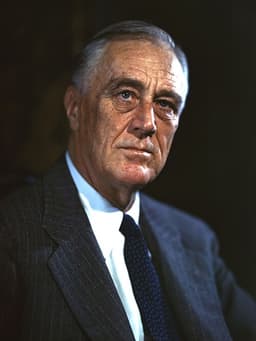
Franklin D. Roosevelt
Politician · Modern
71.0Total
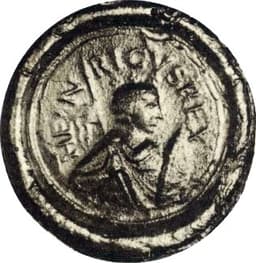
Henry the Fowler
Emperor · Medieval
60.9Total
Basic Information
Born
1882
876
Died
1945
936
Era
Modern
Medieval
Nationality
United States
East Francia
Occupation
Politician
Emperor
Civilization
Western
Western
Score Comparison
Military (10%)
45.0
70.0
Political (20%)
85.0
59.3
Influence (20%)
75.0
55.0
Legacy (20%)
65.0
52.0
Leadership (15%)
85.0
85.0
Strategy (15%)
60.0
55.0
TOTAL
71.0
60.9
Franklin D. Roosevelt — Complete Timeline
1933 AD
Inaugurated as 32nd PresidentOther◆ Major
Franklin D. Roosevelt was inaugurated as President of the United States on March 4, 1933, during the Great Depression. His inaugural address declared 'the only thing we have to fear is fear itself,' and he immediately called Congress into special session to address the banking crisis.
Great DepressionPresidencyInauguration
Impact: national
Enacted the New DealOther◆ Major
Roosevelt launched the New Deal in 1933, a series of federal programs including the Civilian Conservation Corps, the Agricultural Adjustment Act, and the Tennessee Valley Authority. These measures aimed to provide relief, recovery, and reform during the Great Depression, fundamentally expanding the role of the federal government.
Great DepressionEconomic PolicySocial Reform
Impact: nationalconstructive
1935 AD
Signed the Social Security ActOther◆ Major
Roosevelt signed the Social Security Act into law on August 14, 1935, establishing a federal system of old-age pensions, unemployment insurance, and aid for dependent children. This created the modern American welfare state and provided a safety net for millions of citizens.
Social WelfareLegislationNew Deal
Impact: nationalconstructive
1941 AD
Lend-Lease ActOther◆ Major
Roosevelt signed the Lend-Lease Act on March 11, 1941, authorizing the transfer of military equipment and supplies to Allied nations, particularly Britain and the Soviet Union. This program provided critical material support to countries fighting the Axis powers before U.S. entry into World War II.
World War IIForeign PolicyMilitary Aid
Impact: globalconstructive
Declaration of War on JapanPolitical Action◆ Major
Following the Japanese attack on Pearl Harbor on December 7, 1941, Roosevelt delivered his 'Day of Infamy' speech to Congress the next day, requesting a declaration of war. Congress approved the declaration, bringing the United States into World War II.
World War IIPearl HarborDeclaration of War
Impact: globaldestructive
1942 AD
Executive Order 9066Other◆ Major
Roosevelt signed Executive Order 9066 on February 19, 1942, authorizing the forced relocation and internment of Japanese Americans living on the West Coast. Over 110,000 people, mostly U.S. citizens, were incarcerated in camps for the duration of the war, a decision later widely condemned as a violation of civil rights.
World War IICivil RightsInternment
Impact: nationaldestructive
1944 AD
Elected to Fourth TermOther◆ Major
Roosevelt was elected to an unprecedented fourth term as president in November 1944, defeating Republican Thomas E. Dewey. This election occurred during the final stages of World War II, and Roosevelt's continued leadership ensured stability in the war effort and post-war planning.
PresidencyElectionWorld War II
Impact: national
1945 AD
Yalta ConferenceOther◆ Major
Roosevelt met with Winston Churchill and Joseph Stalin at the Yalta Conference in February 1945 to discuss post-war Europe. Agreements included the division of Germany, Soviet entry into the war against Japan, and the creation of the United Nations, shaping the post-war world order.
World War IIDiplomacyPost-War Planning
Impact: global
Henry the Fowler — Complete Timeline
919 AD
Election as King of East FranciaPolitical Action
Henry the Fowler was elected King of East Francia by the Saxon and Frankish nobles at Fritzlar on May 6, 919. He was the first Saxon king, marking the transition from Carolingian to Ottonian rule. His election was contested by other dukes but he prevailed.
ElectionAccessionOttonian Dynasty
Impact: regionalconstructive
921 AD
Treaty of Bonn (921)Political Action◆ Major
Henry the Fowler signed the Treaty of Bonn with Charles the Simple of West Francia, recognizing each other's royal titles and establishing peaceful relations. This treaty ended Carolingian claims over East Francia and solidified Henry's legitimacy as an independent king.
TreatyRecognitionDiplomacy
Impact: regionalconstructive
924 AD
Nine-Year Truce with the MagyarsPolitical Action◆ Major
Henry the Fowler negotiated a nine-year truce with the Magyars, agreeing to pay tribute in exchange for a halt to their raids. He used this period to fortify towns, reorganize the army, and train cavalry. This strategic pause was crucial for his later military reforms.
TruceMagyarsMilitary Reform
Impact: regionalconstructive
929 AD
Battle of Lenzen (929)War◆ Major
Henry the Fowler's forces defeated a Slavic army at the Battle of Lenzen, securing the eastern frontier of East Francia. This victory allowed Henry to consolidate control over the Elbe region and establish the March of Brandenburg, a key step in German eastward expansion.
BattleSlavic WarsEastern Expansion
Impact: regionalconstructive
933 AD
Battle of Riade (933)War
After the truce with the Magyars expired, Henry the Fowler led a German army to victory at the Battle of Riade (near Merseburg). The defeat of the Magyar cavalry ended their raids into East Francia for a generation and established Henry's reputation as a defender of Christendom.
BattleMagyarsVictory
Impact: regionalconstructive
936 AD
Death of Henry the FowlerOther◆ Major
Henry the Fowler died on July 2, 936, at Memleben. He was succeeded by his son, Otto I, who would become Holy Roman Emperor. Henry's reign laid the foundations for the Ottonian dynasty and the medieval German kingdom.
DeathSuccessionOttonian
Impact: regional
Expert Analysis
Henry the Fowler vs Franklin D. Roosevelt
# Two Founders, Two Worlds
On a winter morning in 1933, Franklin Delano Roosevelt stood before a nation in ruins, his hand on a family Bible, and promised Americans that the only thing they had to fear was fear itself. Just over a thousand years earlier, on a spring day in 919, a Saxon duke named Henry had been offered a crown at Fritzlar—a crown he initially refused, knowing that a king who seemed too eager for power would not long keep it. One man inherited a global superpower in crisis; the other inherited a fractured kingdom of warring tribes. Yet both would prove to be the architects of their nations' futures, building foundations that would last for centuries.
Origins
Henry the Fowler was born in 876 into a world that had no Germany, no France, no clear borders at all. The Carolingian Empire had crumbled, and what remained was a patchwork of duchies—Saxony, Franconia, Swabia, Bavaria—each ruled by proud, independent nobles who owed loyalty to no one. Henry’s father, Otto the Illustrious, was Duke of Saxony, and young Henry grew up learning that power in this world meant personal bonds, not institutions. He learned to fight, to negotiate, and to wait.
Franklin Roosevelt was born in 1882 into a very different aristocracy—the landed gentry of New York’s Hudson Valley. His family had money, status, and connections that reached back to the Mayflower. Young Franklin was tutored at home, schooled at Groton and Harvard, and groomed for a life of public service. But there was a crucial difference: where Henry inherited a world of swords and oaths, Roosevelt inherited a world of laws and bureaucracies. Henry would have to build a state from scratch; Roosevelt would have to save one that already existed.
Rise to Power
Henry’s path to kingship was reluctant. When the Saxon and Frankish nobles elected him at Fritzlar in 919, the Archbishop of Mainz offered to anoint him with holy oil—the traditional seal of divine approval. Henry refused. He would be a king by the will of his people, not by the grace of God. This was not humility; it was strategy. By rejecting church coronation, Henry signaled to the other dukes that he was not claiming supremacy over them. He was first among equals, not an emperor.
Roosevelt’s rise was more conventional but no less dramatic. He was Assistant Secretary of the Navy under Woodrow Wilson, then the Democratic vice presidential candidate in 1920—a losing ticket. Then, in 1921, polio struck. The disease paralyzed him from the waist down. Many politicians would have retired. Roosevelt instead built a foundation of iron will, learning to stand with braces and steel himself for a comeback. He was elected Governor of New York in 1928, and by 1932, as the Great Depression deepened, he promised a "New Deal" to a desperate nation.
Leadership & Governance
Henry the Fowler ruled as a master of the possible. His first challenge was the Magyars—fearsome horse archers who raided deep into German lands. In 924, Henry did something that would have shocked a warrior king: he negotiated a nine-year truce and agreed to pay tribute. Critics called it cowardice. Henry called it time. He used those nine years to build fortified towns, train a new kind of cavalry, and drill his soldiers. When the truce expired in 933, Henry met the Magyars at Riade and crushed them. The lesson was clear: patience is a weapon.
Roosevelt faced a different kind of invasion—economic collapse. In his first hundred days, he pushed through a blizzard of legislation: bank reforms, relief programs, public works, and the Social Security Act of 1935. He was not a systematic thinker; he was a pragmatist. If something worked, he kept it; if it failed, he tried something else. His critics called him a socialist; his supporters called him a savior. The truth was more complex: Roosevelt saved capitalism by reforming it.
Both men understood that leadership is about timing. Henry knew when to fight and when to wait. Roosevelt knew when to act and when to reassure. Henry’s victory at Lenzen in 929 secured his eastern frontier; Roosevelt’s fireside chats secured the American psyche.
Triumph & Tragedy
Henry’s greatest triumph was not a battle but a foundation. By the time he died in 936 at Memleben, he had transformed East Francia from a loose confederation into a kingdom strong enough to pass to his son, Otto I. Otto would become Holy Roman Emperor, and the Ottonian dynasty would dominate Europe for a century. Henry never wore a crown of gold, but he built the throne.
Roosevelt’s triumph was twofold: he led America through the Great Depression and then through World War II. He was the only president elected to four terms, a testament to his grip on the nation’s trust. But his tragedy was that he did not live to see the peace. On April 12, 1945, he died of a cerebral hemorrhage in Warm Springs, Georgia, just weeks before Germany’s surrender. He left behind a world in ruins and a new global order he had helped design—the United Nations, the Bretton Woods system, the atomic age.
Character & Destiny
Henry the Fowler was a man of calculation. He knew his limits. He refused the title of emperor because he understood that a title without power is a trap. He paid tribute to the Magyars because he understood that survival matters more than pride. His character was shaped by the reality that in a world of swords, a king who overreaches dies quickly.
Roosevelt was a man of optimism. He radiated confidence even when he could not stand. His polio taught him something that Henry never had to learn: that the body can fail but the will need not. He was manipulative, secretive, and sometimes deceptive—but he believed, genuinely, that he was doing what was necessary. His character was shaped by the reality that in a democracy, a leader who cannot inspire hope cannot lead.
Legacy
Henry the Fowler is remembered today as the founder of the German kingdom, the first of the Saxon kings, the grandfather of the Holy Roman Empire. But his legacy is invisible to most Germans, buried under the weight of later emperors and wars. He is a historian’s figure, not a popular one.
Roosevelt is everywhere. Social Security, the minimum wage, the modern presidency, the American-led world order—all bear his fingerprints. He is ranked with Lincoln and Washington, a giant of American history. But his legacy is also contested: his internment of Japanese Americans, his court-packing scheme, his sometimes imperial style of governance.
Conclusion
Two founders, two worlds. Henry built a kingdom with patience and steel; Roosevelt saved a nation with words and will. One ruled in an age when power was personal; the other in an age when power was institutional. Yet both understood the same truth: that leadership is not about being the strongest or the smartest—it is about being the one who knows when to act and when to wait. Henry waited nine years to fight the Magyars; Roosevelt waited for Congress, for public opinion, for the right moment. Both won. And both left behind something that lasted longer than they did: a foundation.
Rankings
🥇
Franklin D. RooseveltLeader
Mil: 45.0Pol: 85.0Inf: 75.0
71.0
🥈
Henry the Fowler
Mil: 70.0Pol: 59.3Inf: 55.0
60.9
+10.1 behind
How This Comparison Works
Algorithm
Each figure is scored on 6 dimensions (0—100 scale) based on structured historical data: Military (10%), Political (20%), Influence (20%), Legacy (20%), Leadership (15%), Strategy (15%). The weighted total produces the final ranking.
Data Sources
Scores are computed from structured sub-indicators in the database. Scale factors adjust for era (Ancient ×0.85, Modern ×1.0) and civilization size (Eastern ×1.05, Other ×0.80) to account for differences in population and military scale.
Maximum 3 Figures
Comparisons are limited to 2—3 figures to ensure readability and statistical meaningfulness.
Error Margins
±5 points per dimension — Sub-scores are derived from historical records with inherent uncertainty. Two figures within 5 points on a dimension should be considered roughly equivalent in that area.
Total Score Accuracy
±3 points overall — The weighted combination of 6 dimensions produces a total score with approximately ±3 points of uncertainty. Differences of less than 3 points are not statistically significant— the figures are effectively tied.
Known Limitations
- Historical records are incomplete and uneven across civilizations
- Figures from oral-tradition societies may be underrepresented
- Occupation labels can misclassify multi-role figures
- Scores measure capability and impact, not moral character
- Quantitative scoring is a comparison tool, not absolute truth
Capability Radar
Military (10%) — Battles & Warfare
Battles
10
55
Win Rate
10
60
Expansion
10
60
Political (20%) — Governance & Reform
Reform
95
75
Diplomacy
90
70
Economy
95
65
Influence (20%) — Cultural & Global Reach
Cultural
80
55
Global
90
40
Legacy (20%) — Historical Impact
Historical
90
65
Longevity
85
60
Leadership (15%) — Power & Stability
Tenure
90
70
Stability
75
70
Strategy (15%) — Tactics & Innovation
Strategy
65
65
Tactics
10
50
Reform
70
70
Similar Comparisons
Comments & Discussion
No comments yet. Be the first to share your thoughts!