Loading...
Francisco Morazan vs Soe Win
Francisco Morazan leads by 16.3 pts · 2 figures compared
…
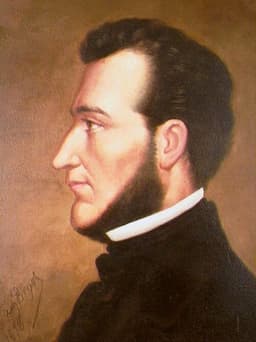
Francisco Morazan
General · Modern
58.0Total
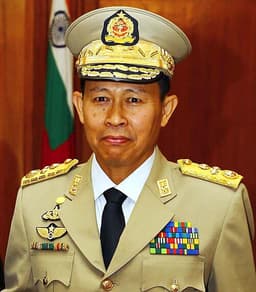
Soe Win
General · Modern
41.7Total
Basic Information
Born
1792
1947
Died
1842
—
Era
Modern
Modern
Nationality
Honduras
Myanmar
Occupation
General
General
Civilization
Western
Eastern
Score Comparison
Military (10%)
52.5
25.9
Political (20%)
60.0
30.8
Influence (20%)
62.0
48.6
Legacy (20%)
50.0
40.0
Leadership (15%)
68.0
57.6
Strategy (15%)
55.0
36.8
TOTAL
58.0
41.7
Francisco Morazan — Complete Timeline
1824 AD
Abolition of slavery in Central AmericaReform◆ Major
As a key leader in the liberal movement, Moraz
AbolitionSlaveryLiberal Reform
Impact: regionalprogressive
1827 AD
Battle of La TrinidadWar◆ Major
Morazán led a liberal army to victory against conservative forces at La Trinidad, Honduras. This battle was a key turning point in the Central American civil war, allowing Morazán to consolidate power and eventually become president of the federation.
BattleLiberal VictoryCivil War
Impact: regional
1830 AD
Presidency of the Federal Republic of Central AmericaPolitical Action
Morazán was elected president of the Federal Republic of Central America, a union of Guatemala, El Salvador, Honduras, Nicaragua, and Costa Rica. He pursued liberal reforms including separation of church and state, free trade, and land reform, facing opposition from conservatives.
Federal RepublicLiberal ReformsCentral America
Impact: regionalconstructive
1842 AD
Execution by firing squadPolitical Action
After a failed attempt to restore the Federal Republic, Moraz
ExecutionEnd of FederationLiberal Defeat
Impact: regionaltragic
Soe Win — Complete Timeline
2004 AD
Appointed Prime Minister of MyanmarPolitical Action◆ Major
Soe Win was appointed Prime Minister of Myanmar by the State Peace and Development Council, succeeding Khin Nyunt. He served as a key figure in the military junta's government.
Military JuntaGovernment Appointment
Impact: national
2007 AD
Saffron Revolution CrackdownPolitical Action
As Prime Minister, Soe Win oversaw the military's violent suppression of the Saffron Revolution, a series of anti-government protests led by Buddhist monks. The crackdown resulted in numerous deaths, arrests, and international condemnation.
Saffron RevolutionHuman RightsRepression
Impact: nationaldestructive
Death in OfficeOther
Soe Win died in office on October 12, 2007, from leukemia. His death occurred shortly after the Saffron Revolution crackdown, and he was succeeded by Thein Sein.
DeathSuccession
Impact: national
Expert Analysis
Francisco Morazan vs Soe Win
# The General and the Junta: Two Paths of Military Power
The firing squad raised their rifles on a September morning in 1842, and Francisco Morazán, the last hope of a united Central America, faced his death with the same defiance he had shown on a hundred battlefields. Across the world and across the centuries, another general—Soe Win—lay in a hospital bed in 2007, dying of leukemia as the Buddhist monks he had crushed in the streets of Rangoon prayed for his soul. One man died for a dream of liberty; the other died clinging to a nightmare of control. What made the difference between the liberator and the oppressor? The answer lies not in their uniforms, but in the worlds that shaped them.
Origins
Francisco Morazán was born in 1792 in Tegucigalpa, Honduras, into a creole family of modest means. He came of age during the twilight of Spanish colonial rule, when the Enlightenment ideals of liberty, equality, and fraternity were sweeping across the Atlantic. The French Revolution, the American Revolution, and the Latin American wars of independence were not distant abstractions—they were the air he breathed. His education was classical but practical: law, philosophy, and the art of war. He read Rousseau and Montesquieu alongside military manuals, and he came to believe that reason could remake society.
Soe Win was born in 1947 in British Burma, a country emerging from colonial rule into a chaos of ethnic conflict and communist insurgency. His world was not one of revolutionary optimism but of survival. The military, under General Ne Win, had seized power in 1962, promising stability and national unity. Soe Win joined the army young, rising through the ranks of the Burma Socialist Programme Party. His education was ideological: anti-colonial nationalism, authoritarian discipline, and the conviction that only force could hold a fractured nation together. Where Morazán saw government as a contract with the people, Soe Win saw it as a command to be obeyed.
Rise to Power
Morazán’s path to leadership was forged in battle. In 1827, at the Battle of La Trinidad, he led a ragtag liberal army against conservative forces in Honduras. His victory was not just military—it was ideological. The conservatives wanted a centralized, church-dominated state; the liberals wanted federalism, secularism, and reform. Morazán’s triumph at La Trinidad made him the champion of the liberal cause. By 1830, he was elected president of the Federal Republic of Central America, a union of Guatemala, El Salvador, Honduras, Nicaragua, and Costa Rica.
Soe Win’s rise was quieter, more bureaucratic. He served in the military intelligence apparatus, earning a reputation for loyalty and ruthlessness. In 2004, when the junta purged Prime Minister Khin Nyunt for corruption and excessive independence, Soe Win was appointed as the safe, reliable replacement. He was not a visionary or a reformer—he was a functionary of repression, chosen because he would not question the system.
Leadership & Governance
Morazán governed with the pen as much as the sword. In 1824, even before his presidency, he supported the abolition of slavery in Central America—a radical act that made him enemies among the landed elite. He promoted public education, separated church and state, and encouraged immigration and trade. His Federal Republic was an experiment in liberal democracy, but it was fragile. The conservatives, backed by the Catholic Church and rural landowners, never accepted his legitimacy. Morazán’s military genius was tactical—he could win battles but could not win the peace. He lacked the patience for compromise and the infrastructure to enforce his reforms.
Soe Win governed through fear. As Prime Minister from 2004 to 2007, he presided over a regime that suppressed dissent, controlled the economy, and isolated Myanmar from the world. His military strategy was one of containment: the army controlled the cities, the ethnic militias controlled the hills, and the people were caught in between. He had no reform agenda, no vision for the future—only the preservation of power.
Triumph & Tragedy
Morazán’s greatest moment was also the seed of his destruction. In 1830, he stood at the height of his power, president of a united Central America. But the union was always fragile. By 1838, civil war had shattered the federation. Morazán fought on, leading a desperate campaign to restore the republic. In 1842, he was captured in Costa Rica after a failed invasion. His execution was a tragedy of idealism—a man who dreamed of a united nation dying alone, betrayed by the very people he sought to liberate.
Soe Win’s tragedy was of a different kind. In 2007, the Saffron Revolution erupted—Buddhist monks marching for democracy, their saffron robes a symbol of moral authority. Soe Win ordered the crackdown. Soldiers beat monks, fired into crowds, and shut down monasteries. The world watched in horror. Then, weeks later, Soe Win died of leukemia. His triumph was the survival of the junta; his tragedy was that he had become the face of a regime that history would condemn.
Character & Destiny
Morazán was a man of passion and principle. He believed in progress, in reason, in the possibility of a better world. But his idealism was also his flaw: he could not accept that his enemies were not simply mistaken but fundamentally opposed to his vision. He fought for unity but could not compromise for it. His death was a martyrdom he seemed to welcome, as if failure itself could be a kind of victory.
Soe Win was a man of discipline and suspicion. He saw the world as a zero-sum game: any freedom granted to the people was power lost to the state. His character was shaped by the paranoid culture of the Burmese military, where loyalty was tested and dissent was treason. He died as he lived—in control, but isolated, a general without a war, a leader without a people.
Legacy
Morazán is remembered today as the father of Central American unity, a liberal hero whose dream of a federal republic still inspires reformers. His face appears on currency, his name on streets and schools. But his legacy is also a caution: idealism without institutional strength cannot survive.
Soe Win is remembered, if at all, as a footnote in Myanmar’s long struggle for democracy. The Saffron Revolution he crushed paved the way for the 2021 coup, but also for the resistance that followed. His name evokes not hope but warning—a reminder that power without legitimacy is always fragile.
Conclusion
Morazán and Soe Win were both generals, both leaders of nations, both men who believed in the power of the state to shape society. But one believed the state should serve the people; the other believed the people should serve the state. In the end, Morazán’s failure was more noble than Soe Win’s success. The firing squad that killed him could not kill his idea. The leukemia that took Soe Win left behind only silence. The difference between them is the difference between a dream and a nightmare—and the question of which one we choose to remember.
Rankings
🥇
Francisco MorazanLeader
Mil: 52.5Pol: 60.0Inf: 62.0
58.0
🥈
Soe Win
Mil: 25.9Pol: 30.8Inf: 48.6
41.7
+16.3 behind
How This Comparison Works
Algorithm
Each figure is scored on 6 dimensions (0—100 scale) based on structured historical data: Military (10%), Political (20%), Influence (20%), Legacy (20%), Leadership (15%), Strategy (15%). The weighted total produces the final ranking.
Data Sources
Scores are computed from structured sub-indicators in the database. Scale factors adjust for era (Ancient ×0.85, Modern ×1.0) and civilization size (Eastern ×1.05, Other ×0.80) to account for differences in population and military scale.
Maximum 3 Figures
Comparisons are limited to 2—3 figures to ensure readability and statistical meaningfulness.
Error Margins
±5 points per dimension — Sub-scores are derived from historical records with inherent uncertainty. Two figures within 5 points on a dimension should be considered roughly equivalent in that area.
Total Score Accuracy
±3 points overall — The weighted combination of 6 dimensions produces a total score with approximately ±3 points of uncertainty. Differences of less than 3 points are not statistically significant— the figures are effectively tied.
Known Limitations
- Historical records are incomplete and uneven across civilizations
- Figures from oral-tradition societies may be underrepresented
- Occupation labels can misclassify multi-role figures
- Scores measure capability and impact, not moral character
- Quantitative scoring is a comparison tool, not absolute truth
Capability Radar
Military (10%) — Battles & Warfare
Battles
55
10
Win Rate
60
10
Expansion
40
10
Political (20%) — Governance & Reform
Reform
70
10
Diplomacy
45
10
Economy
50
10
Influence (20%) — Cultural & Global Reach
Cultural
45
10
Global
35
10
Legacy (20%) — Historical Impact
Historical
50
20
Longevity
40
10
Leadership (15%) — Power & Stability
Tenure
55
30
Stability
30
10
Strategy (15%) — Tactics & Innovation
Strategy
55
10
Tactics
50
10
Reform
45
10
Similar Comparisons
Comments & Discussion
Gatling Gun Philosopher6/16/2026
Morazán died standing upright, quoting Cicero—he was a man who believed the pen could guide the sword. That’s a luxury of an educated elite who never had to watch their country dissolve into ethnic warlordism. Soe Win came from Burma’s post-colonial nightmare where survival meant zero trust. The comparison isn’t liberator vs oppressor; it’s romantic liberal vs traumatized autocrat. One had Voltaire; the other had a grenade under his cot since age 15.
丝绸之路上的一盏灯6/16/2026
有些人总爱把莫拉桑捧作“中美洲的乔治·华盛顿”,但他其实是个失败的联邦主义者,后人只记得他死得好看。吴梭温呢?他治理下的缅甸确实冷酷,可别忘了——他接手的是一个被殖民撕裂的烂摊子。我们在评判历史时,总不自觉地给“有文化的敌人”加分,却忘了那些沉默的暴政也曾在底层维持了脆弱的秩序。
数据不会说谎6/16/2026
单看数字:莫拉桑领导的联邦共和国只勉强维持了13年,他死后中美洲立刻碎成五块。而吴梭温所在的军政府,就算再不得人心,也撑了整整半个世纪。这说明什么?说明“光明的理想”未必比“铁腕的控制”更实际。历史不是道德剧,是结果论。你说他残暴?但他那一套,至少让缅甸没在90年代就彻底瓦解成军阀领地。
The Revisionist’s Loaded Dice6/16/2026
You’re stacking the deck by picking a doomed romantic hero against a stone-faced junta leader. What if we flipped the lens? Morazán’s liberal reforms banned the Catholic Church’s tithe, alienating rural indigenous communities who didn’t ask for Enlightenment—they asked for their land back. Soe Win at least maintained a stable, if grim, continuity of state institutions. Morazán dies poetic; Soe Win dies pathetic. But the body count of pure ideals isn’t zero.
北纬14度的老猎人6/16/2026
莫拉桑的悲剧在于他以为思想能打赢泥土——他推行自由主义改革时,印第安人根本看不懂他的法典。吴梭温冷酷,但他读懂了自己土地上的规则:这里不需要罗素,只需要枪杆子能稳住粮价。你拿启蒙时代的标准去量他,当然输得彻底。可对缅甸农民来说,管你理想多高远,饿肚子才是真敌人。