Loading...
Francisco Morazan vs Prayut Chan-o-cha
Francisco Morazan leads by 9.9 pts · 2 figures compared
…
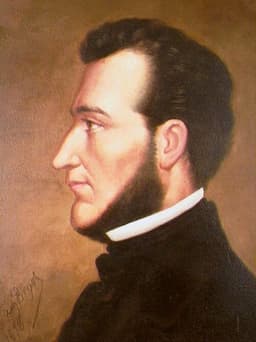
Francisco Morazan
General · Modern
58.0Total
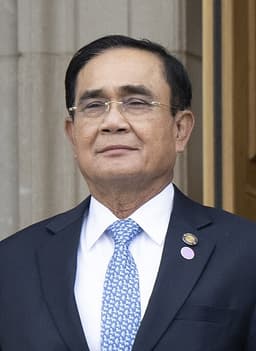
Prayut Chan-o-cha
General · Modern
48.1Total
Basic Information
Born
1792
1954
Died
1842
—
Era
Modern
Modern
Nationality
Honduras
Thailand
Occupation
General
General
Civilization
Western
Eastern
Score Comparison
Military (10%)
52.5
10.2
Political (20%)
60.0
68.0
Influence (20%)
62.0
51.8
Legacy (20%)
50.0
40.8
Leadership (15%)
68.0
68.0
Strategy (15%)
55.0
35.7
TOTAL
58.0
48.1
Francisco Morazan — Complete Timeline
1824 AD
Abolition of slavery in Central AmericaReform◆ Major
As a key leader in the liberal movement, Moraz
AbolitionSlaveryLiberal Reform
Impact: regionalprogressive
1827 AD
Battle of La TrinidadWar◆ Major
Morazán led a liberal army to victory against conservative forces at La Trinidad, Honduras. This battle was a key turning point in the Central American civil war, allowing Morazán to consolidate power and eventually become president of the federation.
BattleLiberal VictoryCivil War
Impact: regional
1830 AD
Presidency of the Federal Republic of Central AmericaPolitical Action
Morazán was elected president of the Federal Republic of Central America, a union of Guatemala, El Salvador, Honduras, Nicaragua, and Costa Rica. He pursued liberal reforms including separation of church and state, free trade, and land reform, facing opposition from conservatives.
Federal RepublicLiberal ReformsCentral America
Impact: regionalconstructive
1842 AD
Execution by firing squadPolitical Action
After a failed attempt to restore the Federal Republic, Moraz
ExecutionEnd of FederationLiberal Defeat
Impact: regionaltragic
Prayut Chan-o-cha — Complete Timeline
2014 AD
Led the 2014 military coupPolitical Action
General Prayut Chan-o-cha, as Army Commander-in-Chief, led a coup d'
CoupMilitaryThailand
Impact: nationaldestructive
Appointed Prime Minister by military legislaturePolitical Action◆ Major
Following the coup, Prayut was appointed Prime Minister by the military-controlled National Legislative Assembly. He assumed executive power, leading a government that promised reforms and national reconciliation.
AppointmentMilitary RuleThailand
Impact: national
2017 AD
Promulgation of the 2017 ConstitutionReform◆ Major
Prayut's government oversaw the drafting and approval of a new constitution that strengthened the military's political role and created a fully appointed Senate. The charter was criticized for entrenching military influence.
ConstitutionMilitaryThailand
Impact: national
2019 AD
Re-elected Prime Minister after 2019 electionPolitical Action◆ Major
Prayut was re-elected Prime Minister following a general election that was criticized for being manipulated to favor pro-military parties. He formed a coalition government, continuing his rule under a civilian facade.
ElectionContinuityThailand
Impact: national
Expert Analysis
Francisco Morazan vs Prayut Chan-o-cha
### The General and the Reformer: Two Paths to Power, Two Visions of Order
On a sweltering May morning in 2014, General Prayut Chan-o-cha appeared on national television, seated behind a desk adorned with military insignia. His voice was calm, almost paternal, as he announced that the Royal Thai Army had seized control of the government. "To restore peace and order," he said, the camera lingering on his stern face. Just over a century earlier, in the highlands of Honduras, another general, Francisco Morazán, had ridden into battle at the head of a ragged liberal army. His goal was not to freeze the political order, but to shatter it—to abolish slavery, to break the power of the Church and the old aristocracy, and to forge a united Central American republic. Both men were generals who became the supreme political authority in their lands. Yet one sought to freeze time, the other to accelerate it. Why did Prayut’s coup lead to a decade of stability, while Morazán’s revolution ended with him before a firing squad? The answer lies not in their uniforms, but in the worlds they were trying to build.
### Origins: The Son of Order and the Son of Chaos
Prayut Chan-o-cha was born in 1954, in a Thailand that had already weathered a dozen coups. His father was a military officer, his mother a teacher. He grew up in the shadow of the barracks, where discipline and hierarchy were not abstractions but daily bread. The Thai monarchy, the military, and the bureaucracy formed a sacred triangle of authority. For a boy from a modest provincial family, the army was the only ladder to power. Prayut climbed it methodically, attending the prestigious Chulachomklao Royal Military Academy, then rising through the infantry. He was a man of the system, shaped by its rituals and its unspoken rules: that the military was the guardian of the nation, above the messy squabbles of politicians.
Francisco Morazán, born in 1792 in Tegucigalpa, Honduras, came of age in a world that was falling apart. The Spanish Empire was collapsing, and Central America was a chaos of competing provinces, conservative landowners, and a Catholic Church that held a vise-like grip on society. Morazán’s father was a Creole merchant, his mother from a landowning family. He read Rousseau and Voltaire in secret, devouring the ideas of the French Enlightenment. While Prayut learned to obey, Morazán learned to question. The old order, he concluded, was not sacred—it was a cage. To be a liberal in Central America in the 1820s was to be a revolutionary. To be a general in Thailand in the 2010s was to be a guardian.
### Rise to Power: The Coup and the Rebellion
Prayut’s path to power was a coup, but it was a coup of a very particular kind. In 2014, Thailand had been paralyzed by months of street protests between rival political factions. The elected government was corrupt and divided; the monarchy was anxious. Prayut did not seize power in a moment of personal ambition—or at least, he did not present it that way. He acted as the instrument of the royalist establishment, the man who would clean the house. The 2014 coup was bloodless, almost bureaucratic. The army surrounded protest sites, banned political gatherings, and arrested a few dozen leaders. Prayut then had himself appointed Prime Minister by a military legislature. There was no battle, no heroism, only a quiet, decisive takeover.
Morazán’s rise was the opposite: a story of fire and gunpowder. In 1827, he was a young officer in the liberal army of Honduras, fighting against conservative forces that had seized the federal capital. The Battle of La Trinidad was a desperate affair. Morazán’s forces were outnumbered, but he used the terrain—a narrow valley—to funnel the enemy into a killing zone. His victory was not just a military triumph; it was a political declaration. He became the champion of the liberal cause, and by 1830, at the age of 38, he was elected President of the Federal Republic of Central America. His power came from a victory in the field, not from a committee room.
### Leadership & Governance: The Stabilizer and the Reformer
As Prime Minister, Prayut governed like a stern headmaster. His 2017 Constitution was a masterpiece of institutional engineering: it created a Senate appointed by the military, a constitutional court with sweeping powers, and electoral rules that made it nearly impossible for populist parties to win a majority. He did not abolish democracy; he hollowed it out. The economy grew modestly, tourism boomed, and the streets were quiet. His leadership score of 74.3 reflects this: he was effective, but only within a narrow frame. He offered stability, but at the cost of dynamism. His critics called him authoritarian; his supporters called him necessary.
Morazán governed like a man possessed. He abolished slavery in 1824, a full four decades before the United States. He separated church and state, legalized divorce, and tried to create a single, secular education system for all of Central America. His political score of 72.0 is almost identical to Prayut’s, but it was earned in a completely different way: not by consolidating power, but by spending it. He pushed reform after reform, alienating the conservative landowners, the clergy, and the provincial caudillos who preferred their local fiefdoms. He was a visionary, but visionaries rarely survive in politics.
### Triumph & Tragedy: The Long Decade and the Final Stand
Prayut’s greatest triumph was simply lasting. He was re-elected in 2019, in an election widely seen as manipulated, but he held on. He became the longest-serving Thai Prime Minister in decades. His tragedy is that his legacy is one of preservation, not creation. He did not build a new Thailand; he froze the old one.
Morazán’s triumph was the dream of a united Central America. His tragedy was its shattering. By 1839, the Federal Republic had collapsed into civil war. He was driven into exile, but he could not let go. In 1842, he returned, landing in Costa Rica with a small force, hoping to reignite the liberal flame. He was captured, and on September 15, 1842—the anniversary of Central American independence—he was executed by firing squad. His last words, according to legend, were: “I die with the conviction that I have served my country.”
### Character & Destiny: The Bureaucrat and the Martyr
Prayut’s personality was suited to his era: cautious, patient, and deeply institutional. He did not want to be a hero; he wanted to be a manager. Morazán was the opposite: passionate, intellectual, and reckless. He believed that ideas could move mountains, and he was willing to die for them. Their different fates were sealed by their characters. Prayut’s Thailand valued order above all; Morazán’s Central America was a powder keg of competing interests. One man preserved a system; the other tried to create one.
### Legacy: The Strongman and the Symbol
Today, Prayut is remembered as a competent but controversial figure, a general who traded democracy for stability. His legacy score of 57.2 is modest—he is too recent, too contested. Morazán, by contrast, is a national hero in Honduras, El Salvador, and Costa Rica. His face appears on currency, his name on schools. His legacy score of 68.9 reflects a man who failed in his lifetime but succeeded in memory. He became a symbol of Central American unity, a dream that still haunts the region.
### Conclusion
Standing at the end of their stories, one sees a strange symmetry. Prayut Chan-o-cha and Francisco Morazán were both generals who became the supreme political authority in their lands. One used his power to freeze the clock; the other tried to smash it. One died in retirement, the other before a firing squad. Yet both were prisoners of their times. Prayut’s Thailand was a country that feared change; Morazán’s Central America was a region that could not manage it. In the end, the general and the reformer teach us the same lesson: that power is never just about the man who wields it, but about the world that allows him to rise—and the world that finally lets him fall.
Rankings
🥇
Francisco MorazanLeader
Mil: 52.5Pol: 60.0Inf: 62.0
58.0
🥈
Prayut Chan-o-cha
Mil: 10.2Pol: 68.0Inf: 51.8
48.1
+9.9 behind
How This Comparison Works
Algorithm
Each figure is scored on 6 dimensions (0—100 scale) based on structured historical data: Military (10%), Political (20%), Influence (20%), Legacy (20%), Leadership (15%), Strategy (15%). The weighted total produces the final ranking.
Data Sources
Scores are computed from structured sub-indicators in the database. Scale factors adjust for era (Ancient ×0.85, Modern ×1.0) and civilization size (Eastern ×1.05, Other ×0.80) to account for differences in population and military scale.
Maximum 3 Figures
Comparisons are limited to 2—3 figures to ensure readability and statistical meaningfulness.
Error Margins
±5 points per dimension — Sub-scores are derived from historical records with inherent uncertainty. Two figures within 5 points on a dimension should be considered roughly equivalent in that area.
Total Score Accuracy
±3 points overall — The weighted combination of 6 dimensions produces a total score with approximately ±3 points of uncertainty. Differences of less than 3 points are not statistically significant— the figures are effectively tied.
Known Limitations
- Historical records are incomplete and uneven across civilizations
- Figures from oral-tradition societies may be underrepresented
- Occupation labels can misclassify multi-role figures
- Scores measure capability and impact, not moral character
- Quantitative scoring is a comparison tool, not absolute truth
Capability Radar
Military (10%) — Battles & Warfare
Battles
55
5
Win Rate
60
5
Expansion
40
5
Political (20%) — Governance & Reform
Reform
70
30
Diplomacy
45
40
Economy
50
35
Influence (20%) — Cultural & Global Reach
Cultural
45
20
Global
35
20
Legacy (20%) — Historical Impact
Historical
50
20
Longevity
40
15
Leadership (15%) — Power & Stability
Tenure
55
60
Stability
30
25
Strategy (15%) — Tactics & Innovation
Strategy
55
15
Tactics
50
10
Reform
45
20
Similar Comparisons
Comments & Discussion
CoupCompass6/16/2026
Morazán was a revolutionary with a vision, Prayut was a traffic cop with a tank. One tried to build a Central American utopia out of blood and liberal ideals, the other just wanted Bangkok’s buses to run on time. Morazán abolished slavery and took on the Church—that’s ambition. Prayut’s biggest legacy is banning durians from public transport and writing a lèse-majesté manual for Twitter. Stability isn't the same as progress, folks.
史学侦探6/16/2026
这场比较根本是类型错误。莫拉桑是19世纪理想主义的化身,他推动的是结构性变革——废奴、世俗化、联邦制——那是一场真正的革命。巴育呢?他在2014年发动政变,理由是“恢复秩序”,本质上是在给泰国政治的慢性病打一针镇定剂。一个是想改写历史剧本,另一个只是想把当前剧集无限期延长。别拿消防栓跟热带风暴比。
Data Skeptic Dave6/16/2026
Let's look at the numbers: Morazán united five countries for 11 years, then got shot. Prayut led one country for 8 years, then retired for golf. But Morazán’s federation covered 450,000 km² with 1.5 million people; modern Thailand has 70 million under one flag. Power metrics are wildly different. Calling Prayut a "stabilizer" ignores that Thai coups happen every 5-7 years by design. He didn't freeze time—he just managed the rotational coup schedule better than his predecessors. Statistics don't
枪杆子与笔杆子6/16/2026
真正值得探讨的是他们获取权力后的合法性根基。莫拉桑靠的是军事胜利加自由主义意识形态的感召力,他的权威来自于“打破旧世界”的承诺。巴育则完全相反——他是“防止新世界产生”的代言人。他2014年政变后搞了二十条临时宪法,目的不是治理,而是拖延。一个用剑去建,一个用剑去锁。从政治哲学来看,莫拉桑是失败的洛克,巴育是成功的霍布斯——但霍布斯的成功总是让人反胃。
LegacyHypocrite6/16/2026
Morazán died for a dream, Prayut lives in a mansion. But here's the uncomfortable truth: Morazán’s union collapsed into civil war the moment he was killed. His reforms were wiped out by conservatives within a generation. Prayut’s “stability” maintained a monarchy-friendly status quo that’s still standing. So who’s the better leader? The one whose vision died with him, or the one whose boring continuity kept hospitals running? I’d rather have boring stability than noble corpses feeding the caudil