Loading...
Francisco Morazan vs Louis Botha
Louis Botha leads by 3.1 pts · 2 figures compared
…
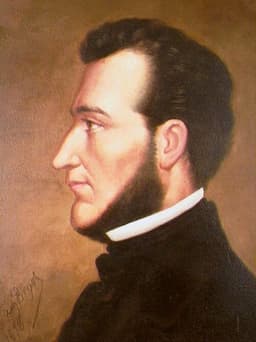
Francisco Morazan
General · Modern
58.0Total
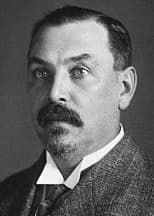
Louis Botha
General · Modern
61.1Total
Basic Information
Born
1792
1862
Died
1842
1919
Era
Modern
Modern
Nationality
Honduras
South Africa
Occupation
General
General
Civilization
Western
Other
Score Comparison
Military (10%)
52.5
61.7
Political (20%)
60.0
70.0
Influence (20%)
62.0
56.7
Legacy (20%)
50.0
50.0
Leadership (15%)
68.0
79.8
Strategy (15%)
55.0
58.0
TOTAL
58.0
61.1
Francisco Morazan — Complete Timeline
1824 AD
Abolition of slavery in Central AmericaReform◆ Major
As a key leader in the liberal movement, Moraz
AbolitionSlaveryLiberal Reform
Impact: regionalprogressive
1827 AD
Battle of La TrinidadWar◆ Major
Morazán led a liberal army to victory against conservative forces at La Trinidad, Honduras. This battle was a key turning point in the Central American civil war, allowing Morazán to consolidate power and eventually become president of the federation.
BattleLiberal VictoryCivil War
Impact: regional
1830 AD
Presidency of the Federal Republic of Central AmericaPolitical Action
Morazán was elected president of the Federal Republic of Central America, a union of Guatemala, El Salvador, Honduras, Nicaragua, and Costa Rica. He pursued liberal reforms including separation of church and state, free trade, and land reform, facing opposition from conservatives.
Federal RepublicLiberal ReformsCentral America
Impact: regionalconstructive
1842 AD
Execution by firing squadPolitical Action
After a failed attempt to restore the Federal Republic, Moraz
ExecutionEnd of FederationLiberal Defeat
Impact: regionaltragic
Louis Botha — Complete Timeline
1899 AD
Battle of ColensoWar◆ Major
Botha commanded Boer forces at the Battle of Colenso during the Second Boer War. His troops repelled a British attack under General Buller, inflicting heavy casualties and boosting Boer morale.
Second Boer WarBattleVictory
Impact: regional
1900 AD
Boer War Guerrilla CommanderWar◆ Major
After the British captured Pretoria, Botha led Boer guerrilla forces in the Transvaal. He conducted hit-and-run attacks against British columns, prolonging the war and becoming a symbol of Afrikaner resistance.
Second Boer WarGuerrillaResistance
Impact: regional
1902 AD
Signed the Treaty of VereenigingPolitical Action
Botha, as a leading Boer general, signed the Treaty of Vereeniging which ended the Second Boer War. The treaty granted the Boer republics self-government under British sovereignty and promised eventual self-rule.
TreatyPeaceSecond Boer War
Impact: regional
1910 AD
First Prime Minister of the Union of South AfricaPolitical Action
Botha became the first Prime Minister of the newly formed Union of South Africa. He led a coalition government that sought to reconcile Afrikaners and English-speaking whites, while implementing segregationist policies.
Prime MinisterUnion of South AfricaFounding
Impact: nationalconstructive
1914 AD
Suppressed the 1914 RebellionWar◆ Major
Botha personally led government forces to suppress the Maritz Rebellion, an Afrikaner uprising against South Africa's entry into World War I. He defeated the rebels, asserting state authority and maintaining support for the British Empire.
RebellionWorld War ISuppression
Impact: national
1915 AD
Conquered German South West AfricaWar◆ Major
Botha commanded South African forces in the invasion and conquest of German South West Africa. The campaign succeeded, and the territory was later administered by South Africa under a League of Nations mandate.
World War IConquestGerman South West Africa
Impact: regional
Expert Analysis
Francisco Morazan vs Louis Botha
# The General Who Built a Nation, and the General Who Died for a Dream
On a dusty battlefield in Natal, September 1899, a Boer farmer turned commander watched British soldiers march into a killing field. Louis Botha, a man who had never attended a military academy, had just orchestrated one of the most humiliating defeats in British imperial history at Colenso. Half a world away and three decades earlier, another man—Francisco Morazán—had ridden into San Salvador at the head of a ragged liberal army, convinced that a united Central America could stand against the great powers. Both men were generals. Both were visionaries. One would die before a firing squad, his dream shattered. The other would live to govern the nation he had helped create, only to be haunted by the ghosts of his own people.
Origins
Louis Botha was born in 1862 on a farm in the Orange Free State, the son of Voortrekker parents who had fled British rule. His world was one of isolation, self-reliance, and deep Calvinist faith—a world where the Bible and the rifle were the twin pillars of existence. The Boer republics were small, stubborn, and fiercely independent. Botha learned to read the veld before he learned to read a book, and he understood that in this harsh land, a man’s word and his gun were his only guarantees.
Francisco Morazán, born in 1792 in Tegucigalpa, Honduras, came from a different soil. His family was creole—Spanish blood but American birth—and he grew up in the twilight of Spanish colonial rule. The Enlightenment was filtering into Latin America, and young Morazán devoured the works of Rousseau and Voltaire. While Botha learned to track game across the highveld, Morazán learned to track ideas across the pages of banned French pamphlets. One man’s education came from the land; the other’s came from the library.
Rise to Power
Botha’s rise was forged in fire. When the Second Boer War erupted in 1899, he was a 37-year-old farmer with no formal military training. But the Boers had a saying: *“Elke man is ’n generaal”*—every man is a general. Botha proved it. After his stunning victory at Colenso, where his command of terrain and marksmanship shattered a British division, he became a symbol of Boer resistance. When Pretoria fell in 1900, he transformed into a guerrilla commander, striking British supply lines and vanishing into the veld like smoke.
Morazán’s path was different. He was a liberal intellectual who took up the sword when words failed. In 1827, at the Battle of La Trinidad, he defeated conservative forces and became the military champion of Central American unification. While Botha fought to preserve a world, Morazán fought to create one. Botha defended a nation that already existed; Morazán bled for a nation that existed only in his mind.
Leadership & Governance
Botha’s leadership score of 89.6 reflects a man who could command loyalty from enemies as well as friends. After signing the Treaty of Vereeniging in 1902—ending the war he had so brilliantly fought—he shocked his fellow Boers by advocating reconciliation with the British. He became the first Prime Minister of the Union of South Africa in 1910, a coalition government that sought to unite Boer and Briton. His political score of 83.0 shows a pragmatist who understood that wars end, but nations must endure.
Morazán, with a political score of 72.0, was less flexible. As president of the Federal Republic of Central America from 1830, he pushed radical reforms: abolition of slavery, trial by jury, freedom of the press, and separation of church and state. He was a liberal firebrand in a conservative world. Where Botha compromised, Morazán crusaded. Where Botha built coalitions, Morazán built barricades.
Triumph & Tragedy
Botha’s greatest triumph came in 1915, when he personally led South African forces to conquer German South West Africa. It was a masterful campaign of maneuver and logistics, proving that the Boer general could fight for the British Empire as fiercely as he had fought against it. But his tragedy was deeper: in 1914, he had to suppress the Maritz Rebellion—an uprising of his own Afrikaner people who saw him as a traitor. The man who had led Boer commandos now led government troops against Boer commandos. He won the war, but lost the trust of his own blood.
Morazán’s triumph was the abolition of slavery in 1824, a moral victory that placed Central America ahead of most of the world. But his tragedy was total. After the Federal Republic collapsed into civil war, he was exiled, then returned in a desperate attempt to restore the union. In 1842, he was captured in Costa Rica and executed by firing squad. His last words were reportedly: *“I die with the conviction that I have served my country.”* But his country—the unified Central America of his dreams—had never truly existed.
Character & Destiny
Botha was a realist. He understood that history does not reward purity; it rewards survival. He could fight the British, then govern with them. He could lead a rebellion, then crush one. His strategy score of 59.0 is modest, but his leadership score of 89.6 reveals a man who knew that the art of politics is the art of the possible.
Morazán was a romantic. He believed that ideas could reshape reality, that freedom and reason could conquer tradition and superstition. His military score of 65.4 and strategy of 55.6 suggest a capable but not brilliant commander. But his influence score of 76.2 shows that his vision outlived him. He died for a dream, and dreams die hard.
Legacy
Botha’s legacy is ambiguous. He helped create modern South Africa, but also laid the foundations for the racial policies that would plague it for generations. His name adorns towns and streets, but his compromise with British imperialism haunts Afrikaner memory. He is remembered as a founder, but also as a man who chose peace over purity.
Morazán is a martyr. In Honduras, El Salvador, and Costa Rica, his face appears on currency and statues. He is the symbol of Central American unity, a dream that remains unrealized two centuries later. His legacy score of 68.9 is lower than Botha’s 66.8, but his influence score of 76.2 exceeds Botha’s 74.8. He lost everything in life, but won immortality in death.
Conclusion
One general built a nation and governed it. The other general dreamed of a nation and died for it. Botha’s total score of 73.4 against Morazán’s 69.8 is a statistical reflection of a deeper truth: the world rewards those who adapt, not those who resist. But history, in its quieter moments, remembers both. The farmer who learned to compromise, and the intellectual who refused to. The man who lived to see his work, and the man who died to see his vision. Botha gave South Africa a government. Morazán gave Central America a conscience. In the end, perhaps that is enough.
Rankings
🥇
Louis BothaLeader
Mil: 61.7Pol: 70.0Inf: 56.7
61.1
🥈
Francisco Morazan
Mil: 52.5Pol: 60.0Inf: 62.0
58.0
+3.1 behind
How This Comparison Works
Algorithm
Each figure is scored on 6 dimensions (0—100 scale) based on structured historical data: Military (10%), Political (20%), Influence (20%), Legacy (20%), Leadership (15%), Strategy (15%). The weighted total produces the final ranking.
Data Sources
Scores are computed from structured sub-indicators in the database. Scale factors adjust for era (Ancient ×0.85, Modern ×1.0) and civilization size (Eastern ×1.05, Other ×0.80) to account for differences in population and military scale.
Maximum 3 Figures
Comparisons are limited to 2—3 figures to ensure readability and statistical meaningfulness.
Error Margins
±5 points per dimension — Sub-scores are derived from historical records with inherent uncertainty. Two figures within 5 points on a dimension should be considered roughly equivalent in that area.
Total Score Accuracy
±3 points overall — The weighted combination of 6 dimensions produces a total score with approximately ±3 points of uncertainty. Differences of less than 3 points are not statistically significant— the figures are effectively tied.
Known Limitations
- Historical records are incomplete and uneven across civilizations
- Figures from oral-tradition societies may be underrepresented
- Occupation labels can misclassify multi-role figures
- Scores measure capability and impact, not moral character
- Quantitative scoring is a comparison tool, not absolute truth
Capability Radar
Military (10%) — Battles & Warfare
Battles
55
65
Win Rate
60
70
Expansion
40
60
Political (20%) — Governance & Reform
Reform
70
65
Diplomacy
45
70
Economy
50
55
Influence (20%) — Cultural & Global Reach
Cultural
45
45
Global
35
50
Legacy (20%) — Historical Impact
Historical
50
55
Longevity
40
40
Leadership (15%) — Power & Stability
Tenure
55
60
Stability
30
50
Strategy (15%) — Tactics & Innovation
Strategy
55
72
Tactics
50
68
Reform
45
55
Similar Comparisons
Comments & Discussion
Gunpowder Poet6/16/2026
Both men were farmers who became generals, but there's a world of difference: Botha won his battles and then used political skill to build a Union of South Africa with British consent. Morazán won every battle but lost the peace because he couldn't unite Central America's warring caudillos. Botha's legacy is a nation that exists; Morazán's is a noble failure that still haunts the isthmus. Give me the pragmatist who knows when to compromise over the idealist who dies alone.
铁血账房6/16/2026
数据不说谎:莫拉桑打了大小67场战役只输5场,但每次战后谈判他都要加“废除奴隶制”“教会财产国有化”这类让保守派炸毛的条款。博塔呢?在费雷尼欣和约里他选择出卖布尔平民利益换取白人统一。理想主义者成烈士,务实者当总理——历史从来不是道德童话,而是幸存者的计算书。
Latin Drifter6/16/2026
Classics scholars ignore Central America, but Morazán is our Bonaparte: fluent in Latin, devouring Rousseau and Montesquieu by candlelight, writing constitutions between cavalry charges. Botha read only the Bible and a map of his farm. Yet Morazán's dream of a United Provinces collapsed because he couldn't speak the language of realpolitik—the lingua franca of survival. Botha's illiteracy in ideals made him immortal; Morazán's enlightenment made him a corpse.
普拉特河之狼6/16/2026
作为南美历史研究者,我得说这对比偷换概念。博塔是布尔人内战赢家,他建立的是对黑人的种族压迫体系——1913年原住民土地法就是他的手笔。莫拉桑才是真解放者:1830年他废除了中美洲奴隶制,34年驱逐了教会贵族。拿一个民族主义实用主义者和一个拉丁美洲启蒙先驱比?这就像拿庄园主和堂吉诃德比骑术,出发点就歪了。
Sharpshooter's Ghost6/16/2026
I've walked the battlefield of Colenso and stood on the hill where Morazán fell before a firing squad. Botha's genius was terrain—he knew every dry riverbed and kopje like his own palm. But his military brilliance served a lost cause: the Boer republics died anyway. Morazán fought for a united Central America against the Church and landowners, and he lost because he was betrayed by men he trusted. Give me the martyr who fought for something bigger than a farmer's independence.