Loading...
Francisco Morazan vs Lon Nol
Francisco Morazan leads by 16.5 pts · 2 figures compared
…
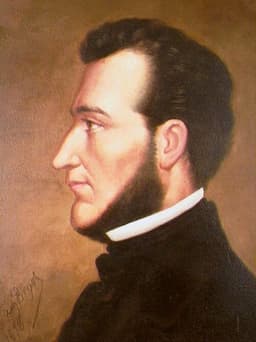
Francisco Morazan
General · Modern
58.0Total
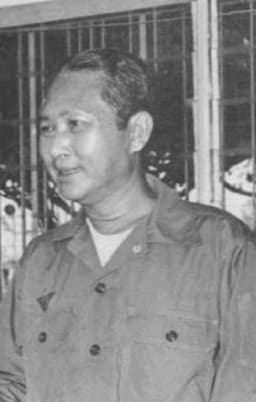
Lon Nol
General · Modern
41.5Total
Basic Information
Born
1792
1913
Died
1842
1985
Era
Modern
Modern
Nationality
Honduras
Cambodia
Occupation
General
General
Civilization
Western
Eastern
Score Comparison
Military (10%)
52.5
25.9
Political (20%)
60.0
30.8
Influence (20%)
62.0
47.9
Legacy (20%)
50.0
38.3
Leadership (15%)
68.0
61.1
Strategy (15%)
55.0
35.7
TOTAL
58.0
41.5
Francisco Morazan — Complete Timeline
1824 AD
Abolition of slavery in Central AmericaReform◆ Major
As a key leader in the liberal movement, Moraz
AbolitionSlaveryLiberal Reform
Impact: regionalprogressive
1827 AD
Battle of La TrinidadWar◆ Major
Morazán led a liberal army to victory against conservative forces at La Trinidad, Honduras. This battle was a key turning point in the Central American civil war, allowing Morazán to consolidate power and eventually become president of the federation.
BattleLiberal VictoryCivil War
Impact: regional
1830 AD
Presidency of the Federal Republic of Central AmericaPolitical Action
Morazán was elected president of the Federal Republic of Central America, a union of Guatemala, El Salvador, Honduras, Nicaragua, and Costa Rica. He pursued liberal reforms including separation of church and state, free trade, and land reform, facing opposition from conservatives.
Federal RepublicLiberal ReformsCentral America
Impact: regionalconstructive
1842 AD
Execution by firing squadPolitical Action
After a failed attempt to restore the Federal Republic, Moraz
ExecutionEnd of FederationLiberal Defeat
Impact: regionaltragic
Lon Nol — Complete Timeline
1970 AD
Coup against Norodom SihanoukPolitical Action
Lon Nol led a military coup that overthrew King Sihanouk while he was abroad. He established the Khmer Republic, ending the monarchy and aligning Cambodia with the United States during the Vietnam War.
CoupKhmer RepublicUS alliance
Impact: nationaldestructive
Declaration of the Khmer RepublicPolitical Action◆ Major
Lon Nol officially proclaimed the Khmer Republic, abolishing the monarchy. He became president and implemented a pro-American, anti-communist regime, which led to civil war with the Khmer Rouge and North Vietnamese forces.
RepublicRegime changeCivil War
Impact: national
1975 AD
Fall of Phnom PenhWar
Lon Nol's government collapsed as Khmer Rouge forces captured Phnom Penh. He fled into exile in the United States, ending the Khmer Republic and leading to the establishment of Democratic Kampuchea under Pol Pot.
Khmer Rouge victoryExileRegime collapse
Impact: nationaltragic
Expert Analysis
Francisco Morazan vs Lon Nol
**The General and the Reformer: Two Visions of Central America and Cambodia**
On a humid March morning in 1970, Cambodia’s King Norodom Sihanouk boarded a plane for France, leaving behind a kingdom he had ruled for nearly three decades. He did not know he would never return as monarch. In Phnom Penh, his prime minister and general, Lon Nol, was already moving tanks into position. Half a world away and a century earlier, another general, Francisco Morazán, had ridden into Guatemala City at the head of a liberal army, determined to forge a unified Central American republic from the wreckage of Spanish colonialism. Both men seized power through violence; both dreamed of remaking their nations. But where Morazán’s vision united, Lon Nol’s shattered. Why did one general become a martyr for union, the other a footnote to genocide?
**Origins**
Lon Nol was born in 1913, the son of a provincial governor in French Cambodia. He grew up in a world of colonial deference, where the Khmer elite served French interests while preserving a fragile monarchy. He joined the civil service, then the army, rising through loyalty and caution. His Cambodia was a small, vulnerable kingdom caught between Vietnam and Thailand, its identity shaped by centuries of foreign domination. By the time he took power, the Cold War had turned his country into a battlefield.
Francisco Morazán, born in 1792 in Tegucigalpa, Honduras, came of age during the collapse of the Spanish Empire. His father was a merchant of Corsican descent, his mother a Creole. He learned law, but the wars of independence called him to arms. His world was the Federal Republic of Central America—a fragile experiment in liberal democracy that stretched from Guatemala to Costa Rica. Where Lon Nol inherited a kingdom, Morazán inherited a revolution.
**Rise to Power**
Morazán’s path was forged in battle. In 1827, at the Battle of La Trinidad, he led a ragged liberal army against conservative forces and won. The victory made him a hero. By 1830, he was president of the Federal Republic, a union he believed could bring progress, education, and freedom to Central America. He abolished slavery in 1824, even before the battle that sealed his fame, and championed secular reforms that challenged the power of the Church and the landed elite.
Lon Nol’s rise was quieter, more calculating. He served King Sihanouk as a loyal minister and general, suppressing rebellions and managing the army. But by 1970, Sihanouk’s balancing act between the United States and North Vietnam had alienated both the military and the conservative elite. Lon Nol saw his moment. While Sihanouk was abroad, he launched a coup, declaring the Khmer Republic and abolishing the monarchy. It was a clean, bloodless seizure of power—but it opened a door to hell.
**Leadership & Governance**
Morazán governed as a liberal reformer, not a dictator. He built schools, promoted free trade, and weakened the Church’s political grip. He believed that unity could overcome the petty rivalries of the Central American states. But his vision was ahead of its time. Conservatives, backed by the Church and rural landowners, fought him at every turn. His military genius kept him in power for nearly a decade, but he could not hold the union together. By 1839, the Federal Republic had collapsed into civil war.
Lon Nol’s governance was the opposite: authoritarian, corrupt, and increasingly desperate. He surrounded himself with cronies, crushed dissent, and alienated the peasantry. His pro-American stance invited massive U.S. bombing campaigns against Vietnamese communist sanctuaries, but the bombs fell on Cambodian villages. The Khmer Rouge, a small guerrilla movement in 1970, swelled with recruits driven by rage at the destruction. Lon Nol’s political wisdom was tactical, not strategic—he could win a coup, but he could not win a war.
**Triumph & Tragedy**
Morazán’s greatest moment came in 1830, when he stood before the Federal Congress as president, a young general who had united a nation. His greatest tragedy came twelve years later, in 1842, when he was captured in Costa Rica after a last, desperate attempt to restore the union. He faced the firing squad with dignity, reportedly telling his executioners, “I die with the satisfaction of having served my country.” His death made him a martyr for Central American unity.
Lon Nol’s triumph was the coup itself—a swift, decisive act that ended Sihanouk’s reign. But his tragedy was the fall of Phnom Penh in April 1975. As Khmer Rouge forces closed in, he boarded a plane for Indonesia, then the United States. He left behind a city about to be emptied by Pol Pot’s revolution, a country about to enter the killing fields. He died in exile in 1985, forgotten and bitter.
**Character & Destiny**
Morazán was a man of conviction. He believed in a liberal, united Central America with the fervor of a prophet. His decisions—abolishing slavery, challenging the Church, fighting for union—were driven by ideology, not ambition. That idealism made him a hero, but it also made him inflexible. He could not compromise with conservatives, and he could not accept the collapse of his dream.
Lon Nol was a man of ambition, not vision. He overthrew Sihanouk not to build a new Cambodia, but to preserve the old one—the Cambodia of generals, landlords, and American dollars. He had no plan beyond power. When the Khmer Rouge rose, he responded with bombs and repression, accelerating the very revolution he feared. His character was cautious, then reckless; his destiny was to destroy what he sought to save.
**Legacy**
Morazán is remembered today as the father of Central American unity, a symbol of liberal hope. His face appears on Honduran currency; his name adorns schools and plazas. His failure was political, but his legacy is moral—a reminder that the dream of union, however shattered, never dies.
Lon Nol is remembered, if at all, as the man who opened the door to the Khmer Rouge. His legacy is a cautionary tale: that a coup without a vision, a war without a strategy, and a leader without a soul can doom a nation. The Khmer Republic he proclaimed lasted five years. The killing fields lasted four.
**Conclusion**
Standing at the edge of history, both men reached for power. Morazán reached for an idea—a united Central America—and died for it. Lon Nol reached for a chair—the presidency—and fled from it. One was a reformer who failed nobly; the other was a general who succeeded disastrously. Their stories remind us that the difference between a hero and a villain is not always victory or defeat, but the vision that drives the hand. And that vision, in the end, is the only thing that survives the firing squad and the exile.
Rankings
🥇
Francisco MorazanLeader
Mil: 52.5Pol: 60.0Inf: 62.0
58.0
🥈
Lon Nol
Mil: 25.9Pol: 30.8Inf: 47.9
41.5
+16.5 behind
How This Comparison Works
Algorithm
Each figure is scored on 6 dimensions (0—100 scale) based on structured historical data: Military (10%), Political (20%), Influence (20%), Legacy (20%), Leadership (15%), Strategy (15%). The weighted total produces the final ranking.
Data Sources
Scores are computed from structured sub-indicators in the database. Scale factors adjust for era (Ancient ×0.85, Modern ×1.0) and civilization size (Eastern ×1.05, Other ×0.80) to account for differences in population and military scale.
Maximum 3 Figures
Comparisons are limited to 2—3 figures to ensure readability and statistical meaningfulness.
Error Margins
±5 points per dimension — Sub-scores are derived from historical records with inherent uncertainty. Two figures within 5 points on a dimension should be considered roughly equivalent in that area.
Total Score Accuracy
±3 points overall — The weighted combination of 6 dimensions produces a total score with approximately ±3 points of uncertainty. Differences of less than 3 points are not statistically significant— the figures are effectively tied.
Known Limitations
- Historical records are incomplete and uneven across civilizations
- Figures from oral-tradition societies may be underrepresented
- Occupation labels can misclassify multi-role figures
- Scores measure capability and impact, not moral character
- Quantitative scoring is a comparison tool, not absolute truth
Capability Radar
Military (10%) — Battles & Warfare
Battles
55
15
Win Rate
60
10
Expansion
40
5
Political (20%) — Governance & Reform
Reform
70
10
Diplomacy
45
15
Economy
50
5
Influence (20%) — Cultural & Global Reach
Cultural
45
5
Global
35
10
Legacy (20%) — Historical Impact
Historical
50
15
Longevity
40
5
Leadership (15%) — Power & Stability
Tenure
55
40
Stability
30
5
Strategy (15%) — Tactics & Innovation
Strategy
55
15
Tactics
50
20
Reform
45
10
Similar Comparisons
Comments & Discussion
General'sGhost6/16/2026
Morazán was the last true idealist of Central America, while Lon Nol was just a paranoid general playing with fire. Morazán actually won battles against the conservatives and kept his dream of a unified republic alive for over a decade. He died facing a firing squad with dignity, reciting his vision. Lon Nol? He barely lasted three years, bombed his own countryside, and invited a genocide he couldn't stop. One is hero, the other a cautionary tale.
铁血刀客6/16/2026
说莫拉桑是“中央美洲的拿破仑”纯属后人拔高。他靠军事冒险夺权,用刀剑强推自由主义,结果就是联邦分裂更快更彻底。隆诺虽然无能,但他至少面对的是胡志明小道的北越渗透和红色高棉叛乱,换成莫拉桑在1970年的柬埔寨,他也只能靠美国人活命。历史压力不同,别拿浪漫主义当史实。
HistoryBitesBack6/16/2026
The real distinction here isn't reform versus reaction—it's timing. Morazán’s rebellions were against half-broken Spanish leftovers; he could afford to be visionary. Lon Nol stepped into a Cambodia already being carved up by Nixon’s secret bombing campaign and Vietnamese communists. He didn’t just fail—he became a tool of foreign powers. Morazán was master of his own destruction; Lon Nol was ground into dust by giants.
冷眼独行6/16/2026
这两个人的共同点只有一个:都在错误的时间坐上了不属于自己的位置。莫拉桑的联邦梦违背了中美洲每个省的地方利益,活该被保守派用枪杆子赶下台。隆诺政变推翻西哈努克,却没想到自己不过是美国在印支半岛的弃子。一个是堂吉诃德,一个是傀儡,都不值得过度祭奠。
StatWonk6/16/2026
Comparing battle records alone: Morazán won the 1829 Battle of Las Charcas and unified Central America for a decade. Lon Nol lost Kompong Cham in 1973 and his regime collapsed within three years. But the grim number that matters? Under Morazán, regional deaths from conflict were under 10,000. The Cambodian Civil War and Lon Nol era? Over 200,000 dead by conservative estimates. Numbers don't lie about who failed catastrophically.