Loading...
Francisco Morazan vs Giuseppe Garibaldi
Francisco Morazan leads by 3.0 pts · 2 figures compared
…
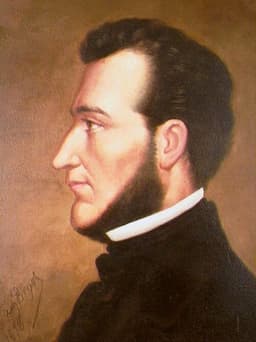
Francisco Morazan
General · Modern
58.0Total
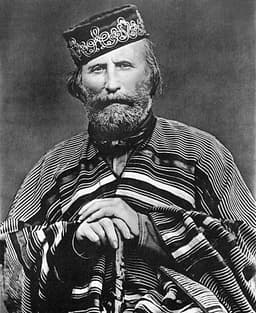
Giuseppe Garibaldi
General · Modern
55.0Total
Basic Information
Born
1792
1807
Died
1842
1882
Era
Modern
Modern
Nationality
Honduras
Italy
Occupation
General
General
Civilization
Western
Western
Score Comparison
Military (10%)
52.5
61.7
Political (20%)
60.0
54.7
Influence (20%)
62.0
40.0
Legacy (20%)
50.0
68.0
Leadership (15%)
68.0
54.2
Strategy (15%)
55.0
55.0
TOTAL
58.0
55.0
Francisco Morazan — Complete Timeline
1824 AD
Abolition of slavery in Central AmericaReform◆ Major
As a key leader in the liberal movement, Moraz
AbolitionSlaveryLiberal Reform
Impact: regionalprogressive
1827 AD
Battle of La TrinidadWar◆ Major
Morazán led a liberal army to victory against conservative forces at La Trinidad, Honduras. This battle was a key turning point in the Central American civil war, allowing Morazán to consolidate power and eventually become president of the federation.
BattleLiberal VictoryCivil War
Impact: regional
1830 AD
Presidency of the Federal Republic of Central AmericaPolitical Action
Morazán was elected president of the Federal Republic of Central America, a union of Guatemala, El Salvador, Honduras, Nicaragua, and Costa Rica. He pursued liberal reforms including separation of church and state, free trade, and land reform, facing opposition from conservatives.
Federal RepublicLiberal ReformsCentral America
Impact: regionalconstructive
1842 AD
Execution by firing squadPolitical Action
After a failed attempt to restore the Federal Republic, Moraz
ExecutionEnd of FederationLiberal Defeat
Impact: regionaltragic
Giuseppe Garibaldi — Complete Timeline
1849 AD
Defense of the Roman RepublicWar◆ Major
Garibaldi commanded the defense of the short-lived Roman Republic against French forces sent to restore papal rule. Despite heroic resistance, the republic fell, and Garibaldi led a retreat through central Italy.
Italian UnificationRoman RepublicDefense
Impact: regionaltragic
1860 AD
Expedition of the ThousandWar
Garibaldi led a volunteer force of about 1,000 men to conquer Sicily and Naples. His campaign overthrew the Bourbon monarchy and unified southern Italy with the Kingdom of Sardinia.
Italian UnificationExpeditionVolunteers
Impact: nationalconstructive
Battle of CalatafimiWar◆ Major
Garibaldi's Redshirts defeated a larger Bourbon army at Calatafimi in Sicily. The victory boosted morale and demonstrated the effectiveness of his volunteers, opening the way to Palermo.
Italian UnificationBattleSicily
Impact: regional
Battle of VolturnusWar◆ Major
Garibaldi's forces defeated the Neapolitan army at the Volturno River. The victory secured his conquest of Naples and forced King Francis II into exile, completing the unification of southern Italy.
Italian UnificationBattleNaples
Impact: regional
Cession of Sicily and Naples to Victor Emmanuel IIPolitical Action
After conquering southern Italy, Garibaldi voluntarily handed over his conquests to King Victor Emmanuel II of Sardinia. This act unified Italy under the monarchy and avoided civil war.
Italian UnificationCessionMonarchy
Impact: nationalconstructive
Expert Analysis
Francisco Morazan vs Giuseppe Garibaldi
### The Revolutionary and the Unifier: Two Paths to a Dream
On a dusty road in Sicily in 1860, Giuseppe Garibaldi led a ragged army of a thousand volunteers against a kingdom. His red shirts fluttered like a promise, and when he handed his hard-won conquests to a king, he did so not for personal power, but for the idea of Italy. A few decades earlier and a continent away, Francisco Morazán stood before a firing squad in Costa Rica, his dream of a united Central America shattered by the very forces he had tried to liberate. Both men were warriors of the liberal age, driven by visions of national unity and reform. Yet one became a founding father, the other a tragic footnote. Why did their fates diverge so sharply?
### Origins
Giuseppe Garibaldi was born in 1807 in Nice, a port city then part of the French Empire. His father was a fisherman, his mother a woman of deep piety. The sea and the struggle for liberty shaped him early. He joined the Young Italy movement of Giuseppe Mazzini, a revolutionary who dreamed of a unified republic. Exiled after a failed uprising, Garibaldi spent years in South America, fighting as a guerrilla leader in Brazil and Uruguay. There he honed his military skills—not in the rigid formations of Europe, but in the fluid, daring tactics of irregular warfare. He learned to inspire men with nothing but a cause and a red shirt.
Francisco Morazán was born in 1792 in Tegucigalpa, Honduras, into a land of colonial stagnation. His family was Creole, literate but not wealthy. The air of Central America was thick with the decay of Spanish rule and the promise of Enlightenment ideas. Morazán was a reader, a thinker, a man who believed that liberty, education, and law could transform a fractured region. He was not a sailor or a guerrilla; he was a lawyer turned soldier, a man who saw the battlefield as a stage for political change. His Central America was a patchwork of jealous states, each suspicious of the others, none willing to surrender sovereignty.
### Rise to Power
Garibaldi’s path to power was forged in fire. In 1849, he commanded the defense of the Roman Republic against French forces sent to restore the Pope. For weeks, his volunteers held the walls, fighting with a ferocity that stunned Europe. When the republic fell, Garibaldi did not surrender. He led a desperate retreat across central Italy, his pregnant wife Anita dying in his arms. The image of the man who would not bend became his legend. He fled again to exile, but his name was now a symbol.
Morazán’s rise was more conventional, yet no less dramatic. In 1827, at the Battle of La Trinidad in Honduras, he led a liberal army to victory against conservative forces. That battle was a turning point. He became the military champion of the liberal faction, which wanted to abolish slavery, reduce church power, and create a unified federal state. By 1830, he was elected president of the Federal Republic of Central America—a union of Guatemala, El Salvador, Honduras, Nicaragua, and Costa Rica. He was 38 years old. The dream seemed within reach.
### Leadership & Governance
As a leader, Garibaldi was a force of nature, not a bureaucrat. He led by example, sleeping on the ground, eating what his men ate, and fighting in the front lines. His strategy was audacity: attack before the enemy expects, move faster than they can react. The Expedition of the Thousand in 1860 was his masterpiece. With just over a thousand volunteers, he landed in Sicily, defeated a Bourbon army at the Battle of Calatafimi, and then swept across the island. The victory at Calatafimi was not just military; it was psychological. It proved that a determined few could topple a kingdom. By the time he reached Naples, the city fell without a fight. Garibaldi’s genius was not in grand tactics, but in the power of his presence. He was a walking revolution.
Morazán governed as he fought: with a pen and a sword. He abolished slavery in Central America in 1824, a reform that shook the region. He promoted education, secularized the state, and tried to build a modern economy. But his military strategy was less inspired. His score of 55.6 in strategy reflects a man who could win battles but not wars of consolidation. He repeatedly defeated conservative armies, but he could not hold the peace. The Federal Republic was constantly undermined by local caudillos and church-backed revolts. Morazán was a reformer in a land that did not want reform.
### Triumph & Tragedy
Garibaldi’s greatest moment was also his most selfless. After conquering Sicily and Naples in 1860, he could have declared himself king. Instead, he ceded all his conquests to King Victor Emmanuel II of Sardinia. He rode into Naples not as a dictator, but as a servant of unity. The gesture was stunning. It legitimized the Italian unification and made Garibaldi a national hero. His tragedy was that the unified Italy he helped create was a monarchy, not the republic he had dreamed of. He spent his later years in relative isolation, a man out of step with the compromise he had enabled.
Morazán’s tragedy was absolute. In 1839, the Federal Republic collapsed under the weight of civil war. He went into exile, but could not let go of his dream. In 1842, he returned, attempting to restore the union by invading Costa Rica. He was captured, and on September 15, 1842, he was executed by firing squad. His last words were reportedly: “I die with the satisfaction of having served my country, and I leave it to my children as a legacy of honor.” He was 50 years old. His dream died with him.
### Character & Destiny
Garibaldi was a romantic, a man of action who believed in the goodness of the people. He was also pragmatic: he knew when to fight and when to yield. His cession of power to Victor Emmanuel was a masterstroke of political wisdom, even if it cost him his republic. He understood that unity required sacrifice. Morazán was a rationalist, a man of the Enlightenment who believed that reason could conquer tradition. He was less flexible. He fought for a federal system that no one else wanted, and he could not adapt to the stubborn realities of local power. His character was noble, but his destiny was to be a martyr for a cause that was ahead of its time.
### Legacy
Garibaldi is remembered as the “Hero of Two Worlds,” a symbol of national liberation. His face adorns Italian currency, his name is on streets from Buenos Aires to New York. His legacy is the unified Italy he helped forge, a nation that endures. Morazán is remembered in Central America as a tragic idealist. His name is still invoked by those who dream of regional unity, but the reality is that the five nations he tried to unite remain separate, often at odds. His legacy is a monument to a dream that failed.
### Conclusion
Standing at the edge of history, one sees two men who shared a vision but met different fates. Garibaldi’s Italy had a king ready to receive his conquests; Morazán’s Central America had only jealous states. Garibaldi’s cause was rooted in a deep, ancient identity; Morazán’s was an artificial construction of liberal hope. The difference was not in courage or conviction, but in the soil in which their dreams were planted. One grew into a nation; the other withered into a memory. And so we remember them both: the victor who gave away his power, and the martyr who died for a union that never was.
Rankings
🥇
Francisco MorazanLeader
Mil: 52.5Pol: 60.0Inf: 62.0
58.0
🥈
Giuseppe Garibaldi
Mil: 61.7Pol: 54.7Inf: 40.0
55.0
+3.0 behind
How This Comparison Works
Algorithm
Each figure is scored on 6 dimensions (0—100 scale) based on structured historical data: Military (10%), Political (20%), Influence (20%), Legacy (20%), Leadership (15%), Strategy (15%). The weighted total produces the final ranking.
Data Sources
Scores are computed from structured sub-indicators in the database. Scale factors adjust for era (Ancient ×0.85, Modern ×1.0) and civilization size (Eastern ×1.05, Other ×0.80) to account for differences in population and military scale.
Maximum 3 Figures
Comparisons are limited to 2—3 figures to ensure readability and statistical meaningfulness.
Error Margins
±5 points per dimension — Sub-scores are derived from historical records with inherent uncertainty. Two figures within 5 points on a dimension should be considered roughly equivalent in that area.
Total Score Accuracy
±3 points overall — The weighted combination of 6 dimensions produces a total score with approximately ±3 points of uncertainty. Differences of less than 3 points are not statistically significant— the figures are effectively tied.
Known Limitations
- Historical records are incomplete and uneven across civilizations
- Figures from oral-tradition societies may be underrepresented
- Occupation labels can misclassify multi-role figures
- Scores measure capability and impact, not moral character
- Quantitative scoring is a comparison tool, not absolute truth
Capability Radar
Military (10%) — Battles & Warfare
Battles
55
65
Win Rate
60
70
Expansion
40
60
Political (20%) — Governance & Reform
Reform
70
40
Diplomacy
45
50
Economy
50
20
Influence (20%) — Cultural & Global Reach
Cultural
45
70
Global
35
65
Legacy (20%) — Historical Impact
Historical
50
75
Longevity
40
65
Leadership (15%) — Power & Stability
Tenure
55
30
Stability
30
25
Strategy (15%) — Tactics & Innovation
Strategy
55
60
Tactics
50
75
Reform
45
55
Similar Comparisons
Comments & Discussion
Tricolor Dreamer6/16/2026
Garibaldi was a tactical genius, but Morazán was the better strategist. One conquered a kingdom with a thousand volunteers, but the other almost held a continent together. Garibaldi had the advantage of a clear enemy and a unified cultural identity—Italy already existed in Dante's language. Morazán faced a fractured isthmus where colonial borders were still bleeding. That's not a failure of leadership, it's a difference in raw material to work with. Garibaldi was lucky with his raw ore; Morazán
鞋匠与主教6/16/2026
别把加里波第抬得太高。他不过是意大利统一大戏里的一个动作演员,真正的导演是加富尔和那位精明的皮埃蒙特国王。莫拉桑才是硬汉——他亲手起草了中美洲联邦宪法,捍卫政教分离,还废除了奴隶制。加里波第在南美打得那些游击战,说白了就是高级雇佣兵。莫拉桑在临死前还能对着行刑队喊出“上帝保佑你们”这种话,这才是真正的革命者风骨。
Historiographical Grifter6/16/2026
Let's stop romanticizing failure. Morazán lost because his vision was fundamentally flawed—he tried to impose liberal centralism on a region built on local oligarchies and indigenous resistance. Garibaldi succeeded because he adapted Italian unification to the realities of Piedmontese monarchy. Morazán's "federal dream" was a bureaucratic fantasy that ignored that Central American identity didn't exist beyond a few creole intellectuals. Garibaldi knew when to hand power to a king; Morazán died s
塞万提斯的子弹6/16/2026
地理位置决定命运。加里波第身边是大海,背后是阿尔卑斯山,他只需要一个方向——向北推进。莫拉桑面对的是中美洲的山脉、丛林和火山,每个峡谷都能藏一支叛军。加里波第的红衫军坐船就能补给;莫拉桑的军队要穿越洪都拉斯的热带雨林才能到达萨尔瓦多。这不是谁更英勇的问题,是地理把莫拉桑活活拖死了。把加里波第扔到危地马拉的山沟里试试,看他还能不能当英雄。
Causality's Critic6/16/2026
The comparison misses the crucial demographic factor. Garibaldi's Thousand were urban artisans and intellectuals from northern Italy—people already primed for nationalism. Morazán's forces were rural conscripts who barely spoke Spanish, with loyalties to local caudillos, not abstract federations. When Morazán needed backup against Carrera's indigenous uprising, his own soldiers deserted because they had more in common with the enemy than with their liberal general. Garibaldi never faced an enemy