Loading...
Francisco I. Madero vs Napoleon Bonaparte
Napoleon Bonaparte leads by 20.6 pts · 2 figures compared
…
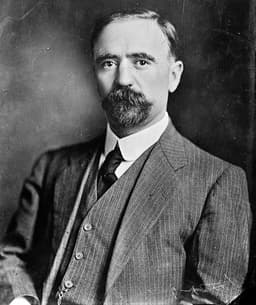
Francisco I. Madero
Revolutionary · Modern
50.3Total

Napoleon Bonaparte
General · Modern
70.9Total
Basic Information
Born
1873
1769
Died
1913
1821
Era
Modern
Modern
Nationality
Mexico
France
Occupation
Revolutionary
General
Civilization
Western
Western
Score Comparison
Military (10%)
50.0
94.0
Political (20%)
54.7
72.0
Influence (20%)
52.5
40.0
Legacy (20%)
47.5
80.0
Leadership (15%)
54.2
78.0
Strategy (15%)
39.6
90.0
TOTAL
50.3
70.9
Francisco I. Madero — Complete Timeline
1908 AD
Madero publishes 'The Presidential Succession in 1910'Cultural◆ Major
Francisco I. Madero published a book criticizing the long dictatorship of Porfirio D
Mexican RevolutionPolitical WritingDemocracy
Impact: nationalprogressive
1910 AD
Madero launches the Mexican RevolutionPolitical Action
After being fraudulently defeated in the 1910 presidential election, Madero issued the Plan of San Luis Potos
Mexican RevolutionArmed RebellionPlan of San Luis
Impact: national
1911 AD
Madero becomes President of MexicoPolitical Action◆ Major
Following the resignation of Porfirio D
PresidencyDemocracyReform
Impact: nationalconstructive
1913 AD
Madero's assassination during the Decena TrágicaPolitical Action
During a coup known as the Decena Tr
AssassinationCoupDecena Trágica
Impact: nationaltragic
Napoleon Bonaparte — Complete Timeline
1799 AD
Coup of 18 BrumaireOther◆ Major
Napoleon Bonaparte, with support from his brother Lucien and key political figures, overthrew the Directory in a bloodless coup. He established the Consulate with himself as First Consul, effectively becoming the ruler of France. This event ended the French Revolution's most unstable period.
French RevolutionCoupRise to Power
Impact: regional
1804 AD
Promulgation of the Napoleonic CodeOther◆ Major
Napoleon enacted the Civil Code of the French, known as the Napoleonic Code, a comprehensive set of laws that replaced the fragmented feudal legal systems. The code established legal equality, protected property rights, and secularized law. It became the basis for legal systems in many European and world countries.
Legal ReformNapoleonic CodeCivil Law
Impact: globalconstructive
1805 AD
Battle of AusterlitzWar◆ Major
Napoleon's Grande Arm
Napoleonic WarsBattleDecisive Victory
Impact: global
1812 AD
Invasion of RussiaWar◆ Major
Napoleon led the Grande Arm
Napoleonic WarsInvasionDisaster
Impact: globaldestructive
1815 AD
Battle of WaterlooWar◆ Major
Napoleon's French army was defeated by the combined forces of the Duke of Wellington's Anglo-Allied army and Gebhard Leberecht von Bl
Napoleonic WarsBattleFinal Defeat
Impact: globaldestructive
Expert Analysis
francisco-i-madero-vs-napoleon-bonaparte
# The General and the Dreamer
On a June morning in 1815, Napoleon Bonaparte stood on a muddy field near Waterloo, watching his Imperial Guard march into cannon fire. He had conquered Europe, crowned himself emperor, and rewritten the laws of a continent. Twenty years later, on a February night in 1913, Francisco I. Madero knelt in the darkness of a Mexico City prison, a pistol pressed to his temple. He had toppled a thirty-year dictatorship, won a democratic election, and then lost everything in ten days of bloodshed. One man died in exile on a remote Atlantic island; the other died in the capital he had tried to free. Both sought to reshape their worlds, but their paths diverged like rivers flowing from the same mountain. Why did Napoleon build an empire that still echoes, while Madero built a revolution that consumed him?
Origins
Napoleon was born in 1769 on Corsica, an island that had just passed from Italian to French control. His family was minor nobility, poor enough to know hunger but privileged enough to send him to military school. The France of his youth was a powder keg: the Old Regime crumbling, the Enlightenment fermenting, and the Revolution about to explode. He absorbed the era’s contradictions—aristocratic ambition and revolutionary fervor, classical order and romantic chaos. By contrast, Francisco Madero was born in 1873 into one of Mexico’s wealthiest landowning families. His childhood was one of greenhouses and pianos, not barracks and battlefields. He studied in France and the United States, returning to a Mexico ruled by Porfirio Díaz, a dictator who had modernized the country at the cost of its soul. Where Napoleon learned to command men through discipline and fear, Madero learned to persuade them through pamphlets and speeches.
Rise to Power
Napoleon’s ascent was a blaze of artillery and ambition. He was a young artillery officer during the French Revolution, and when royalist rebels threatened the government in 1795, he cleared the streets with a “whiff of grapeshot”—a cannon volley that killed dozens and launched his career. By 1796 he commanded the Army of Italy, winning battles that made him a national hero. In 1799, he staged a coup and became First Consul; by 1804, he crowned himself Emperor. Every step was calculated, every victory leveraged.
Madero’s rise was gentler but no less audacious. In 1908, Díaz gave an interview suggesting Mexico was ready for democracy. Madero seized the moment, publishing *The Presidential Succession in 1910*, a book that argued for free elections and became a national sensation. When Díaz rigged the 1910 vote, Madero issued the Plan of San Luis Potosí from exile in Texas, calling for armed revolt. The response was astonishing: peasants, miners, and ranchers rose up across northern Mexico. By May 1911, Díaz had fled, and Madero entered Mexico City as a liberator. He had never commanded an army; he had simply lit a fuse.
Leadership & Governance
Napoleon governed with the precision of a battlefield commander. He centralized the French state, created the Bank of France, and most famously, codified the Napoleonic Code—a legal system that enshrined equality before the law, property rights, and secular administration. He built roads, bridges, and schools. He also built a war machine. His military genius lay in speed, deception, and mass: he could move an army faster than any enemy, strike at the decisive point, and crush opposition with overwhelming force. At Austerlitz in 1805, he destroyed a combined Russian-Austrian army with a feigned retreat that remains a textbook maneuver.
Madero governed as a man who believed in the power of words. He lifted press censorship, encouraged unions, and promised land reform. But he lacked Napoleon’s ruthlessness. He refused to purge Díaz’s old officials, hoping to reconcile with the past. He hesitated to disarm the revolutionary armies that had brought him to power. His military score of 34 reflects a man who could inspire but not command; his political score of 53 shows a leader who understood democracy but not power. When rebellions broke out—first by Emiliano Zapata in the south, then by Pascual Orozco in the north—Madero relied on generals he barely controlled, including Victoriano Huerta, who would later betray him.
Triumph & Tragedy
Napoleon’s greatest moment came at Austerlitz, where he defeated two emperors in a single day. His worst came in Russia in 1812, when he marched 600,000 men into a frozen graveyard. The Grand Army disintegrated; only 100,000 returned. He was exiled to Elba in 1814, escaped in 1815, and met his final defeat at Waterloo—a battle he might have won if not for rain, mud, and the late arrival of Prussian reinforcements. His tragedy was hubris: he could not stop conquering.
Madero’s triumph was brief but real. He overthrew a dictator without a civil war, won a landslide election, and gave Mexico its first taste of democracy in three decades. His tragedy unfolded in February 1913, during the Decena Trágica—Ten Tragic Days. A coup led by conservative generals, backed by the U.S. ambassador, trapped Madero in the National Palace. He refused to flee, refused to arm the people, and trusted his own commander, Huerta. On February 22, he was forced to resign; that night, he was shot “while trying to escape.” He was 39 years old. His assassination plunged Mexico into a decade of civil war that would kill over a million people.
Character & Destiny
Napoleon was a creature of will. He slept little, worked constantly, and believed that “impossible is a word to be found only in the dictionary of fools.” His personality fused brilliance with arrogance; he could charm a room of diplomats and then order the execution of prisoners. He was a man of action who wrote love letters and a man of war who quoted Rousseau. His destiny was shaped by his refusal to accept limits—a strength that became his flaw.
Madero was a spiritualist who believed in séances and democracy. He was small, soft-spoken, and often naive. He once said, “I do not want to impose my will on anyone; I only want to persuade.” In a country of caudillos and warlords, persuasion was not enough. His character was noble but mismatched to his era. Napoleon bent history to his will; Madero tried to reason with it.
Legacy
Napoleon’s legacy is carved into the stone of modern Europe. The Napoleonic Code influenced legal systems from Argentina to Japan. He standardized weights, measures, and time. He spread nationalism across a continent of empires. His score of 82.4 reflects a man who changed the world, for better and worse. But he also left a trail of war, destruction, and a cult of personality that inspired dictators for centuries.
Madero’s legacy is more fragile but no less vital. He is remembered as the “Apostle of Democracy,” a martyr who proved that dictatorship could be challenged. His Plan of San Luis Potosí became a template for social revolution. His assassination radicalized Mexico, leading to the Constitution of 1917, which enshrined land reform, labor rights, and secular education. His score of 54.5 is modest, but his influence—72.6—shows that ideas can outlast armies. In Mexico, his face appears on the 1,000-peso note; in history, he is the man who lit a fire he could not control.
Conclusion
Napoleon and Madero lived in different worlds, but they faced the same question: how do you change a society? Napoleon answered with force, Madero with faith. One built an empire that collapsed under its own weight; the other planted a seed that took a century to grow. Napoleon’s story is a tragedy of ambition; Madero’s is a tragedy of innocence. Both remind us that history rewards not just the strong, but the ones who understand the currents they are trying to steer. In the end, the general conquered the world and lost himself; the dreamer lost himself and gave his people a world to win.
Rankings
🥇
Napoleon BonaparteLeader
Mil: 94.0Pol: 72.0Inf: 40.0
70.9
🥈
Francisco I. Madero
Mil: 50.0Pol: 54.7Inf: 52.5
50.3
+20.6 behind
How This Comparison Works
Algorithm
Each figure is scored on 6 dimensions (0—100 scale) based on structured historical data: Military (10%), Political (20%), Influence (20%), Legacy (20%), Leadership (15%), Strategy (15%). The weighted total produces the final ranking.
Data Sources
Scores are computed from structured sub-indicators in the database. Scale factors adjust for era (Ancient ×0.85, Modern ×1.0) and civilization size (Eastern ×1.05, Other ×0.80) to account for differences in population and military scale.
Maximum 3 Figures
Comparisons are limited to 2—3 figures to ensure readability and statistical meaningfulness.
Error Margins
±5 points per dimension — Sub-scores are derived from historical records with inherent uncertainty. Two figures within 5 points on a dimension should be considered roughly equivalent in that area.
Total Score Accuracy
±3 points overall — The weighted combination of 6 dimensions produces a total score with approximately ±3 points of uncertainty. Differences of less than 3 points are not statistically significant— the figures are effectively tied.
Known Limitations
- Historical records are incomplete and uneven across civilizations
- Figures from oral-tradition societies may be underrepresented
- Occupation labels can misclassify multi-role figures
- Scores measure capability and impact, not moral character
- Quantitative scoring is a comparison tool, not absolute truth
Capability Radar
Military (10%) — Battles & Warfare
Battles
25
95
Win Rate
30
90
Expansion
10
95
Political (20%) — Governance & Reform
Reform
60
95
Diplomacy
35
80
Economy
30
85
Influence (20%) — Cultural & Global Reach
Cultural
45
85
Global
40
90
Legacy (20%) — Historical Impact
Historical
55
95
Longevity
50
90
Leadership (15%) — Power & Stability
Tenure
40
85
Stability
15
70
Strategy (15%) — Tactics & Innovation
Strategy
25
95
Tactics
20
98
Reform
10
92
Similar Comparisons
Comments & Discussion
CorsicanOverlord6/17/2026
Napoleon’s legacy is carved in bronze and blood—his Civil Code still structures European law, while Madero’s Plan of San Luis Potosí barely outlived his corpse. Bonaparte conquered to impose order; Madero trusted that election alone could cleanse a slave state. Three million Mexican dead in the revolution he started, yet he lacked the stomach to command them. One built a legal framework; the other left a vacuum.
草鞋总统6/17/2026
拿破仑失败于滑铁卢,死在圣赫勒拿岛,马德罗则死在总统府外——但关键是:拿破仑统一了欧洲思想,马德罗连墨西哥都没能统一。他放了迪亚斯去巴黎,结果乌埃尔塔杀了他。没有土地改革,没有农民军队,只有一本招魂小册子。拿破仑至少知道,权力需要刺刀背书。马德罗是个慈善家,不是革命者。
DataSkeptic6/17/2026
Numbers don't lie: Napoleon commanded armies of 600,000; Madero mustered maybe 25,000 constitutionalists. France had 28 million people, Mexico only 15 million—and half were indigenous peasants who barely knew there was a president. Napoleon's wars cost 5 million lives; Madero's overthrow cost maybe a few thousand. Yet we call Napoleon a genius and Madero a martyr. Which loss of life was more justified for what was built?
竹林公子6/17/2026
两个人都被叛徒出卖——但拿破仑的元帅们是背叛皇帝,马德罗的却是背叛理想。费利克斯·迪亚斯和维多利亚诺·乌埃尔塔,这些人是他的"同行者"。拿破仑至少死得壮烈,读着普鲁塔克,想着凯撒。马德罗呢?跪在路灯杆下,像条狗。墨西哥失败的地方在于:我们总是选浪漫的理想主义者,而不是冷酷的建造者。
RevisionistWrath6/17/2026
Don't flatter Madero with comparison. Napoleon ended the Directory's chaos; Madero resurrected Díaz's playbook with a saintly face. He jailed his own general Zapata for enforcing land reform! Meanwhile Napoleon made his brother Joseph king of Spain and his sisters princesses—openly, without pretense. Madero's sin was not ambition but weakness. He wanted the presidency without the responsibility to break the old system. Honest tyranny beats hypocritical democracy every time.