Loading...
Francisco I. Madero vs Julius Caesar
Julius Caesar leads by 32.5 pts · 2 figures compared
…
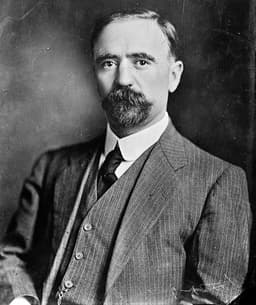
Francisco I. Madero
Revolutionary · Modern
50.3Total

Julius Caesar
General · Ancient
82.8Total
Basic Information
Born
1873
-100
Died
1913
-44
Era
Modern
Ancient
Nationality
Mexico
Roman Republic
Occupation
Revolutionary
General
Civilization
Western
Western
Score Comparison
Military (10%)
50.0
88.0
Political (20%)
54.7
78.0
Influence (20%)
52.5
85.0
Legacy (20%)
47.5
82.0
Leadership (15%)
54.2
80.0
Strategy (15%)
39.6
85.0
TOTAL
50.3
82.8
Francisco I. Madero — Complete Timeline
1908 AD
Madero publishes 'The Presidential Succession in 1910'Cultural◆ Major
Francisco I. Madero published a book criticizing the long dictatorship of Porfirio D
Mexican RevolutionPolitical WritingDemocracy
Impact: nationalprogressive
1910 AD
Madero launches the Mexican RevolutionPolitical Action
After being fraudulently defeated in the 1910 presidential election, Madero issued the Plan of San Luis Potos
Mexican RevolutionArmed RebellionPlan of San Luis
Impact: national
1911 AD
Madero becomes President of MexicoPolitical Action◆ Major
Following the resignation of Porfirio D
PresidencyDemocracyReform
Impact: nationalconstructive
1913 AD
Madero's assassination during the Decena TrágicaPolitical Action
During a coup known as the Decena Tr
AssassinationCoupDecena Trágica
Impact: nationaltragic
Julius Caesar — Complete Timeline
58 BC
Gallic WarsWar◆ Major
Caesar, as proconsul of Gaul, launched a series of campaigns that conquered all of Gaul (modern France, Belgium, and parts of Switzerland). He fought numerous battles, including against the Helvetii, the Belgae, and the Gallic chieftain Vercingetorix. The wars brought immense wealth and a loyal army to Caesar.
Gallic WarsConquestRoman Expansion
Impact: regional
49 BC
Crossing the RubiconPolitical Action◆ Major
Caesar led Legio XIII across the Rubicon River into Italy, defying the Roman Senate's order to disband his army. This act triggered a civil war against Pompey and the Optimates, ultimately leading to Caesar's dictatorship and the end of the Roman Republic.
Roman Civil WarEnd of RepublicPower Struggle
Impact: global
48 BC
Battle of PharsalusWar◆ Major
Caesar's outnumbered army defeated the larger forces of Pompey the Great at Pharsalus in Greece. Caesar's tactical use of a reserve line to counter Pompey's cavalry charge proved decisive. Pompey fled to Egypt, where he was assassinated, leaving Caesar as the undisputed master of the Roman world.
Roman Civil WarBattleDecisive Victory
Impact: regional
44 BC
Appointment as Dictator for LifePolitical Action◆ Major
The Roman Senate appointed Caesar dictator perpetuo (dictator for life), granting him unprecedented personal power. This move concentrated military, legislative, and judicial authority in one person, effectively ending the Roman Republic's traditional system of checks and balances and alarming many senators.
DictatorshipEnd of RepublicPower Consolidation
Impact: regionaldestructive
Assassination on the Ides of MarchPolitical Action◆ Major
A group of Roman senators, led by Marcus Junius Brutus and Gaius Cassius Longinus, stabbed Caesar to death at a meeting of the Senate in the Theatre of Pompey. The assassination was intended to restore the Republic, but instead triggered another civil war that led to the rise of the Roman Empire.
AssassinationRoman PoliticsEnd of Republic
Impact: globaldestructive
Expert Analysis
francisco-i-madero-vs-julius-caesar
# The Dictator and the Democrat: Two Paths to Power, Two Fates in History
On a cold January morning in 1913, Francisco I. Madero, the man who had inspired a revolution with the power of his words, was led from the National Palace in Mexico City. Within hours, he would be shot dead by men he had once trusted. Two thousand years earlier and half a world away, on the Ides of March in 44 BCE, Julius Caesar fell beneath the daggers of Roman senators in the Theatre of Pompey. Both men died violently, betrayed by those closest to them. But the roads that brought them to their final moments could not have been more different—and the worlds they left behind were transformed in ways neither could have imagined.
Origins
Julius Caesar was born into the patrician class of Rome in 100 BCE, but his family was neither wealthy nor politically dominant. The Roman Republic was already creaking under the weight of its own success—a system designed for a city-state struggling to govern an empire. Caesar’s uncle by marriage, Gaius Marius, had been a populist general who challenged the Senate’s authority, and the young Caesar absorbed these lessons early. He was a product of a world where military glory and political ambition were inseparable, where a man could rise by conquering foreign lands and winning the loyalty of legions.
Francisco I. Madero, born in 1873 in Coahuila, Mexico, came from a very different world—one of immense wealth and privilege. His family owned vast haciendas, cotton mills, and mines. Educated in Europe and the United States, Madero was a spiritualist, a vegetarian, and a believer in democracy as a moral force. Where Caesar grew up amid the clatter of swords and the rhetoric of the Forum, Madero grew up reading Rousseau and Henry George. The two men were separated by two millennia, but the deeper divide was one of worldview: Caesar saw power as something to be seized and wielded; Madero saw it as something to be earned and shared.
Rise to Power
Caesar’s ascent was a masterclass in strategic ambition. He served as a military tribune in Asia, was captured by pirates and famously told them they would be crucified (and was), and climbed the Roman political ladder—quaestor, aedile, praetor—each step funded by borrowed money and alliances with the powerful. In 60 BCE, he formed the First Triumvirate with Pompey and Crassus, a secret pact that controlled Rome. Then came Gaul. From 58 to 50 BCE, Caesar conquered a territory that doubled Rome’s holdings, writing his own commentaries to shape public opinion. When the Senate ordered him to disband his army, he crossed the Rubicon River in 49 BCE, igniting a civil war. He was now master of Rome.
Madero’s rise was driven not by military conquest but by moral conviction. In 1908, he published *The Presidential Succession in 1910*, a book that dared to criticize Porfirio Díaz, the dictator who had ruled Mexico for thirty years. The book was a sensation, and Madero became the unlikely leader of an opposition movement. When Díaz rigged the 1910 election, Madero issued the Plan of San Luis Potosí from exile in Texas, calling for armed rebellion. The Mexican Revolution exploded across the country. Unlike Caesar, who led his own legions, Madero was a civilian who relied on revolutionary fighters like Pancho Villa and Emiliano Zapata. Within a year, Díaz resigned, and Madero was elected president in a landslide in 1911.
Leadership & Governance
Caesar ruled as a dictator in all but name, first as consul with extraordinary powers, then as dictator for life. He reformed the calendar (the Julian calendar we still use), granted citizenship to provincials, and launched massive public works. He also centralized power ruthlessly, packing the Senate with his supporters and minting coins with his own image. His military genius was beyond question—he won battles against overwhelming odds, from the siege of Alesia to the Battle of Pharsalus. But his political wisdom was flawed: he underestimated the hatred of the old aristocracy.
Madero governed as a democrat, perhaps naively so. He refused to purge Díaz loyalists from the government, believing that democracy could heal old wounds. He allowed free press and labor unions, but he failed to deliver the land reform that Zapata demanded. His military inexperience was glaring—he relied on generals who would later betray him. Where Caesar consolidated power, Madero tried to share it. Where Caesar was a realist, Madero was an idealist. And in revolutionary Mexico, idealism without force was a death sentence.
Triumph & Tragedy
Caesar’s greatest triumph was the conquest of Gaul, a feat of strategy, logistics, and propaganda that made him a legend. His greatest tragedy was his own success: he became so powerful that his survival threatened the Republic itself. The Ides of March was not just an assassination; it was the desperate act of men who believed they were saving Rome. Instead, they plunged it into another civil war, from which it emerged as an empire.
Madero’s triumph was the peaceful transition of power after Díaz’s resignation—a rare achievement in Mexican history. His tragedy was the Decena Trágica, the "Ten Tragic Days" of February 1913, when a coup led by General Victoriano Huerta, with the backing of the U.S. ambassador, overthrew his government. Madero was forced to resign and then murdered, a martyr to his own faith in legal process.
Character & Destiny
Caesar was audacious, calculating, and unapologetically ambitious. "Veni, vidi, vici"—"I came, I saw, I conquered"—was not just a boast but a philosophy. He believed that history belonged to those who seized it. Madero was earnest, spiritual, and trusting. He famously said, "It is better to die standing than to live on your knees." But he could not see that his enemies were not convinced by his arguments—they were convinced only by power.
Their fates were shaped by their characters. Caesar’s arrogance blinded him to the conspiracy forming around him. Madero’s goodness blinded him to the ruthlessness of his opponents. Both were destroyed by the very qualities that had lifted them.
Legacy
Caesar’s legacy is the Roman Empire—the political structure that dominated the West for five centuries. His name became a title: "Caesar" meant emperor in Rome, Kaiser in Germany, Tsar in Russia. He is remembered as a military genius, a reformer, and a cautionary tale about the dangers of concentrated power.
Madero’s legacy is the Mexican Revolution, which continued for years after his death and ultimately transformed Mexico. He is remembered as the "Apostle of Democracy," the man who dared to challenge a dictator. But his failure to control the forces he unleashed also serves as a lesson: that democracy requires not just ideals, but the strength to defend them.
Conclusion
Standing at the edge of history, these two men could not have been more different—the patrician general who built an empire and the wealthy idealist who sparked a revolution. Yet both were consumed by the same fire: the desire to change the world. Caesar succeeded, and it killed him. Madero failed, and it killed him too. Perhaps the lesson is not that power corrupts, but that in times of upheaval, the moderate are devoured by the extreme. The dictator and the democrat both fell, but the worlds they left behind were forever shaped by their dreams and their flaws.
Rankings
🥇
Julius CaesarLeader
Mil: 88.0Pol: 78.0Inf: 85.0
82.8
🥈
Francisco I. Madero
Mil: 50.0Pol: 54.7Inf: 52.5
50.3
+32.5 behind
How This Comparison Works
Algorithm
Each figure is scored on 6 dimensions (0—100 scale) based on structured historical data: Military (10%), Political (20%), Influence (20%), Legacy (20%), Leadership (15%), Strategy (15%). The weighted total produces the final ranking.
Data Sources
Scores are computed from structured sub-indicators in the database. Scale factors adjust for era (Ancient ×0.85, Modern ×1.0) and civilization size (Eastern ×1.05, Other ×0.80) to account for differences in population and military scale.
Maximum 3 Figures
Comparisons are limited to 2—3 figures to ensure readability and statistical meaningfulness.
Error Margins
±5 points per dimension — Sub-scores are derived from historical records with inherent uncertainty. Two figures within 5 points on a dimension should be considered roughly equivalent in that area.
Total Score Accuracy
±3 points overall — The weighted combination of 6 dimensions produces a total score with approximately ±3 points of uncertainty. Differences of less than 3 points are not statistically significant— the figures are effectively tied.
Known Limitations
- Historical records are incomplete and uneven across civilizations
- Figures from oral-tradition societies may be underrepresented
- Occupation labels can misclassify multi-role figures
- Scores measure capability and impact, not moral character
- Quantitative scoring is a comparison tool, not absolute truth
Capability Radar
Military (10%) — Battles & Warfare
Battles
25
95
Win Rate
30
92
Expansion
10
97
Political (20%) — Governance & Reform
Reform
60
90
Diplomacy
35
85
Economy
30
82
Influence (20%) — Cultural & Global Reach
Cultural
45
88
Global
40
94
Legacy (20%) — Historical Impact
Historical
55
95
Longevity
50
96
Leadership (15%) — Power & Stability
Tenure
40
75
Stability
15
60
Strategy (15%) — Tactics & Innovation
Strategy
25
94
Tactics
20
96
Reform
10
88
Similar Comparisons
Comments & Discussion
Historian3996/17/2026
Caesar and Madero both died betrayed, but Caesar understood that power flows from violence. He crossed the Rubicon knowing civil war was the price. Madero, the naïve spiritualist, believed democracy could bloom overnight in a land of latifundios and peons. His fatal mistake? Disbanding the revolutionary forces that put him in power. Caesar would never have made that error—a general commands or he dies. Trusting your assassins is a luxury history never rewards. Rome knew this; Mexico learned it t