Loading...
Francisco I. Madero vs Jose Rizal
Francisco I. Madero leads by 3.6 pts · 2 figures compared
…
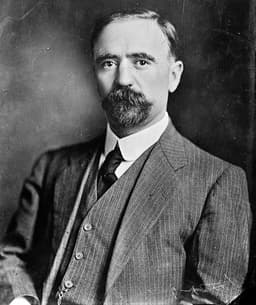
Francisco I. Madero
Revolutionary · Modern
50.3Total
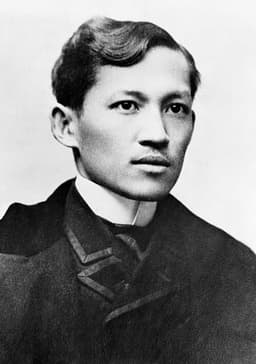
Jose Rizal
Revolutionary · Modern
46.7Total
Basic Information
Born
1873
1861
Died
1913
1896
Era
Modern
Modern
Nationality
Mexico
Philippines
Occupation
Revolutionary
Revolutionary
Civilization
Western
Eastern
Score Comparison
Military (10%)
50.0
11.9
Political (20%)
54.7
33.6
Influence (20%)
52.5
62.0
Legacy (20%)
47.5
58.0
Leadership (15%)
54.2
40.4
Strategy (15%)
39.6
44.5
TOTAL
50.3
46.7
Francisco I. Madero — Complete Timeline
1908 AD
Madero publishes 'The Presidential Succession in 1910'Cultural◆ Major
Francisco I. Madero published a book criticizing the long dictatorship of Porfirio D
Mexican RevolutionPolitical WritingDemocracy
Impact: nationalprogressive
1910 AD
Madero launches the Mexican RevolutionPolitical Action
After being fraudulently defeated in the 1910 presidential election, Madero issued the Plan of San Luis Potos
Mexican RevolutionArmed RebellionPlan of San Luis
Impact: national
1911 AD
Madero becomes President of MexicoPolitical Action◆ Major
Following the resignation of Porfirio D
PresidencyDemocracyReform
Impact: nationalconstructive
1913 AD
Madero's assassination during the Decena TrágicaPolitical Action
During a coup known as the Decena Tr
AssassinationCoupDecena Trágica
Impact: nationaltragic
Jose Rizal — Complete Timeline
1887 AD
Publication of Noli Me TangereCultural
Rizal published his first novel, Noli Me Tangere, in Berlin. The book exposed the corruption and abuses of Spanish colonial rule and the Catholic Church in the Philippines, sparking nationalist sentiment among Filipinos.
LiteratureNationalismColonial Critique
Impact: nationalprogressive
1891 AD
Publication of El FilibusterismoCultural◆ Major
Rizal published his second novel, El Filibusterismo, in Ghent, Belgium. A darker sequel to Noli Me Tangere, it advocated for revolution and further criticized Spanish oppression, intensifying calls for reform and independence.
LiteratureRevolutionColonial Critique
Impact: nationalprogressive
1892 AD
Exile to DapitanPolitical Action◆ Major
Rizal was exiled by Spanish authorities to Dapitan in Mindanao for his alleged involvement in revolutionary activities. During his four-year exile, he practiced medicine, taught, and conducted scientific research, but remained under surveillance.
ExileSpanish ColonialismDapitan
Impact: nationaltragic
1896 AD
Execution of José RizalPolitical Action
Rizal was executed by firing squad in Manila on charges of sedition and rebellion, following a trial by Spanish military court. His martyrdom galvanized the Philippine Revolution, making him a national hero and symbol of resistance.
ExecutionMartyrdomPhilippine Revolution
Impact: nationaltragic
Expert Analysis
Jose Rizal vs Francisco I. Madero
# The Pen and the Ballot: Two Martyrs of Revolution
On a gray December morning in 1896, José Rizal stood before a firing squad in Manila, his back to the executioners, refusing to be shot as a traitor. Half a world away and seventeen years later, Francisco Madero was dragged from the National Palace in Mexico City, murdered by men he had trusted. Both were revolutionaries who never commanded armies. Both were idealists who believed that words and elections could topple dictators. And both were executed at thirty-five, their deaths igniting the very fires they had hoped to contain.
Origins
Rizal grew up in the Philippines as a child of privilege, the seventh of eleven children in a wealthy mestizo family. His mother taught him to read at three, and by eight he was writing poetry in Tagalog and Spanish. The world he inherited was one of rigid colonial hierarchy—Spanish friars controlled education, land, and conscience. Rizal’s genius was nurtured in this crucible of contradiction: he studied in Madrid, Paris, and Heidelberg, absorbing European liberalism while his homeland languished under imperial rule. He became a ophthalmologist, a sculptor, a linguist fluent in twenty-two languages—a Renaissance man born into an age of empire.
Madero’s world was different. He was the son of one of Mexico’s wealthiest landowning families, raised on a vast hacienda in Coahuila. His grandfather had been governor; his father owned cotton mills and mines. Madero studied in France and the United States, returning to manage the family estates. But unlike Rizal, who confronted Spanish colonialism, Madero faced a homegrown dictator: Porfirio Díaz, who had ruled Mexico for thirty-four years through rigged elections and brutal repression. Madero was small, teetotaling, and vegetarian—a spiritualist who believed in séances and democracy with equal fervor.
Rise to Power
Rizal’s path was that of the writer as revolutionary. In 1887, he published *Noli Me Tangere* in Berlin, a novel that peeled back the polite veneer of colonial society to reveal rape, corruption, and clerical hypocrisy. The book circulated secretly in the Philippines, passed from hand to hand, read aloud in homes. Four years later, *El Filibusterismo* went further, depicting a failed revolution and advocating violent change. Rizal never called for arms—he believed in education and reform—but the Spanish authorities saw him as a dangerous subversive. In 1892, they exiled him to Dapitan, a remote outpost in Mindanao, where he practiced medicine, taught children, and built a water system.
Madero took a different route. In 1908, he published *The Presidential Succession in 1910*, a dry political treatise that called for free elections and an end to Díaz’s dictatorship. The book made him a national figure. When Díaz rigged the 1910 election, Madero did something Rizal never attempted: he crossed into Texas, issued the Plan of San Luis Potosí, and called for armed rebellion. The call was answered not by intellectuals but by peasants, miners, and bandits—men like Pancho Villa and Emiliano Zapata, who saw in Madero a chance to reclaim their land and dignity.
Leadership & Governance
Rizal never ruled. His leadership was moral and intellectual, not political. He founded the Liga Filipina, a reform society, but it dissolved within days of his arrest. His power lay in his pen: *Noli Me Tangere* and *El Filibusterismo* became the foundational texts of Filipino nationalism, read by generations who would fight the Spanish and later the Americans. Rizal’s strategy was gradualist—he believed that exposure of injustice would lead to reform, that reason would triumph over brute force.
Madero became president. When Díaz fled to Paris in 1911, Madero was elected in a landslide, the first democratic leader Mexico had seen in decades. His presidency was a disaster. He tried to govern through compromise, keeping Díaz’s old bureaucracy in place while promising land reform to peasants and justice to workers. He satisfied no one. The old regime plotted; the revolutionaries grew impatient. Zapata, betrayed by broken promises, rose in rebellion. Madero sent the army against him—the same army that would soon turn on Madero himself.
Triumph & Tragedy
Rizal’s greatest moment came in his final hours. On the eve of his execution, he wrote “Mi Último Adiós,” a poem smuggled out in an alcohol lamp. He walked to the execution ground in Luneta Park, refused a blindfold, and turned to face his killers. The Spanish officer ordered him shot in the back as a traitor; Rizal insisted on facing front. The soldiers hesitated, then fired. His martyrdom electrified the Philippines. Within months, the Katipunan, a secret revolutionary society, launched an armed uprising. Rizal became what he had never been in life: the soul of a revolution.
Madero’s tragedy was more sordid. In February 1913, a military coup erupted in Mexico City. For ten days—the *Decena Trágica*—the city was shelled. Madero, delusional to the end, trusted General Victoriano Huerta, who had promised loyalty. Huerta arrested him, forced his resignation, and had him shot while being transferred to prison. Madero died not facing his executioners but in the back of a car, a bullet in his head. His body was dumped on a street. The democracy he had sacrificed everything for died with him.
Character & Destiny
Rizal was an ascetic intellectual who believed that ideas were stronger than armies. He refused to lead an armed rebellion, even when urged by friends, because he believed violence would destroy the very society he hoped to build. This was both his strength and his limitation: he inspired others to fight but could not fight himself. His death was the logical conclusion of his life—a martyr’s end that he had foreseen and accepted.
Madero was a spiritualist democrat who believed that elections could solve anything. He saw politics as a moral crusade, not a struggle for power. He trusted his enemies, ignored his allies, and governed as if goodwill could replace guns. His naivety was breathtaking: he appointed Díaz’s nephew to his cabinet, disarmed his own supporters, and refused to believe that men could be evil. His assassination was the inevitable result of his innocence.
Legacy
Rizal became the national hero of the Philippines, his face on currency, his books required reading, his execution date a national holiday. But his legacy is complex: he is revered as a peaceful reformer, yet his martyrdom inspired a violent revolution. His novels are studied as masterpieces of anti-colonial literature, but their radical message has been domesticated by the state. He remains, as the historian John Schumacher wrote, “the first Filipino”—the man who gave his people a national consciousness.
Madero is remembered as the “Apostle of Democracy,” but his reputation is more contested. Mexican history textbooks praise him for ending the Díaz dictatorship, but criticize him for failing to understand the social forces he unleashed. The revolution he started outlived him, killing a million Mexicans before it ended. His assassination opened the door to Huerta’s tyranny, then to Villa and Zapata, then to Carranza and Obregón. Madero lit a match in a powder keg and was consumed by the blast.
Conclusion
Standing in Luneta Park in Manila, gazing at Rizal’s bronze statue, you can feel the weight of his sacrifice. Drive through Mexico City’s Chapultepec Park, past the Monument to the Revolution, and you wonder what Madero would think of the country he helped create. Both men believed that the pen was mightier than the sword. Both were proven right—and wrong. Their writings survive, their ideas endure, but their deaths remind us that revolutions consume their prophets. Rizal’s final poem spoke of “a faith, a hope, a tear.” Madero’s last words were simply, “I die for my country.” Both were true. Both were not enough.
Rankings
🥇
Francisco I. MaderoLeader
Mil: 50.0Pol: 54.7Inf: 52.5
50.3
🥈
Jose Rizal
Mil: 11.9Pol: 33.6Inf: 62.0
46.7
+3.6 behind
How This Comparison Works
Algorithm
Each figure is scored on 6 dimensions (0—100 scale) based on structured historical data: Military (10%), Political (20%), Influence (20%), Legacy (20%), Leadership (15%), Strategy (15%). The weighted total produces the final ranking.
Data Sources
Scores are computed from structured sub-indicators in the database. Scale factors adjust for era (Ancient ×0.85, Modern ×1.0) and civilization size (Eastern ×1.05, Other ×0.80) to account for differences in population and military scale.
Maximum 3 Figures
Comparisons are limited to 2—3 figures to ensure readability and statistical meaningfulness.
Error Margins
±5 points per dimension — Sub-scores are derived from historical records with inherent uncertainty. Two figures within 5 points on a dimension should be considered roughly equivalent in that area.
Total Score Accuracy
±3 points overall — The weighted combination of 6 dimensions produces a total score with approximately ±3 points of uncertainty. Differences of less than 3 points are not statistically significant— the figures are effectively tied.
Known Limitations
- Historical records are incomplete and uneven across civilizations
- Figures from oral-tradition societies may be underrepresented
- Occupation labels can misclassify multi-role figures
- Scores measure capability and impact, not moral character
- Quantitative scoring is a comparison tool, not absolute truth
Capability Radar
Military (10%) — Battles & Warfare
Battles
25
14
Win Rate
30
21
Expansion
10
22
Political (20%) — Governance & Reform
Reform
60
15
Diplomacy
35
20
Economy
30
5
Influence (20%) — Cultural & Global Reach
Cultural
45
75
Global
40
65
Legacy (20%) — Historical Impact
Historical
55
80
Longevity
50
75
Leadership (15%) — Power & Stability
Tenure
40
0
Stability
15
5
Strategy (15%) — Tactics & Innovation
Strategy
25
27
Tactics
20
28
Reform
10
28
Similar Comparisons
Comments & Discussion
古籍剑客6/16/2026
比较两人?太不公平了。黎刹用笔杆子拆了殖民神权大厦,马德罗拿着选票箱跟波菲里奥·迪亚斯谈判——一个独裁者坐了三十年龙椅。黎刹在达皮丹流放时还建学校开诊所,马德罗掌权后连土地法案都推不动。一个是捅破天的先知,一个是想修水管的老好人。
江湖墨客6/16/2026
黎刹最后还是选择了枪毙而非流放,马德罗也是明知兵变风险还相信韦尔塔。两个人都死在自己最信任的东西上——黎刹信西班牙会改革,马德罗信军队会忠诚。悲剧不在于他们被背叛,而在于他们始终没看懂权力游戏。跟赤壁战前劝曹操别打水仗一样天真:理想主义在暴力面前就是纸糊的盾牌。
Historian2136/16/2026
Rizal was the real revolutionary genius here: he wrote Noli Me Tangere and El Filibusterismo, two novels that exposed Spanish colonial brutality so effectively that the authorities banned them. Madero? He wrote La Sucesión Presidencial, a dry pamphlet on electoral reform. One ignited a national awakening; the other hoped to politely ask a dictator to step down. Rizal understood that true revolution begins in the mind, not the ballot box.
SharpWatcher946/16/2026
Let's look at the numbers: Rizal's execution triggered the Philippine Revolution within weeks, with over 500,000 casualties by 1902. Madero's murder caused the Mexican Revolution, which killed over 1 million people and took a decade. Both martyrdoms accelerated violence instead of containing it. The romantic "pen vs ballot" framing ignores the blood arithmetic: both men's deaths escalated conflicts by 200-300%. Pacifism in revolutions is a myth; martyrs are just delayed explosions.
Historian8226/16/2026
You revisionists miss the key context: Rizal explicitly condemned revolution in his final manifesto, writing "I have no part in those dark conspiracies." He was executed for sparking a fire he disowned. Madero actually led the anti-reelection movement and won power. One was a martyr to his own ambivalence, the other a martyr to his naivety. Rizal died with his contradictions intact; Madero died because he believed the devil could keep promises. Both were brilliant—and fatally outmatched by their