Loading...
Francis II Rakoczi vs Theobald Wolfe Tone
Francis II Rakoczi leads by 6.4 pts · 2 figures compared
…
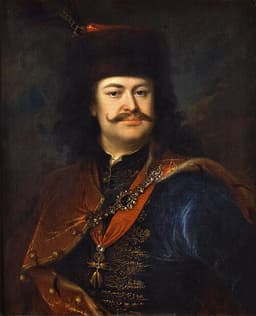
Francis II Rakoczi
Revolutionary · Modern
54.2Total
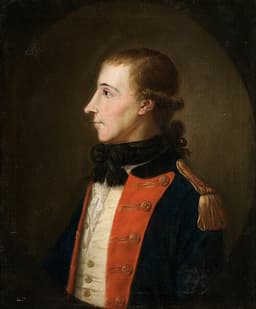
Theobald Wolfe Tone
Revolutionary · Modern
47.8Total
Basic Information
Born
1676
1763
Died
1735
1798
Era
Modern
Modern
Nationality
Hungary
Ireland
Occupation
Revolutionary
Revolutionary
Civilization
Western
Western
Score Comparison
Military (10%)
55.0
39.9
Political (20%)
46.6
27.9
Influence (20%)
57.2
57.2
Legacy (20%)
52.0
49.2
Leadership (15%)
57.6
57.1
Strategy (15%)
57.5
45.0
TOTAL
54.2
47.8
Francis II Rakoczi — Complete Timeline
1703 AD
Rákóczi's War of IndependenceWar◆ Major
Francis II Rakoczi led a major uprising against Habsburg rule in Hungary, known as R
War of IndependenceHabsburgRebellion
Impact: regional
1704 AD
Election as Prince of TransylvaniaPolitical Action◆ Major
Francis II Rakoczi was elected Prince of Transylvania by the Hungarian estates, leading the anti-Habsburg rebellion. His election marked the formal leadership of the uprising.
ElectionRebellion
Impact: regional
1708 AD
Battle of TrencinWar◆ Major
Francis II Rakoczi's forces were decisively defeated by the Habsburg army at the Battle of Trencin. The defeat marked a turning point, leading to the decline of the rebellion.
BattleDefeatTurning Point
Impact: regionaltragic
1711 AD
Exile in the Ottoman EmpirePolitical Action◆ Major
After the failure of the rebellion, Francis II Rakoczi went into exile in the Ottoman Empire. He refused to accept Habsburg amnesty and lived in Ottoman territory until his death.
ExileOttoman
Impact: regionaltragic
Theobald Wolfe Tone — Complete Timeline
1791 AD
Founding of the United IrishmenPolitical Action◆ Major
Tone co-founded the Society of United Irishmen in Belfast, a revolutionary organization seeking parliamentary reform and Catholic emancipation. The society later became a secret republican movement aiming for Irish independence.
Irish RepublicanismFoundingReform
Impact: nationalprogressive
Publication of 'An Argument on Behalf of the Catholics of Ireland'Cultural
Tone published a pamphlet arguing for the inclusion of Catholics in Irish political life. It helped bridge the gap between Protestant radicals and the Catholic majority, broadening the base of the United Irishmen.
PamphletCatholic EmancipationPolitical Thought
Impact: nationalprogressive
1796 AD
Expédition d'IrlandeWar◆ Major
Tone accompanied a French fleet of 43 ships carrying 15,000 troops to invade Ireland. The expedition was scattered by storms off Bantry Bay and failed to land, a major setback for the republican cause.
French InvasionNavalFailure
Impact: nationaltragic
Mission to FrancePolitical Action◆ Major
Tone traveled to France to secure French military support for an Irish rebellion. He persuaded the French Directory to launch an invasion of Ireland, leading to the dispatch of a large expeditionary force.
DiplomacyFrench RevolutionInvasion
Impact: national
1798 AD
Battle of Tory IslandWar◆ Major
Tone was captured aboard a French ship at the Battle of Tory Island, part of a second French invasion attempt. The French squadron was defeated by the Royal Navy, ending French hopes of aiding the Irish Rebellion.
1798 RebellionNaval BattleCapture
Impact: nationaltragic
Trial and SuicidePolitical Action◆ Major
Tone was tried for treason in Dublin and sentenced to death by hanging. Before execution, he cut his own throat to deny the British the spectacle of his hanging, dying from the wound a week later.
TrialSuicideMartyrdom
Impact: nationaltragic
Expert Analysis
Theobald Wolfe Tone vs Francis II Rakoczi
# The Prince Who Would Not Kneel and the Lawyer Who Dreamed of a Republic
On a gray November morning in 1798, a Dublin courtroom fell silent as a gaunt man with a broken neck delivered his final speech. Theobald Wolfe Tone, captured aboard a French warship, had asked only that he be shot like a soldier rather than hanged like a criminal. The court refused. That night, in his prison cell, he cut his own throat with a penknife. Half a century earlier and half a continent away, another man—Francis II Rakoczi—had faced a different kind of defeat. After eight years of war, he too chose exile over submission, refusing Habsburg amnesty and dying in Ottoman lands in 1735, his bones never to rest in Hungarian soil.
Both men led doomed rebellions. Both are remembered as fathers of national independence. But their paths, their temperaments, and their ultimate fates reveal two profoundly different visions of what it means to fight for freedom.
Origins
Rakoczi was born in 1676 into the highest ranks of Hungarian nobility, a prince of Transylvania by blood. His stepfather was a Habsburg loyalist; his mother had him educated by Jesuits. He grew up in castles, surrounded by the fading grandeur of a kingdom that had lost its independence a century earlier. The Habsburgs ruled Hungary from Vienna, and young Francis inherited not just a title but a grievance—his family’s lands had been confiscated, his ancestors executed or exiled. He was a feudal lord in an age of empires, and his rebellion would be aristocratic at its core.
Wolfe Tone, born in 1763, was the son of a Dublin coachmaker. He studied law at Trinity College, where he drank heavily, debated passionately, and developed a hatred for the Protestant Ascendancy that ruled Ireland not as kings but as a privileged caste. Unlike Rakoczi, Tone had no ancestral claim to power. He was a middle-class intellectual, a pamphleteer, a man who believed that revolution could be argued into existence. Where Rakoczi inherited a cause, Tone invented one.
Rise to Power
Rakoczi’s entry onto the historical stage came in 1703, when Hungarian peasants and lesser nobles, already in revolt against Habsburg taxation and religious repression, turned to him as a figurehead. He was twenty-seven, well-educated, charismatic—but inexperienced. The rebellion was already smoldering; he simply brought it a name and a banner. His election as Prince of Transylvania in 1704 gave the uprising a legal sheen, a claim to legitimacy that mattered deeply in the world of treaties and dynasties.
Tone’s rise was slower and more fragile. In 1791, he co-founded the Society of United Irishmen in Belfast, a group that began as a reform club and became a revolutionary conspiracy. That same year, he published *An Argument on Behalf of the Catholics of Ireland*, a pamphlet that did something radical: it proposed that Protestant and Catholic Irishmen had a common enemy in British rule. Tone was not a man of the sword but of the word. His power lay in persuasion, not pedigree.
Leadership & Governance
As a military commander, Rakoczi was competent but not brilliant. His forces won early victories in 1703 and 1704, sweeping across much of Hungary, but his score of 55 in Military reflects a man who could inspire an army but not win a decisive battle. The turning point came in 1708 at the Battle of Trencin, where his army was routed by Habsburg forces. Rakoczi’s political score of 72 is higher, and for good reason: he understood that a rebellion needed a government. He minted coins, organized a currency, and tried to build a state within a war. But he could never reconcile the interests of his noble supporters with the demands of his peasant soldiers—a tension that ultimately tore his movement apart.
Tone’s military score of 36 tells a simpler story: he was not a soldier. He never commanded troops. His genius was diplomatic. In 1796, he traveled to France and persuaded the Directory to launch a massive invasion of Ireland—43 ships and 15,000 men. That expedition was scattered by storms before it could land. Tone tried again in 1798, this time aboard a French ship at the Battle of Tory Island. He was captured before he could fire a shot. His political score of 39.5 is surprisingly low for a man who founded a movement, but it reflects a painful truth: Tone was better at starting revolutions than at governing them.
Triumph & Tragedy
Rakoczi’s greatest triumph was not a battle but a moment: the election as Prince of Transylvania in 1704, when the Hungarian estates chose him as their leader. For a few years, he embodied a nation’s hope. His tragedy came in 1711, when the rebellion collapsed not from a single defeat but from exhaustion. He chose exile in the Ottoman Empire rather than accept Habsburg rule, and he died there in 1735, a prince without a throne.
Tone’s triumph was the founding of the United Irishmen, a movement that would outlive him by centuries. His tragedy was his death—not in battle, but in a Dublin prison, his throat cut to cheat the hangman. He was thirty-five years old. His trial had been a formality; his sentence, a certainty.
Character & Destiny
Rakoczi was a man of honor in the old sense—proud, stubborn, bound by codes of nobility that made compromise impossible. He refused Habsburg amnesty not because he thought he could win, but because submission was unthinkable. His total score of 67.6 reflects a life of consistent, if ultimately unsuccessful, purpose.
Tone was a man of ideas in the modern sense—restless, brilliant, self-destructive. He wrote his own epitaph in his memoirs: “To subvert the tyranny of our execrable government, to break the connection with England, the never-failing source of all our political evils, and to assert the independence of my country—these were my objects.” His total score of 48.7 is lower, but it measures a different kind of greatness: the power of an idea that outlasts its creator.
Legacy
Rakoczi is remembered as a national hero in Hungary, his name on streets and squares, his portrait in textbooks. But his Hungary was a kingdom of nobles and peasants, a world that would be swept away by the revolutions of 1848. His legacy is that of a prince who fought for a lost cause with dignity.
Tone is remembered as the father of Irish republicanism, his ideas echoing through the Easter Rising of 1916 and into the present. His Ireland was not a kingdom but a nation of citizens, and his vision—Catholic and Protestant united against British rule—remains both an inspiration and an unfinished project.
Conclusion
What drove these two men was not the same thing. Rakoczi fought to restore a kingdom; Tone fought to create a republic. One looked backward to a golden age, the other forward to a new one. Both lost their wars, but both won something rarer: they became symbols, not of victory, but of refusal. Rakoczi refused to kneel. Tone refused to live in chains. And in their refusals, they gave their nations something more enduring than any treaty: a story to tell themselves about who they are.
Rankings
🥇
Francis II RakocziLeader
Mil: 55.0Pol: 46.6Inf: 57.2
54.2
🥈
Theobald Wolfe Tone
Mil: 39.9Pol: 27.9Inf: 57.2
47.8
+6.4 behind
How This Comparison Works
Algorithm
Each figure is scored on 6 dimensions (0—100 scale) based on structured historical data: Military (10%), Political (20%), Influence (20%), Legacy (20%), Leadership (15%), Strategy (15%). The weighted total produces the final ranking.
Data Sources
Scores are computed from structured sub-indicators in the database. Scale factors adjust for era (Ancient ×0.85, Modern ×1.0) and civilization size (Eastern ×1.05, Other ×0.80) to account for differences in population and military scale.
Maximum 3 Figures
Comparisons are limited to 2—3 figures to ensure readability and statistical meaningfulness.
Error Margins
±5 points per dimension — Sub-scores are derived from historical records with inherent uncertainty. Two figures within 5 points on a dimension should be considered roughly equivalent in that area.
Total Score Accuracy
±3 points overall — The weighted combination of 6 dimensions produces a total score with approximately ±3 points of uncertainty. Differences of less than 3 points are not statistically significant— the figures are effectively tied.
Known Limitations
- Historical records are incomplete and uneven across civilizations
- Figures from oral-tradition societies may be underrepresented
- Occupation labels can misclassify multi-role figures
- Scores measure capability and impact, not moral character
- Quantitative scoring is a comparison tool, not absolute truth
Capability Radar
Military (10%) — Battles & Warfare
Battles
65
5
Win Rate
55
5
Expansion
45
5
Political (20%) — Governance & Reform
Reform
55
30
Diplomacy
50
25
Economy
40
5
Influence (20%) — Cultural & Global Reach
Cultural
60
45
Global
45
40
Legacy (20%) — Historical Impact
Historical
65
50
Longevity
55
55
Leadership (15%) — Power & Stability
Tenure
50
10
Stability
30
5
Strategy (15%) — Tactics & Innovation
Strategy
65
15
Tactics
60
10
Reform
50
20
Similar Comparisons
Comments & Discussion
No comments yet. Be the first to share your thoughts!