Loading...
Francis II Rakoczi vs Miguel Hidalgo
Francis II Rakoczi leads by 7.2 pts · 2 figures compared
…
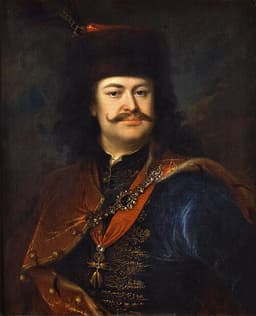
Francis II Rakoczi
Revolutionary · Modern
54.2Total
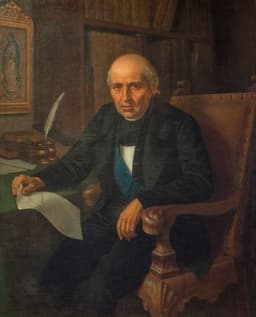
Miguel Hidalgo
Revolutionary · Modern
47.0Total
Basic Information
Born
1676
1753
Died
1735
1811
Era
Modern
Modern
Nationality
Hungary
Mexico
Occupation
Revolutionary
Revolutionary
Civilization
Western
Western
Score Comparison
Military (10%)
55.0
50.0
Political (20%)
46.6
36.5
Influence (20%)
57.2
55.0
Legacy (20%)
52.0
52.0
Leadership (15%)
57.6
39.0
Strategy (15%)
57.5
39.6
TOTAL
54.2
47.0
Francis II Rakoczi — Complete Timeline
1703 AD
Rákóczi's War of IndependenceWar◆ Major
Francis II Rakoczi led a major uprising against Habsburg rule in Hungary, known as R
War of IndependenceHabsburgRebellion
Impact: regional
1704 AD
Election as Prince of TransylvaniaPolitical Action◆ Major
Francis II Rakoczi was elected Prince of Transylvania by the Hungarian estates, leading the anti-Habsburg rebellion. His election marked the formal leadership of the uprising.
ElectionRebellion
Impact: regional
1708 AD
Battle of TrencinWar◆ Major
Francis II Rakoczi's forces were decisively defeated by the Habsburg army at the Battle of Trencin. The defeat marked a turning point, leading to the decline of the rebellion.
BattleDefeatTurning Point
Impact: regionaltragic
1711 AD
Exile in the Ottoman EmpirePolitical Action◆ Major
After the failure of the rebellion, Francis II Rakoczi went into exile in the Ottoman Empire. He refused to accept Habsburg amnesty and lived in Ottoman territory until his death.
ExileOttoman
Impact: regionaltragic
Miguel Hidalgo — Complete Timeline
1810 AD
Captured Guanajuato and massacred SpaniardsWar◆ Major
Hidalgo's army of 80,000 captured the city of Guanajuato on September 28, 1810. After taking the Alh
BattleMassacreViolence
Impact: regionaldestructive
Issued the Grito de DoloresPolitical Action
On September 16, 1810, Father Miguel Hidalgo rang the church bell in Dolores and called for rebellion against Spanish colonial rule. His speech, known as the Grito de Dolores, urged Mexicans to rise up against the Spanish and marked the beginning of the Mexican War of Independence.
IndependenceRebellionGrito de Dolores
Impact: nationalconstructive
1811 AD
Defeated at the Battle of Calderón BridgeWar◆ Major
Hidalgo's poorly trained army was decisively defeated by a smaller Spanish royalist force at the Battle of Calder
DefeatSpanish RoyalistsTurning Point
Impact: regionaltragic
Executed by Spanish authoritiesPolitical Action◆ Major
Hidalgo was captured in Acatita de Baj
ExecutionMartyrdomIndependence Movement
Impact: nationaltragic
Expert Analysis
Miguel Hidalgo vs Francis II Rakoczi
# The Bell and the Crown: Two Revolutions, Two Fates
On a September morning in 1810, a gray-haired priest stepped onto the porch of a small church in Dolores, Mexico, and rang its bell. The sound that echoed across the dusty plaza was not a call to mass, but to revolution. Thousands of indigenous villagers and mestizo peasants gathered, and Father Miguel Hidalgo—a man who had spent most of his life in quiet study—uttered a cry that would reverberate through Mexican history: "Long live Our Lady of Guadalupe! Death to bad government!"
Half a world away and a century earlier, another man had stood before a different crowd. Francis II Rákóczi, a prince born into one of Hungary's wealthiest families, had raised his sword against the Habsburg Empire. When he spoke, it was not to peasants but to nobles, and his call was not for death but for a restoration of ancient liberties. Both men sought independence from foreign rule. Both ignited wars that would define their nations. But their paths—and their endings—could not have been more different.
Origins
Miguel Hidalgo was born in 1753 into a criollo family in Guanajuato, a region rich in silver and Spanish exploitation. His father managed a hacienda, and young Miguel was sent to study at the College of San Nicolás in Valladolid, where he excelled in philosophy and theology. He became a priest, but a restless one. Hidalgo read banned Enlightenment texts—Rousseau, Voltaire, the French encyclopedists—and questioned the divine right of Spanish rule. He was a man of the mind, not of the battlefield. His parish in Dolores became a meeting place for intellectuals and discontents, where he plotted a revolution that would be as much about social justice as about independence.
Francis II Rákóczi, born in 1676, was the product of a different kind of rebellion. His family had long resisted Habsburg domination; his stepfather, Imre Thököly, had led an earlier revolt. Rákóczi inherited not just wealth but a legacy of defiance. Raised by Jesuits, educated in Prague and Vienna, he was a prince by birth and a soldier by training. When he took up arms in 1703, he did so not as a radical priest but as a feudal lord calling on his Magyar nobles to reclaim their ancient rights. His war was a war of aristocrats, not of peasants.
Rise to Power
Hidalgo's rise was sudden and desperate. By 1810, conspiracy had spread across New Spain, but the Spanish authorities discovered the plot in Querétaro. Hidalgo had no choice: on September 16, he rang the bell of Dolores and declared rebellion. In weeks, his ragged army swelled to 80,000—indigenous laborers, mestizo farmers, and escaped slaves, armed with machetes, slings, and stolen muskets. On September 28, they stormed the Alhóndiga de Granaditas in Guanajuato, a fortified granary where Spanish civilians had taken refuge. The massacre that followed was horrifying: men, women, and children were butchered. Hidalgo had become a revolutionary, but he had also unleashed a fury he could not control.
Rákóczi's path was more deliberate. The War of Spanish Succession had left the Habsburgs distracted, and Rákóczi saw his moment. In 1703, he issued a proclamation from the town of Brezno, calling on the Hungarian nobility to rise. Within months, his forces controlled much of Upper Hungary. In 1704, the Hungarian estates elected him Prince of Transylvania, giving him a political legitimacy Hidalgo never achieved. Rákóczi was not just a rebel leader; he was a prince with a crown.
Leadership & Governance
Hidalgo was a visionary, not an administrator. He abolished slavery, decreed the return of land to indigenous communities, and called for an end to colonial tribute. But he was a disastrous military commander. His army, however vast, was untrained and undisciplined. At the Battle of Calderón Bridge in January 1811, a Spanish force of 6,000 routed his 100,000 men. Hidalgo fled north, hoping to reach the United States for aid. He was captured in Acatita de Baján on March 21, 1811, tried by the Inquisition, defrocked, and executed by firing squad. His head was displayed in Guanajuato as a warning.
Rákóczi was a better soldier and a more skilled politician. He built a functioning state in rebel-held Hungary, minting coins, printing newspapers, and negotiating with foreign powers—though his overtures to Louis XIV of France and Peter the Great of Russia came to nothing. Yet his war also faltered. At the Battle of Trencin in 1708, his army was crushed by Habsburg forces. Unlike Hidalgo, Rákóczi survived. He retreated to Poland, then to France, and finally to the Ottoman Empire, where he lived in exile until his death in 1735. He never accepted Habsburg rule, but he never returned to Hungary.
Triumph & Tragedy
Hidalgo's greatest moment was his first: the Grito de Dolores, which became the founding cry of Mexican independence. His tragedy was that he did not live to see it. The war he started would drag on for a decade, but his name became a symbol. Every September 16, the President of Mexico reenacts his cry from the National Palace.
Rákóczi's triumph was the rebellion itself—a war that lasted eight years and forced the Habsburgs to negotiate. His tragedy was the exile that followed. He died in Tekirdağ, on the Sea of Marmara, far from the Carpathian Mountains he had fought to liberate.
Character & Destiny
Hidalgo was a man of ideas, not of armies. He believed that justice could be born from righteous anger, but he lacked the cold calculation needed to turn fury into victory. His compassion—abolishing slavery, protecting indigenous rights—was also his weakness: he could not bring himself to be the ruthless commander that war demanded.
Rákóczi was a prince who believed in honor. He fought not for a new world but for an old one—the liberties of the Hungarian nobility. His pride refused compromise, even in defeat. He chose exile over submission.
Legacy
Hidalgo is the father of Mexico. His face appears on the 1,000-peso note; his name adorns streets, schools, and towns. His Grito is a national holiday. But his legacy is complicated: he unleashed a social revolution that Mexico would spend two centuries trying to contain.
Rákóczi is Hungary's national hero, but a tragic one. His statue stands in Budapest; his memoirs are read in schools. Yet his war failed, and Hungary remained under Habsburg rule for two more centuries. He is remembered not as a victor but as a martyr to liberty.
Conclusion
Both men rang a bell. Hidalgo's bell called the poor to arms; Rákóczi's called the nobles to war. One died in front of a firing squad, the other in a foreign bed. One became a saint of revolution, the other a prince of memory. Their differences reveal a deeper truth: revolutions are shaped not just by their leaders, but by the people who follow them. Hidalgo's army was a flood; Rákóczi's was a fortress. Both were overwhelmed, but the flood carved a channel that still runs through Mexican history, while the fortress crumbled into legend. The bell of Dolores still rings every year. The crown of Transylvania remains only a memory.
Rankings
🥇
Francis II RakocziLeader
Mil: 55.0Pol: 46.6Inf: 57.2
54.2
🥈
Miguel Hidalgo
Mil: 50.0Pol: 36.5Inf: 55.0
47.0
+7.2 behind
How This Comparison Works
Algorithm
Each figure is scored on 6 dimensions (0—100 scale) based on structured historical data: Military (10%), Political (20%), Influence (20%), Legacy (20%), Leadership (15%), Strategy (15%). The weighted total produces the final ranking.
Data Sources
Scores are computed from structured sub-indicators in the database. Scale factors adjust for era (Ancient ×0.85, Modern ×1.0) and civilization size (Eastern ×1.05, Other ×0.80) to account for differences in population and military scale.
Maximum 3 Figures
Comparisons are limited to 2—3 figures to ensure readability and statistical meaningfulness.
Error Margins
±5 points per dimension — Sub-scores are derived from historical records with inherent uncertainty. Two figures within 5 points on a dimension should be considered roughly equivalent in that area.
Total Score Accuracy
±3 points overall — The weighted combination of 6 dimensions produces a total score with approximately ±3 points of uncertainty. Differences of less than 3 points are not statistically significant— the figures are effectively tied.
Known Limitations
- Historical records are incomplete and uneven across civilizations
- Figures from oral-tradition societies may be underrepresented
- Occupation labels can misclassify multi-role figures
- Scores measure capability and impact, not moral character
- Quantitative scoring is a comparison tool, not absolute truth
Capability Radar
Military (10%) — Battles & Warfare
Battles
65
30
Win Rate
55
25
Expansion
45
20
Political (20%) — Governance & Reform
Reform
55
60
Diplomacy
50
30
Economy
40
20
Influence (20%) — Cultural & Global Reach
Cultural
60
70
Global
45
60
Legacy (20%) — Historical Impact
Historical
65
75
Longevity
55
70
Leadership (15%) — Power & Stability
Tenure
50
15
Stability
30
10
Strategy (15%) — Tactics & Innovation
Strategy
65
25
Tactics
60
20
Reform
50
10
Similar Comparisons
Comments & Discussion
PriestPatriot6/16/2026
Hidalgo didn't just ring a bell; he detonated a social bomb. Unlike Rákóczi's noble revolt, Hidalgo's *Grito* unleashed indigenous fury against 300 years of Spanish caste tyranny. The priest's army of 80,000 shattered the racial hierarchy, but that's exactly why creole elites abandoned him. Rákóczi's war was a gentleman's rebellion—Hidalgo's was a class war, and he paid for it at the firing squad.
血旗骑士6/16/2026
拉科齐输在太贵族,伊达尔戈输在太草根。前者1711年的萨特马尔和约好歹保留了匈牙利贵族特权,后者1811年的蒙特德拉斯克鲁塞斯战役后就被自己人背叛。历史讽刺:拉科齐的庄园完好无损,伊达尔戈的瓜纳华托粮仓却被保皇党血洗。革命要是没群众,就是贵族游戏;要有群众,就成暴民狂欢。