Loading...
Francis II Rakoczi vs Qin Shi Huang
Qin Shi Huang leads by 31.0 pts · 2 figures compared
…
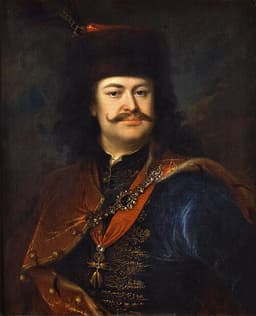
Francis II Rakoczi
Revolutionary · Modern
54.2Total
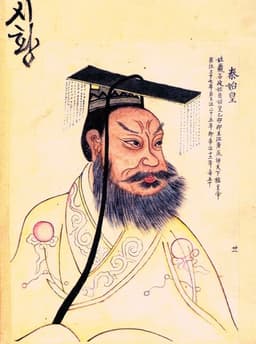
Qin Shi Huang
Emperor · Ancient
85.2Total
Basic Information
Born
1676
-259
Died
1735
-210
Era
Modern
Ancient
Nationality
Hungary
China
Occupation
Revolutionary
Emperor
Civilization
Western
Eastern
Score Comparison
Military (10%)
55.0
80.0
Political (20%)
46.6
90.0
Influence (20%)
57.2
85.0
Legacy (20%)
52.0
90.0
Leadership (15%)
57.6
78.0
Strategy (15%)
57.5
82.0
TOTAL
54.2
85.2
Francis II Rakoczi — Complete Timeline
1703 AD
Rákóczi's War of IndependenceWar◆ Major
Francis II Rakoczi led a major uprising against Habsburg rule in Hungary, known as R
War of IndependenceHabsburgRebellion
Impact: regional
1704 AD
Election as Prince of TransylvaniaPolitical Action◆ Major
Francis II Rakoczi was elected Prince of Transylvania by the Hungarian estates, leading the anti-Habsburg rebellion. His election marked the formal leadership of the uprising.
ElectionRebellion
Impact: regional
1708 AD
Battle of TrencinWar◆ Major
Francis II Rakoczi's forces were decisively defeated by the Habsburg army at the Battle of Trencin. The defeat marked a turning point, leading to the decline of the rebellion.
BattleDefeatTurning Point
Impact: regionaltragic
1711 AD
Exile in the Ottoman EmpirePolitical Action◆ Major
After the failure of the rebellion, Francis II Rakoczi went into exile in the Ottoman Empire. He refused to accept Habsburg amnesty and lived in Ottoman territory until his death.
ExileOttoman
Impact: regionaltragic
Qin Shi Huang — Complete Timeline
246 BC
Construction of the Mausoleum and Terracotta ArmyOther◆ Major
Qin Shi Huang commissioned a vast mausoleum complex near Xi'an, guarded by thousands of life-sized terracotta soldiers, horses, and chariots. The project employed hundreds of thousands of workers and reflected his obsession with immortality and imperial power.
Impact: global
230 BC
Conquest of the Six Warring StatesWar
From 230 to 221 BCE, Ying Zheng led the Qin state in a series of campaigns that conquered the Han, Zhao, Wei, Chu, Yan, and Qi states. This unified China under a single ruler for the first time, ending the Warring States period.
Impact: global
221 BC
Standardization of Writing, Currency, and MeasurementsReform◆ Major
Qin Shi Huang ordered the standardization of Chinese script, currency, and weights and measures across the unified empire. This facilitated administration, trade, and cultural integration, laying a foundation for future dynasties.
Impact: globalconstructive
Proclamation of the Qin DynastyPolitical Action
After conquering the last independent state, Ying Zheng declared himself Shi Huangdi (First Emperor), founding the Qin Dynasty. He adopted a new title to signify his supreme authority and initiated centralized imperial rule.
Impact: global
214 BC
Initiation of the Great Wall ConstructionOther◆ Major
Qin Shi Huang ordered the connection and extension of existing northern fortifications to create a unified defensive wall against nomadic Xiongnu raids. This project involved massive conscripted labor and became the precursor to the later Great Wall.
Impact: regional
213 BC
Burning of Books and Burying of ScholarsPolitical Action◆ Major
On the advice of Li Si, Qin Shi Huang ordered the burning of historical records and philosophical texts not aligned with Legalist doctrine. He also had 460 Confucian scholars buried alive to suppress dissent and consolidate ideological control.
Impact: nationaldestructive
Expert Analysis
francis-ii-rakoczi-vs-qin-shi-huang
# The Emperor and the Exile
In the winter of 210 BC, a procession of chariots and horses wound its way eastward across the dusty plains of northern China. Inside a sealed carriage, the body of Qin Shi Huang, the First Emperor of a unified China, lay decomposing under a load of rotten fish meant to mask the smell. Half a world away and nearly two millennia later, in 1735, an aging Hungarian prince named Francis II Rákóczi drew his last breath in the Ottoman port city of Tekirdağ, far from the Carpathian Basin he had once hoped to liberate. One man had conquered an entire civilization; the other had tried and failed to free a nation. Their ends were equally lonely, but their paths could not have diverged more sharply. What makes one man a founder of empires and another a heroic failure? The answer lies not only in their times but in the very nature of their ambitions.
Origins
Ying Zheng was born in 259 BC, a prince of the western state of Qin, one of seven warring kingdoms tearing ancient China apart. His childhood was forged in violence: his father was a hostage in a neighboring state, and the boy grew up in a court rife with intrigue. He ascended the throne at thirteen, a puppet for regents and eunuchs. The world he inherited was a brutal chessboard of competing states, each vying for supremacy. This was an age that demanded ruthlessness, and the Qin school of Legalist philosophy provided it—a doctrine that valued order above all, enforced by law and punishment.
Francis II Rákóczi, born in 1676, came from a different kind of chaos. His family was among the wealthiest in Hungary, a kingdom then under Habsburg rule. His father had led a failed conspiracy against the Austrians, and young Francis was raised by his stepmother in exile. He grew up in castles and courts, reading history and dreaming of restoring Hungarian sovereignty. His Hungary was not a collection of warring states but a subjugated kingdom, its nobility resentful of Vienna’s centralizing policies. Rákóczi’s era was one of rising national consciousness and religious conflict—the Counter-Reformation pitting Catholic Habsburgs against Protestant Hungarian nobles. While Qin Shi Huang’s China was a world of states fighting to become an empire, Rákóczi’s Europe was an empire struggling to contain its nations.
Rise to Power
Qin Shi Huang’s rise was methodical and merciless. At twenty-two, he purged his court of rivals, exiling his own mother’s lover and executing his regent. Then he turned to war. From 230 to 221 BC, his armies swept through the six rival states—Han, Zhao, Wei, Chu, Yan, and Qi—in a series of campaigns that blended overwhelming force with cunning diplomacy. He did not merely defeat them; he annihilated their ruling houses, absorbed their armies, and erased their borders. In 221 BC, he declared himself Shi Huangdi, the First Emperor. He was thirty-eight years old, and all of China lay at his feet.
Rákóczi’s path was far more uncertain. In 1703, a peasant uprising against Habsburg oppression offered him a chance. He was no natural soldier—his military score of 55 reflects a commander more passionate than skilled—but he was a symbol. The Hungarian nobility elected him Prince of Transylvania in 1704, and for a few years, his rebellion swelled. He forged alliances with Louis XIV of France and even entertained Ottoman support. But his war was a patchwork of local grievances, noble ambitions, and foreign promises. Unlike Qin Shi Huang, who commanded a unified state machine, Rákóczi led a coalition of fractious magnates and unpaid soldiers. His turning point came not in a single conquest but in a single battle: the Battle of Trencin in 1708, where his forces were crushed by the Habsburg army. After that, the rebellion bled away.
Leadership & Governance
Here the two men could not be more different. Qin Shi Huang governed as a revolutionary. He standardized writing, currency, and measurements across his new empire—an act of administrative genius that would bind China for two millennia. He ordered the construction of roads and canals, and he began linking northern fortifications into what would become the Great Wall. His rule was absolute, enforced by Legalist terror: he burned books that contradicted his ideology and buried scholars alive. His political score of 88 reflects a man who understood that to create something new, he had to destroy the old. His reforms were not merely ambitious; they were total.
Rákóczi, by contrast, governed as a constitutionalist. He issued a proclamation in 1704 promising religious tolerance and noble privileges, hoping to unite Hungarians against Vienna. He tried to build a modern state, minting coins and organizing a standing army. But his political score of 72 reveals a leader constrained by the very traditions he sought to defend. He could not centralize power because his supporters—the Hungarian nobility—feared centralization as much as they feared the Habsburgs. Where Qin Shi Huang crushed dissent, Rákóczi negotiated with it. Where the First Emperor built a bureaucracy, the Hungarian prince relied on feudal loyalty. One created an empire; the other led a rebellion.
Triumph & Tragedy
Qin Shi Huang’s greatest moment was his proclamation of the Qin Dynasty in 221 BC, a triumph of will and warfare that reshaped the world. But his tragedy was equally vast. Obsessed with immortality, he consumed mercury-laced elixirs prescribed by court alchemists, which likely hastened his death at forty-nine. His empire, built on terror and his own iron will, collapsed within four years of his passing. The Terracotta Army he commissioned to guard his tomb stands as a monument not only to his power but to his paranoia—a king who could not bear to be alone, even in death.
Rákóczi’s triumph was more fleeting. For a few years, he was the hope of Hungary. His tragedy came at Trencin in 1708, and in the long exile that followed. He refused the Habsburg offer of amnesty in 1711, choosing instead to live in Poland, France, and finally the Ottoman Empire. He died in 1735, still writing manifestos, still dreaming of a free Hungary that would not see independence for another two centuries. His military score of 55 and strategy of 56 tell the story: he was outmatched not only by the Habsburgs but by the limits of his own era.
Character & Destiny
Qin Shi Huang was a man of absolute will. He believed that the world could be remade by decree, that history itself could be rewritten. His personality was forged in the crucible of the Warring States period, where mercy was weakness and strength was survival. He was paranoid, brilliant, and ruthless—a combination that allowed him to unify China but also doomed his dynasty.
Rákóczi was a man of principle. He could have surrendered, accepted a pardon, and lived comfortably. Instead, he chose exile. His character was shaped by the romantic ideals of the Hungarian nobility—honor, liberty, and resistance to tyranny. But those ideals could not defeat the Habsburg war machine. Where Qin Shi Huang adapted his philosophy to power, Rákóczi sacrificed power to his philosophy. One conquered reality; the other was conquered by it.
Legacy
Qin Shi Huang’s legacy is immeasurable. He gave China its name, its written script, and its first unified government. The Great Wall, the Terracotta Army, the standardization of weights and measures—these endure. His influence score of 82 and legacy of 85 reflect a man whose impact outlasted his dynasty. He is remembered as both a unifier and a tyrant, a figure of awe and horror.
Rákóczi’s legacy is smaller but no less profound. In Hungary, he is a national hero, his portrait on coins and his name on streets. His war of independence failed, but it planted a seed of national identity that would flower in 1848 and again in 1918. His influence score of 73 and legacy of 69 capture a man who lost his war but won a place in his people’s memory.
Conclusion
Standing at the edge of history, these two men ask us a question: What is success? Qin Shi Huang built an empire that collapsed, yet his ideas survived. Rákóczi fought a war he lost, yet his dream endured. The First Emperor’s tomb, with its silent army of clay soldiers, stares out at eternity. The Hungarian prince’s grave in Tekirdağ, far from the Carpathians, is a quieter monument to a different kind of ambition. One man sought to conquer the world; the other sought to free a piece of it. Both failed in their own ways, and both succeeded beyond their wildest dreams. Perhaps that is the only lesson history ever teaches: that the measure of a life is not in victory or defeat, but in what it leaves behind.
Rankings
🥇
Qin Shi HuangLeader
Mil: 80.0Pol: 90.0Inf: 85.0
85.2
🥈
Francis II Rakoczi
Mil: 55.0Pol: 46.6Inf: 57.2
54.2
+31.0 behind
How This Comparison Works
Algorithm
Each figure is scored on 6 dimensions (0—100 scale) based on structured historical data: Military (10%), Political (20%), Influence (20%), Legacy (20%), Leadership (15%), Strategy (15%). The weighted total produces the final ranking.
Data Sources
Scores are computed from structured sub-indicators in the database. Scale factors adjust for era (Ancient ×0.85, Modern ×1.0) and civilization size (Eastern ×1.05, Other ×0.80) to account for differences in population and military scale.
Maximum 3 Figures
Comparisons are limited to 2—3 figures to ensure readability and statistical meaningfulness.
Error Margins
±5 points per dimension — Sub-scores are derived from historical records with inherent uncertainty. Two figures within 5 points on a dimension should be considered roughly equivalent in that area.
Total Score Accuracy
±3 points overall — The weighted combination of 6 dimensions produces a total score with approximately ±3 points of uncertainty. Differences of less than 3 points are not statistically significant— the figures are effectively tied.
Known Limitations
- Historical records are incomplete and uneven across civilizations
- Figures from oral-tradition societies may be underrepresented
- Occupation labels can misclassify multi-role figures
- Scores measure capability and impact, not moral character
- Quantitative scoring is a comparison tool, not absolute truth
Capability Radar
Military (10%) — Battles & Warfare
Battles
65
85
Win Rate
55
90
Expansion
45
90
Political (20%) — Governance & Reform
Reform
55
95
Diplomacy
50
75
Economy
40
90
Influence (20%) — Cultural & Global Reach
Cultural
60
95
Global
45
85
Legacy (20%) — Historical Impact
Historical
65
95
Longevity
55
95
Leadership (15%) — Power & Stability
Tenure
50
70
Stability
30
65
Strategy (15%) — Tactics & Innovation
Strategy
65
85
Tactics
60
80
Reform
50
95
Similar Comparisons
Comments & Discussion
史海探照灯6/17/2026
拿一个统一六国的铁血皇帝跟一个流亡土耳其的失败贵族对比,本身就离谱。秦始皇焚书坑儒、严刑峻法,但人家确实终结了五百年割据;拉科齐打八年游击战,签个索特马尔和约就认输跑了。真要较真,他连同时代的瑞典查理十二都不如,至少人家打到挪威去了。历史看结果,不是看谁哭得更惨。求同情请去教堂。
墨迹未干6/17/2026
你们都被民族主义叙事骗了。拉科齐所谓的“自由斗争”,不过是匈牙利大贵族跟哈布斯堡王室分赃不均的狗咬狗。他身边那帮人,哪个不是想多捞几个庄园?反观秦始皇,车同轨书同文,真正打破血缘贵族垄断,建立官僚帝国。一个向前看,一个向后缩。别拿“失败英雄”这种伪概念来碰瓷帝王,级别差得远。
野史清道夫6/17/2026
最讽刺的是,拉科齐在土耳其流亡时还写了回忆录,幻想自己是抗击“暴政”的英雄。可他那个时代,奥斯曼帝国正蚕食匈牙利,他投靠敌人算什么爱国者?秦始皇再暴,至少没把匈奴引进函谷关。拉科齐的悲剧在于,他的“自由”是给别人当傀儡的自由,而秦始皇的“专制”是让华夏第一次有了统一的可能。高下立判。
Historian7396/17/2026
Military perspective is brutal but honest: Qin Shi Huang conquered with iron and blood, building an empire that endured for millennia. Rákóczi? A valiant but doomed romantic who couldn't break Habsburg power. The First Emperor unified warring states through strategic brilliance and terrifying efficiency; the Hungarian prince rallied nobles with rhetoric but lacked the ruthless logistics and centralized force to win. One built institutions that lasted; the other left only legends.
Historian8276/17/2026
The numbers don't lie: Qin Shi Huang mobilized hundreds of thousands for the Great Wall and his mausoleum, controlling a population of 20 million+ with standardized weights, measures, and script. Rákóczi's 1703-1711 uprising? 50,000 Kuruc fighters, mostly peasants, against a professional Habsburg army of 80,000. Scale difference is staggering. The Hungarian rebellion was a provincial hiccup; Qin's unification was a demographic and administrative revolution. Stop romanticizing failure.