Loading...
Bhagat Singh vs Francis II Rakoczi
Francis II Rakoczi leads by 7.4 pts · 2 figures compared
…
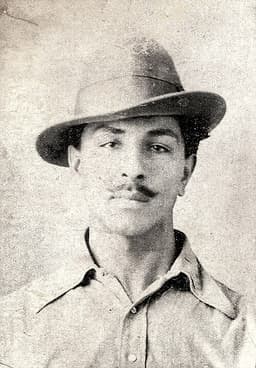
Bhagat Singh
Revolutionary · Modern
46.8Total
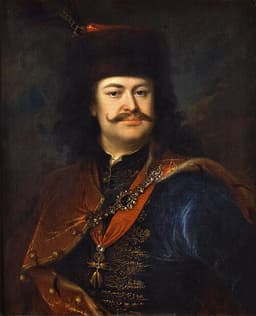
Francis II Rakoczi
Revolutionary · Modern
54.2Total
Basic Information
Born
1907
1676
Died
1931
1735
Era
Modern
Modern
Nationality
India
Hungary
Occupation
Revolutionary
Revolutionary
Civilization
Indian
Western
Score Comparison
Military (10%)
30.0
55.0
Political (20%)
25.0
46.6
Influence (20%)
61.0
57.2
Legacy (20%)
50.0
52.0
Leadership (15%)
65.0
57.6
Strategy (15%)
25.0
57.5
TOTAL
46.8
54.2
Bhagat Singh — Complete Timeline
1928 AD
Killing of John SaundersPolitical Action◆ Major
Bhagat Singh and his associates killed British police officer John Saunders in Lahore, mistaking him for James Scott, who had ordered the lathi charge that killed Lala Lajpat Rai. This act of revenge escalated the revolutionary movement.
AssassinationRevolutionary Action
Impact: national
1929 AD
Central Legislative Assembly BombingPolitical Action◆ Major
Bhagat Singh and Batukeshwar Dutt threw bombs in the Central Legislative Assembly in Delhi to protest the Public Safety Bill and Trade Disputes Act. They were arrested and used the trial to propagate revolutionary ideas.
ProtestRevolutionary Action
Impact: national
Hunger Strike in JailPolitical Action◆ Major
Bhagat Singh and fellow prisoners went on a 116-day hunger strike in Lahore jail demanding better treatment for political prisoners. The strike drew national attention and forced the British to make concessions.
ProtestPrison Reform
Impact: national
1931 AD
Execution by HangingPolitical Action◆ Major
Bhagat Singh was executed by hanging at Lahore jail at age 23, along with Rajguru and Sukhdev. His execution sparked widespread protests and made him a martyr for the Indian independence movement.
ExecutionMartyrdom
Impact: nationaltragic
Francis II Rakoczi — Complete Timeline
1703 AD
Rákóczi's War of IndependenceWar◆ Major
Francis II Rakoczi led a major uprising against Habsburg rule in Hungary, known as R
War of IndependenceHabsburgRebellion
Impact: regional
1704 AD
Election as Prince of TransylvaniaPolitical Action◆ Major
Francis II Rakoczi was elected Prince of Transylvania by the Hungarian estates, leading the anti-Habsburg rebellion. His election marked the formal leadership of the uprising.
ElectionRebellion
Impact: regional
1708 AD
Battle of TrencinWar◆ Major
Francis II Rakoczi's forces were decisively defeated by the Habsburg army at the Battle of Trencin. The defeat marked a turning point, leading to the decline of the rebellion.
BattleDefeatTurning Point
Impact: regionaltragic
1711 AD
Exile in the Ottoman EmpirePolitical Action◆ Major
After the failure of the rebellion, Francis II Rakoczi went into exile in the Ottoman Empire. He refused to accept Habsburg amnesty and lived in Ottoman territory until his death.
ExileOttoman
Impact: regionaltragic
Expert Analysis
Bhagat Singh vs Francis II Rakoczi
# The Revolutionary’s Dilemma: Why Bhagat Singh Died Young and Francis II Rákóczi Lived to Fight Another Day
In the cold dawn of March 23, 1931, a 23-year-old man walked to the gallows in Lahore jail, his last words defiantly proclaiming that he would die with a smile on his face. Across the world and two centuries earlier, another revolutionary, Francis II Rákóczi, faced a different fate: after years of leading a war that shook the Habsburg Empire, he chose exile in the Ottoman Empire rather than surrender, living until 1735. Both men fought against empires they deemed illegitimate. Both inspired generations. Yet one became a martyr at twenty-three, the other a prince in exile at fifty-nine. What drove these divergent paths—and what does it tell us about the nature of revolution itself?
Origins
Bhagat Singh was born in 1907 in a small Punjabi village, into a family steeped in anti-colonial defiance. His father was a supporter of the Ghadar Party, his uncle a revolutionary who had been executed. From childhood, Singh breathed the air of resistance. He grew up in a British India where the Jallianwala Bagh massacre of 1919 was a living memory, where the gap between colonizer and colonized was absolute, and where the only question for a young idealist was *how* to fight, not *whether*.
Francis II Rákóczi, born in 1676, emerged from a very different world. He was a Hungarian nobleman, scion of one of the wealthiest families in the Kingdom of Hungary. His stepfather was a Habsburg loyalist; his mother, a fierce defender of Hungarian independence. Rákóczi was raised in a Europe of shifting alliances, where empires—Habsburg, Ottoman, French—competed for dominance, and where a nobleman could command armies, negotiate treaties, and dream of becoming a prince. His revolution was not against a distant colonial power but against a neighboring dynasty that had absorbed his homeland.
These origins shaped everything. Singh’s revolution was existential—a fight for the very survival of a civilization. Rákóczi’s was political—a struggle for the restoration of a nobleman’s rights and a kingdom’s autonomy.
Rise to Power
Singh entered history not through birthright but through action. In 1928, at age 21, he and his associates killed John Saunders, a British police officer, in a case of mistaken identity—they had intended to kill James Scott, the officer responsible for the lathi charge that killed the veteran leader Lala Lajpat Rai. This was not a calculated political assassination; it was an act of vengeance, born of rage and frustration. Singh then escalated: in 1929, he and Batukeshwar Dutt threw bombs into the Central Legislative Assembly in Delhi—not to kill, but to protest the Public Safety Bill. They deliberately surrendered, using the courtroom as a stage.
Rákóczi’s rise was more traditional. In 1703, at age 27, he was invited by Hungarian peasants and lesser nobles to lead a rebellion against Habsburg rule. He had been imprisoned by the Habsburgs earlier, escaped, and spent years in exile in Poland. He returned to Hungary with the backing of French and Bavarian allies, and within a year, he was elected Prince of Transylvania by the Hungarian estates. His legitimacy came from lineage and election, not from a bomb and a courtroom.
The difference is stark: Singh seized the revolutionary stage through theatrical, self-sacrificial acts; Rákóczi stepped onto it through the traditional channels of noble leadership and foreign diplomacy.
Leadership & Governance
As a leader, Rákóczi was a prince in practice as well as name. He organized a standing army, minted coins, issued diplomatic letters to Louis XIV of France and Peter the Great of Russia, and even attempted to establish a Protestant university. His military score of 55.0 reflects a competent commander who could win battles but not the war. His political score of 72.0 shows a man who understood that revolution required governance—taxes, laws, alliances. He was a state-builder.
Singh, by contrast, never governed anything. His military score of 34.3 and political score of 40.0 reflect the reality that he was a revolutionary of ideas, not of armies. His leadership was intellectual and symbolic: he wrote articles, smuggled letters from prison, and used his trial to articulate a vision of socialism and independence. During his 116-day hunger strike in 1929, he forced the British to negotiate over prisoner treatment—a moral victory that resonated across India. But he never commanded a battalion, never held a territory, never negotiated a treaty. His revolution was one of the spirit, not the sword.
Triumph & Tragedy
Rákóczi’s greatest moment came in 1704, when he was elected Prince of Transylvania—a recognition that his rebellion was more than a peasant uprising. His greatest tragedy followed in 1708, at the Battle of Trencin, where his forces were decisively crushed by the Habsburg army. The defeat was not just military; it shattered the rebellion’s momentum. By 1711, with his army disintegrating and his allies abandoning him, Rákóczi chose exile in the Ottoman Empire rather than accept Habsburg amnesty. He died in 1735 in Tekirdağ, on the shores of the Sea of Marmara, a prince without a throne.
Singh’s triumph and tragedy are the same event: his execution. In 1931, when the British hanged him at age 23, they turned a young revolutionary into an immortal symbol. His influence score of 72.2 and legacy score of 68.4 reflect the power of martyrdom. The British thought they were silencing a voice; instead, they amplified it across India and the world. As Singh himself wrote, “The sword of revolution is sharpened on the whetstone of ideas.”
Character & Destiny
Here we reach the crux. Rákóczi was a pragmatist. He knew when to fight, when to negotiate, and when to flee. He preserved his life because he believed a living prince could still serve his cause. His character was that of a nobleman who saw revolution as a political instrument, not a moral absolute.
Singh was an absolutist. He wrote in prison, “I am a man and all that affects mankind concerns me.” He rejected any compromise, any plea for mercy. He saw his death not as a defeat but as a necessary act of propaganda—a bomb more powerful than any explosive. His character was that of a martyr who believed that the ultimate revolutionary act was to die for one’s beliefs.
This difference is not merely personal; it is cultural and historical. Rákóczi lived in a world where revolutions could be negotiated, where a defeated prince could wait for another chance. Singh lived in a world where the colonial system offered no such hope—only submission or annihilation.
Legacy
Rákóczi is remembered as a Hungarian national hero, a symbol of resistance against Habsburg oppression. His statue stands in Budapest, his name adorns streets and squares. But his rebellion failed. Hungary remained under Habsburg rule for another century. His legacy is that of a noble dream, not a transformed reality.
Singh’s legacy is different. He became a symbol for the Indian independence movement, inspiring figures like Subhas Chandra Bose and Jawaharlal Nehru. Today, his image is ubiquitous in India—on posters, in films, in political rallies. But his legacy is also contested: some see him as a socialist revolutionary, others as a nationalist martyr, still others as a terrorist. His execution, which was intended to end his influence, instead made him eternal.
Conclusion
Standing at the end of these two lives, one cannot help but feel the weight of choice. Rákóczi chose exile and lived; Singh chose death and became immortal. Which was wiser? The historian cannot say. But perhaps the answer lies in what each man sought. Rákóczi sought a kingdom; Singh sought a world. One could be regained; the other could only be born. In the end, both men gave everything they had to the cause they believed in. That, perhaps, is the only measure of a revolutionary that truly matters.
Rankings
🥇
Francis II RakocziLeader
Mil: 55.0Pol: 46.6Inf: 57.2
54.2
🥈
Bhagat Singh
Mil: 30.0Pol: 25.0Inf: 61.0
46.8
+7.4 behind
How This Comparison Works
Algorithm
Each figure is scored on 6 dimensions (0—100 scale) based on structured historical data: Military (10%), Political (20%), Influence (20%), Legacy (20%), Leadership (15%), Strategy (15%). The weighted total produces the final ranking.
Data Sources
Scores are computed from structured sub-indicators in the database. Scale factors adjust for era (Ancient ×0.85, Modern ×1.0) and civilization size (Eastern ×1.05, Other ×0.80) to account for differences in population and military scale.
Maximum 3 Figures
Comparisons are limited to 2—3 figures to ensure readability and statistical meaningfulness.
Error Margins
±5 points per dimension — Sub-scores are derived from historical records with inherent uncertainty. Two figures within 5 points on a dimension should be considered roughly equivalent in that area.
Total Score Accuracy
±3 points overall — The weighted combination of 6 dimensions produces a total score with approximately ±3 points of uncertainty. Differences of less than 3 points are not statistically significant— the figures are effectively tied.
Known Limitations
- Historical records are incomplete and uneven across civilizations
- Figures from oral-tradition societies may be underrepresented
- Occupation labels can misclassify multi-role figures
- Scores measure capability and impact, not moral character
- Quantitative scoring is a comparison tool, not absolute truth
Capability Radar
Military (10%) — Battles & Warfare
Battles
0
65
Win Rate
0
55
Expansion
0
45
Political (20%) — Governance & Reform
Reform
15
55
Diplomacy
5
50
Economy
0
40
Influence (20%) — Cultural & Global Reach
Cultural
55
60
Global
50
45
Legacy (20%) — Historical Impact
Historical
60
65
Longevity
55
55
Leadership (15%) — Power & Stability
Tenure
0
50
Stability
0
30
Strategy (15%) — Tactics & Innovation
Strategy
5
65
Tactics
10
60
Reform
0
50
Similar Comparisons
Comments & Discussion
**Tech-Savvy Mutineer**6/16/2026
From a purely logistical standpoint, Bhagat Singh made a fatal rookie error: he didn't plan for a long game. Rákóczi understood that a revolution needs a treasury, foreign allies, and a fallback position. Singh’s "bomb in the assembly" stunt was theater, not war. He confused propaganda with strategy. If he’d escaped to Moscow or Kabul instead of waiting for the noose, India might have had its Lenin—not just a martyr. Dead heroes don't win wars.
**古战场上的堂吉诃德**6/16/2026
拉科齐说白了就是个封建军阀,他打的是“复国”旗号,想的却是抢回自家领地。而巴格特·辛格是个真正的现代革命者,他要推翻整个阶级体系,不是换个国王。拉科齐活到五十九岁,是因为他妥协了——跑到奥斯曼帝国当温室里的囚鸟。辛格的死,是那个时代最干净的一声枪响:他证明了理想不能打折。活得久未必赢。
**The Irony Keeper**6/16/2026
The classic "live vs. die" framing here is a trap. Rákóczi "lived to fight another day" by becoming a footnote in Ottoman exile, dying obscure in Tekirdağ. Meanwhile, Bhagat Singh’s single rifle shot echoed for a century. Which legacy is more powerful? Rákóczi has a statue in Budapest; Singh has an entire political mythology. The real question isn’t about lifespan—it’s about who writes the history. Singh wrote his in blood, Rákóczi in ink.
**数据流观察员**6/16/2026
比寿命毫无意义,比影响力才有价值。根据当时英国殖民档案,巴格特·辛格死后三年,旁遮普地区的反英暴力行动增加了270%。而拉科齐流亡后,匈牙利贵族迅速向哈布斯堡投降,他攒的军队两个月就散了。这叫“活棋”吗?这叫蒸发的革命。辛格虽然死了,但他的形象持续制造了三十年的政治动荡。短命不等于失败,长命也不等于成功。
**Redcoat’s Grudge**6/16/2026
Stop romanticizing both. Singh blew up a police van killing two constables—that’s not "revolution," that’s terrorism. Rákóczi led a feudal rebellion that burned villages across Hungary. The difference? One died young, so we call him a martyr. The other lived long enough for his incompetence to be exposed: he couldn't even hold a single city against imperial troops. Both failed. The only lesson here is that violence gets you either a gallows or a forgotten exile.