Loading...
Bal Gangadhar Tilak vs Francis II Rakoczi
Francis II Rakoczi leads by 1.3 pts · 2 figures compared
…
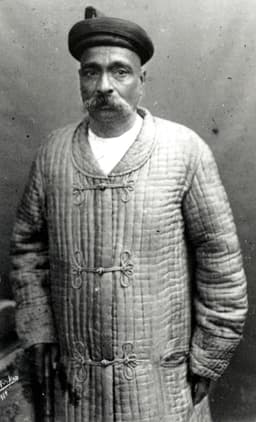
Bal Gangadhar Tilak
Revolutionary · Modern
52.9Total
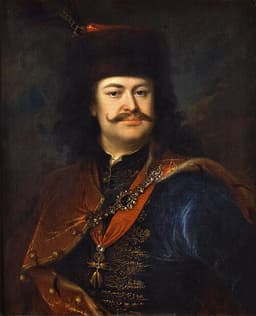
Francis II Rakoczi
Revolutionary · Modern
54.2Total
Basic Information
Born
1856
1676
Died
1920
1735
Era
Modern
Modern
Nationality
India
Hungary
Occupation
Revolutionary
Revolutionary
Civilization
Indian
Western
Score Comparison
Military (10%)
50.0
55.0
Political (20%)
48.0
46.6
Influence (20%)
58.3
57.2
Legacy (20%)
56.0
52.0
Leadership (15%)
50.7
57.6
Strategy (15%)
45.0
57.5
TOTAL
52.9
54.2
Bal Gangadhar Tilak — Complete Timeline
1881 AD
Launch of the Maratha and Kesari NewspapersCultural◆ Major
Tilak founded the Marathi-language newspaper 'Kesari' and the English-language 'Maratha' to spread nationalist ideas. These newspapers became influential platforms for criticizing British rule and mobilizing public opinion.
MediaNationalism
Impact: nationalconstructive
1897 AD
Imprisonment for SeditionPolitical Action◆ Major
Tilak was arrested and sentenced to 18 months imprisonment for sedition after publishing articles critical of British rule. His imprisonment increased his popularity and made him a martyr for the nationalist cause.
ImprisonmentSedition
Impact: national
1905 AD
Introduction of Swadeshi MovementPolitical Action◆ Major
Bal Gangadhar Tilak promoted the Swadeshi movement, advocating for the boycott of British goods and the use of Indian-made products. This movement gained widespread support and became a key part of the Indian independence struggle.
NationalismEconomic Boycott
Impact: nationalconstructive
1908 AD
Lucky Ali TrialPolitical Action◆ Major
Tilak was tried and sentenced to six years in Mandalay prison for sedition after defending the use of violence against British officials. His trial and imprisonment further galvanized the Indian independence movement.
TrialImprisonment
Impact: national
1916 AD
Formation of the Home Rule LeaguePolitical Action◆ Major
Tilak founded the Indian Home Rule League in 1916, demanding self-government for India within the British Empire. The movement gained mass support and pressured the British government to consider political reforms.
Political MovementSelf-Government
Impact: nationalconstructive
Francis II Rakoczi — Complete Timeline
1703 AD
Rákóczi's War of IndependenceWar◆ Major
Francis II Rakoczi led a major uprising against Habsburg rule in Hungary, known as R
War of IndependenceHabsburgRebellion
Impact: regional
1704 AD
Election as Prince of TransylvaniaPolitical Action◆ Major
Francis II Rakoczi was elected Prince of Transylvania by the Hungarian estates, leading the anti-Habsburg rebellion. His election marked the formal leadership of the uprising.
ElectionRebellion
Impact: regional
1708 AD
Battle of TrencinWar◆ Major
Francis II Rakoczi's forces were decisively defeated by the Habsburg army at the Battle of Trencin. The defeat marked a turning point, leading to the decline of the rebellion.
BattleDefeatTurning Point
Impact: regionaltragic
1711 AD
Exile in the Ottoman EmpirePolitical Action◆ Major
After the failure of the rebellion, Francis II Rakoczi went into exile in the Ottoman Empire. He refused to accept Habsburg amnesty and lived in Ottoman territory until his death.
ExileOttoman
Impact: regionaltragic
Expert Analysis
Bal Gangadhar Tilak vs Francis II Rakoczi
# The Revolutionary’s Burden
On a sweltering July morning in 1908, a fifty-two-year-old Indian scholar stood before a British judge in Bombay, his white turban immaculate, his voice steady as he defended the right of a people to rise against tyranny. Half a world away and two centuries earlier, a young Hungarian nobleman, barely twenty-seven, galloped across the Carpathian plains in 1703, rallying peasants and magnates alike to throw off the yoke of the Habsburg Empire. Bal Gangadhar Tilak and Francis II Rákóczi never met, never exchanged a word, yet their lives trace a single, haunting question: What makes a revolutionary succeed—or fail? One became the father of Indian unrest, the other a national hero in exile. Their paths diverged not in courage, but in the soil of history itself.
Origins
Tilak was born in 1856 in Ratnagiri, a coastal town in western India, into a Chitpavan Brahmin family—a caste of priests and scholars who had long served as administrators under the Maratha Empire. His father was a schoolteacher, his mother died when he was young, and the boy grew up steeped in Sanskrit, mathematics, and a deep pride in India’s ancient civilization. The British Raj was then at its zenith, having crushed the 1857 Rebellion just a year before Tilak’s birth. He studied law, but his heart belonged to the nation.
Rákóczi, born in 1676, came from a different world entirely. He was a Hungarian magnate, prince of Transylvania, heir to a family that had fought Habsburg rule for generations. His stepfather was the powerful Imre Thököly, a rebel leader himself, and young Francis grew up in exile and intrigue, shuttling between Vienna and the Ottoman frontier. The Habsburgs had crushed Hungarian autonomy after the failed Wesselényi conspiracy, and the kingdom lay under military occupation. Where Tilak inherited a tradition of spiritual resistance, Rákóczi inherited a sword.
Rise to Power
Tilak’s path was not of battlefields but of ink and oratory. In 1881, he launched two newspapers: the Marathi *Kesari* and the English *Maratha*. Through them, he turned ideas into weapons, writing in a style that was both learned and incendiary. He criticized British rule not merely as unjust but as a violation of India’s soul. His rise was gradual, intellectual, and deeply strategic. He organized festivals for the Hindu god Ganesha to unite people across caste lines—a masterstroke of cultural mobilization.
Rákóczi’s rise was sudden and violent. In 1703, as the Habsburgs were distracted by the War of the Spanish Succession, he issued a proclamation from Poland calling Hungarians to arms. Peasants flocked to him, carrying scythes and pitchforks. Within months, he controlled much of Hungary. By 1704, the Hungarian Diet elected him Prince of Transylvania. His power came from the battlefield, not the printing press.
Leadership & Governance
Tilak governed through persuasion and organization. He was the architect of the Swadeshi Movement in 1905, urging Indians to boycott British cloth and burn foreign goods. He believed in self-reliance—*swaraj*—as both a political goal and a spiritual duty. His leadership was charismatic but not dictatorial; he built coalitions, wrote manifestos, and endured prison with the patience of a sage. In 1916, he founded the Home Rule League, demanding self-government within the Empire, a moderate demand that nonetheless electrified millions.
Rákóczi ruled as a prince at war. He minted coins, issued decrees, and tried to build a modern state from a patchwork of feudal loyalties. His military strategy was bold but flawed. At the Battle of Trencin in 1708, his forces were crushed by the Habsburg army—a defeat from which the rebellion never recovered. He lacked Tilak’s patience for long-term political organization, relying instead on the momentum of revolt.
Triumph & Tragedy
Tilak’s greatest moment came in 1916, when he united the moderate and extremist wings of the Indian National Congress. His tragedy was that he never saw independence. He died in 1920, twenty-seven years before the British finally left. But his ideas—*swaraj*, *swadeshi*, national education—became the bedrock of Gandhi’s movement.
Rákóczi’s triumph was brief. For five years, he held much of Hungary free of Habsburg control. His tragedy was total. After Trencin, the rebellion collapsed. In 1711, his generals signed the Treaty of Szatmár, surrendering to the Habsburgs. Rákóczi refused to accept it and went into exile in the Ottoman Empire, then France, then Turkey again. He died in 1735 in Rodosto, a lonely figure on the shores of the Sea of Marmara, never to see his homeland again.
Character & Destiny
Tilak was a man of iron will and flexible mind. He could write a legal brief, edit a newspaper, and organize a protest with equal skill. His personality was that of a teacher who never stopped learning. He accepted prison, exile, and poverty as the price of freedom. His destiny was to lay foundations.
Rákóczi was a man of pride and principle—perhaps too much pride. He refused compromise, refused surrender, even when his cause was lost. His memoirs, written in exile, are filled with bitterness and dignity. He was a knight in an age of diplomats. His destiny was to become a symbol.
Legacy
Tilak is remembered as the father of Indian unrest, the man who taught Indians that freedom was not a gift but a birthright. His face adorns statues, his words fill textbooks, his name is chanted in political rallies. His legacy is a nation of over a billion people.
Rákóczi is remembered as a national hero, his name on streets and squares in Hungary, his portrait in museums. But his rebellion failed. His legacy is a memory, not a state.
Conclusion
The difference between these two revolutionaries is not courage—both had it in abundance. It is not intelligence—both were brilliant. It is not even luck—both faced overwhelming empires. The difference lies in the nature of their struggle. Tilak fought an empire that was already aging, already cracking under the weight of its own contradictions. Rákóczi fought an empire that was still rising, still hungry, still ruthless. One sowed seeds; the other burned bright and vanished. Both were necessary. Both were magnificent. And both remind us that history is not a reward for virtue, but a river that flows where the land allows.
Rankings
🥇
Francis II RakocziLeader
Mil: 55.0Pol: 46.6Inf: 57.2
54.2
🥈
Bal Gangadhar Tilak
Mil: 50.0Pol: 48.0Inf: 58.3
52.9
+1.3 behind
How This Comparison Works
Algorithm
Each figure is scored on 6 dimensions (0—100 scale) based on structured historical data: Military (10%), Political (20%), Influence (20%), Legacy (20%), Leadership (15%), Strategy (15%). The weighted total produces the final ranking.
Data Sources
Scores are computed from structured sub-indicators in the database. Scale factors adjust for era (Ancient ×0.85, Modern ×1.0) and civilization size (Eastern ×1.05, Other ×0.80) to account for differences in population and military scale.
Maximum 3 Figures
Comparisons are limited to 2—3 figures to ensure readability and statistical meaningfulness.
Error Margins
±5 points per dimension — Sub-scores are derived from historical records with inherent uncertainty. Two figures within 5 points on a dimension should be considered roughly equivalent in that area.
Total Score Accuracy
±3 points overall — The weighted combination of 6 dimensions produces a total score with approximately ±3 points of uncertainty. Differences of less than 3 points are not statistically significant— the figures are effectively tied.
Known Limitations
- Historical records are incomplete and uneven across civilizations
- Figures from oral-tradition societies may be underrepresented
- Occupation labels can misclassify multi-role figures
- Scores measure capability and impact, not moral character
- Quantitative scoring is a comparison tool, not absolute truth
Capability Radar
Military (10%) — Battles & Warfare
Battles
23
65
Win Rate
30
55
Expansion
30
45
Political (20%) — Governance & Reform
Reform
70
55
Diplomacy
60
50
Economy
20
40
Influence (20%) — Cultural & Global Reach
Cultural
65
60
Global
55
45
Legacy (20%) — Historical Impact
Historical
70
65
Longevity
60
55
Leadership (15%) — Power & Stability
Tenure
30
50
Stability
40
30
Strategy (15%) — Tactics & Innovation
Strategy
37
65
Tactics
39
60
Reform
43
50
Similar Comparisons
Comments & Discussion
Rákóczi's Ghost6/16/2026
Look, Tilak was a brilliant strategist who understood mass mobilization better than any Indian leader before Gandhi. But Rákóczi? He actually commanded armies in the field, personally led cavalry charges, and held off the Habsburg Empire—one of Europe's great powers—for eight years. Tilak never fired a shot in anger; his revolution was intellectual, not military. Rákóczi's Kuruc fighters bled and died. There's a difference between a revolutionary thinker and a revolutionary soldier.