Loading...
Francis II Rakoczi vs Gulbuddin Hekmatyar
Francis II Rakoczi leads by 15.9 pts · 2 figures compared
…
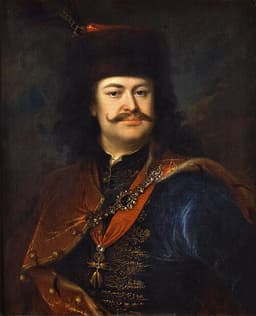
Francis II Rakoczi
Revolutionary · Modern
54.2Total
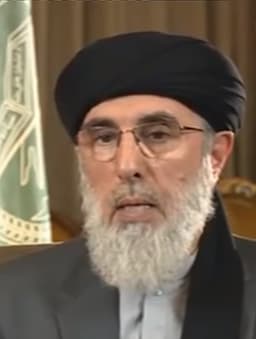
Gulbuddin Hekmatyar
Revolutionary · Modern
38.3Total
Basic Information
Born
1676
1947
Died
1735
—
Era
Modern
Modern
Nationality
Hungary
Afghanistan
Occupation
Revolutionary
Revolutionary
Civilization
Western
Middle Eastern
Score Comparison
Military (10%)
55.0
35.0
Political (20%)
46.6
26.4
Influence (20%)
57.2
47.1
Legacy (20%)
52.0
36.7
Leadership (15%)
57.6
40.4
Strategy (15%)
57.5
38.3
TOTAL
54.2
38.3
Francis II Rakoczi — Complete Timeline
1703 AD
Rákóczi's War of IndependenceWar◆ Major
Francis II Rakoczi led a major uprising against Habsburg rule in Hungary, known as R
War of IndependenceHabsburgRebellion
Impact: regional
1704 AD
Election as Prince of TransylvaniaPolitical Action◆ Major
Francis II Rakoczi was elected Prince of Transylvania by the Hungarian estates, leading the anti-Habsburg rebellion. His election marked the formal leadership of the uprising.
ElectionRebellion
Impact: regional
1708 AD
Battle of TrencinWar◆ Major
Francis II Rakoczi's forces were decisively defeated by the Habsburg army at the Battle of Trencin. The defeat marked a turning point, leading to the decline of the rebellion.
BattleDefeatTurning Point
Impact: regionaltragic
1711 AD
Exile in the Ottoman EmpirePolitical Action◆ Major
After the failure of the rebellion, Francis II Rakoczi went into exile in the Ottoman Empire. He refused to accept Habsburg amnesty and lived in Ottoman territory until his death.
ExileOttoman
Impact: regionaltragic
Gulbuddin Hekmatyar — Complete Timeline
1975 AD
Founding of Hezb-e Islami (1975)Political Action◆ Major
Gulbuddin Hekmatyar founded the Hezb-e Islami political party, an Islamist faction that became one of the most powerful mujahideen groups during the Soviet-Afghan War. The party received significant support from Pakistan's ISI and foreign Islamist donors.
MujahideenIslamist PartyCold War
Impact: national
1993 AD
Prime Minister during Civil War (1993-1994)Political Action◆ Major
Hekmatyar served as Prime Minister of Afghanistan from 1993 to 1994 under President Burhanuddin Rabbani. His tenure was marked by intense factional fighting, including rocket attacks on Kabul that caused thousands of civilian casualties, contributing to the devastation of the city.
Civil WarKabulRocket Attacks
Impact: nationaldestructive
1996 AD
Alliance with Taliban (1996-2001)Political Action
After the Taliban captured Kabul in 1996, Hekmatyar initially fled to Iran. He later aligned with the Taliban regime, though his influence waned. He remained in Afghanistan until the US-led invasion in 2001, after which he fled to Pakistan.
TalibanExileAlliance
Impact: national
2016 AD
Peace Agreement with Afghan Government (2016)Political Action◆ Major
Hekmatyar signed a peace agreement with the Afghan government of President Ashraf Ghani in 2016. The deal allowed him to return to Afghanistan from exile, with his party recognized as a political entity and his fighters integrated into state security forces.
Peace DealReconciliationGhani
Impact: nationalconstructive
Expert Analysis
Gulbuddin Hekmatyar vs Francis II Rakoczi
### The Prince and the Warlord: Two Revolutions, Two Fates
In a drafty Hungarian manor in 1703, a prince in exile unfurled a banner emblazoned with the motto “With God for the Homeland and Liberty.” Two and a half centuries later, in the dusty lecture halls of Kabul University, a young engineering student was sketching a very different kind of blueprint for revolution. Francis II Rakoczi and Gulbuddin Hekmatyar never met, yet they share the same fraught title: revolutionary. One became a national martyr, his name etched into the soul of a people; the other became a byword for civil war, his name a curse whispered in the ruins of his own capital. The difference between them is not merely one of success or failure, but of what a revolution is meant to *be*.
### Origins
Rakoczi was born into the highest echelons of the Hungarian nobility, a prince of Transylvania and a descendant of princes who had resisted the Habsburgs for generations. His childhood was a tutelage in loss and resistance: orphaned young, raised by Jesuits, his family estates confiscated by the Austrian Emperor. His era was one of absolute monarchy and religious division, where the Hungarian Diet had been stripped of its ancient liberties. Hekmatyar, by contrast, was born in 1947 in the northern Afghan province of Kunduz, into a Ghilzai Pashtun family of modest means. His world was one of tribal loyalties, Cold War machinations, and a monarchy that was already crumbling. While Rakoczi’s grievance was the suppression of a historic constitution, Hekmatyar’s was the failure of a modern state to provide order or justice. Rakoczi saw his struggle as a restoration; Hekmatyar saw his as a fundamental remaking.
### Rise to Power
Rakoczi’s path was forged by a peasant revolt. In 1703, Hungarian serfs, enraged by Habsburg taxes and military conscription, rose in rebellion. They had no leader of stature until they turned to the young prince in exile. Rakoczi, at 27, accepted, transforming a peasant jacquerie into a national war of independence. His legitimacy came from his bloodline and his willingness to champion the common cause. Hekmatyar’s rise was more deliberate and ideological. In 1975, as a 28-year-old engineering student, he founded Hezb-e Islami, a radical Islamist party that rejected both the Soviet-backed communists and the traditional monarchy. His power came not from heritage but from discipline, from the students he recruited, and from the generous funding of foreign intelligence services who saw him as a useful proxy. Rakoczi’s revolution was born from a spontaneous cry of the people; Hekmatyar’s was a calculated political project.
### Leadership & Governance
As a leader, Rakoczi was a man of the 18th century, a prince who believed in the rule of law and the rights of estates. In 1704, the Hungarian Diet elected him Prince of Transylvania, a constitutional act that gave his rebellion a legal framework. He minted his own copper currency, issued proclamations in Latin and Hungarian, and sought alliances with Louis XIV of France and Peter the Great of Russia. His military strategy, however, was conventional and ultimately flawed. The Battle of Trencin in 1708 was a disaster: his forces were crushed by the disciplined Habsburg cavalry, a defeat from which the rebellion never recovered. His political score of 72.0 reflects a genuine statesman, but his military score of 55.0 reveals a commander outmatched by his enemy.
Hekmatyar’s leadership was the opposite. He was a master of guerrilla warfare and political chaos, with a strategy score of 63.7 that reflects a cunning, if destructive, mind. Yet his political acumen was abysmal. As Prime Minister from 1993 to 1994, he presided over the shelling of Kabul, reducing his own capital to rubble in a bid for power. He formed alliances as easily as he broke them: first with the CIA, then with the Pakistani ISI, then with the Taliban in 1996. He had no vision for governance beyond his own dominance. Where Rakoczi sought to *build* a nation, Hekmatyar seemed intent on *consuming* one.
### Triumph & Tragedy
Rakoczi’s greatest moment was the early success of his rebellion, when his Kuruc army swept across the Hungarian plain, liberating much of the kingdom from Habsburg control. His tragedy was the Battle of Trencin, after which his army melted away, and his dream of a free Hungary died. He spent his final years in exile in the Ottoman Empire, refusing a Habsburg pardon, a prince without a throne. Hekmatyar’s triumph was his sheer survival: outlasting the Soviet invasion, the civil war, and the American occupation. In 2016, he signed a peace agreement with the Afghan government, returning to Kabul as a political figure. His tragedy was that he never built anything. He left behind a country shattered by factional violence, a legacy of rockets and rubble, a name synonymous with betrayal.
### Character & Destiny
Character was destiny for both men. Rakoczi was a romantic, a man of principle who chose exile over compromise. His memoirs, written in French, reveal a reflective, melancholic soul, a leader who genuinely believed in the “Homeland and Liberty” on his banner. Hekmatyar was a pragmatist of the most brutal kind, a man who saw power as an end in itself. He was known for his fiery speeches and his willingness to turn on allies. Rakoczi’s tragedy was that he was too noble for the world he lived in; Hekmatyar’s tragedy was that he was not noble enough.
### Legacy
Today, Francis II Rakoczi is a national hero in Hungary. His statue stands in Budapest, his name adorns squares and schools. His legacy score of 68.8 is a testament to a man who, though he failed, inspired generations. Gulbuddin Hekmatyar, with a legacy score of 47.8, is a ghost. He is remembered, if at all, as a cautionary tale, a warlord who helped destroy his own country. One man’s failure became a symbol of hope; the other’s success—in merely surviving—became a symbol of despair.
### Conclusion
The difference between Rakoczi and Hekmatyar is not in their ambition, but in their architecture. Rakoczi dreamed of a house with foundations, a nation built on law and liberty. Hekmatyar dreamed only of the deed to the land. One sought to restore a kingdom; the other sought to rule a ruin. In the end, history remembers not just what a revolutionary fights *against*, but what he fights *for*. Rakoczi fought for a nation; Hekmatyar fought for himself. And that is the difference between a prince and a warlord.
Rankings
🥇
Francis II RakocziLeader
Mil: 55.0Pol: 46.6Inf: 57.2
54.2
🥈
Gulbuddin Hekmatyar
Mil: 35.0Pol: 26.4Inf: 47.1
38.3
+15.9 behind
How This Comparison Works
Algorithm
Each figure is scored on 6 dimensions (0—100 scale) based on structured historical data: Military (10%), Political (20%), Influence (20%), Legacy (20%), Leadership (15%), Strategy (15%). The weighted total produces the final ranking.
Data Sources
Scores are computed from structured sub-indicators in the database. Scale factors adjust for era (Ancient ×0.85, Modern ×1.0) and civilization size (Eastern ×1.05, Other ×0.80) to account for differences in population and military scale.
Maximum 3 Figures
Comparisons are limited to 2—3 figures to ensure readability and statistical meaningfulness.
Error Margins
±5 points per dimension — Sub-scores are derived from historical records with inherent uncertainty. Two figures within 5 points on a dimension should be considered roughly equivalent in that area.
Total Score Accuracy
±3 points overall — The weighted combination of 6 dimensions produces a total score with approximately ±3 points of uncertainty. Differences of less than 3 points are not statistically significant— the figures are effectively tied.
Known Limitations
- Historical records are incomplete and uneven across civilizations
- Figures from oral-tradition societies may be underrepresented
- Occupation labels can misclassify multi-role figures
- Scores measure capability and impact, not moral character
- Quantitative scoring is a comparison tool, not absolute truth
Capability Radar
Military (10%) — Battles & Warfare
Battles
65
45
Win Rate
55
30
Expansion
45
25
Political (20%) — Governance & Reform
Reform
55
15
Diplomacy
50
20
Economy
40
10
Influence (20%) — Cultural & Global Reach
Cultural
60
25
Global
45
25
Legacy (20%) — Historical Impact
Historical
65
30
Longevity
55
20
Leadership (15%) — Power & Stability
Tenure
50
30
Stability
30
5
Strategy (15%) — Tactics & Innovation
Strategy
65
35
Tactics
60
40
Reform
50
20
Similar Comparisons
Comments & Discussion
No comments yet. Be the first to share your thoughts!