Loading...
Ferdinand II of Aragon vs Tokhtamysh
Ferdinand II of Aragon leads by 9.6 pts · 2 figures compared
…
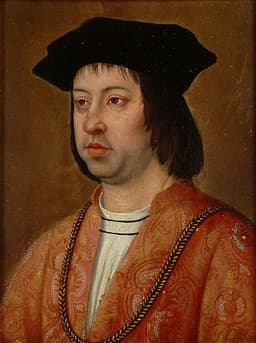
Ferdinand II of Aragon
Emperor · Medieval
70.4Total
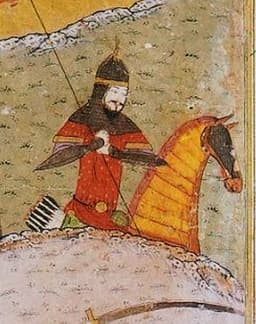
Tokhtamysh
Emperor · Medieval
60.8Total
Basic Information
Born
1452
1342
Died
1516
1406
Era
Medieval
Medieval
Nationality
Spain
Golden Horde
Occupation
Emperor
Emperor
Civilization
Western
Eastern
Score Comparison
Military (10%)
76.0
74.7
Political (20%)
78.0
68.0
Influence (20%)
65.0
61.0
Legacy (20%)
65.0
49.2
Leadership (15%)
80.0
65.0
Strategy (15%)
66.3
58.0
TOTAL
70.4
60.8
Ferdinand II of Aragon — Complete Timeline
1469 AD
Marriage to Isabella I of CastilePolitical Action
Ferdinand II of Aragon married Isabella I of Castile in Valladolid, uniting the two largest Christian kingdoms in Spain. This marriage created the basis for the Kingdom of Spain, though both crowns remained legally separate until the death of Isabella in 1504.
Spanish unificationDynastic union
Impact: globalconstructive
1478 AD
Establishment of the Spanish InquisitionPolitical Action◆ Major
Ferdinand II and Isabella I obtained papal approval to establish the Spanish Inquisition, a tribunal to enforce Catholic orthodoxy. The Inquisition targeted converted Jews (conversos) and Muslims (moriscos) suspected of secretly practicing their former religions, leading to thousands of executions and imprisonments.
InquisitionReligious persecution
Impact: globaldestructive
1492 AD
Conquest of GranadaWar
Ferdinand II and Isabella I completed the Reconquista by capturing the city of Granada, the last Muslim stronghold in the Iberian Peninsula. The surrender of the Nasrid kingdom ended nearly 800 years of Muslim rule in Spain and marked a major victory for the Catholic Monarchs.
ReconquistaGranada
Impact: global
Alhambra DecreePolitical Action◆ Major
Ferdinand II and Isabella I issued the Alhambra Decree, ordering the expulsion of all Jews from the kingdoms of Spain who refused to convert to Catholicism. The decree led to the exile of an estimated 200,000 Jews, causing a significant demographic and economic impact on Spain.
Expulsion of JewsReligious persecution
Impact: globaldestructive
Tokhtamysh — Complete Timeline
1380 AD
Reunification of the Golden HordePolitical Action◆ Major
Tokhtamysh, with the support of Timur, defeated the rebellious general Mamai and reunified the Golden Horde under his rule. He restored the Horde's authority over the Russian principalities, ending a period of fragmentation.
Golden HordeMamaiReunification
Impact: regionalconstructive
1382 AD
Sack of MoscowWar◆ Major
Tokhtamysh led a campaign against the Grand Duchy of Moscow. He besieged and captured Moscow, burning the city and massacring its inhabitants. The victory reasserted Mongol dominance over the Russian principalities.
MoscowRussiaSack
Impact: regionaldestructive
1387 AD
War with TimurWar◆ Major
Tokhtamysh invaded Timur's territory in Transoxiana, starting a war between the two Mongol rulers. Timur retaliated by invading the Golden Horde, defeating Tokhtamysh at the Battle of the Kondurcha River in 1391.
TimurTransoxianaKondurcha
Impact: regional
1395 AD
Battle of the Terek RiverWar
Timur decisively defeated Tokhtamysh at the Battle of the Terek River. The victory destroyed Tokhtamysh's army and led to the sack of Sarai, the capital of the Golden Horde. Tokhtamysh fled and never regained power.
TimurTerek RiverSarai
Impact: regionaltragic
1406 AD
Death in ExilePolitical Action
After his defeat by Timur, Tokhtamysh fled to the Grand Duchy of Lithuania. He was killed in a skirmish with a rival Mongol faction near Tyumen. His death marked the end of the last attempt to reunite the Golden Horde.
ExileLithuaniaTyumen
Impact: regionaltragic
Expert Analysis
Origins
Ferdinand II of Aragon was born on March 10, 1452, in Sos, Aragon, to King John II of Aragon and Juana Enríquez. He received a solid education in military arts and governance, preparing him for kingship. His marriage to Isabella I of Castile in 1469 was a political masterstroke that united the two largest Christian kingdoms in Spain.
Tokhtamysh was born around 1342 into the Mongol Tugay clan, a descendant of Genghis Khan's eldest son Jochi. He grew up during the fragmentation of the Golden Horde, known as the 'Great Troubles,' which shaped his ambition to restore unity. His early life involved military training and alliances with powerful figures like Timur.
Rise to Power
Ferdinand II became king of Aragon in 1479 upon his father's death. However, his rise to power was accelerated by his marriage to Isabella, which began the unification of Spain. Together, they pursued the Reconquista, culminating in the conquest of Granada in 1492. This victory marked the end of Muslim rule in Iberia and solidified Ferdinand's reputation as a Catholic monarch.
Tokhtamysh rose with the support of Timur, who helped him defeat the usurper Mamai at the Battle of the Kalka River in 1380. By 1382, Tokhtamysh had reunified the Golden Horde, from the Dnieper to the Urals. His sack of Moscow in 1382 further demonstrated his military prowess and reasserted Mongol dominance over Russian principalities.
Leadership & Governance
Ferdinand II was a pragmatic and strategic ruler. He centralized royal authority, curbed the power of nobles, and established the Spanish Inquisition in 1478 to enforce religious uniformity. His governance prioritized unity and Catholic orthodoxy, leading to the Alhambra Decree (1492) that expelled Jews. Ferdinand also sponsored Christopher Columbus's voyages, expanding Spain's influence globally. His political score of 78.0 reflects his effective state-building.
Tokhtamysh ruled as a traditional Mongol khan, relying on tribal alliances and military force. He restored the Horde's administrative structure but lacked Ferdinand's institutional reforms. His leadership score of 65.0 indicates a more fragile rule. Tokhtamysh's decision to invade Timur's territory in 1385 proved disastrous, as it triggered a war that would destroy his kingdom.
Triumph & Tragedy
Ferdinand's greatest triumph was completing the Reconquista in 1492, a 700-year effort. His marriage to Isabella created a unified Spain that became a global power. However, his expulsion of Jews and Muslims caused long-term economic and cultural damage. The Inquisition's brutality tarnished his legacy. His military score of 76.0 reflects successful campaigns, but his legacy score of 65.0 is tempered by these controversies.
Tokhtamysh's triumph was briefly reuniting the Golden Horde and sacking Moscow, restoring Mongol prestige. His tragedy came with the war against Timur. At the Battle of the Terek River in 1395, Timur crushed his army, sacked Sarai, and destroyed the Horde's economy. Tokhtamysh fled to Lithuania but was killed in exile around 1406, leaving the Horde fragmented again. His military score of 74.7 is high, but his legacy score of 49.2 reflects his failure to sustain unity.
Character & Destiny
Ferdinand was calculating, patient, and devout. He used marriage and diplomacy to achieve goals, but also showed ruthlessness through the Inquisition. His character aligned with the era's religious fervor, ensuring his success in Spain. However, his policies sowed seeds of internal division.
Tokhtamysh was ambitious and impulsive. His decision to challenge Timur, despite being his former ally, was a fatal miscalculation. He overestimated his strength and underestimated Timur's military genius. His character led to a dramatic rise and fall, embodying the volatility of steppe politics.
Legacy
Ferdinand II's legacy is monumental: he laid the foundation for the Spanish Empire, which dominated Europe and the Americas for centuries. The unification of Spain, the Reconquista, and the patronage of Columbus are enduring impacts. However, the Inquisition and expulsion of Jews remain controversial. His total score of 70.4 reflects a balanced but significant influence.
Tokhtamysh's legacy is more limited. He is remembered as the last khan to reunite the Golden Horde before its final decline. His sack of Moscow is a notable event, but his defeat by Timur accelerated the Horde's fragmentation. His influence score of 61.0 is lower, as his achievements were short-lived. He failed to create lasting institutions.
Conclusion
Ferdinand II of Aragon had a greater and more enduring impact than Tokhtamysh. While Tokhtamysh briefly reunited the Golden Horde, his achievements were undone by his war with Timur. Ferdinand's unification of Spain, completion of the Reconquista, and sponsorship of Columbus changed the course of world history. His total score of 70.4 versus Tokhtamysh's 60.8 reflects this difference. Ferdinand's political and leadership scores (78.0 and 80.0) highlight his effective governance, while Tokhtamysh's legacy score (49.2) shows his ephemeral success. In the long term, Ferdinand's Spain became a global empire, while Tokhtamysh's Horde disintegrated. Thus, Ferdinand II is the more consequential figure.
Rankings
🥇
Ferdinand II of AragonLeader
Mil: 76.0Pol: 78.0Inf: 65.0
70.4
🥈
Tokhtamysh
Mil: 74.7Pol: 68.0Inf: 61.0
60.8
+9.6 behind
How This Comparison Works
Algorithm
Each figure is scored on 6 dimensions (0—100 scale) based on structured historical data: Military (10%), Political (20%), Influence (20%), Legacy (20%), Leadership (15%), Strategy (15%). The weighted total produces the final ranking.
Data Sources
Scores are computed from structured sub-indicators in the database. Scale factors adjust for era (Ancient ×0.85, Modern ×1.0) and civilization size (Eastern ×1.05, Other ×0.80) to account for differences in population and military scale.
Maximum 3 Figures
Comparisons are limited to 2—3 figures to ensure readability and statistical meaningfulness.
Error Margins
±5 points per dimension — Sub-scores are derived from historical records with inherent uncertainty. Two figures within 5 points on a dimension should be considered roughly equivalent in that area.
Total Score Accuracy
±3 points overall — The weighted combination of 6 dimensions produces a total score with approximately ±3 points of uncertainty. Differences of less than 3 points are not statistically significant— the figures are effectively tied.
Known Limitations
- Historical records are incomplete and uneven across civilizations
- Figures from oral-tradition societies may be underrepresented
- Occupation labels can misclassify multi-role figures
- Scores measure capability and impact, not moral character
- Quantitative scoring is a comparison tool, not absolute truth
Capability Radar
Military (10%) — Battles & Warfare
Battles
75
75
Win Rate
80
70
Expansion
85
75
Political (20%) — Governance & Reform
Reform
80
55
Diplomacy
90
65
Economy
75
55
Influence (20%) — Cultural & Global Reach
Cultural
75
45
Global
80
50
Legacy (20%) — Historical Impact
Historical
85
55
Longevity
80
40
Leadership (15%) — Power & Stability
Tenure
85
60
Stability
70
40
Strategy (15%) — Tactics & Innovation
Strategy
85
70
Tactics
70
65
Reform
60
60
Similar Comparisons
Comments & Discussion
No comments yet. Be the first to share your thoughts!