Loading...
Ferdinand II of Aragon vs Mahmud of Ghazni
Ferdinand II of Aragon leads by 7.7 pts · 2 figures compared
…
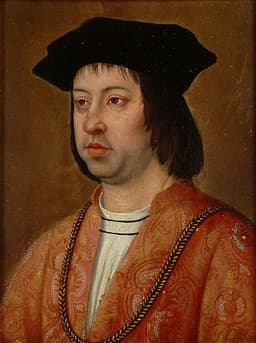
Ferdinand II of Aragon
Emperor · Medieval
70.4Total
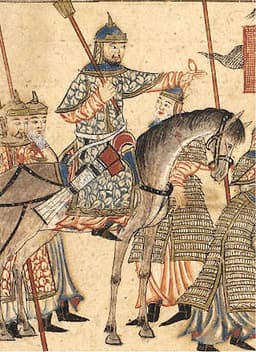
Mahmud of Ghazni
Emperor · Medieval
62.7Total
Basic Information
Born
1452
971
Died
1516
1030
Era
Medieval
Medieval
Nationality
Spain
Ghaznavid Empire
Occupation
Emperor
Emperor
Civilization
Western
Middle Eastern
Score Comparison
Military (10%)
76.0
82.0
Political (20%)
78.0
60.0
Influence (20%)
65.0
55.0
Legacy (20%)
65.0
52.0
Leadership (15%)
80.0
79.8
Strategy (15%)
66.3
68.0
TOTAL
70.4
62.7
Ferdinand II of Aragon — Complete Timeline
1469 AD
Marriage to Isabella I of CastilePolitical Action
Ferdinand II of Aragon married Isabella I of Castile in Valladolid, uniting the two largest Christian kingdoms in Spain. This marriage created the basis for the Kingdom of Spain, though both crowns remained legally separate until the death of Isabella in 1504.
Spanish unificationDynastic union
Impact: globalconstructive
1478 AD
Establishment of the Spanish InquisitionPolitical Action◆ Major
Ferdinand II and Isabella I obtained papal approval to establish the Spanish Inquisition, a tribunal to enforce Catholic orthodoxy. The Inquisition targeted converted Jews (conversos) and Muslims (moriscos) suspected of secretly practicing their former religions, leading to thousands of executions and imprisonments.
InquisitionReligious persecution
Impact: globaldestructive
1492 AD
Conquest of GranadaWar
Ferdinand II and Isabella I completed the Reconquista by capturing the city of Granada, the last Muslim stronghold in the Iberian Peninsula. The surrender of the Nasrid kingdom ended nearly 800 years of Muslim rule in Spain and marked a major victory for the Catholic Monarchs.
ReconquistaGranada
Impact: global
Alhambra DecreePolitical Action◆ Major
Ferdinand II and Isabella I issued the Alhambra Decree, ordering the expulsion of all Jews from the kingdoms of Spain who refused to convert to Catholicism. The decree led to the exile of an estimated 200,000 Jews, causing a significant demographic and economic impact on Spain.
Expulsion of JewsReligious persecution
Impact: globaldestructive
Mahmud of Ghazni — Complete Timeline
1001 AD
Seventeen Raids into IndiaWar◆ Major
Mahmud of Ghazni conducted seventeen military campaigns into the Indian subcontinent between 1001 and 1027. He plundered wealthy Hindu temples and kingdoms, including Somnath, Mathura, and Kannauj, amassing enormous wealth and spreading Ghaznavid influence.
Indian RaidsPlunderTemple Destruction
Impact: regionaldestructive
1006 AD
Battle of CharkhWar◆ Major
Mahmud defeated the Hindu Shahi king Jayapala at the Battle of Charkh near Peshawar. Jayapala committed suicide after the defeat, and Mahmud annexed the Hindu Shahi kingdom, establishing Ghaznavid rule over the Punjab region.
BattleHindu ShahiPunjab
Impact: regional
1010 AD
Patronage of Persian CultureCultural◆ Major
Mahmud patronized Persian poets, scholars, and artists at his court in Ghazni. He commissioned the Persian poet Ferdowsi to write the Shahnameh, though they later quarreled over payment. His court became a center of Persian literature and Islamic learning.
PatronagePersian LiteratureShahnameh
Impact: regionalconstructive
1025 AD
Sack of Somnath TempleWar◆ Major
Mahmud led a raid to the Somnath temple in Gujarat, one of the wealthiest Hindu temples. He destroyed the temple and carried away its treasures, including the famous lingam, which he sent to Ghazni. This event became legendary in both Islamic and Hindu traditions.
Temple DestructionSomnathPlunder
Impact: regionaldestructive
Expert Analysis
Origins
Ferdinand II of Aragon (born 1452) was the son of John II of Aragon and Juana Enríquez. He grew up in the court of Aragon, receiving military and political training. His marriage to Isabella I of Castile in 1469 was a calculated move to unite the two kingdoms. Mahmud of Ghazni (born 971) was the son of Sabuktigin, a former Turkish slave who founded the Ghaznavid dynasty. Mahmud was raised in Ghazni (modern Afghanistan) and learned military strategy from his father. He seized power in 998 after a brief struggle with his brother.
Rise to Power
Ferdinand's rise came through his marriage to Isabella and his military campaigns. In 1474, Isabella inherited Castile, but a civil war erupted with supporters of her niece Joanna. Ferdinand fought alongside Isabella, securing victory at the Battle of Toro (1476) and consolidating their rule. By 1479, Ferdinand became king of Aragon, effectively uniting Spain under joint rule. Mahmud's rise was more direct: he became sultan in 998 and immediately launched campaigns to expand his empire. His first major victory was the Battle of Charkh (1001) against the Hindu Shahi king Jayapala, after which Jayapala committed suicide. Mahmud then annexed the Punjab region.
Leadership & Governance
Ferdinand governed through a dual monarchy with Isabella, centralizing power and reducing the nobility's influence. He reformed the bureaucracy, established the Spanish Inquisition (1478) to enforce religious unity, and expelled Jews in 1492. His military leadership focused on the Reconquista, culminating in the conquest of Granada (1492). Mahmud ruled as an absolute monarch, relying on a loyal Turkic slave army. He organized his state around plunder from India, using the wealth to patronize Persian culture. He commissioned Ferdowsi to write the Shahnameh, though he paid him in silver rather than the promised gold. Mahmud's governance was less institutionalized than Ferdinand's, lacking lasting administrative reforms.
Triumph & Tragedy
Ferdinand's greatest triumph was completing the Reconquista after 781 years of Muslim rule. The conquest of Granada in 1492 added a wealthy territory and boosted Christian morale. However, his expulsion of Jews (Alhambra Decree) and forced conversions caused economic decline and cultural loss. The Inquisition's terror also damaged Spain's reputation. Mahmud's greatest success was his seventeen raids into India, which brought immense wealth—including the Somnath temple's treasures in 1025. His military score of 82.0 reflects this effectiveness. But his raids were destructive, leaving no lasting rule over India. His failure to consolidate gains meant the Ghaznavid Empire declined after his death.
Character & Destiny
Ferdinand was calculating and pragmatic, focused on state-building and religious uniformity. His alliance with Isabella was a partnership of equals, but he also skillfully manipulated the nobility. His leadership score of 80.0 reflects his ability to unify Spain. Mahmud was ambitious and ruthless, driven by greed and a desire for glory. He was a competent general (strategy score 66.3) but lacked long-term vision. His character led to short-lived conquests; the Ghaznavid Empire shrank after his death. Ferdinand's destiny was to create a unified Spain that became a global power, while Mahmud's legacy was more ephemeral.
Legacy
Ferdinand's legacy is profound: he unified Spain, funded Columbus's voyage (1492), and established the Spanish Empire. The Inquisition and expulsion of Jews had lasting negative impacts, but his political unification endured. His total score of 70.4 reflects this mixed legacy. Mahmud's legacy is primarily as a destroyer of Hindu temples and a patron of Persian culture. He is remembered in South Asia as a plunderer, while his patronage of Ferdowsi's Shahnameh enriched Persian literature. However, his empire collapsed within decades. His total score of 62.7 is lower due to weaker political and influence scores.
Conclusion
Ferdinand II of Aragon had greater impact than Mahmud of Ghazni. Ferdinand's unification of Spain and completion of the Reconquista created a lasting political entity that shaped world history. His actions—both positive and negative—had enduring consequences. Mahmud's raids, while militarily successful, did not build a durable empire. Ferdinand scores higher overall (70.4 vs. 62.7) and in political (78.0 vs. 60.0), influence (65.0 vs. 55.0), and legacy (65.0 vs. 52.0). Mahmud's higher military score (82.0 vs. 76.0) cannot compensate for his lack of lasting governance. Ferdinand's strategic marriage and institutional reforms created a foundation for Spain's golden age, whereas Mahmud's empire faded. Thus, Ferdinand II of Aragon is the more significant historical figure.
Rankings
🥇
Ferdinand II of AragonLeader
Mil: 76.0Pol: 78.0Inf: 65.0
70.4
🥈
Mahmud of Ghazni
Mil: 82.0Pol: 60.0Inf: 55.0
62.7
+7.7 behind
How This Comparison Works
Algorithm
Each figure is scored on 6 dimensions (0—100 scale) based on structured historical data: Military (10%), Political (20%), Influence (20%), Legacy (20%), Leadership (15%), Strategy (15%). The weighted total produces the final ranking.
Data Sources
Scores are computed from structured sub-indicators in the database. Scale factors adjust for era (Ancient ×0.85, Modern ×1.0) and civilization size (Eastern ×1.05, Other ×0.80) to account for differences in population and military scale.
Maximum 3 Figures
Comparisons are limited to 2—3 figures to ensure readability and statistical meaningfulness.
Error Margins
±5 points per dimension — Sub-scores are derived from historical records with inherent uncertainty. Two figures within 5 points on a dimension should be considered roughly equivalent in that area.
Total Score Accuracy
±3 points overall — The weighted combination of 6 dimensions produces a total score with approximately ±3 points of uncertainty. Differences of less than 3 points are not statistically significant— the figures are effectively tied.
Known Limitations
- Historical records are incomplete and uneven across civilizations
- Figures from oral-tradition societies may be underrepresented
- Occupation labels can misclassify multi-role figures
- Scores measure capability and impact, not moral character
- Quantitative scoring is a comparison tool, not absolute truth
Capability Radar
Military (10%) — Battles & Warfare
Battles
75
85
Win Rate
80
90
Expansion
85
85
Political (20%) — Governance & Reform
Reform
80
70
Diplomacy
90
65
Economy
75
75
Influence (20%) — Cultural & Global Reach
Cultural
75
60
Global
80
60
Legacy (20%) — Historical Impact
Historical
85
70
Longevity
80
65
Leadership (15%) — Power & Stability
Tenure
85
80
Stability
70
70
Strategy (15%) — Tactics & Innovation
Strategy
85
85
Tactics
70
80
Reform
60
75
Similar Comparisons
Comments & Discussion
No comments yet. Be the first to share your thoughts!