Loading...
Ferdinand I of Leon vs Yi Seong-gye
Yi Seong-gye leads by 16.6 pts · 2 figures compared
…
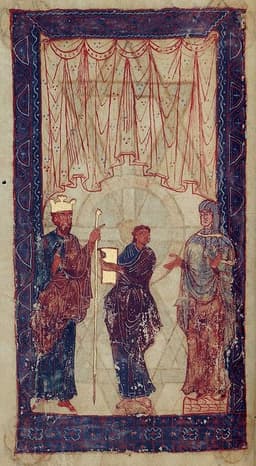
Ferdinand I of Leon
Emperor · Medieval
59.2Total
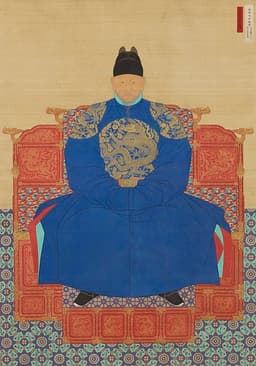
Yi Seong-gye
Emperor · Medieval
75.8Total
Basic Information
Born
1015
1335
Died
1065
1408
Era
Medieval
Medieval
Nationality
Leon
Korea
Occupation
Emperor
Emperor
Civilization
Western
Eastern
Score Comparison
Military (10%)
70.0
74.7
Political (20%)
68.0
70.0
Influence (20%)
56.4
88.0
Legacy (20%)
49.2
75.0
Leadership (15%)
66.0
68.0
Strategy (15%)
57.5
69.1
TOTAL
59.2
75.8
Ferdinand I of Leon — Complete Timeline
1029 AD
Inheritance of the County of CastilePolitical Action◆ Major
Ferdinand I inherited the County of Castile from his father Sancho III of Navarre. He later expanded his territory through conquest and marriage, laying the foundation for the Kingdom of Castile.
Impact: regionalconstructive
1037 AD
Conquest of LeónWar◆ Major
Ferdinand I defeated and killed King Bermudo III of Le
Impact: regional
1056 AD
First Emperor of SpainPolitical Action◆ Major
Ferdinand I was crowned 'Imperator totius Hispaniae' (Emperor of all Spain) in 1056, claiming suzerainty over all Christian and Muslim rulers in Iberia. This title reflected his military dominance and political ambition.
Impact: regional
1065 AD
Division of the kingdomPolitical Action◆ Major
Upon his death, Ferdinand I divided his kingdom among his sons: Sancho II received Castile, Alfonso VI received Le
Impact: regionaldestructive
Yi Seong-gye — Complete Timeline
1380 AD
Battle of HwangsanWar◆ Major
Yi Seong-gye led Goryeo forces against Japanese pirates (wokou) at the Battle of Hwangsan. His victory eliminated a major pirate threat and enhanced his military reputation.
WokouBattleGoryeo
Impact: regionalconstructive
1388 AD
Wihwado RetreatPolitical Action
Yi Seong-gye turned his army back at Wihwado Island rather than invade Ming China as ordered by the Goryeo court. This act of defiance led to a coup that eventually brought him to power.
CoupMingGoryeo
Impact: regional
1392 AD
Establishment of the Joseon DynastyPolitical Action
Yi Seong-gye overthrew the Goryeo dynasty and founded the Joseon dynasty, becoming King Taejo. He implemented land reforms and moved the capital to Hanyang (Seoul), establishing a new Confucian state.
JoseonDynasty FoundationReform
Impact: regionalconstructive
Expert Analysis
Ferdinand I of Leon vs Yi Seong-gye
### The General Who Turned Back and the King Who Crowned Himself Emperor
History often turns on a single, decisive moment. For Yi Seong-gye, that moment came in the summer of 1388, on an island in the Yalu River. He had marched north with a Goryeo army to invade Ming China, a campaign he believed was suicidal. Instead of crossing into enemy territory, he turned his army around and marched back to the capital, an act of defiance that would topple a dynasty and reshape a kingdom. For Ferdinand I of León, the turning point was a battlefield in 1037, where he killed his brother-in-law, King Bermudo III, and claimed a crown. One man founded a dynasty by refusing a war; the other built an empire by waging one. How did two medieval rulers, born continents apart, arrive at such different paths to power—and what drove their fates?
### Origins: The Warrior and the Heir
Yi Seong-gye was born in 1335 into a military family serving the crumbling Goryeo dynasty. His father was a local official in the northeastern frontier, a region of constant skirmishes with Mongol-backed forces and Japanese pirates. Yi grew up as a practical soldier, learning to command men in the chaos of a kingdom under siege. His world was one of survival, where loyalty was earned through competence, not birthright. By contrast, Ferdinand I, born in 1015, was a prince of Navarre, the son of Sancho III, the most powerful Christian king in Iberia. He inherited the County of Castile at age fourteen, a gift from his father. His path was paved with titles and territories, not mud and blood. Where Yi fought for every step, Ferdinand was born onto the ladder.
These origins shaped their instincts. Yi’s Korea was a society in crisis, torn by foreign raids and internal decay. Ferdinand’s León was a kingdom on the rise, part of the centuries-long *Reconquista* against Muslim al-Andalus. The former needed a reformer; the latter needed a conqueror.
### Rise to Power: The Retreat and the Crown
Yi Seong-gye’s rise was a masterclass in political opportunism. In 1380, he crushed a massive Japanese pirate fleet at the Battle of Hwangsan, earning fame as a national hero. But his true genius lay in the Wihwado Retreat of 1388. Ordered by the Goryeo court to invade Ming China—a doomed venture—he chose pragmatism over obedience. He turned his army back, seized the capital, and purged his rivals. Four years later, in 1392, he formally overthrew the king and founded the Joseon dynasty. His path was one of calculated rebellion, driven by a clear-eyed assessment of what was possible.
Ferdinand’s rise was a tale of inheritance and conquest. In 1037, he defeated and killed Bermudo III at the Battle of Tamarón, annexing León. He then spent decades raiding Moorish taifa kingdoms, extracting tribute and expanding his realm. In 1056, he crowned himself “Imperator totius Hispaniae”—Emperor of All Spain—a title that reflected his ambition, not his actual control. His power came from the sword, but it was legitimized by blood. Yi had to invent a new order; Ferdinand simply claimed an old one.
### Leadership & Governance: Confucian Reform and Feudal Division
As King Taejo of Joseon, Yi Seong-gye was a builder. He moved the capital to Hanyang (modern Seoul), a site chosen for its geomantic harmony and defensible position. He implemented land reforms that broke the power of the old Goryeo aristocracy, redistributing land to loyal officials and soldiers. He embraced Neo-Confucianism as the state ideology, reshaping Korean society around bureaucracy, scholarship, and filial piety. His leadership was systematic, aimed at creating a stable, centralized state that could endure.
Ferdinand I was a warrior king. His campaigns against the Moors were relentless but pragmatic—he preferred tribute to conquest, extracting wealth from the fragmented taifas rather than annexing their lands. His political wisdom was feudal: he rewarded his nobles with lands and titles, binding them through personal loyalty. But his greatest failure was his death. In 1065, he divided his kingdom among his three sons, a decision that triggered decades of civil war. Yi, by contrast, faced a succession crisis of his own—his son killed his half-brother in a bloody purge—but the Joseon system survived because it was built on institutions, not personal bonds.
### Triumph & Tragedy: Founding a Dynasty and Dividing a Kingdom
Yi Seong-gye’s greatest triumph was founding Joseon, a dynasty that would rule Korea for over five centuries. His reforms created a Confucian state that fostered cultural and scientific achievements, from the invention of the Korean alphabet to the construction of grand palaces. But his tragedy came at the end: in 1398, his own sons fought for power, and he abdicated in despair, living his final years in quiet retirement. He died in 1408, a founder who outlived his peace.
Ferdinand’s triumph was his coronation as Emperor of Spain, a symbolic claim that foreshadowed the unification of Iberia. He crushed Moorish resistance and amassed vast treasures. But his tragedy was his division of the kingdom—a classic feudal mistake that undid his life’s work. His sons fought for decades, and the dream of a united Spain died with him. He died in 1065, a conqueror who failed to secure his legacy.
### Character & Destiny: The Pragmatist and the Visionary
Yi Seong-gye was a pragmatist. He turned back at Wihwado because he knew when to fight and when to retreat. He adopted Confucianism because it offered a stable framework for rule, not because he was a zealot. His character was cautious, methodical, and strategic. Ferdinand was a visionary, driven by a grand ambition to unite Christendom in Spain. He took risks, fought battles, and claimed titles that exceeded his reach. His character was bold, impulsive, and feudal.
Their destinies reflected their worlds. Yi’s Korea needed a reformer to survive; Ferdinand’s Spain needed a conqueror to expand. One built a system; the other built a name.
### Legacy: The Lasting Dynasty and the Forgotten Emperor
Yi Seong-gye’s legacy is immense. Joseon became one of the world’s longest-lasting dynasties, shaping Korean identity, language, and culture for centuries. He is remembered as a wise founder, a national hero, and a symbol of Confucian governance. Ferdinand I is less known. His title “Emperor of Spain” was forgotten, his kingdom divided, his achievements overshadowed by later figures like El Cid and Isabella. He is a footnote in the *Reconquista*, a king who reached for greatness but could not hold it.
### Conclusion
Two men, two paths, two outcomes. Yi Seong-gye turned his army back from a war he knew he could not win, and in doing so, won everything. Ferdinand I marched forward, conquered, and crowned himself emperor, only to see his empire shatter at his death. The difference was not in their courage or ambition—both had plenty. It was in their understanding of what power truly required. Yi built a state; Ferdinand built a monument. History remembers the builders.
Rankings
🥇
Yi Seong-gyeLeader
Mil: 74.7Pol: 70.0Inf: 88.0
75.8
🥈
Ferdinand I of Leon
Mil: 70.0Pol: 68.0Inf: 56.4
59.2
+16.6 behind
How This Comparison Works
Algorithm
Each figure is scored on 6 dimensions (0—100 scale) based on structured historical data: Military (10%), Political (20%), Influence (20%), Legacy (20%), Leadership (15%), Strategy (15%). The weighted total produces the final ranking.
Data Sources
Scores are computed from structured sub-indicators in the database. Scale factors adjust for era (Ancient ×0.85, Modern ×1.0) and civilization size (Eastern ×1.05, Other ×0.80) to account for differences in population and military scale.
Maximum 3 Figures
Comparisons are limited to 2—3 figures to ensure readability and statistical meaningfulness.
Error Margins
±5 points per dimension — Sub-scores are derived from historical records with inherent uncertainty. Two figures within 5 points on a dimension should be considered roughly equivalent in that area.
Total Score Accuracy
±3 points overall — The weighted combination of 6 dimensions produces a total score with approximately ±3 points of uncertainty. Differences of less than 3 points are not statistically significant— the figures are effectively tied.
Known Limitations
- Historical records are incomplete and uneven across civilizations
- Figures from oral-tradition societies may be underrepresented
- Occupation labels can misclassify multi-role figures
- Scores measure capability and impact, not moral character
- Quantitative scoring is a comparison tool, not absolute truth
Capability Radar
Military (10%) — Battles & Warfare
Battles
55
75
Win Rate
60
80
Expansion
60
65
Political (20%) — Governance & Reform
Reform
50
85
Diplomacy
55
75
Economy
45
70
Influence (20%) — Cultural & Global Reach
Cultural
40
80
Global
30
55
Legacy (20%) — Historical Impact
Historical
45
85
Longevity
40
80
Leadership (15%) — Power & Stability
Tenure
65
60
Stability
50
65
Strategy (15%) — Tactics & Innovation
Strategy
55
82
Tactics
50
78
Reform
40
70
Similar Comparisons
Comments & Discussion
YALU TRAITOR6/16/2026
Yi Seong-gye wasn’t a hero; he was a deserter who stabbed his own king in the back. That 1388 turn at Wihwado Island was cowardice dressed up as wisdom. A real general would have fought the Ming—Goryeo had survived Mongol invasions, why not try? Instead, he marched on Gaegyeong and murdered the dynasty that raised him. Ferdinand at least had the spine to kill Bermudo in open battle. One’s a traitor with a crown, the other a conqueror with honor.
腐儒弑君6/16/2026
说李成桂是明君?别逗了。1388年那次回师,根本就是背主弑君,和赵匡胤陈桥兵变一个德行,只是朝鲜史书写得漂亮。他打着"抗明"旗号起兵,结果缩头三十年向明朝称臣纳贡,虚伪至极。斐迪南一世在塔马龙战场上正式决斗杀了贝尔穆多三世,好歹是骑士规则下的死斗,没有背后捅刀子。李成桂?投机的军阀而已。
NEO-CLASSICS6/16/2026
Here’s the irony: Ferdinand I made his name by killing a fellow Christian king, while Yi Seong-gye rejected war with Ming China, a foreign power. Ferdinand’s victory at Tamarón in 1037 wasn’t just personal—it broke the Leonese succession and fused Castile with León through conquest. Yi, by contrast, preserved Goryeo’s army for a civil war that destroyed the old order. Both were usurpers, but Ferdinand’s path was brutal clarity, Yi’s was calculated hypocrisy.
韩史造神6/16/2026
斐迪南一世的功绩是实打实的:1037年塔马龙战役后,他把莱昂和卡斯蒂利亚合并成能真正对抗摩尔人的王国,恢复了西哥特传统。李成桂在1388年干了什么?就是把高丽大军从鸭绿江边拉回来,畏战求生。更讽刺的是,他后来编《朝鲜王朝实录》把自己塑造成天命所归的圣君,其实是胆小鬼捡漏。比历史硬实力?斐迪南吊打李成桂。