Loading...
Ferdinand I of Leon vs Lucius Junius Brutus
Lucius Junius Brutus leads by 13.5 pts · 2 figures compared
…
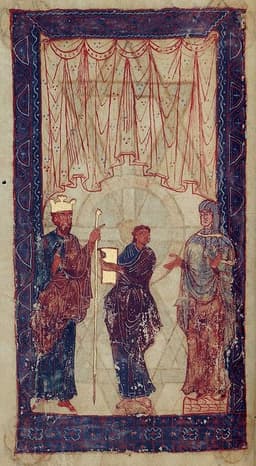
Ferdinand I of Leon
Emperor · Medieval
59.2Total
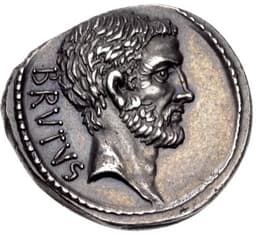
Lucius Junius Brutus
Politician · Ancient
72.7Total
Basic Information
Born
1015
-540
Died
1065
-509
Era
Medieval
Ancient
Nationality
Leon
Roman Republic
Occupation
Emperor
Politician
Civilization
Western
Western
Score Comparison
Military (10%)
70.0
45.0
Political (20%)
68.0
72.0
Influence (20%)
56.4
75.0
Legacy (20%)
49.2
90.0
Leadership (15%)
66.0
71.0
Strategy (15%)
57.5
54.8
TOTAL
59.2
72.7
Ferdinand I of Leon — Complete Timeline
1029 AD
Inheritance of the County of CastilePolitical Action◆ Major
Ferdinand I inherited the County of Castile from his father Sancho III of Navarre. He later expanded his territory through conquest and marriage, laying the foundation for the Kingdom of Castile.
Impact: regionalconstructive
1037 AD
Conquest of LeónWar◆ Major
Ferdinand I defeated and killed King Bermudo III of Le
Impact: regional
1056 AD
First Emperor of SpainPolitical Action◆ Major
Ferdinand I was crowned 'Imperator totius Hispaniae' (Emperor of all Spain) in 1056, claiming suzerainty over all Christian and Muslim rulers in Iberia. This title reflected his military dominance and political ambition.
Impact: regional
1065 AD
Division of the kingdomPolitical Action◆ Major
Upon his death, Ferdinand I divided his kingdom among his sons: Sancho II received Castile, Alfonso VI received Le
Impact: regionaldestructive
Lucius Junius Brutus — Complete Timeline
509 BC
Battle of Silva ArsiaWar◆ Major
Brutus led the Roman army against the forces of Tarquinius Superbus and his Etruscan allies at Silva Arsia. During the battle, Brutus and Arruns Tarquinius, the king's son, killed each other in single combat, but the Romans ultimately won the battle, securing the Republic's survival.
BattleSingle CombatFounding Myth
Impact: nationaltragic
Expulsion of the TarquinsPolitical Action
Lucius Junius Brutus led a revolt against the Tarquin monarchy after the rape of Lucretia by Sextus Tarquinius. He organized the Senate and the people to expel the royal family, ending the Roman Kingdom and establishing the Roman Republic with himself as one of the first consuls.
RevolutionFounding of RepublicOverthrow of Monarchy
Impact: globalprogressive
Execution of His SonsPolitical Action◆ Major
Brutus discovered that his own sons, Titus and Tiberius, had conspired to restore the Tarquins. As consul, he ordered their arrest, trial, and execution by beheading in the Forum, demonstrating his unwavering commitment to the Republic over family loyalty.
ExecutionConspiracyRepublican Virtue
Impact: nationaltragic
Oath of BrutusPolitical Action◆ Major
After the expulsion of the Tarquins, Brutus made the Roman people swear an oath never to allow a king to rule Rome again. This oath became a foundational principle of the Republic, reinforcing the commitment to liberty and opposition to tyranny.
OathRepublican IdeologyAnti-Monarchy
Impact: nationalprogressive
Expert Analysis
Lucius Junius Brutus vs Ferdinand I of Leon
### The Emperor and the Executioner
On a dusty battlefield in northern Spain in 1037, a king fell. Bermudo III of León was dead, and a new power rose to claim his crown. A thousand miles away and fifteen centuries earlier, in the Roman Forum, a consul watched in silence as his own sons were led away to be beaten to death with rods. Two men, Ferdinand I of León and Lucius Junius Brutus, each forged a nation from blood and law. But where one built a kingdom that would fracture at his death, the other built a republic that would endure for centuries. Why did their paths diverge so sharply? The answer lies not in their ambitions, but in the worlds they inherited.
### Origins
Ferdinand was born into a world of Christian kingdoms and Muslim taifas, a patchwork of warring states on the Iberian Peninsula. His father, Sancho III of Navarre, was a master of dynastic politics, and young Ferdinand grew up in a court where power was measured in land and oaths. He was a prince of the medieval order, where kings ruled by God’s grace and the sword.
Brutus, by contrast, emerged from the shadow of a tyrannical monarchy. In the sixth century BC, Rome was a city ruled by the Etruscan Tarquin dynasty, a line infamous for arrogance and cruelty. Brutus was a patrician, but one who had seen his own brother murdered by the king. He learned early that power could corrupt absolutely, and that survival required a mask of foolishness—hence his nickname, "Brutus," meaning dullard. His world was one of clan feuds and foreign kings, where the only law was the will of the strong.
### Rise to Power
Ferdinand’s ascent was a matter of inheritance and conquest. In 1029, he inherited the County of Castile from his father, a strategic prize. Then, in 1037, he met Bermudo III at the Battle of Tamarón. The Leonese king was killed, and Ferdinand simply claimed his kingdom. It was a clean, brutal transfer of power—a medieval transaction sealed in blood. By 1056, he had grown so powerful that he had himself crowned "Imperator totius Hispaniae," Emperor of all Spain, a title that proclaimed his dominance over Christian and Muslim alike.
Brutus’s rise was a revolution. In 509 BC, after the rape of Lucretia by the king’s son, Brutus seized the moment. He did not inherit power; he created it. He led the people in expelling the Tarquins, then swore an oath that no king would ever rule Rome again. His power came not from a crown, but from the consent of a furious populace. He became one of the first consuls, a leader elected for a single year.
### Leadership & Governance
Ferdinand ruled as a medieval emperor. He led campaigns against the Moors, extracting tribute and expanding his domains. But his governance was feudal: he rewarded his nobles with land and relied on their loyalty. His greatest political act was also his most fateful: in 1065, on his deathbed, he divided his kingdom among his three sons. Sancho got Castile, Alfonso got León, and García got Galicia. It was a standard practice of the age, meant to keep peace among heirs. It guaranteed civil war.
Brutus governed as a republican founder. He created the office of consul, with two men sharing power for a single year, each able to veto the other. He established the Senate as a check on executive authority. His greatest act of leadership was also his most terrible: when his own sons conspired to restore the monarchy, he ordered their execution. He did not spare them because they were his blood. He killed them because the republic was more important than any family.
### Triumph & Tragedy
Ferdinand’s triumph was his coronation as Emperor of Spain, a moment that united the Christian kingdoms under one banner—on paper. His tragedy was his division of that empire. Within years of his death, his sons were at each other’s throats. The dream of a unified Spain shattered into fratricidal war.
Brutus’s triumph was the expulsion of the Tarquins and the birth of the Roman Republic. His tragedy was personal: he died at the Battle of Silva Arsia, fighting the very king he had deposed. But his death was a martyrdom. He fell in battle, but his republic lived on. His sons died for treason, but his oath survived for centuries.
### Character & Destiny
Ferdinand was a pragmatist. He built his power through marriage, war, and diplomacy. He was a product of his time, and he thought like a king: the kingdom was his property, to be divided as he saw fit. He could not imagine a state that outlasted its ruler.
Brutus was a fanatic. He was willing to sacrifice everything—his reputation, his sons, his life—for an idea. He believed that liberty was more important than blood. His character was forged in hatred of tyranny, and that hatred gave him the strength to do what no king could: put the state above himself.
### Legacy
Ferdinand’s legacy is mixed. He is remembered as the first Emperor of Spain, a forerunner of the unification that would come centuries later under Isabella and Ferdinand. But his division of the kingdom is a cautionary tale. He is a figure of medieval ambition, not of lasting institutions.
Brutus’s legacy is monumental. He is the founder of the Roman Republic, the man whose oath became the foundation of Roman liberty. His execution of his sons became a symbol of republican virtue, celebrated by historians and poets for millennia. He is a hero of the classical world, a man who proved that a state could be built on law, not blood.
### Conclusion
Ferdinand I and Lucius Junius Brutus both stood at the birth of a nation. One saw his kingdom as a family inheritance, to be passed down and divided. The other saw his republic as a sacred trust, to be defended even against his own children. Ferdinand’s empire crumbled within a generation. Brutus’s republic endured for five centuries. The difference was not in their courage or their intelligence. It was in their vision. One built a house for his sons. The other built a temple for his people.
Rankings
🥇
Lucius Junius BrutusLeader
Mil: 45.0Pol: 72.0Inf: 75.0
72.7
🥈
Ferdinand I of Leon
Mil: 70.0Pol: 68.0Inf: 56.4
59.2
+13.5 behind
How This Comparison Works
Algorithm
Each figure is scored on 6 dimensions (0—100 scale) based on structured historical data: Military (10%), Political (20%), Influence (20%), Legacy (20%), Leadership (15%), Strategy (15%). The weighted total produces the final ranking.
Data Sources
Scores are computed from structured sub-indicators in the database. Scale factors adjust for era (Ancient ×0.85, Modern ×1.0) and civilization size (Eastern ×1.05, Other ×0.80) to account for differences in population and military scale.
Maximum 3 Figures
Comparisons are limited to 2—3 figures to ensure readability and statistical meaningfulness.
Error Margins
±5 points per dimension — Sub-scores are derived from historical records with inherent uncertainty. Two figures within 5 points on a dimension should be considered roughly equivalent in that area.
Total Score Accuracy
±3 points overall — The weighted combination of 6 dimensions produces a total score with approximately ±3 points of uncertainty. Differences of less than 3 points are not statistically significant— the figures are effectively tied.
Known Limitations
- Historical records are incomplete and uneven across civilizations
- Figures from oral-tradition societies may be underrepresented
- Occupation labels can misclassify multi-role figures
- Scores measure capability and impact, not moral character
- Quantitative scoring is a comparison tool, not absolute truth
Capability Radar
Military (10%) — Battles & Warfare
Battles
55
10
Win Rate
60
10
Expansion
60
10
Political (20%) — Governance & Reform
Reform
50
90
Diplomacy
55
40
Economy
45
30
Influence (20%) — Cultural & Global Reach
Cultural
40
70
Global
30
70
Legacy (20%) — Historical Impact
Historical
45
80
Longevity
40
80
Leadership (15%) — Power & Stability
Tenure
65
30
Stability
50
40
Strategy (15%) — Tactics & Innovation
Strategy
55
10
Tactics
50
10
Reform
40
20
Similar Comparisons
Comments & Discussion
FORUM FURY6/16/2026
The analysis is wrong about endurance—Ferdinand's León actually survived intact for centuries as a dynastic unit until its partition was undone by his grandson Alfonso VI within a generation. Brutus' Republic? It collapsed into civil war within two decades of his death. Take your "longevity" narrative and shove it; Brutus built a suicide pact, not a state.
帝国独裁者6/16/2026
费迪南一世至少把自己的儿子们教育得忠诚,而布鲁图斯呢?他亲眼看着自己的儿子被活活打死,还觉得这是美德。这根本不是建造共和,这是精神变态的血腥仪式。罗马共和确实延续了,但代价是布鲁图斯自己先变成了冷血怪物。莱昂王国靠铁血和信仰建立,不比这种疯狂更坚强?
CLASSICS SNARK6/16/2026
Leave it to a medievalist to miss Brutus' actual genius: he wielded the myth of the "wise fool" as a political weapon, outlasting Tarquin's reign by playing dumb while aristocrats exposed themselves. Ferdinand got handed a kingdom by daddy's will; Brutus had to outthink an entire dynasty. That's not "inherited achievement"—that's earned in blood and sweat.
数据打脸侠6/16/2026
比较里说布鲁图斯的共和“延续数百年”,但有史可查:公元前509年他建立共和,但公元前494年就爆发了第一次平民离城运动,共和国差点散伙。费迪南一世1037年统一莱昂和卡斯蒂利亚,到他孙子阿方索六世1085年攻下托莱多,王国稳得一批。说共和更持久?看看你的年限再吹。
REVISIONIST RANT6/16/2026
You're still buying Rome's propaganda. Brutus wasn't building a republic; he was purging rivals in a coup, using the "execution of sons" as a PR stunt to legitimize his takeover. Ferdinand fought for his throne on the field at Tamarón against a legitimate king—that's real statecraft, not theater. Brutus is a blue-blooded tyrant with a good spin doctor.
历史老饕6/16/2026
喂,别忽视一个关键:莱昂王国本身是用血与火从摩尔人手里抢来的,而布鲁图斯只是在罗马城里的贵族圈子里打架。费迪南一世一边打仗一边立法,搞出《卡斯蒂利亚法典》的雏形;布鲁图斯呢?他的主要功绩就是杀了自家小孩,然后照抄埃特鲁里亚人的法律。哪个更像个真正的建国者?皇帝甩了行刑者十条街。