Loading...
Ferdinand I of Leon vs Winston Churchill
Winston Churchill leads by 12.6 pts · 2 figures compared
…
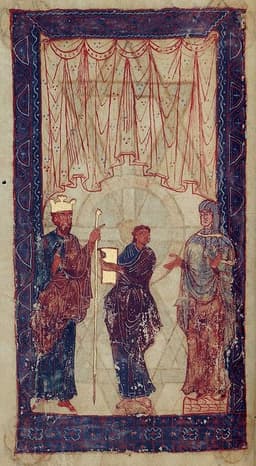
Ferdinand I of Leon
Emperor · Medieval
59.2Total
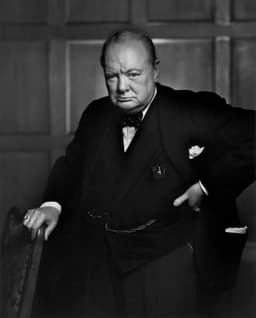
Winston Churchill
Politician · Modern
71.8Total
Basic Information
Born
1015
1874
Died
1065
1965
Era
Medieval
Modern
Nationality
Leon
United Kingdom
Occupation
Emperor
Politician
Civilization
Western
Western
Score Comparison
Military (10%)
70.0
55.0
Political (20%)
68.0
78.0
Influence (20%)
56.4
75.0
Legacy (20%)
49.2
68.0
Leadership (15%)
66.0
82.0
Strategy (15%)
57.5
65.0
TOTAL
59.2
71.8
Ferdinand I of Leon — Complete Timeline
1029 AD
Inheritance of the County of CastilePolitical Action◆ Major
Ferdinand I inherited the County of Castile from his father Sancho III of Navarre. He later expanded his territory through conquest and marriage, laying the foundation for the Kingdom of Castile.
Impact: regionalconstructive
1037 AD
Conquest of LeónWar◆ Major
Ferdinand I defeated and killed King Bermudo III of Le
Impact: regional
1056 AD
First Emperor of SpainPolitical Action◆ Major
Ferdinand I was crowned 'Imperator totius Hispaniae' (Emperor of all Spain) in 1056, claiming suzerainty over all Christian and Muslim rulers in Iberia. This title reflected his military dominance and political ambition.
Impact: regional
1065 AD
Division of the kingdomPolitical Action◆ Major
Upon his death, Ferdinand I divided his kingdom among his sons: Sancho II received Castile, Alfonso VI received Le
Impact: regionaldestructive
Winston Churchill — Complete Timeline
1940 AD
Appointed Prime Minister of the United KingdomPolitical Action◆ Major
On May 10, 1940, Winston Churchill became Prime Minister of the United Kingdom, replacing Neville Chamberlain. His appointment came as Nazi Germany invaded France and the Low Countries, and Churchill formed a coalition government to lead Britain through World War II.
World War IILeadershipCoalition Government
Impact: globalconstructive
Delivered the 'We Shall Fight on the Beaches' SpeechOther◆ Major
On June 4, 1940, Churchill delivered a speech to the House of Commons following the evacuation of British forces from Dunkirk. He declared that Britain would fight on the beaches, landing grounds, fields, streets, and hills, and never surrender, rallying British morale during the darkest days of World War II.
World War IIOratoryMorale
Impact: nationalconstructive
1941 AD
Signed the Atlantic CharterOther◆ Major
On August 14, 1941, Churchill and U.S. President Franklin D. Roosevelt signed the Atlantic Charter aboard HMS Prince of Wales. This joint declaration outlined post-war goals including self-determination, disarmament, and free trade, and became a foundational document for the Allied war aims and the United Nations.
World War IIAllied CooperationPost-war Planning
Impact: globalconstructive
1945 AD
Attended the Yalta ConferenceOther◆ Major
In February 1945, Churchill attended the Yalta Conference with Roosevelt and Stalin to discuss the post-war reorganization of Europe. The conference agreed on the division of Germany, the establishment of the United Nations, and the fate of Eastern Europe, though Churchill later expressed regret over concessions to Stalin.
World War IIPost-war SettlementBig Three
Impact: global
1946 AD
Delivered the 'Iron Curtain' SpeechOther◆ Major
On March 5, 1946, Churchill delivered a speech at Westminster College in Fulton, Missouri, where he stated that an 'iron curtain' had descended across Europe from Stettin to Trieste. This speech is widely regarded as marking the beginning of the Cold War, as it highlighted the division between Soviet-controlled Eastern Europe and the West.
Cold WarSoviet UnionDivision of Europe
Impact: globaldestructive
1953 AD
Awarded the Nobel Prize in LiteratureOther◆ Major
In 1953, Churchill was awarded the Nobel Prize in Literature for his historical writings, particularly 'The Second World War' and 'A History of the English-Speaking Peoples'. The Nobel committee cited his mastery of historical and biographical description as well as his brilliant oratory in defending human values.
LiteratureNobel PrizeHistorical Writing
Impact: nationalconstructive
Expert Analysis
Ferdinand I of Leon vs Winston Churchill
### The Lion and the Emperor: Two Paths to Power in the West
In the winter of 1940, as German bombs rained down on London, a stout, cigar-chomping man with a bulldog jaw stood before the House of Commons and declared that Britain would “never surrender.” Nine centuries earlier, in the sun-baked plains of northern Spain, a warrior-king named Ferdinand I knelt in the cathedral of León, receiving a crown that proclaimed him “Emperor of all Spain.” One man saved a nation from annihilation; the other forged a kingdom from blood and faith. Both were titans of the Western world, yet their legacies could not be more different. Why did Churchill become a global icon while Ferdinand remains a footnote? The answer lies not in their deeds, but in the eras that shaped them and the destinies they chose.
### Origins
Winston Churchill was born in 1874 into the gilded heart of the British aristocracy—Blenheim Palace, a monument to his ancestor the Duke of Marlborough. His father, Lord Randolph, was a brilliant but erratic politician; his mother, Jennie, was an American socialite. Young Winston was a poor student, rebellious and lonely, but he devoured history and dreamed of martial glory. He grew up in an age of empire, when Britain ruled the waves and the world seemed ordered by Victorian certainties. This was a world of global reach, where a man could shape events on a continental scale.
Ferdinand I, born around 1015, emerged from a very different world—a fragmenting, violent Christendom. He was the second son of Sancho III of Navarre, a king who had briefly united Christian Spain. The Reconquista was underway, a centuries-long struggle between Christian kingdoms and Moorish taifas. Ferdinand inherited not a secure throne but a contested county, Castile, in 1029. His world was local, feudal, and brutal: power was measured in castles, oaths, and the edge of a sword. There were no parliaments, no newspapers, no global stage—only the relentless grind of dynastic war.
### Rise to Power
Churchill’s path was one of sheer will. He first tasted war as a cavalry officer in India and Sudan, then as a war correspondent in the Boer War, where his dramatic escape from a prisoner-of-war camp made him a national hero. He entered Parliament in 1900, switching parties twice in pursuit of power. His rise was marked by boldness—and catastrophic miscalculations. The Gallipoli campaign of 1915, which he championed as First Lord of the Admiralty, ended in disaster, costing him his post and nearly his career. He spent the 1930s in the political wilderness, warning of Nazi Germany while most of Britain hoped for peace. Only in 1940, when all seemed lost, did the nation turn to him.
Ferdinand’s ascent was simpler, bloodier, and more direct. In 1037, he challenged King Bermudo III of León, a rival who had inherited his kingdom. At the Battle of Tamarón, Ferdinand’s forces crushed the Leonese army, and Bermudo himself fell in the fighting. Ferdinand then claimed León by right of conquest—and by marriage to Bermudo’s sister, Sancha. It was a classic medieval gambit: kill the king, marry the princess, and call it law. Within a decade, he had united León, Castile, and Galicia under one crown. In 1056, he was crowned “Imperator totius Hispaniae”—Emperor of all Spain—a title that proclaimed his supremacy over every Christian ruler on the peninsula.
### Leadership & Governance
Churchill governed through the spoken word. His speeches—“We shall fight on the beaches,” “Their finest hour”—were weapons as potent as Spitfires. He was a master of coalition, forging an alliance with the United States and the Soviet Union, and a relentless optimist who refused to countenance defeat. But his military strategy was often erratic; he micromanaged campaigns in Norway, Greece, and North Africa, with mixed results. His genius was not tactical but inspirational. As one general put it, he was “the greatest man to lead a nation in crisis, but the worst to manage a war in detail.”
Ferdinand ruled through the sword and the cross. He led campaigns against the Moors, capturing the city of Coimbra in 1064 and forcing the taifas to pay tribute—a system of extortion that enriched his kingdom without destroying his enemies. He was a shrewd politician, using marriage alliances and church patronage to bind his nobles to him. Yet his military score of 60.1 reflects a cautious, methodical commander, not a spectacular one. He preferred siege and tribute to open battle, a strategy that slowly expanded his realm but never delivered a decisive blow. His political wisdom was evident in his empire-building, but his vision was limited to the Iberian peninsula.
### Triumph & Tragedy
Churchill’s greatest triumph was the survival of Britain in 1940–41, when every ally had fallen and the United States had not yet entered the war. His defiance turned a small island into a symbol of resistance for the free world. But his tragedy came in 1945: having won the war, he lost the peace. The British electorate, weary of austerity and hungry for social reform, voted him out of office just months after Germany’s surrender. It was a brutal personal blow. He returned as Prime Minister in 1951, but his second term was marked by imperial decline and economic stagnation—a bitter anticlimax.
Ferdinand’s triumph was the unification of Christian Spain under his crown. By 1065, he was the most powerful ruler on the peninsula, feared by Moors and respected by popes. But his tragedy was a failure of succession. He divided his kingdom among his three sons—Sancho, Alfonso, and García—as if it were private property. The result was a generation of fratricidal war that undid much of his work. His empire shattered because he could not imagine a kingdom that outlived its king. In this, he was a man of his time: medieval kings built for themselves, not for posterity.
### Character & Destiny
Churchill was a man of immense ego and romanticism. He believed in destiny, in the “great man” theory of history, and in his own role as the defender of civilization. He was also deeply flawed: a depressive (his “black dog”), a racist, and a man who clung to empire long after it was viable. His character drove him to take colossal risks—Gallipoli, the Norwegian campaign, the alliance with Stalin—and sometimes those risks paid off, sometimes they did not. His destiny was to be the right man for the worst moment.
Ferdinand was a man of calculation and piety. He saw himself as God’s instrument, a king who brought Christian order to a fractured land. He was less impulsive than Churchill, more conservative in strategy, and more bound by the feudal logic of his time. His character made him a successful conqueror but a poor founder. He could win battles and collect tribute, but he could not build institutions that outlasted his will. His destiny was to be a builder, not a visionary.
### Legacy
Churchill’s legacy is global. His name is synonymous with wartime leadership, and his speeches are quoted in every crisis. He won the Nobel Prize in Literature in 1953, a testament to his power with words. Statues of him stand in London, Paris, and Washington. Yet his legacy is also contested: his views on India, Ireland, and race have drawn sharp criticism. He remains a symbol of defiant freedom—and of imperial nostalgia.
Ferdinand’s legacy is local. He is remembered in Spain as a unifier, the first to claim the title of emperor, and a key figure in the Reconquista. But his division of the kingdom is seen as a cautionary tale. He has no statues abroad, no Nobel Prize, no place in the global imagination. His score of 67.0 reflects a competent but not transcendent leader—a man who did his job in his time and was then forgotten by the world.
### Conclusion
What separates a Churchill from a Ferdinand is not merely talent, but the stage on which history unfolds. Churchill lived in an age of global conflict, mass media, and democratic politics—a stage that amplified his every word. Ferdinand lived in an age of local war, feudal oaths, and monastic chronicles—a stage that limited his reach to a few dusty plains. One became a symbol of the human will to resist; the other became a name in a textbook. Both were products of their eras, and both did what their eras demanded. In the end, the difference between them is not greatness, but the accident of when and where they were born. And perhaps that is the deepest lesson: history does not remember the best, but the most visible.
Rankings
🥇
Winston ChurchillLeader
Mil: 55.0Pol: 78.0Inf: 75.0
71.8
🥈
Ferdinand I of Leon
Mil: 70.0Pol: 68.0Inf: 56.4
59.2
+12.6 behind
How This Comparison Works
Algorithm
Each figure is scored on 6 dimensions (0—100 scale) based on structured historical data: Military (10%), Political (20%), Influence (20%), Legacy (20%), Leadership (15%), Strategy (15%). The weighted total produces the final ranking.
Data Sources
Scores are computed from structured sub-indicators in the database. Scale factors adjust for era (Ancient ×0.85, Modern ×1.0) and civilization size (Eastern ×1.05, Other ×0.80) to account for differences in population and military scale.
Maximum 3 Figures
Comparisons are limited to 2—3 figures to ensure readability and statistical meaningfulness.
Error Margins
±5 points per dimension — Sub-scores are derived from historical records with inherent uncertainty. Two figures within 5 points on a dimension should be considered roughly equivalent in that area.
Total Score Accuracy
±3 points overall — The weighted combination of 6 dimensions produces a total score with approximately ±3 points of uncertainty. Differences of less than 3 points are not statistically significant— the figures are effectively tied.
Known Limitations
- Historical records are incomplete and uneven across civilizations
- Figures from oral-tradition societies may be underrepresented
- Occupation labels can misclassify multi-role figures
- Scores measure capability and impact, not moral character
- Quantitative scoring is a comparison tool, not absolute truth
Capability Radar
Military (10%) — Battles & Warfare
Battles
55
55
Win Rate
60
60
Expansion
60
40
Political (20%) — Governance & Reform
Reform
50
70
Diplomacy
55
85
Economy
45
60
Influence (20%) — Cultural & Global Reach
Cultural
40
85
Global
30
85
Legacy (20%) — Historical Impact
Historical
45
90
Longevity
40
80
Leadership (15%) — Power & Stability
Tenure
65
75
Stability
50
70
Strategy (15%) — Tactics & Innovation
Strategy
55
85
Tactics
50
65
Reform
40
70
Similar Comparisons
Comments & Discussion
Cigar&Sword6/16/2026
Churchill saved civilization with words and willpower; Ferdinand just conquered some dusty Spanish villages. One gave us "their finest hour," the other gave us...a tax system for pilgrims? Facts don't lie: Churchill's 1940 speeches mobilized millions, while Ferdinand's biggest achievement was getting the pope to call him emperor for a day. Military historian's verdict: Churchill changed the world; Ferdinand changed a map.
数据侦探6/16/2026
数据党来了啊——比面积、人口、影响力,Churchill完虐Ferdinand十条街。Ferdinand那点“帝国”连伦敦一个区都塞不下,军队能打苏格兰一个小郡就不错了。战争数据?他把摩尔人打得丢盔弃甲是牛逼,但别忘了人家当时已经内斗成渣了。Churchill面对的是纳粹战争机器,赢的是全球性战役。别拿地头蛇跟真龙比。
NumismaticNerd6/16/2026
Coins don't lie, and Ferdinand's are the real flex. His silver denarii literally read "Imperator totius Hispaniae" — Emperor of All Spain. Churchill got a face on the £5 note decades after dying. Ferdinand's coinage shows him crowned by God, approved by the Pope, ruling by divine right AND conquest. That's not a footnote — that's proof his contemporaries saw him as the Western Roman Emperor reborn.
古典学家6/16/2026
等一下,拿Churchill比Ferdinand I?这好比拿莎士比亚比《熙德之歌》。Ferdinand是克里斯玛型领袖——他统一了莱昂、卡斯蒂利亚、加利西亚,建立了一套司法体系影响后世几百年。他的“帝国”称号不是虚的,是对抗摩尔人的精神旗帜。Churchill伟大,但西方文明在8-11世纪的存续靠的是这些“footnote”们打下的地基。别用20世纪的视网膜看11世纪的世界。
MidnightRevisionist6/16/2026
真相是:Churchill赢在会写书,Ferdinand赢在会打仗。Churchill的二战史把自己塑造成了唯一救世主,Ferdinand可没那资源搞公关。Ferdinand把西班牙从摩尔人手里一寸寸啃回来,建立了欧洲最早的民族统一体之一。Churchill呢?放任1943年孟加拉饥荒饿死三百万印度人,还觉得这是“战争代价”。别没事给伟人镀金了,承认Ferdinand被忽略是因为历史是胜利者写的——而Ferdinand的胜利没赶上印刷术和纪录片。