Loading...
Ferdinand I of Leon vs Wanyan Aguda
Wanyan Aguda leads by 4.2 pts · 2 figures compared
…
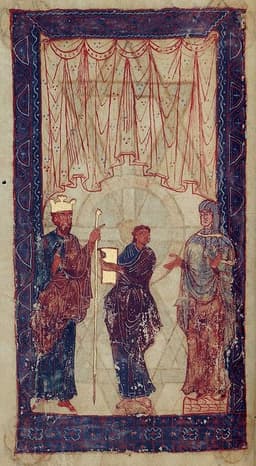
Ferdinand I of Leon
Emperor · Medieval
59.2Total
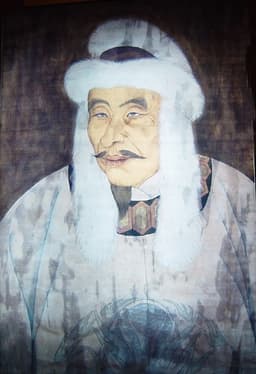
Wanyan Aguda
Emperor · Medieval
63.4Total
Basic Information
Born
1015
1068
Died
1065
1123
Era
Medieval
Medieval
Nationality
Leon
China
Occupation
Emperor
Emperor
Civilization
Western
Eastern
Score Comparison
Military (10%)
70.0
82.0
Political (20%)
68.0
59.3
Influence (20%)
56.4
55.0
Legacy (20%)
49.2
52.0
Leadership (15%)
66.0
85.0
Strategy (15%)
57.5
68.0
TOTAL
59.2
63.4
Ferdinand I of Leon — Complete Timeline
1029 AD
Inheritance of the County of CastilePolitical Action◆ Major
Ferdinand I inherited the County of Castile from his father Sancho III of Navarre. He later expanded his territory through conquest and marriage, laying the foundation for the Kingdom of Castile.
Impact: regionalconstructive
1037 AD
Conquest of LeónWar◆ Major
Ferdinand I defeated and killed King Bermudo III of Le
Impact: regional
1056 AD
First Emperor of SpainPolitical Action◆ Major
Ferdinand I was crowned 'Imperator totius Hispaniae' (Emperor of all Spain) in 1056, claiming suzerainty over all Christian and Muslim rulers in Iberia. This title reflected his military dominance and political ambition.
Impact: regional
1065 AD
Division of the kingdomPolitical Action◆ Major
Upon his death, Ferdinand I divided his kingdom among his sons: Sancho II received Castile, Alfonso VI received Le
Impact: regionaldestructive
Wanyan Aguda — Complete Timeline
1114 AD
Battle of HubudagangWar◆ Major
Aguda's Jurchen forces defeated a Liao army at Hubudagang, marking the first major victory of the rebellion. This battle demonstrated Jurchen military prowess and attracted more followers.
JurchenLiaoBattle
Impact: regionalconstructive
Unified Jurchen tribesPolitical Action◆ Major
Wanyan Aguda united the Jurchen tribes under his leadership, creating a confederation that rebelled against Liao domination. He organized a disciplined army and began the Jurchen revolt.
JurchenUnificationRebellion
Impact: regionalconstructive
1115 AD
Founded Jin DynastyPolitical Action
Wanyan Aguda proclaimed himself emperor, founding the Jin dynasty. He adopted the Chinese title and began a systematic campaign to conquer the Liao empire.
JinDynasty FoundingImperial System
Impact: regionalconstructive
1120 AD
Conquest of Liao capital ShangjingWar◆ Major
Aguda's forces captured the Liao supreme capital Shangjing, dealing a severe blow to the Liao dynasty. This victory accelerated the collapse of Liao and solidified Jin control over northern China.
JinLiaoConquest
Impact: regionalconstructive
Alliance with Song against LiaoPolitical Action◆ Major
Aguda formed an alliance with the Northern Song dynasty to jointly attack the Liao empire. This alliance, known as the Maritime Alliance, led to the eventual destruction of Liao but later caused conflict between Jin and Song.
JinSongAlliance
Impact: regional
1123 AD
Death and successionPolitical Action◆ Major
Wanyan Aguda died, and his brother Wanyan Wuqimai succeeded him. Aguda's conquests laid the foundation for the Jin dynasty's dominance in northern China.
JinDeathSuccession
Impact: regional
Expert Analysis
Ferdinand I of Leon vs Wanyan Aguda
### The Emperor Who Never Was: Wanyan Aguda and Ferdinand I of León
In the winter of 1120, a Jurchen chieftain named Wanyan Aguda stood before the smoking ruins of Shangjing, the supreme capital of the Liao dynasty. His horsemen, hardened by a lifetime of hunting and war, had shattered an empire that had dominated East Asia for two centuries. Half a world away, thirty years earlier, Ferdinand I of León had entered the ancient city of León in triumph, his sword still wet from the Battle of Tamarón, where he had killed his own brother-in-law to claim a crown. Both men were hailed as emperors. Both built kingdoms from blood and ambition. Yet one founded a dynasty that would rule for a century, while the other’s empire crumbled within a generation. The difference lay not in their swords, but in the worlds they inherited.
### Origins: The Steppe and the Cross
Wanyan Aguda was born in 1068 into the forests and rivers of Manchuria, a land where survival depended on the bow and the bond of clan. The Jurchen tribes were subjects of the Liao dynasty—a vast Khitan empire that treated them as little more than tribute-paying barbarians. Aguda grew up watching Liao officials demand furs, horses, and young women, and he learned early that power was something you took, not something you were given. His father and grandfather had been chieftains, but the Jurchen were fractured, each tribe suspicious of the next. Aguda’s genius lay in seeing that unity was the only path to freedom.
Ferdinand I was born in 1015 into a very different world: the Christian kingdoms of northern Iberia, where the Reconquista—the centuries-long struggle to reclaim land from the Moors—gave every king a holy purpose. He was the son of Sancho III of Navarre, the most powerful Christian ruler in Spain, and grew up in courts where Latin, law, and lineage mattered as much as swords. Unlike Aguda, Ferdinand inherited a title—the County of Castile—from his father in 1029, a stepping stone to greater things. His world was one of charters and alliances, where a crown could be won through marriage, inheritance, and the blessing of the Church.
### Rise to Power: Rebellion and Inheritance
Aguda’s rise was a rebellion. In 1114, he united the Jurchen tribes under a single war banner, a feat that required not just military skill but political cunning. He promised his chieftains a share of the Liao’s wealth—gold, silk, and slaves—and gave them a common enemy. That same year, at the Battle of Hubudagang, his outnumbered forces crushed a Liao army, proving that the Khitan were not invincible. The victory ignited a wildfire: tribe after tribe flocked to his cause. In 1115, Aguda declared himself emperor, founding the Jin dynasty. He adopted the Chinese title of *huangdi*, but he never forgot his roots. He ruled from a tent, ate with his warriors, and led charges himself.
Ferdinand’s path was more legalistic. In 1037, he defeated and killed King Bermudo III of León at the Battle of Tamarón, claiming the kingdom through his wife, Sancha, who was Bermudo’s sister. It was a brutal act, but it was dressed in the language of inheritance and right. Ferdinand then spent years consolidating his rule, fighting not just Moors but also rebellious Christian nobles. In 1056, he was crowned *Imperator totius Hispaniae*—Emperor of all Spain—a title that asserted his supremacy over the other Christian kings of the peninsula. But his empire was a patchwork of territories, each with its own laws, languages, and loyalties.
### Leadership & Governance: The Bow and the Scepter
Aguda’s leadership was visceral. He led from the front, sharing his men’s hardships, and his military strategy was simple: attack before the enemy could unite. In 1120, he captured the Liao capital Shangjing, a city of palaces and walls that his horsemen had never seen before. But Aguda was also a politician. He formed the Alliance of the Sea with the Northern Song dynasty in 1120, a pact to destroy the Liao from both sides. It was a masterstroke of diplomacy that gave him access to Chinese resources and technology. Yet Aguda never fully trusted the Song—they were too civilized, too soft. He knew that in the end, only the Jurchen could save themselves.
Ferdinand’s style was more institutional. He reformed the administration of León and Castile, codifying laws and strengthening the Church as a pillar of royal authority. His campaigns against the Moors were measured and deliberate—he expanded his territory not through blitzkrieg but through siege and negotiation, demanding tribute from Muslim taifa kingdoms. His military score of 60.1 reflects a cautious commander, not a conqueror. Ferdinand’s strategy score of 45.7 is telling: he lacked Aguda’s instinct for the decisive blow. Instead, he built slowly, laying foundations for a kingdom that would last.
### Triumph & Tragedy: The Crown and the Breaking
Aguda’s greatest triumph was the destruction of the Liao dynasty, a feat that seemed impossible in 1114. By 1123, when he died of illness at age 55, the Jin dynasty controlled most of northern China. His tragedy was that he did not live to see the final conquest of the Song—a task left to his brother, Wanyan Wuqimai, who succeeded him. Aguda’s empire was built on momentum, and his death risked a power vacuum. But the Jurchen had been forged into a nation, and they would endure.
Ferdinand’s triumph was his coronation as Emperor of Spain in 1056, a moment that symbolized Christian unity against the Moors. His tragedy was his own death in 1065. Following the old Frankish custom, Ferdinand divided his kingdom among his three sons: Sancho II received Castile, Alfonso VI received León, and García received Galicia. Within years, the brothers were at war, tearing apart everything their father had built. Ferdinand’s legacy score of 65.2 suffers from this fatal error—a king who could unite a kingdom but could not keep it whole.
### Character & Destiny: The Warrior and the Lawgiver
Aguda’s character was forged in the crucible of the steppe. He was ruthless, charismatic, and pragmatic—a man who could slaughter a Liao garrison one day and negotiate with Song diplomats the next. His leadership score of 88.4 reflects a commander who inspired absolute loyalty. He died as he lived: on campaign, with a bow in his hand. His destiny was to break the Khitan yoke and give his people an empire.
Ferdinand’s character was that of a medieval king: pious, calculating, and bound by tradition. He believed in the sanctity of inheritance, which is why he divided his kingdom—a common practice in his era, but a catastrophic one. His political score of 72.0 shows a man who understood power but not the fragility of his own creation. He died in a monastery, having abdicated in his final days, perhaps sensing that his empire was already cracking.
### Legacy: The Dynasty and the Division
Aguda is remembered as the founder of the Jin dynasty, a state that would rule northern China for over a century and set the stage for the Mongol conquest. His influence score of 68.7 is modest, but his place in history is secure: he destroyed one empire and built another, a feat few generals have matched.
Ferdinand’s legacy is more ambiguous. He is honored as the first Emperor of Spain, a title that would later be claimed by the Catholic Monarchs. But his division of the kingdom ensured that the Reconquista would be delayed by decades, as Christian kings fought each other instead of the Moors. His influence score of 74.9 is higher than Aguda’s, but his impact is diluted by his own failure.
### Conclusion: Two Paths to Power
Aguda and Ferdinand both wore the crown of empire, but they lived in different worlds. Aguda’s world was one of blood and iron, where a man’s worth was measured in the enemies he defeated. Ferdinand’s world was one of law and faith, where a king’s duty was to build, not just to conquer. Aguda died in the saddle, his empire still expanding; Ferdinand died in a monastery, his empire already fracturing. One founded a dynasty that would last a century; the other left a kingdom that would take three generations to reunite. In the end, the difference between them was not in their ambitions, but in the worlds they inherited—and the choices they made within them.
Rankings
🥇
Wanyan AgudaLeader
Mil: 82.0Pol: 59.3Inf: 55.0
63.4
🥈
Ferdinand I of Leon
Mil: 70.0Pol: 68.0Inf: 56.4
59.2
+4.2 behind
How This Comparison Works
Algorithm
Each figure is scored on 6 dimensions (0—100 scale) based on structured historical data: Military (10%), Political (20%), Influence (20%), Legacy (20%), Leadership (15%), Strategy (15%). The weighted total produces the final ranking.
Data Sources
Scores are computed from structured sub-indicators in the database. Scale factors adjust for era (Ancient ×0.85, Modern ×1.0) and civilization size (Eastern ×1.05, Other ×0.80) to account for differences in population and military scale.
Maximum 3 Figures
Comparisons are limited to 2—3 figures to ensure readability and statistical meaningfulness.
Error Margins
±5 points per dimension — Sub-scores are derived from historical records with inherent uncertainty. Two figures within 5 points on a dimension should be considered roughly equivalent in that area.
Total Score Accuracy
±3 points overall — The weighted combination of 6 dimensions produces a total score with approximately ±3 points of uncertainty. Differences of less than 3 points are not statistically significant— the figures are effectively tied.
Known Limitations
- Historical records are incomplete and uneven across civilizations
- Figures from oral-tradition societies may be underrepresented
- Occupation labels can misclassify multi-role figures
- Scores measure capability and impact, not moral character
- Quantitative scoring is a comparison tool, not absolute truth
Capability Radar
Military (10%) — Battles & Warfare
Battles
55
85
Win Rate
60
90
Expansion
60
85
Political (20%) — Governance & Reform
Reform
50
75
Diplomacy
55
70
Economy
45
65
Influence (20%) — Cultural & Global Reach
Cultural
40
60
Global
30
50
Legacy (20%) — Historical Impact
Historical
45
70
Longevity
40
55
Leadership (15%) — Power & Stability
Tenure
65
70
Stability
50
60
Strategy (15%) — Tactics & Innovation
Strategy
55
85
Tactics
50
80
Reform
40
75
Similar Comparisons
Comments & Discussion
史海钩沉6/16/2026
把金太祖和阿方索六世之父放一起比?这本身就够荒诞。完颜阿骨打是带领女真从部落联盟到帝国建立的军事天才,而费迪南德一世本质上是靠婚姻和继承拼凑领土的封建领主。阿骨打在出河店之战以少胜多,费迪南德却连收复托莱多都没活到看见。两人唯一的共同点:死后王国都分裂了,但完颜家的金朝撑了百年,莱昂王国?十年就散架了。
传统考据派6/16/2026
史料记载完颜阿骨打"十战九胜",1115年称帝后仅用十年灭辽,而费迪南德一世从1037年继位到1065年去世,连莱昂王国的最大版图都没超出杜罗河盆地。阿骨打创制女真文字、建立猛安谋克制度,是制度创新者;费迪南德只是循例分封土地。说两人都是"皇帝"?前者实至名归,后者不过是自封的头衔。
Historian2066/16/2026
The irony is delicious: both men's empires fractured at their deaths, but Aguda's collapse took 120 years and happened because his Jurchen successors got too soft and sinified. Ferdinand's imploded in 10 years because his sons inherited Iberia's permanent civil war state. The steppe warrior built a machine that outlasted him; the crusader king built a sandcastle in a rainstorm. Guess which one actually understood statecraft.
Historian9116/16/2026
Aguda was a true empire builder who turned 2,500 Jurchen horsemen into a dynasty that crushed the Khitan Liao and forced Song China into humiliating tribute. Ferdinand I? He inherited a Christian kingdom and couldn't even unify Iberia. Aguda's Jin Dynasty lasted 120 years and controlled half of China; Ferdinand's realm fractured after his death. One forged a steppe army into history's weapon, the other was just another medieval king with delusions of grandeur.
Chronicler62046/16/2026
Looking at comparative metrics: Aguda unified the Jurchen tribes (estimated 1-2 million people) and fought the Liao Empire (5+ million troops available). Ferdinand inherited León (population ~500,000) and fought fragmented Taifa kingdoms. Military scale? Aguda's Jin fielded 200,000 troops by 1125; Ferdinand's levy maxed at 10,000. Historical impact? Jin replaced Liao as East Asian hegemon. León? A footnote to Castile's rise. This isn't a contest.