Loading...
Ferdinand I of Leon vs Timur
Timur leads by 6.4 pts · 2 figures compared
…
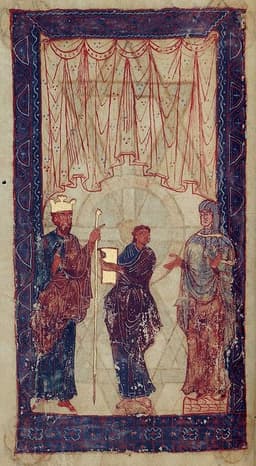
Ferdinand I of Leon
Emperor · Medieval
59.2Total
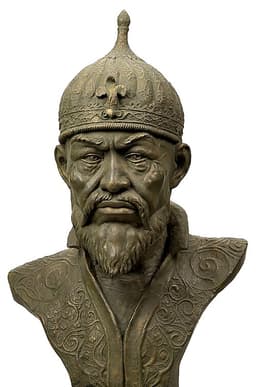
Timur
Emperor · Medieval
65.6Total
Basic Information
Born
1015
1336
Died
1065
1405
Era
Medieval
Medieval
Nationality
Leon
Timurid Empire
Occupation
Emperor
Emperor
Civilization
Western
Middle Eastern
Score Comparison
Military (10%)
70.0
79.0
Political (20%)
68.0
70.0
Influence (20%)
56.4
70.0
Legacy (20%)
49.2
40.0
Leadership (15%)
66.0
79.8
Strategy (15%)
57.5
77.6
TOTAL
59.2
65.6
Ferdinand I of Leon — Complete Timeline
1029 AD
Inheritance of the County of CastilePolitical Action◆ Major
Ferdinand I inherited the County of Castile from his father Sancho III of Navarre. He later expanded his territory through conquest and marriage, laying the foundation for the Kingdom of Castile.
Impact: regionalconstructive
1037 AD
Conquest of LeónWar◆ Major
Ferdinand I defeated and killed King Bermudo III of Le
Impact: regional
1056 AD
First Emperor of SpainPolitical Action◆ Major
Ferdinand I was crowned 'Imperator totius Hispaniae' (Emperor of all Spain) in 1056, claiming suzerainty over all Christian and Muslim rulers in Iberia. This title reflected his military dominance and political ambition.
Impact: regional
1065 AD
Division of the kingdomPolitical Action◆ Major
Upon his death, Ferdinand I divided his kingdom among his sons: Sancho II received Castile, Alfonso VI received Le
Impact: regionaldestructive
Timur — Complete Timeline
1362 AD
Battle of the Terek RiverWar
Timur defeated the Mongol ruler of the Chagatai Khanate, establishing his control over Transoxiana. This victory marked the beginning of his rise to power, as he captured Samarkand and declared himself emir.
Rise to PowerBattleCentral Asia
Impact: regional
1387 AD
Conquest of PersiaWar◆ Major
Timur launched a campaign into Persia, capturing Isfahan and Shiraz. He suppressed a revolt in Isfahan by massacring tens of thousands of inhabitants, establishing his reputation for extreme brutality and consolidating control over the region.
ConquestMassacrePersia
Impact: regionaldestructive
1395 AD
Campaign against the Golden HordeWar◆ Major
Timur defeated the Golden Horde under Tokhtamysh at the Battle of the Terek River. He sacked Sarai, the Horde's capital, and destroyed its trade networks, permanently weakening the Mongol state and securing his northern frontier.
ConquestGolden HordeBattle
Impact: regionaldestructive
1398 AD
Sack of DelhiWar◆ Major
Timur invaded the Delhi Sultanate, defeating Sultan Nasir-ud-Din Mahmud Shah Tughluq. His army sacked Delhi, massacring tens of thousands of civilians and destroying the city's infrastructure, then withdrew with immense plunder.
ConquestMassacreIndia
Impact: regionaldestructive
1402 AD
Battle of AnkaraWar
Timur defeated the Ottoman Sultan Bayezid I at Ankara, capturing him. The victory shattered Ottoman power, leading to a civil war among Bayezid's sons and delaying Ottoman expansion into Europe for a decade.
BattleOttoman EmpireDecisive Victory
Impact: global
1404 AD
Construction of SamarkandCultural◆ Major
Timur invested heavily in transforming Samarkand into a cultural and architectural center. He brought artisans from conquered lands to build mosques, madrasas, and the Bibi-Khanym Mosque, making the city a showcase of Timurid art and learning.
ArchitecturePatronageCultural Center
Impact: regionalconstructive
1405 AD
Death during campaign against Ming ChinaWar◆ Major
Timur died of illness while leading a massive army toward the Ming dynasty's borders. His death ended the planned invasion of China and led to the fragmentation of his empire among his sons and grandsons.
DeathCampaignMing Dynasty
Impact: regional
Expert Analysis
Ferdinand I of Leon vs Timur
# The Emperor Who Built Towers of Skulls and the Emperor Who Built a Kingdom
On a winter morning in 1402, the Ottoman Sultan Bayezid I, known as "the Thunderbolt," found himself in a cage, a captive of a man who walked with a limp and spoke in the old Mongol tongue. Half a world away and three centuries earlier, another ruler—Ferdinand I of León—was being crowned "Emperor of all Spain" in a cathedral, his hands stained not with the blood of fellow Christians but with the dust of Moorish fortresses. Both men claimed the title of emperor. Both led armies. But their paths diverged as sharply as the steppe from the Spanish plain. What drove one to build pyramids of severed heads and the other to build a unified Christian kingdom?
Origins
Timur was born in 1336 near the city of Kesh in Transoxiana, into a minor noble family of the Barlas tribe, a Mongol clan that had adopted Turkic language and Islamic faith. His world was one of fractured khanates, shifting alliances, and endless horse raids. A childhood injury to his right leg and hand earned him the name Timur-e Lang—"Timur the Lame"—a physical limitation that seemed to mock his ambitions. In contrast, Ferdinand I was born in 1015 into the royal House of Navarre, the second son of Sancho III, the most powerful Christian king in Iberia. His inheritance was not a wound but a county: Castile, given to him by his father in 1029. Where Timur clawed his way up from a broken body and a fractured world, Ferdinand stepped onto a stage already built for him.
Rise to Power
Timur’s rise was a brutal climb over bodies. In 1362, at the Battle of the Terek River, he defeated the Mongol ruler of the Chagatai Khanate, seizing control of Transoxiana. He did not simply win—he annihilated. He married into the Mongol royal line to legitimize his rule but never claimed the title of khan, ruling instead as an emir behind a puppet figurehead. His legitimacy came from conquest, not blood. Ferdinand’s path was different. In 1037, he defeated and killed King Bermudo III of León at the Battle of Tamarón, then claimed the throne through his wife, Sancha, Bermudo’s sister. He absorbed León not by erasing it but by marrying it. Where Timur shattered his rivals, Ferdinand absorbed them.
Leadership & Governance
Timur governed through terror and spectacle. After capturing Isfahan in 1387, a revolt broke out. His response was methodical: his soldiers massacred tens of thousands and built towers of their skulls—a grisly calculus designed to make rebellion unthinkable. When he sacked Delhi in 1398, the massacre was so thorough that the city's stench reportedly reached the nearby hills. Yet Timur was no mere destroyer. He brought artisans from every conquered land to Samarkand, transforming it into a jewel of Persianate culture, with blue-tiled mosques and observatories that would inspire the Mughals. His political score of 65 reflects this paradox: a builder who built on rubble.
Ferdinand governed through law and division. He was crowned "Imperator totius Hispaniae" in 1056, a title that claimed suzerainty over all Christian Spain, but he never tried to rule all of it directly. He expanded against the Moors, taking Coimbra and other strongholds, but his campaigns were measured, not scorched earth. His strategy score of 45.7 is telling—he was no tactical genius like Timur. Instead, he was a political architect, creating a stable realm by knowing when to fight and when to negotiate. His greatest act of governance came at his death: he divided his kingdom among his sons, a decision that would lead to civil war but also to the eventual emergence of a unified Castile and León.
Triumph & Tragedy
Timur’s greatest triumph was the Battle of Ankara in 1402, where he crushed the Ottoman Sultan Bayezid I, capturing him and shattering Ottoman power for a decade. It was a masterpiece of strategy: he used his mobility to outflank the Ottoman heavy infantry, then unleashed his horse archers. The tragedy came three years later, in 1405, when he died of illness while marching toward the Ming dynasty’s borders. His invasion of China, planned with meticulous detail, evaporated with his breath. The empire he had built on blood and fear did not survive him; his descendants squabbled over fragments.
Ferdinand’s triumph was his coronation as Emperor of Spain, a symbolic unification of Christian Iberia under one crown. His tragedy was his own deathbed decision. By dividing his kingdom, he ensured decades of fratricidal war among his sons—Sancho, Alfonso, and García—undoing much of his life’s work. Yet that division, ironically, would eventually lead to the marriage of Isabella of Castile and Ferdinand of Aragon, the Catholic Monarchs who completed the Reconquista.
Character & Destiny
Timur was a man of immense will and immense cruelty. He saw himself as a scourge of God, a restorer of the Mongol Empire, yet he was also a patron of learning who could discuss theology with scholars. His lameness did not slow him; it seemed to fuel him. He once said, "The strength of a man is in his arm, but the strength of a king is in his justice"—a justice that meant annihilation for those who resisted. Ferdinand was a quieter figure, a consolidator rather than a conqueror. His chroniclers describe him as pious and prudent, a man who expanded his realm not through brilliant gambles but through steady pressure. Their personalities shaped their outcomes: Timur’s fire burned bright and consumed everything, including his own legacy; Ferdinand’s ember glowed steadily, warming a kingdom that would outlast him.
Legacy
Timur’s legacy is a contradiction. In Central Asia, he is a national hero, the father of Uzbek identity, a cultural icon whose monuments draw pilgrims. In India, he is remembered as the destroyer of Delhi, the ancestor of the Mughal emperors who would build the Taj Mahal. In the West, he is a byword for barbarism, a Mongol warlord who turned cities into graveyards. His cultural score of 65 and legacy score of 65 reflect this split: he built Samarkand, but he also built towers of skulls.
Ferdinand’s legacy is quieter but more enduring. He is not a household name, but he laid the foundation for a unified Spain. His title of Emperor of Spain was a prophecy that would take centuries to fulfill, but it gave Christian Iberia a vision of unity. His legacy score of 65 matches Timur’s, but it is a legacy of institutions, not monuments—of laws and borders that shaped a nation.
Conclusion
Perhaps the deepest difference between these two emperors lies in what they left behind. Timur built a city of blue tiles and a history of red rivers; Ferdinand built a kingdom of parchment and prayer. One sought to conquer the world and died on the road; the other sought to unify a peninsula and died in his bed. Their scores tell the story: Timur the military genius (90), Ferdinand the political builder (72). But numbers cannot capture the chill of a winter morning in 1402 when a sultan sat in a cage, or the quiet satisfaction of a king in 1056 who heard himself called Emperor of all Spain. Both men wanted the same thing—to be remembered. And they are, but for reasons that reveal as much about us as about them. We remember Timur because horror is unforgettable. We remember Ferdinand because foundations are invisible.
Rankings
🥇
TimurLeader
Mil: 79.0Pol: 70.0Inf: 70.0
65.6
🥈
Ferdinand I of Leon
Mil: 70.0Pol: 68.0Inf: 56.4
59.2
+6.4 behind
How This Comparison Works
Algorithm
Each figure is scored on 6 dimensions (0—100 scale) based on structured historical data: Military (10%), Political (20%), Influence (20%), Legacy (20%), Leadership (15%), Strategy (15%). The weighted total produces the final ranking.
Data Sources
Scores are computed from structured sub-indicators in the database. Scale factors adjust for era (Ancient ×0.85, Modern ×1.0) and civilization size (Eastern ×1.05, Other ×0.80) to account for differences in population and military scale.
Maximum 3 Figures
Comparisons are limited to 2—3 figures to ensure readability and statistical meaningfulness.
Error Margins
±5 points per dimension — Sub-scores are derived from historical records with inherent uncertainty. Two figures within 5 points on a dimension should be considered roughly equivalent in that area.
Total Score Accuracy
±3 points overall — The weighted combination of 6 dimensions produces a total score with approximately ±3 points of uncertainty. Differences of less than 3 points are not statistically significant— the figures are effectively tied.
Known Limitations
- Historical records are incomplete and uneven across civilizations
- Figures from oral-tradition societies may be underrepresented
- Occupation labels can misclassify multi-role figures
- Scores measure capability and impact, not moral character
- Quantitative scoring is a comparison tool, not absolute truth
Capability Radar
Military (10%) — Battles & Warfare
Battles
55
95
Win Rate
60
92
Expansion
60
96
Political (20%) — Governance & Reform
Reform
50
78
Diplomacy
55
70
Economy
45
82
Influence (20%) — Cultural & Global Reach
Cultural
40
88
Global
30
85
Legacy (20%) — Historical Impact
Historical
45
90
Longevity
40
75
Leadership (15%) — Power & Stability
Tenure
65
85
Stability
50
65
Strategy (15%) — Tactics & Innovation
Strategy
55
93
Tactics
50
94
Reform
40
80
Similar Comparisons
Comments & Discussion
SteppeButcher6/16/2026
Calling Timur an "emperor" is giving him too much credit—he was a nomadic warlord with a talent for PR, not a builder. His empire was a scattering of terrified cities held together by sheer horror. Within a decade of his death, it was gone. Ferdinand, meanwhile, laid the administrative and dynastic groundwork for León and Castile that lasted centuries. Timur made headlines; Ferdinand made history. One left skulls, the other left a kingdom.
骷髅堆里的数据6/16/2026
比较铁锤和闪电?笑话。Timur 的军事行动是赤裸裸的屠杀表演,而 Ferdinand 是冷血精算师。在政治联盟上,Ferdinand 通过联姻并入加西利亚和葡萄牙的影响力,每一步都算清了账本。Timur 打了二十多年仗,征服的土地大多数在他断气前就叛变。前者是积木大厦,后者是万里长城。别被血腥的传奇糊弄了。
CawliflowerEars6/16/2026
What the comparison misses is that both men were deeply pragmatic, not ideological zealots. Timur slaughtered Delhi because they resisted, but also spared artisans and moved them to Samarkand—he knew culture had value. Ferdinand fought the Taifa kings but hired Muslim architects and adopted Arabic administrative practices. Neither was driven by religion or crusade. They were predators wearing whatever cloak got them power. The real difference is geography: one ruled a peninsula, the other a corr
铁冠信徒6/16/2026
作为古典学学者,我提醒诸位:Ferdinand 自称“皇帝”是向西罗马帝国残骸追认正统,本质上是对抗哈里发的政治口号。而 Timur 的“埃米尔”头衔反映了突厥-蒙古的草原传统。别看他们共用一个英文词 emperor,两者背后的权力逻辑完全不同。Ferdinand 的帝国是继承来的,Timur 是自己拼出来的。把两者并列,等于把教皇比作蒙古萨满。