Loading...
Ferdinand I of Leon vs Theodore I Laskaris
Theodore I Laskaris leads by 2.6 pts · 2 figures compared
…
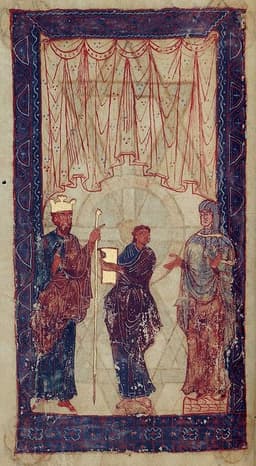
Ferdinand I of Leon
Emperor · Medieval
59.2Total
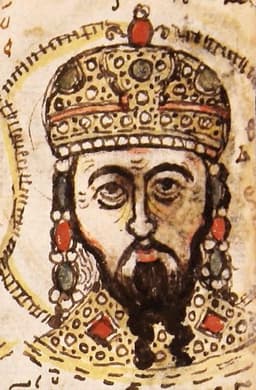
Theodore I Laskaris
Emperor · Medieval
61.8Total
Basic Information
Born
1015
1174
Died
1065
1222
Era
Medieval
Medieval
Nationality
Leon
Nicaean Empire
Occupation
Emperor
Emperor
Civilization
Western
Western
Score Comparison
Military (10%)
70.0
65.0
Political (20%)
68.0
60.0
Influence (20%)
56.4
61.0
Legacy (20%)
49.2
56.0
Leadership (15%)
66.0
77.2
Strategy (15%)
57.5
55.0
TOTAL
59.2
61.8
Ferdinand I of Leon — Complete Timeline
1029 AD
Inheritance of the County of CastilePolitical Action◆ Major
Ferdinand I inherited the County of Castile from his father Sancho III of Navarre. He later expanded his territory through conquest and marriage, laying the foundation for the Kingdom of Castile.
Impact: regionalconstructive
1037 AD
Conquest of LeónWar◆ Major
Ferdinand I defeated and killed King Bermudo III of Le
Impact: regional
1056 AD
First Emperor of SpainPolitical Action◆ Major
Ferdinand I was crowned 'Imperator totius Hispaniae' (Emperor of all Spain) in 1056, claiming suzerainty over all Christian and Muslim rulers in Iberia. This title reflected his military dominance and political ambition.
Impact: regional
1065 AD
Division of the kingdomPolitical Action◆ Major
Upon his death, Ferdinand I divided his kingdom among his sons: Sancho II received Castile, Alfonso VI received Le
Impact: regionaldestructive
Theodore I Laskaris — Complete Timeline
1204 AD
Foundation of the Empire of NicaeaPolitical Action
After the Fourth Crusade captured Constantinople, Theodore I Laskaris fled to Nicaea in Asia Minor and established a Byzantine government-in-exile. He organized resistance against the Latin Empire and the Seljuk Turks, laying the foundation for the Nicaean Empire as the primary successor state of Byzantium.
Fourth CrusadeSuccessor StateExile Government
Impact: regionalconstructive
1208 AD
Coronation as emperor by the Patriarch of ConstantinoplePolitical Action◆ Major
Theodore I Laskaris was formally crowned as emperor by the newly elected Patriarch of Constantinople-in-exile, Michael IV Autoreianos. This coronation legitimized the Nicaean Empire as the rightful continuation of the Byzantine Empire, with full ecclesiastical authority.
CoronationLegitimacyPatriarchate
Impact: regionalconstructive
1211 AD
Battle of Antioch on the MeanderWar◆ Major
Theodore I Laskaris defeated the Seljuk Sultanate of Rum at the Battle of Antioch on the Meander. The victory secured Nicaean control over western Anatolia and prevented Seljuk expansion into Byzantine territories, establishing Theodore as a major regional power.
Byzantine-Seljuk WarsMilitary VictoryAnatolian Campaign
Impact: regional
Defeat of the Latin Empire at the Battle of RhyndacusWar
Theodore I Laskaris led Nicaean forces to a victory over the Latin Empire at the Battle of Rhyndacus. The battle halted Latin expansion into Asia Minor and secured Nicaean control over the region, strengthening the Byzantine resistance against the crusader states.
Latin EmpireMilitary VictoryAsia Minor
Impact: regional
Expert Analysis
Ferdinand I of Leon vs Theodore I Laskaris
The Emperor Who Divided, and the Emperor Who Rebuilt
In the year 1065, an old man lay dying in León, his kingdom carved up among three sons who would soon tear each other apart. In 1204, a young man fled Constantinople as crusaders sacked the city, carrying only the hope of rebuilding an empire from ashes. Ferdinand I of León and Theodore I Laskaris never met, never knew of each other’s worlds, yet both wore the crown of emperor in an age when empires were won by the sword and lost by the will. Their stories, separated by a century and a continent, ask a haunting question: What makes one ruler’s triumph become his dynasty’s tragedy, and another’s defeat become his people’s salvation?
Origins
Ferdinand I was born in 1015 into the royal house of Navarre, the second son of Sancho III, the most powerful Christian king in Iberia. His father had forged a fragile unity among the fractious Christian kingdoms—León, Castile, Navarre, Aragón—by marriage, war, and sheer ambition. But when Sancho died in 1035, he divided his realm among his sons, as was the custom. Ferdinand received only the County of Castile, a borderland of hard men and harder soil. He grew up in a world where the Reconquista against the Moors was not a holy war but a family business, where kings married their cousins and killed their brothers.
Theodore I Laskaris was born in 1174 into the Byzantine aristocracy, a world of silk and gold, of court intrigues and theological disputes that could topple emperors. Byzantium was ancient, weary, and corrupt. The Komnenian dynasty had restored some glory, but the empire was bleeding from within. Theodore married a princess of the Angelos family—a dynasty notorious for incompetence—and watched as the Fourth Crusade, diverted by Venetian greed and Frankish ambition, turned on Constantinople in 1204. He was thirty years old when the city fell, and he chose not to die with it.
Rise to Power
Ferdinand’s path was one of inheritance sharpened by violence. In 1029, his father had secured him the County of Castile, but it was a gift that required conquest to hold. In 1037, Ferdinand marched against King Bermudo III of León, who had claims to the same lands. At the Battle of Tamarón, Ferdinand killed Bermudo with his own hand—or so the chronicles say—and claimed the kingdom. He was now King of León and Castile, but he was not satisfied. In 1056, he had himself crowned *Imperator totius Hispaniae*—Emperor of all Spain—a title that meant little to the Moors of Córdoba or the counts of Barcelona, but everything to his own ambition.
Theodore’s rise was born of catastrophe. After the fall of Constantinople in 1204, the Latin crusaders carved up the empire like a feast. Theodore fled to Nicaea, a city in western Anatolia, and began gathering refugees, soldiers, and bishops. In 1205, he declared himself emperor, but he had no patriarch to crown him—the rightful patriarch was a prisoner in Constantinople. It took three years to elect a new one, and in 1208, Theodore was formally crowned by Michael I Autoreianos, the Patriarch of Constantinople-in-exile. He was an emperor without a capital, a king without a kingdom, ruling from a city that smelled of dust and desperation.
Leadership & Governance
Ferdinand ruled as a conqueror. His military campaigns against the Moors were brutal and effective: he pushed the frontier south, exacted tribute from the taifa kingdoms of Toledo and Seville, and filled his coffers with gold. But his strategy was blunt—he relied on overwhelming force and the weakness of his enemies, not on subtlety or diplomacy. His political wisdom lay in consolidation: he reformed the church, patronized monasteries, and issued charters that bound the nobility to his throne. Yet his leadership had a fatal flaw. In 1065, as he lay dying, he divided his kingdom among his sons—Sancho II received Castile, Alfonso VI received León, and García received Galicia. It was not an act of generosity; it was a failure of vision. He believed his sons would honor his memory and rule as brothers. They did not.
Theodore ruled as a survivor. His military genius was defensive and strategic: in 1211, at the Battle of Antioch on the Meander, he crushed the Seljuk Sultanate of Rum, securing Nicaea’s eastern frontier. Later that same year, at the Battle of Rhyndacus, he defeated the Latin Empire, halting their advance into Asia Minor. He did not seek to conquer; he sought to endure. His political wisdom was even greater. He forged alliances with the Seljuks when it suited him, married his daughters to Latin knights and Armenian princes, and built a government-in-exile that preserved Byzantine law, Orthodox faith, and the dream of reconquest. He understood that empire was not a territory but a continuity.
Triumph & Tragedy
Ferdinand’s greatest moment was his coronation as Emperor of Spain in 1056—a symbolic triumph that declared Christian unity against the Moors. His greatest failure came nine years later, when he divided his kingdom. Within seven years of his death, his sons were at war. Sancho II killed García and drove Alfonso VI into exile. Then Sancho was assassinated, and Alfonso VI reclaimed León and Castile—but the dream of a unified Spain was shattered. Ferdinand’s legacy became a cautionary tale: the conqueror who could not trust his own blood.
Theodore’s triumph was not a single battle but a decade of survival. He died in 1222, having founded an empire that would last for fifty more years, eventually reclaiming Constantinople in 1261 under his son-in-law, Michael VIII Palaiologos. But his tragedy was personal: he never saw the city he loved reborn. He died in Nicaea, a provincial town, knowing that his life’s work was a promise, not a fulfillment.
Character & Destiny
Ferdinand was a man of iron will and brittle faith. He believed in God, in his sword, and in his sons—but not in the fragility of human ambition. He divided his kingdom because he could not imagine his sons failing where he had succeeded. Theodore was a man of flexible spine and fixed purpose. He bent before the storm—fleeing Constantinople, negotiating with enemies, building alliances—because he knew that survival required compromise. He never stopped believing that Byzantium would rise again.
Their scores reflect these differences. Ferdinand’s military score of 60.1 and strategy of 45.7 reveal a blunt instrument; Theodore’s strategy of 72.0 shows a craftsman. But Ferdinand’s political score of 72.0 matches Theodore’s exactly—both understood power, but one used it to divide, the other to unite.
Legacy
Ferdinand I is remembered as a king who expanded Christian Spain but sowed the seeds of its civil wars. His name appears in chronicles, but his empire died with him. Theodore I Laskaris is remembered as the founder of the Nicaean Empire, the man who kept the Byzantine flame alive when the world thought it had been extinguished. His legacy is not a divided kingdom but a restored one.
Conclusion
History judges rulers not by their intentions but by their outcomes. Ferdinand I of León wanted unity but left division; Theodore I Laskaris wanted survival and left rebirth. The difference was not in their courage or their faith, but in their understanding of time. Ferdinand thought his sons would be like him; Theodore knew his successors would be different. The emperor who divides his kingdom believes his blood is eternal. The emperor who builds an empire from ashes knows that nothing is.
Rankings
🥇
Theodore I LaskarisLeader
Mil: 65.0Pol: 60.0Inf: 61.0
61.8
🥈
Ferdinand I of Leon
Mil: 70.0Pol: 68.0Inf: 56.4
59.2
+2.6 behind
How This Comparison Works
Algorithm
Each figure is scored on 6 dimensions (0—100 scale) based on structured historical data: Military (10%), Political (20%), Influence (20%), Legacy (20%), Leadership (15%), Strategy (15%). The weighted total produces the final ranking.
Data Sources
Scores are computed from structured sub-indicators in the database. Scale factors adjust for era (Ancient ×0.85, Modern ×1.0) and civilization size (Eastern ×1.05, Other ×0.80) to account for differences in population and military scale.
Maximum 3 Figures
Comparisons are limited to 2—3 figures to ensure readability and statistical meaningfulness.
Error Margins
±5 points per dimension — Sub-scores are derived from historical records with inherent uncertainty. Two figures within 5 points on a dimension should be considered roughly equivalent in that area.
Total Score Accuracy
±3 points overall — The weighted combination of 6 dimensions produces a total score with approximately ±3 points of uncertainty. Differences of less than 3 points are not statistically significant— the figures are effectively tied.
Known Limitations
- Historical records are incomplete and uneven across civilizations
- Figures from oral-tradition societies may be underrepresented
- Occupation labels can misclassify multi-role figures
- Scores measure capability and impact, not moral character
- Quantitative scoring is a comparison tool, not absolute truth
Capability Radar
Military (10%) — Battles & Warfare
Battles
55
65
Win Rate
60
70
Expansion
60
60
Political (20%) — Governance & Reform
Reform
50
65
Diplomacy
55
70
Economy
45
60
Influence (20%) — Cultural & Global Reach
Cultural
40
50
Global
30
45
Legacy (20%) — Historical Impact
Historical
45
65
Longevity
40
55
Leadership (15%) — Power & Stability
Tenure
65
70
Stability
50
65
Strategy (15%) — Tactics & Innovation
Strategy
55
75
Tactics
50
60
Reform
40
55
Similar Comparisons
Comments & Discussion
Ferdinand the Fracturer6/16/2026
Ferdinand I is wildly overrated. Yes, he conquered Coimbra and squeezed tribute from Muslim taifas, but his real legacy was splitting his kingdom like a spoiled child. By giving León, Castile, and Galicia to his three sons, he ensured civil war for decades. That’s not statesmanship—that’s a historical facepalm. Theodore, meanwhile, built an empire from scratch with his bare hands after the Fourth Crusade. Give me the refugee who patches an empire over the king who breaks his own.
分裂王斐迪南6/16/2026
斐迪南一世被严重高估了。他确实征服了科英布拉,从穆斯林泰法王国榨取贡金,但他最真正的遗产是像被宠坏的孩子一样分割自己的王国。他把莱昂、卡斯蒂利亚和加利西亚分给三个儿子,结果确保了几十年的内战。这算什么治国之才?这叫历史性翻车。反观西奥多一世,他在第四次十字军东征后白手起家重建帝国。我宁愿选择一个从废墟中拼合帝国的流亡者,也不要那个亲手打破自家江山的国王。
Data Denier6/16/2026
The comparison is apples and oranges. Ferdinand inherited Castile with defined borders and a tax base; Theodore started with fugitives and a borrowed tent. Let’s talk growth metrics: Ferdinand expanded León-Castile’s territory by about 40% over his reign, but his sons lost half within a decade. Theodore’s Nicaean Empire began as maybe 2% of Byzantine territory and grew to control western Anatolia and Thrace by his death—despite losing an eye in battle. The rebuild rate vs. collapse rate favors T
数据打假人6/16/2026
这对比根本是胡扯。斐迪南继承卡斯蒂利亚时有明确边界和税收基础;西奥多起步时只有一群难民和一顶借来的帐篷。说数据:斐迪南在位时把莱昂-卡斯蒂利亚领土扩大了约40%,但他儿子们十年内丢了一半。西奥多的尼西亚帝国开始时只有拜占庭领土的大约2%,到死时却控制了整个小亚细亚西部和色雷斯——哪怕他在战场上瞎了一只眼。重建率对崩塌率,西奥多完胜。
Classics Curmudgeon6/16/2026
Theodore I never even claimed the title ‘emperor of the Romans’ until after a dodgy church council in Nicaea in 1208! Ferdinand was crowned legitimate king of León in 1037 by divine right, backed by the Pope’s tacit approval. There’s no contest in legitimacy. Theodore was a clever warlord, but his empire was a refugee camp with pretensions. Ferdinand’s León was a Christian kingdom with 700 years of Visigothic tradition behind it. The Nica