Loading...
Ferdinand I of Leon vs Suleiman the Magnificent
Suleiman the Magnificent leads by 14.0 pts · 2 figures compared
…
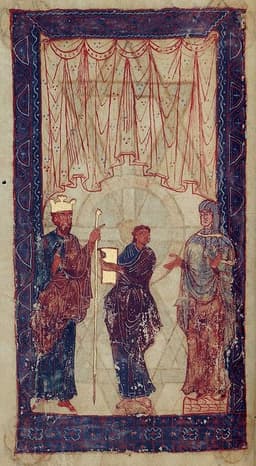
Ferdinand I of Leon
Emperor · Medieval
59.2Total
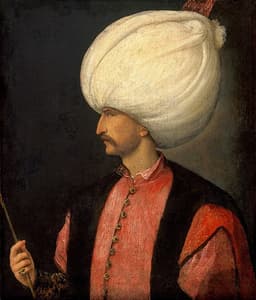
Suleiman the Magnificent
Emperor · Medieval
73.2Total
Basic Information
Born
1015
1494
Died
1065
1566
Era
Medieval
Medieval
Nationality
Leon
Ottoman Empire
Occupation
Emperor
Emperor
Civilization
Western
Middle Eastern
Score Comparison
Military (10%)
70.0
85.0
Political (20%)
68.0
78.0
Influence (20%)
56.4
72.0
Legacy (20%)
49.2
68.0
Leadership (15%)
66.0
72.0
Strategy (15%)
57.5
72.0
TOTAL
59.2
73.2
Ferdinand I of Leon — Complete Timeline
1029 AD
Inheritance of the County of CastilePolitical Action◆ Major
Ferdinand I inherited the County of Castile from his father Sancho III of Navarre. He later expanded his territory through conquest and marriage, laying the foundation for the Kingdom of Castile.
Impact: regionalconstructive
1037 AD
Conquest of LeónWar◆ Major
Ferdinand I defeated and killed King Bermudo III of Le
Impact: regional
1056 AD
First Emperor of SpainPolitical Action◆ Major
Ferdinand I was crowned 'Imperator totius Hispaniae' (Emperor of all Spain) in 1056, claiming suzerainty over all Christian and Muslim rulers in Iberia. This title reflected his military dominance and political ambition.
Impact: regional
1065 AD
Division of the kingdomPolitical Action◆ Major
Upon his death, Ferdinand I divided his kingdom among his sons: Sancho II received Castile, Alfonso VI received Le
Impact: regionaldestructive
Suleiman the Magnificent — Complete Timeline
1522 AD
Siege of RhodesWar◆ Major
Suleiman personally led a massive Ottoman campaign against the Knights Hospitaller on Rhodes. After a six-month siege, the knights surrendered and were allowed to leave. This victory secured Ottoman control over the eastern Mediterranean.
SiegeMediterraneanKnights Hospitaller
Impact: regional
1526 AD
Battle of MohácsWar
Suleiman's Ottoman army defeated the Hungarian forces of King Louis II at Moh
BattleHungaryOttoman expansion
Impact: regional
1529 AD
Siege of ViennaWar◆ Major
Suleiman besieged Vienna, the Habsburg capital, with a large army. The siege failed due to supply issues, disease, and strong defenses. This defeat halted Ottoman expansion into central Europe and marked the empire's furthest advance westward.
SiegeViennaDefeat
Impact: regional
1530 AD
Codification of Ottoman lawReform◆ Major
Suleiman oversaw the compilation and standardization of Ottoman legal codes, known as Kanun. These laws regulated criminal justice, land tenure, and taxation, creating a unified legal system that balanced sharia with secular law. He earned the title 'Kanuni' (the Lawgiver).
Legal reformKanunOttoman Empire
Impact: nationalconstructive
1536 AD
Execution of Ibrahim PashaPolitical Action◆ Major
Suleiman ordered the execution of his grand vizier and close friend Ibrahim Pasha, who had served for 13 years. The reasons remain debated, but likely involved Ibrahim's growing power and conflicts with Suleiman's wife, Hurrem Sultan. This event demonstrated the absolute power of the sultan.
ExecutionCourt politicsPower
Impact: nationaltragic
Expert Analysis
Ferdinand I of Leon vs Suleiman the Magnificent
The Emperor and the King: Two Visions of Medieval Power
In the autumn of 1529, a vast Ottoman army of perhaps 100,000 men encamped before the walls of Vienna, the heart of Habsburg Europe. The sultan who led them, Suleiman, was at the height of his powers—a ruler whose name would become synonymous with magnificence. Four and a half centuries earlier, another medieval sovereign, Ferdinand I of León, had stood before the gates of a different city, Coimbra, pressing his claim to be emperor of all Spain. Both men sought to unite fractured lands under a single crown. But while Suleiman built an empire that stretched from Budapest to Baghdad, Ferdinand’s dream of a united Spain collapsed within months of his death. What separated these two rulers—one remembered as a titan of his age, the other as a footnote in Iberian history—was not merely fortune, but the very nature of their power.
Origins
Suleiman was born into certainty. The only surviving son of Sultan Selim I, he inherited a machine of conquest that had already doubled Ottoman territory. His childhood in Trabzon and later in the imperial palace at Edirne was a curriculum of statecraft: Quranic law, Persian poetry, military tactics, and the careful management of a court that could destroy a man as quickly as it elevated him. The Ottoman system was designed to produce sultans—and Suleiman was its masterpiece.
Ferdinand I of León was born into a world of competing claims and fragile alliances. His father, Sancho III of Navarre, had carved out a precarious hegemony over Christian Spain, but on his death in 1035, he divided his lands among his sons. Ferdinand received the County of Castile, a frontier territory that was less a kingdom than a perpetual battlefield against the Moorish taifa states of Al-Andalus. Unlike Suleiman, who inherited a throne, Ferdinand had to build one. His legitimacy came not from birth alone but from the sword—and from the careful management of a court of fractious nobles who had seen kings come and go.
Rise to Power
Suleiman’s path to supreme power was smooth. Upon Selim’s death in 1520, he ascended the throne without opposition. His first act as sultan was to release thousands of prisoners held by his father, a gesture of magnanimity that signaled a new era. Within two years, he had launched his first major campaign—the siege of Rhodes in 1522, a six-month ordeal that tested his resolve. The Knights Hospitaller, fortified on their island stronghold, fought with desperate skill. But Suleiman’s patience and overwhelming force prevailed. He allowed the knights to leave with their lives, a chivalrous act that burnished his reputation across Europe.
Ferdinand’s rise was bloodier and less certain. In 1037, he marched against King Bermudo III of León, his wife’s brother, and met him at the Battle of Tamarón. The chroniclers record that Ferdinand’s forces routed the Leonese army and that Bermudo himself was killed. Ferdinand then claimed León by right of his wife, Sancha, and the crown passed to him. This was not a smooth succession but a violent seizure, and it set a pattern: Ferdinand’s power was always contingent on victory, never guaranteed by tradition.
Leadership & Governance
Suleiman governed through institutions. The Ottoman Empire was a vast bureaucracy, and he was its supreme administrator. In 1530, he oversaw the codification of the *Kanun*, a comprehensive legal system that standardized criminal, land, and tax law across the empire. These laws balanced the authority of Islamic sharia with the practical needs of a multi-ethnic state. Suleiman’s court in Istanbul became a crucible of culture: the architect Sinan built the Süleymaniye Mosque, the poet Baki wrote odes to the sultan’s justice, and the empire’s economy flourished on the trade routes that connected three continents. He ruled through delegation—most famously through his grand vizier, Ibrahim Pasha, a Greek-born slave who became his closest confidant—but the ultimate authority was always his.
Ferdinand ruled through personality. His court in León was smaller, poorer, and more personal. He led his armies in person, fighting alongside his knights in the border wars against the Moors. He was crowned *Imperator totius Hispaniae* in 1056, a title that reflected his ambition to unite all Christian Spain under his rule. But his governance was limited by the feudal realities of the age. He could not impose a uniform legal code or build a standing army; he relied on the loyalty of nobles who could shift their allegiance with a change of wind. His greatest achievement was the systematic collection of tribute from the Moorish taifa kingdoms—a policy of intimidation that filled his coffers without requiring permanent conquest.
Triumph & Tragedy
Suleiman’s greatest triumph was the Battle of Mohács in 1526. In a single day, his army destroyed the Hungarian kingdom, killing King Louis II and opening the way to central Europe. The victory was so complete that Hungary remained divided between Ottoman and Habsburg spheres for 150 years. But his tragedy came three years later at Vienna. The 1529 siege failed not because of enemy valor but because of logistics: autumn rains turned roads to mud, disease ravaged the camp, and the defenders held out long enough for winter to force a retreat. Suleiman never returned to Vienna, and the failure marked the northern limit of Ottoman expansion.
Ferdinand’s triumph was the conquest of León itself—the moment he transformed from a count into a king. But his tragedy was the division of his kingdom. On his deathbed in 1065, he partitioned his realm among his three sons, as his father had done before him. Within years, the brothers were at war. The dream of a united Spain shattered, not by Moorish resistance, but by the very dynastic logic that had brought Ferdinand to power.
Character & Destiny
Suleiman was a master of measured cruelty. He executed his friend Ibrahim Pasha in 1536, not in a fit of rage but as a calculated political act. Ibrahim had grown too powerful, too independent, and the sultan’s justice was absolute. This capacity for cold decision-making allowed Suleiman to maintain control over an empire that spanned continents. He was a patron of poets and a builder of mosques, but he was also a man who could order the death of his own sons when they threatened the succession. His character was the empire’s character: disciplined, ruthless, and endlessly ambitious.
Ferdinand was a warrior king in an age of warriors. He was pious—he founded monasteries and endowed churches—but his piety was inseparable from his ambition. He saw himself as the champion of Christendom against the Moors, and his campaigns were framed as holy wars. Yet his decisions were often reactive, shaped by the immediate pressures of noble rebellion or Moorish incursion. He lacked the institutional framework that allowed Suleiman to think in terms of decades and centuries. Ferdinand thought in terms of his own lifetime, and his kingdom died with him.
Legacy
Suleiman’s legacy endures in stone and law. The Süleymaniye Mosque still dominates Istanbul’s skyline. The *Kanun* shaped Ottoman jurisprudence for centuries. He is remembered as the lawgiver, the magnificent, the sultan who brought the empire to its zenith. But his successors could not maintain his momentum; the empire he built slowly decayed, and by the time of the Battle of Lepanto in 1571—fought after his death—the tide had begun to turn.
Ferdinand’s legacy is more ambiguous. He is remembered as the first emperor of Spain, but his empire was a mirage. The real unification of Spain came centuries later, under Ferdinand and Isabella, who learned the lesson that Ferdinand I did not: that a kingdom divided against itself cannot stand. His name lives on in the chronicles of medieval Iberia, but he is a figure of regional history, not world history.
Conclusion
What drove these two men to such different outcomes? Suleiman inherited an empire and expanded it; Ferdinand built a kingdom and saw it shatter. The difference was not in their personal qualities—both were capable, ambitious, and ruthless—but in the structures they commanded. Suleiman ruled a bureaucratic state that could survive the whims of any single ruler; Ferdinand ruled a feudal patchwork that depended on his own strength. One built for eternity, the other for a day. In the end, the most magnificent throne is the one that outlasts the king who sits upon it.
Rankings
🥇
Suleiman the MagnificentLeader
Mil: 85.0Pol: 78.0Inf: 72.0
73.2
🥈
Ferdinand I of Leon
Mil: 70.0Pol: 68.0Inf: 56.4
59.2
+14.0 behind
How This Comparison Works
Algorithm
Each figure is scored on 6 dimensions (0—100 scale) based on structured historical data: Military (10%), Political (20%), Influence (20%), Legacy (20%), Leadership (15%), Strategy (15%). The weighted total produces the final ranking.
Data Sources
Scores are computed from structured sub-indicators in the database. Scale factors adjust for era (Ancient ×0.85, Modern ×1.0) and civilization size (Eastern ×1.05, Other ×0.80) to account for differences in population and military scale.
Maximum 3 Figures
Comparisons are limited to 2—3 figures to ensure readability and statistical meaningfulness.
Error Margins
±5 points per dimension — Sub-scores are derived from historical records with inherent uncertainty. Two figures within 5 points on a dimension should be considered roughly equivalent in that area.
Total Score Accuracy
±3 points overall — The weighted combination of 6 dimensions produces a total score with approximately ±3 points of uncertainty. Differences of less than 3 points are not statistically significant— the figures are effectively tied.
Known Limitations
- Historical records are incomplete and uneven across civilizations
- Figures from oral-tradition societies may be underrepresented
- Occupation labels can misclassify multi-role figures
- Scores measure capability and impact, not moral character
- Quantitative scoring is a comparison tool, not absolute truth
Capability Radar
Military (10%) — Battles & Warfare
Battles
55
95
Win Rate
60
90
Expansion
60
95
Political (20%) — Governance & Reform
Reform
50
90
Diplomacy
55
88
Economy
45
85
Influence (20%) — Cultural & Global Reach
Cultural
40
90
Global
30
88
Legacy (20%) — Historical Impact
Historical
45
92
Longevity
40
85
Leadership (15%) — Power & Stability
Tenure
65
95
Stability
50
85
Strategy (15%) — Tactics & Innovation
Strategy
55
92
Tactics
50
85
Reform
40
80
Similar Comparisons
Comments & Discussion
No comments yet. Be the first to share your thoughts!