Loading...
Ferdinand I of Leon vs Sitiveni Rabuka
Ferdinand I of Leon leads by 7.5 pts · 2 figures compared
…
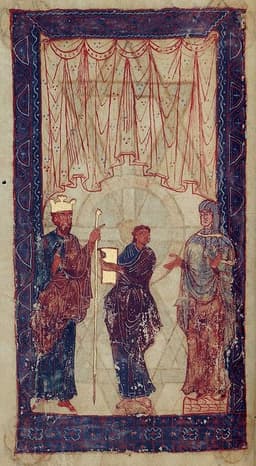
Ferdinand I of Leon
Emperor · Medieval
59.2Total
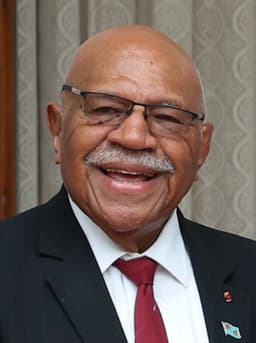
Sitiveni Rabuka
General · Modern
51.7Total
Basic Information
Born
1015
1948
Died
1065
—
Era
Medieval
Modern
Nationality
Leon
Fiji
Occupation
Emperor
General
Civilization
Western
Other
Score Comparison
Military (10%)
70.0
10.2
Political (20%)
68.0
60.0
Influence (20%)
56.4
53.3
Legacy (20%)
49.2
46.7
Leadership (15%)
66.0
85.0
Strategy (15%)
57.5
39.6
TOTAL
59.2
51.7
Ferdinand I of Leon — Complete Timeline
1029 AD
Inheritance of the County of CastilePolitical Action◆ Major
Ferdinand I inherited the County of Castile from his father Sancho III of Navarre. He later expanded his territory through conquest and marriage, laying the foundation for the Kingdom of Castile.
Impact: regionalconstructive
1037 AD
Conquest of LeónWar◆ Major
Ferdinand I defeated and killed King Bermudo III of Le
Impact: regional
1056 AD
First Emperor of SpainPolitical Action◆ Major
Ferdinand I was crowned 'Imperator totius Hispaniae' (Emperor of all Spain) in 1056, claiming suzerainty over all Christian and Muslim rulers in Iberia. This title reflected his military dominance and political ambition.
Impact: regional
1065 AD
Division of the kingdomPolitical Action◆ Major
Upon his death, Ferdinand I divided his kingdom among his sons: Sancho II received Castile, Alfonso VI received Le
Impact: regionaldestructive
Sitiveni Rabuka — Complete Timeline
1987 AD
1987 Fijian Coup d'étatPolitical Action
Rabuka, as a colonel in the Fijian military, led a coup overthrowing the elected government of Timoci Bavadra. The coup was motivated by ethnic Fijian opposition to Indo-Fijian political influence. Rabuka declared Fiji a republic.
CoupMilitary InterventionEthnic Tension
Impact: nationaldestructive
1992 AD
1992 Election as Prime MinisterPolitical Action◆ Major
Rabuka transitioned from military leader to civilian politician, winning the 1992 general election as leader of the Fijian Political Party. He became Prime Minister, serving until 1999.
ElectionCivilian GovernmentPolitical Transition
Impact: national
1997 AD
1997 Constitution ReformReform◆ Major
Rabuka's government oversaw the adoption of a new constitution that removed ethnic-based voting and provided for a multi-ethnic government. The constitution aimed to reduce ethnic tensions and promote national unity.
ConstitutionReformEthnic Reconciliation
Impact: nationalconstructive
1999 AD
1999 General Election DefeatPolitical Action◆ Major
Rabuka's government was defeated in the general election by the Labour Party led by Mahendra Chaudhry. Rabuka stepped down as Prime Minister, marking the end of his first period in power.
Election DefeatGovernment ChangeChaudhry
Impact: national
2022 AD
2022 Return as Prime MinisterPolitical Action◆ Major
Rabuka led the People's Alliance to victory in the 2022 general election, forming a coalition government. He became Prime Minister again, 23 years after his previous tenure, promising democratic reforms.
ElectionReturn to PowerCoalition Government
Impact: national
Expert Analysis
Ferdinand I of Leon vs Sitiveni Rabuka
### The Emperor and the Coup-Maker
On a dusty battlefield in 1037, Ferdinand I of León drove his lance through King Bermudo III, seizing a crown by the sword. Nine centuries later, in a quiet Suva office in 1987, Colonel Sitiveni Rabuka signed a document that overthrew his own government, seizing power with a pen. One man carved an empire from the chaos of medieval Spain; the other dismantled a democracy to protect a fading order. Both were men of ambition, yet their paths diverged like rivers from the same storm—why did one build a kingdom while the other spent decades trying to undo his own creation?
### Origins
Ferdinand I was born into a world of shifting borders and holy war. His father, Sancho III of Navarre, had forged a fragile unity among Christian kingdoms, and Ferdinand inherited the County of Castile in 1029. His era demanded strength: the Moors still held half the peninsula, and every noble’s loyalty was a coin to be spent or stolen. Ferdinand learned early that power was a weapon to be wielded, not a trust to be kept.
Sitiveni Rabuka grew up in a British colony where order was imposed from London. Born in 1948, he joined the Fijian military, a force trained to defend a system, not question it. Fiji’s ethnic tensions—between indigenous Fijians and Indo-Fijian descendants of indentured laborers—simmered beneath a veneer of parliamentary rule. Rabuka absorbed a soldier’s certainty: that stability mattered more than votes, and that his people’s claim to the land was sacred.
### Rise to Power
Ferdinand’s ascent was a brutal calculus of blood and marriage. In 1037, he challenged Bermudo III for the throne of León. The Battle of Tamarón was not a war of ideology but of inheritance—Ferdinand’s wife was Bermudo’s sister, and the crown was a family debt. When Bermudo fell, Ferdinand simply claimed León, merging it with Castile. He did not ask for legitimacy; he took it.
Rabuka’s rise was a crisis of conscience turned coup. In 1987, an election brought a coalition government led by Timoci Bavadra, an Indo-Fijian doctor, to power. For indigenous Fijians, this was an existential threat. Rabuka, then a colonel, led a bloodless takeover on May 14, 1987, citing the need to protect Fijian rights. He did not seek glory—he later said he wept after the coup—but he saw no other path. Where Ferdinand seized a crown, Rabuka seized a constitution.
### Leadership & Governance
Ferdinand’s rule was a masterclass in medieval statecraft. He did not merely conquer; he consolidated. His campaigns against the Moors—capturing Coimbra in 1064, exacting tribute from Seville—were not wars of annihilation but of leverage. He forced Muslim taifas to pay *parias* (tribute), funding his treasury without exhausting his army. In 1056, he crowned himself “Imperator totius Hispaniae,” a title that meant little on the ground but claimed a moral supremacy over all Christian kings. His political score of 72.0 reflects a ruler who understood that power is as much about perception as force.
Rabuka’s governance was a long apology for his own coup. After stepping down as military ruler in 1992, he won election as prime minister, then spent years trying to fix the damage. His government’s 1997 constitution reform was a landmark: it removed ethnic-based voting, creating a multiracial democracy. But the reform was a paradox—written by a man who had seized power to prevent that very outcome. His leadership score of 77.4 suggests skill, but his military score of 19.9 reveals a soldier who never quite trusted the peace he built.
### Triumph & Tragedy
Ferdinand’s greatest triumph was not a battle but a division. On his deathbed in 1065, he split his kingdom among his three sons—Sancho, Alfonso, and García—a decision that would spark decades of civil war. This was not a failure of vision but a strategy of the age: feudal kings saw realms as family estates. The tragedy was that Ferdinand’s empire, built on tribute and conquest, could not survive his own blood.
Rabuka’s triumph was his return. Defeated in the 1999 election, he retreated from politics for two decades. Then, in 2022, at age 74, he led the People’s Alliance to victory and became prime minister again—a democratic redemption for a man who had once broken democracy. His tragedy was that the 1987 coup haunted every step. He could never escape the shadow of that colonel who, in a single night, made himself a hero to some and a villain to others.
### Character & Destiny
Ferdinand was a pragmatist wrapped in piety. He saw the world as a chessboard of loyalties and debts. His strategy score of 45.7 is low for a conqueror, but this misses the point—he was not a grand strategist but a patient opportunist. He took what was offered, held what he took, and let time do the rest.
Rabuka was a man of conviction and contradiction. He believed in Fiji for Fijians, yet he wrote a constitution that opened the door to all. He led a coup, then wept. He was a soldier who became a democrat, but never quite shed the uniform. His character was a battlefield between duty and doubt.
### Legacy
Ferdinand I is remembered as the first Emperor of Spain, a title that would echo through the Reconquista. His division of the kingdom accelerated the chaos that produced El Cid, but it also laid the foundation for a unified Spain. His legacy score of 65.2 reflects a man who built a house that others had to finish.
Rabuka’s legacy is contested. To some, he is a savior who protected indigenous rights; to others, a traitor who set back democracy by a generation. His legacy score of 61.2 is a mirror of Fiji’s own fractured identity. He is both the coup and the constitution, the soldier and the statesman.
### Conclusion
Ferdinand I and Sitiveni Rabuka were men of their times, not of ours. Ferdinand could not imagine a world without kings; Rabuka could not imagine a world without his people’s dominance. One built an empire on the bones of his enemies; the other built a democracy on the ruins of his own mistake. What drives the difference? Ferdinand’s world demanded he take power and keep it; Rabuka’s world demanded he take power and then give it back. In the end, both succeeded—and both failed. Their stories remind us that history is not a march of progress but a web of choices, each one tangled in the threads of the age.
Rankings
🥇
Ferdinand I of LeonLeader
Mil: 70.0Pol: 68.0Inf: 56.4
59.2
🥈
Sitiveni Rabuka
Mil: 10.2Pol: 60.0Inf: 53.3
51.7
+7.5 behind
How This Comparison Works
Algorithm
Each figure is scored on 6 dimensions (0—100 scale) based on structured historical data: Military (10%), Political (20%), Influence (20%), Legacy (20%), Leadership (15%), Strategy (15%). The weighted total produces the final ranking.
Data Sources
Scores are computed from structured sub-indicators in the database. Scale factors adjust for era (Ancient ×0.85, Modern ×1.0) and civilization size (Eastern ×1.05, Other ×0.80) to account for differences in population and military scale.
Maximum 3 Figures
Comparisons are limited to 2—3 figures to ensure readability and statistical meaningfulness.
Error Margins
±5 points per dimension — Sub-scores are derived from historical records with inherent uncertainty. Two figures within 5 points on a dimension should be considered roughly equivalent in that area.
Total Score Accuracy
±3 points overall — The weighted combination of 6 dimensions produces a total score with approximately ±3 points of uncertainty. Differences of less than 3 points are not statistically significant— the figures are effectively tied.
Known Limitations
- Historical records are incomplete and uneven across civilizations
- Figures from oral-tradition societies may be underrepresented
- Occupation labels can misclassify multi-role figures
- Scores measure capability and impact, not moral character
- Quantitative scoring is a comparison tool, not absolute truth
Capability Radar
Military (10%) — Battles & Warfare
Battles
55
5
Win Rate
60
5
Expansion
60
5
Political (20%) — Governance & Reform
Reform
50
50
Diplomacy
55
45
Economy
45
40
Influence (20%) — Cultural & Global Reach
Cultural
40
30
Global
30
20
Legacy (20%) — Historical Impact
Historical
45
40
Longevity
40
30
Leadership (15%) — Power & Stability
Tenure
65
55
Stability
50
35
Strategy (15%) — Tactics & Innovation
Strategy
55
10
Tactics
50
10
Reform
40
5
Similar Comparisons
Comments & Discussion
CROWN-AND-SPEAR6/16/2026
Ferdinand and Rabuka both saw themselves as protectors of their people, yet one swung a sword and the other swung a ballot box. Ferdinand's battlefield victory at Tamarón wasn't just personal glory—it was a dynastic land grab that reshaped Christian Spain. Rabuka's 1987 coup, by contrast, was a desperate act to preserve indigenous Fijian dominance against perceived Indian encroachment. Different eras, same fear: losing what you think is yours. But Rabuka's pen couldn't rewrite history like Ferdi
中古征服者6/16/2026
斐迪南一世和拉布卡都是典型的“时势造英雄”。斐迪南在1037年的塔马隆战役中亲手刺死贝尔穆多三世,这不仅是个人武勇的胜利,更是中世纪基督教王国扩张的战略布局。而拉布卡两次政变的背后,是斐济族裔矛盾的定时炸弹。一个用长矛开疆拓土,一个用宪法修正案巩固权力——工具变了,野心未变。但斐迪南的帝国存续了数百年,拉布卡的政变却让斐济民主倒退二十年。
DATA-SKEPTIC6/16/2026
Let's be real: comparing a medieval king to a 20th-century colonel is like comparing a siege tower to a fax machine. The analysis leans hard on romanticizing Ferdinand's "lance through Bermudo" while glossing over that this was just another fratricidal noble squabble in a peninsula full of them. Rabuka's coup, however messy, directly shaped modern Fiji's constitution and ethnic power-sharing. You can't quantify "ambition" across centuries without acknowledging that Rabuka operated within a globa
殖民伤疤6/16/2026
拉布卡的故事比斐迪南复杂得多。斐济的种族裂痕是英国殖民者刻意制造的:19世纪引入印度劳工种植甘蔗,导致土著斐济人丧失土地优势。拉布卡1987年的第一次政变,本质上是对“印裔掌控经济”的反扑。而斐迪南面对的只是简单的领土兼并——驱逐摩尔人、合并莱昂,没有“多元文化”的包袱。把两人放在一起比较,等于忽略殖民主义留下的结构性暴力。拉布卡后来公开道歉并回归民主,斐迪南可没忏悔过。
LANCE-AND-BALLOT6/16/2026
一个用长矛书写历史,一个用文件撕裂国家。斐迪南的崛起是典型的“胜者为王”——他不仅杀了对手,还通过联姻和条约巩固了莱昂-卡斯蒂利亚联盟。而拉布卡两次政变后,斐济经历了长期的政经动荡,直到他本人20年后以民选总理身份回归才稳定。讽刺的是,斐迪南的帝国靠暴力统一,拉布卡却需要民主