Loading...
Ferdinand I of Leon vs Qin Shi Huang
Qin Shi Huang leads by 26.0 pts · 2 figures compared
…
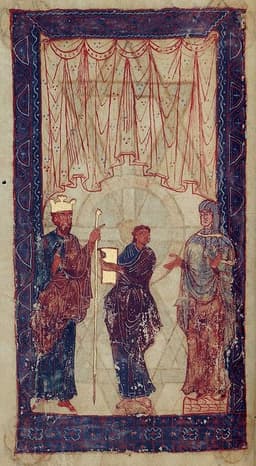
Ferdinand I of Leon
Emperor · Medieval
59.2Total
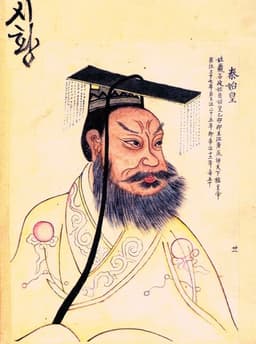
Qin Shi Huang
Emperor · Ancient
85.2Total
Basic Information
Born
1015
-259
Died
1065
-210
Era
Medieval
Ancient
Nationality
Leon
China
Occupation
Emperor
Emperor
Civilization
Western
Eastern
Score Comparison
Military (10%)
70.0
80.0
Political (20%)
68.0
90.0
Influence (20%)
56.4
85.0
Legacy (20%)
49.2
90.0
Leadership (15%)
66.0
78.0
Strategy (15%)
57.5
82.0
TOTAL
59.2
85.2
Ferdinand I of Leon — Complete Timeline
1029 AD
Inheritance of the County of CastilePolitical Action◆ Major
Ferdinand I inherited the County of Castile from his father Sancho III of Navarre. He later expanded his territory through conquest and marriage, laying the foundation for the Kingdom of Castile.
Impact: regionalconstructive
1037 AD
Conquest of LeónWar◆ Major
Ferdinand I defeated and killed King Bermudo III of Le
Impact: regional
1056 AD
First Emperor of SpainPolitical Action◆ Major
Ferdinand I was crowned 'Imperator totius Hispaniae' (Emperor of all Spain) in 1056, claiming suzerainty over all Christian and Muslim rulers in Iberia. This title reflected his military dominance and political ambition.
Impact: regional
1065 AD
Division of the kingdomPolitical Action◆ Major
Upon his death, Ferdinand I divided his kingdom among his sons: Sancho II received Castile, Alfonso VI received Le
Impact: regionaldestructive
Qin Shi Huang — Complete Timeline
246 BC
Construction of the Mausoleum and Terracotta ArmyOther◆ Major
Qin Shi Huang commissioned a vast mausoleum complex near Xi'an, guarded by thousands of life-sized terracotta soldiers, horses, and chariots. The project employed hundreds of thousands of workers and reflected his obsession with immortality and imperial power.
Impact: global
230 BC
Conquest of the Six Warring StatesWar
From 230 to 221 BCE, Ying Zheng led the Qin state in a series of campaigns that conquered the Han, Zhao, Wei, Chu, Yan, and Qi states. This unified China under a single ruler for the first time, ending the Warring States period.
Impact: global
221 BC
Standardization of Writing, Currency, and MeasurementsReform◆ Major
Qin Shi Huang ordered the standardization of Chinese script, currency, and weights and measures across the unified empire. This facilitated administration, trade, and cultural integration, laying a foundation for future dynasties.
Impact: globalconstructive
Proclamation of the Qin DynastyPolitical Action
After conquering the last independent state, Ying Zheng declared himself Shi Huangdi (First Emperor), founding the Qin Dynasty. He adopted a new title to signify his supreme authority and initiated centralized imperial rule.
Impact: global
214 BC
Initiation of the Great Wall ConstructionOther◆ Major
Qin Shi Huang ordered the connection and extension of existing northern fortifications to create a unified defensive wall against nomadic Xiongnu raids. This project involved massive conscripted labor and became the precursor to the later Great Wall.
Impact: regional
213 BC
Burning of Books and Burying of ScholarsPolitical Action◆ Major
On the advice of Li Si, Qin Shi Huang ordered the burning of historical records and philosophical texts not aligned with Legalist doctrine. He also had 460 Confucian scholars buried alive to suppress dissent and consolidate ideological control.
Impact: nationaldestructive
Expert Analysis
ferdinand-i-of-leon-vs-qin-shi-huang
# The First Emperor and the Emperor of All Spain: Two Paths to Unification
In 221 BC, a 38-year-old king stood before the conquered capitals of six ancient states and declared himself *Shi Huangdi*—the First Emperor. In 1056 AD, nearly thirteen centuries later, a Spanish king knelt before an altar in León and accepted a crown that proclaimed him *Imperator totius Hispaniae*—Emperor of all Spain. Both men sought to forge unity from chaos, to impose order on fractured lands. Yet one built an empire that would define China for two millennia, while the other's realm crumbled within a generation. What made the difference?
Origins
Ying Zheng was born into war. The Warring States period had torn China apart for two centuries, and his father's kingdom of Qin was the most ruthless of them all. Raised in a court where Legalist philosophers preached that strength came from absolute control, young Zheng learned early that mercy was weakness. When he ascended the Qin throne at thirteen, his regent Lü Buwei governed with iron efficiency, and the boy absorbed every lesson.
Ferdinand I came from a world of shifting alliances and holy war. Born in 1015, he was the second son of Sancho III of Navarre, a king who had carved out a dominant position in Christian Iberia. Unlike Zheng, Ferdinand grew up in a Europe where kingship meant negotiation as much as conquest—where popes, nobles, and rival monarchs all demanded respect. His inheritance was not a unified kingdom but a patchwork of claims and loyalties.
Rise to Power
Zheng's path was direct and devastating. Between 230 and 221 BC, he unleashed the full military might of Qin against the six rival states—Han, Zhao, Wei, Chu, Yan, and Qi. Each campaign was a masterpiece of logistics and terror: he flooded cities, bribed ministers, and slaughtered armies. When the last king surrendered, Zheng did not pause. He immediately abolished the old feudal system, divided China into commanderies, and imposed a single legal code. Power, he believed, was like a sword—only sharp when held in one hand.
Ferdinand's rise was more gradual, more political. He inherited the County of Castile from his father in 1029, but that was just a piece of the puzzle. In 1037, he defeated and killed King Bermudo III of León at the Battle of Tamarón, claiming that kingdom through conquest and marriage. Yet even after his imperial coronation in 1056, Ferdinand never commanded the absolute authority Zheng enjoyed. His fellow Christian kings, the Muslim taifa rulers, and even his own nobles all retained power he could only influence, not destroy.
Leadership & Governance
Qin Shi Huang governed through terror and standardization. He ordered the burning of books and the burying of scholars in 213 BC, wiping out philosophical traditions that challenged his Legalist orthodoxy. He standardized writing, currency, and measurements across his empire—practical reforms that would outlast his dynasty. And he began the Great Wall, linking existing fortifications into a single barrier against northern nomads. His rule was efficient, ruthless, and utterly centralized. Every cart axle, every written character, every coin had to be identical from the Yellow Sea to the Tibetan plateau.
Ferdinand ruled through compromise and faith. As Emperor of Spain, he claimed suzerainty over all Christian Iberia, but he never attempted to impose a single legal code or language. Instead, he led campaigns against the Moors, extracting tribute from the taifa kingdoms while allowing them to keep their own laws and religions. His greatest achievement was not conquest but balance—keeping his nobles satisfied, his bishops loyal, and his Muslim vassals paying. Where Qin Shi Huang built walls and burned books, Ferdinand built alliances and collected tribute.
Triumph & Tragedy
Zheng's greatest triumph was the unification itself—an achievement so complete that "China" became a single political concept for the first time. But his tragedy was equally immense. His obsession with immortality led him to consume mercury pills, poisoning himself slowly. His brutal Legalist system provoked revolts that erupted within months of his death in 210 BC. The Qin Dynasty lasted barely fifteen years after his passing, destroyed by the very harshness that had made it strong.
Ferdinand's greatest moment came in 1056, when he was crowned Emperor of all Spain—the first ruler to claim that title. But his tragedy was a different kind of failure. On his deathbed in 1065, Ferdinand divided his kingdom among his three sons, following the old Frankish tradition. Sancho received Castile, Alfonso got León, and García took Galicia. Within a decade, the brothers were at war. The empire Ferdinand had built was shattered by his own decision.
Character & Destiny
Qin Shi Huang saw the world as a problem to be solved through will and force. His paranoia drove him to build a mausoleum guarded by thousands of terracotta soldiers, a silent army for the afterlife. His arrogance made him believe he could defeat death itself. These traits unified China but also ensured its collapse—no system built on fear can survive the death of the feared.
Ferdinand was a pragmatist. He understood that power in medieval Europe meant balancing competing interests, not crushing them. But his pragmatism had a fatal flaw: he could not imagine a future beyond his own lifetime. By dividing his kingdom, he prioritized his sons' inheritance over his empire's survival. Where Qin Shi Huang's tyranny killed his dynasty quickly, Ferdinand's generosity killed it slowly.
Legacy
Qin Shi Huang's legacy is paradoxical. His dynasty fell, but his systems endured. The standardized script, the commandery system, the Great Wall—all became foundations of Imperial China. He is remembered as both a monster and a founder, a tyrant who gave birth to a civilization. The Terracotta Army, buried for two millennia, now draws millions of visitors who marvel at his audacity.
Ferdinand I is largely forgotten outside of Spanish history. His imperial title never stuck, and his kingdom's division ensured that later Spanish unification would come through marriage and conquest, not inheritance. His greatest contribution was perhaps negative: demonstrating that medieval empires could not survive on personal loyalty alone. The next Emperor of Spain would not appear for another four centuries, and that one would learn from Ferdinand's mistakes.
Conclusion
Standing before their respective altars—Zheng at the foot of Mount Tai performing the Fengshan sacrifices, Ferdinand in the cathedral of León receiving his imperial crown—both men believed they were founding something eternal. One built a mausoleum to guard his memory; the other distributed his kingdom to his sons. Both failed to preserve what they created. Yet their failures teach us something profound: that unification is never a single act but a continuous process. Qin Shi Huang's China endured because his systems outlasted his dynasty. Ferdinand's Spain vanished because his system was himself. In the end, the First Emperor's ghost still rules China, while the Emperor of All Spain sleeps in an unremembered grave.
Rankings
🥇
Qin Shi HuangLeader
Mil: 80.0Pol: 90.0Inf: 85.0
85.2
🥈
Ferdinand I of Leon
Mil: 70.0Pol: 68.0Inf: 56.4
59.2
+26.0 behind
How This Comparison Works
Algorithm
Each figure is scored on 6 dimensions (0—100 scale) based on structured historical data: Military (10%), Political (20%), Influence (20%), Legacy (20%), Leadership (15%), Strategy (15%). The weighted total produces the final ranking.
Data Sources
Scores are computed from structured sub-indicators in the database. Scale factors adjust for era (Ancient ×0.85, Modern ×1.0) and civilization size (Eastern ×1.05, Other ×0.80) to account for differences in population and military scale.
Maximum 3 Figures
Comparisons are limited to 2—3 figures to ensure readability and statistical meaningfulness.
Error Margins
±5 points per dimension — Sub-scores are derived from historical records with inherent uncertainty. Two figures within 5 points on a dimension should be considered roughly equivalent in that area.
Total Score Accuracy
±3 points overall — The weighted combination of 6 dimensions produces a total score with approximately ±3 points of uncertainty. Differences of less than 3 points are not statistically significant— the figures are effectively tied.
Known Limitations
- Historical records are incomplete and uneven across civilizations
- Figures from oral-tradition societies may be underrepresented
- Occupation labels can misclassify multi-role figures
- Scores measure capability and impact, not moral character
- Quantitative scoring is a comparison tool, not absolute truth
Capability Radar
Military (10%) — Battles & Warfare
Battles
55
85
Win Rate
60
90
Expansion
60
90
Political (20%) — Governance & Reform
Reform
50
95
Diplomacy
55
75
Economy
45
90
Influence (20%) — Cultural & Global Reach
Cultural
40
95
Global
30
85
Legacy (20%) — Historical Impact
Historical
45
95
Longevity
40
95
Leadership (15%) — Power & Stability
Tenure
65
70
Stability
50
65
Strategy (15%) — Tactics & Innovation
Strategy
55
85
Tactics
50
80
Reform
40
95
Similar Comparisons
Comments & Discussion
QIN-IRON-FIST6/17/2026
Ferdinand I tried to be "Emperor of All Spain" but couldn't even hold his family together—his kingdom split right after his death. Qin Shi Huang actually built the foundation that lasted 2,000 years. That’s the difference between a ceremonial title and real, ruthless statecraft. Ferdinand was a medieval paper emperor, while Qin was an iron-fisted architect of history.
LOST_TORAH_SCROLL6/17/2026
费迪南一世算个什么皇帝?连犹太人和穆斯林的文书档案都管不好,还指望统一西班牙?人家秦始皇书同文车同轨,李斯那套中央集权才是真本事。费迪南跪在莱昂祭坛前,八成连自己的文书都看不懂,也就靠教皇给个虚衔撑场面。中世纪的西班牙王,跟华夏大一统比,差远了。
QIN_CENSUS_SCOFF6/17/2026
Data doesn't lie, and neither does history: Ferdinand I’s "empire" had zero central census, standardized script, or unified tax system. Qin Shi Huang implemented a systematic population count, enforced standardized writing, and built road networks that tied his empire together. Ferdinand’s rule was feudal chaos dressed in imperial robes, while Qin was actually engineering a functioning state.
WEST_IS_LOST6/17/2026
拿费迪南一世跟秦始皇比,简直是对秦制的侮辱。费迪南能统一个屁?他的儿子们把王国瓜分成三块,跟小摊贩分家似的。而秦始皇呢?废分封设郡县,修驰道,统一货币度量衡,哪个不是传世功业?费迪南那套神权包装的封建制,跟秦法家的铁腕集权一比,连提鞋都不配。
BURN_BOOKS_NOT_BRIDGES6/17/2026
Sure, Qin Shi Huang burned books and buried scholars alive—that’s brutal. But Ferdinand I’s "unification" was propped up by church tithes and noble oaths that crumbled overnight. Bet you’d rather have Qin’s tyranny with actual unity than Ferdinand’s religious piety with total fragmentation. History judges by results, not intentions.