Loading...
Ferdinand I of Leon vs Philip the Good
Philip the Good leads by 0.3 pts · 2 figures compared
…
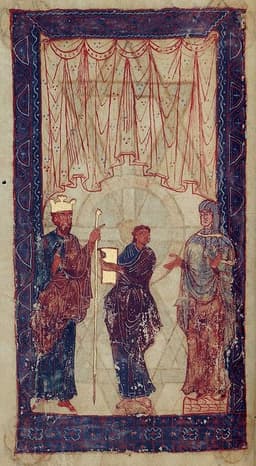
Ferdinand I of Leon
Emperor · Medieval
59.2Total
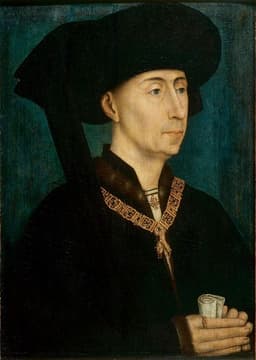
Philip the Good
Emperor · Medieval
59.5Total
Basic Information
Born
1015
1396
Died
1065
1467
Era
Medieval
Medieval
Nationality
Leon
Burgundy
Occupation
Emperor
Emperor
Civilization
Western
Western
Score Comparison
Military (10%)
70.0
47.5
Political (20%)
68.0
62.7
Influence (20%)
56.4
56.7
Legacy (20%)
49.2
54.0
Leadership (15%)
66.0
78.0
Strategy (15%)
57.5
60.0
TOTAL
59.2
59.5
Ferdinand I of Leon — Complete Timeline
1029 AD
Inheritance of the County of CastilePolitical Action◆ Major
Ferdinand I inherited the County of Castile from his father Sancho III of Navarre. He later expanded his territory through conquest and marriage, laying the foundation for the Kingdom of Castile.
Impact: regionalconstructive
1037 AD
Conquest of LeónWar◆ Major
Ferdinand I defeated and killed King Bermudo III of Le
Impact: regional
1056 AD
First Emperor of SpainPolitical Action◆ Major
Ferdinand I was crowned 'Imperator totius Hispaniae' (Emperor of all Spain) in 1056, claiming suzerainty over all Christian and Muslim rulers in Iberia. This title reflected his military dominance and political ambition.
Impact: regional
1065 AD
Division of the kingdomPolitical Action◆ Major
Upon his death, Ferdinand I divided his kingdom among his sons: Sancho II received Castile, Alfonso VI received Le
Impact: regionaldestructive
Philip the Good — Complete Timeline
1429 AD
Acquired the County of NamurPolitical Action◆ Major
Philip purchased the County of Namur from the impoverished Count John III, expanding Burgundian territory. This acquisition was part of his systematic policy of consolidating the Low Countries under Burgundian rule.
Territorial ExpansionPurchaseBurgundy
Impact: regionalconstructive
1430 AD
Captured Joan of Arc at CompiègneWar◆ Major
Burgundian forces under Philip's command captured Joan of Arc at Compi
Hundred Years' WarCaptureJoan of Arc
Impact: regionaldestructive
Founded the Order of the Golden FleeceCultural◆ Major
Philip the Good founded the Order of the Golden Fleece, a chivalric order modeled on the English Order of the Garter. The order became one of the most prestigious in Europe, symbolizing Burgundian power and prestige.
ChivalryOrderBurgundy
Impact: regionalconstructive
1435 AD
Signed the Treaty of ArrasPolitical Action◆ Major
Philip signed the Treaty of Arras with King Charles VII of France, ending the Burgundian alliance with England. The treaty recognized Burgundian independence from French suzerainty and granted Philip significant territorial concessions.
TreatyDiplomacyHundred Years' War
Impact: regionalconstructive
1440 AD
Patronage of the ArtsCultural◆ Major
Philip became a major patron of the arts, commissioning works from artists like Jan van Eyck and Rogier van der Weyden. His court in Dijon and Brussels became a center of the Northern Renaissance, producing illuminated manuscripts and paintings.
PatronageRenaissanceArt
Impact: regionalconstructive
Expert Analysis
Ferdinand I of Leon vs Philip the Good
### The Emperor and the Duke: Two Paths to Power in Medieval Europe
On a dusty battlefield in 1037, Ferdinand I of León drove his lance into the heart of his rival, King Bermudo III. The crown of León rolled in the mud, and a new king was born. Four centuries later, in the gilded halls of a Burgundian palace, Philip the Good did not spill blood to seize power; he wrote a check. He purchased the County of Namur from a bankrupt nobleman, adding territory to his growing dominions with the scratch of a quill. Both men sought to build kingdoms. One did it with a sword, the other with a purse. Why did these two medieval rulers, both crowned as emperors in their own right, choose such radically different paths to power? The answer lies not in their shared ambition, but in the very different worlds they inherited.
**Origins**
Ferdinand I was born into a world of raw, frontier violence. His father, Sancho III of Navarre, had carved out a formidable kingdom through war and marriage, and Ferdinand learned early that on the Iberian Peninsula, land was won at the point of a spear. He was a son of the Reconquista, a centuries-long struggle between Christian kingdoms and Muslim taifas. His upbringing was Spartan, his education practical. He understood that a king’s legitimacy was measured in the bodies of his enemies and the tribute they paid.
Philip the Good, born in 1396, entered a Europe that had already begun to change. The Hundred Years' War was grinding on, but the feudal order was fraying. His father, John the Fearless, was a master of political intrigue, not battlefield glory. Philip grew up in a world of courtly splendor, where power flowed not just from castles but from counting houses. The great cities of Flanders—Ghent, Bruges, Ypres—were engines of commerce, and their wealth was the true currency of power. Philip learned to read a balance sheet as carefully as a battle map.
**Rise to Power**
Ferdinand’s rise was a bloody staircase. In 1029, he inherited the County of Castile through his wife, Sancha. But that was merely a foothold. In 1037, he saw his chance. King Bermudo III of León was young and vulnerable. At the Battle of Tamarón, Ferdinand did not just defeat his rival; he killed him. Then, with the cold logic of a conqueror, he married Bermudo’s sister and claimed the throne. There was no negotiation, no compromise. The kingdom was taken by right of conquest and sealed in blood.
Philip’s ascent was a masterclass in political patience. He inherited Burgundy in 1419 after his father was assassinated—a murder that could have sparked a war of vengeance. Instead, Philip calculated. He initially allied with the English, and in 1430, his men captured Joan of Arc at Compiègne. But he did not keep her. He sold her to the English, turning a prisoner into a political asset. Then, in 1435, he performed his greatest political feat: the Treaty of Arras. He abandoned his English allies and reconciled with the French king, Charles VII. In exchange, he gained territorial concessions and, crucially, was released from his oath of fealty to the French crown. He had traded allies like a merchant trades goods, and emerged richer than before.
**Leadership & Governance**
Ferdinand ruled as a warrior-king. His military campaigns against the Moors were relentless, extracting the *parias*—tribute payments—that filled his treasury. In 1056, he had himself crowned *Imperator totius Hispaniae*—Emperor of all Spain. The title was grand, but the reality was simpler: he was the strongest king on the peninsula, and his power rested on his ability to make war. His political wisdom was that of a feudal lord: loyalty was personal, and his kingdom was his patrimony.
Philip was a different breed of ruler. He never led an army into battle; his military score of 36.1 reflects a man who preferred diplomacy to combat. Instead, he governed through institutions. He founded the Order of the Golden Fleece in 1430, a chivalric order that bound the most powerful nobles of his realm to his person not through fear, but through honor and prestige. He understood that a duke’s power in the 15th century came from controlling the flow of patronage, not just the flow of blood. His political score of 80.0 is a testament to this skill. He was a builder of a state, not a conqueror of one.
**Triumph & Tragedy**
Ferdinand’s greatest triumph was his coronation as Emperor of Spain, a title that proclaimed Christian unity against the Moors. But his tragedy was also his making. On his deathbed in 1065, he did what so many medieval kings did: he divided his kingdom among his three sons. Sancho II got Castile, Alfonso VI got León, and García got Galicia. Within years, the brothers were at war. His life’s work—a united Christian Spain—was shattered by his own hand. The warrior-king had failed to build a structure that could outlast him.
Philip’s triumph was the Burgundian court itself. Under his patronage, artists like Jan van Eyck and Rogier van der Weyden created works of breathtaking beauty. The Ghent Altarpiece, with its luminous colors and meticulous detail, was a product of his patronage. His tragedy was more subtle. For all his wealth and influence, he never achieved his ultimate ambition: to be crowned king. Burgundy remained a duchy, a collection of rich territories but not a kingdom. He was a prince who lacked the final, unattainable title.
**Character & Destiny**
Ferdinand was a man of iron will and limited vision. He saw the world as a battlefield and his kingdom as a personal possession. His strategy score of 45.7 suggests a man who thought in terms of immediate victories, not long-term institutions. He was a hammer, and everything looked like a nail. His destiny was to be a founder, but a flawed one—a man who built a house on sand.
Philip was a man of velvet and steel. He was patient, calculating, and deeply aware of the power of symbols. The Order of the Golden Fleece was not just a club; it was a tool of governance. His patronage of the arts was not mere vanity; it was a way of projecting an image of legitimacy and wealth. He understood that in a world of shifting alliances, reputation was a fortress. His destiny was to be a builder of a culture, not just a state.
**Legacy**
Ferdinand I of León is remembered as a minor figure in the Reconquista, a stepping stone to the later unification of Spain under his grandson, Alfonso VI. His empire did not survive him. His legacy score of 65.2 reflects a name that is known to specialists, not the public. He is a footnote in a larger story.
Philip the Good is remembered differently. His court was the crucible of the Burgundian Renaissance, a golden age of art and culture that shaped the future of the Low Countries. The Order of the Golden Fleece survives to this day as a Spanish chivalric order. His legacy score of 69.7 is higher, and more importantly, his influence is tangible. The wealth and culture he cultivated would eventually pass to the Habsburgs, forming the foundation of the Spanish Empire.
**Conclusion**
Standing at the edge of their worlds, Ferdinand and Philip offer a lesson in the evolution of power. Ferdinand was a king of the old order, where might made right and a kingdom was a personal inheritance to be divided among sons. Philip was a prince of the new order, where wealth, diplomacy, and culture were the true engines of power. One built with a sword; the other built with a brush and a treaty. Both were emperors in name, but only one understood that in the end, an empire is not a territory on a map, but a story that outlives its teller.
Rankings
🥇
Philip the GoodLeader
Mil: 47.5Pol: 62.7Inf: 56.7
59.5
🥈
Ferdinand I of Leon
Mil: 70.0Pol: 68.0Inf: 56.4
59.2
+0.3 behind
How This Comparison Works
Algorithm
Each figure is scored on 6 dimensions (0—100 scale) based on structured historical data: Military (10%), Political (20%), Influence (20%), Legacy (20%), Leadership (15%), Strategy (15%). The weighted total produces the final ranking.
Data Sources
Scores are computed from structured sub-indicators in the database. Scale factors adjust for era (Ancient ×0.85, Modern ×1.0) and civilization size (Eastern ×1.05, Other ×0.80) to account for differences in population and military scale.
Maximum 3 Figures
Comparisons are limited to 2—3 figures to ensure readability and statistical meaningfulness.
Error Margins
±5 points per dimension — Sub-scores are derived from historical records with inherent uncertainty. Two figures within 5 points on a dimension should be considered roughly equivalent in that area.
Total Score Accuracy
±3 points overall — The weighted combination of 6 dimensions produces a total score with approximately ±3 points of uncertainty. Differences of less than 3 points are not statistically significant— the figures are effectively tied.
Known Limitations
- Historical records are incomplete and uneven across civilizations
- Figures from oral-tradition societies may be underrepresented
- Occupation labels can misclassify multi-role figures
- Scores measure capability and impact, not moral character
- Quantitative scoring is a comparison tool, not absolute truth
Capability Radar
Military (10%) — Battles & Warfare
Battles
55
45
Win Rate
60
50
Expansion
60
60
Political (20%) — Governance & Reform
Reform
50
70
Diplomacy
55
80
Economy
45
85
Influence (20%) — Cultural & Global Reach
Cultural
40
65
Global
30
50
Legacy (20%) — Historical Impact
Historical
45
60
Longevity
40
55
Leadership (15%) — Power & Stability
Tenure
65
75
Stability
50
70
Strategy (15%) — Tactics & Innovation
Strategy
55
55
Tactics
50
40
Reform
40
30
Similar Comparisons
Comments & Discussion
DukeNotDuelist6/16/2026
"Sword vs ledger? Please. Philip the Good bought his power because he could—the 15th-century Low Countries were the economic engine of Europe, with Bruges’ wool trade funding armies that made Ferdinand’s rusty spearmen look like peasants with pitchforks. Ferdinand fought because he had no choice; Leon was a backwater with zero trade routes. Philip’s purchase of Namur in 1421 cost 132,000 gold crowns—a sum that would have hired 5,000 mercenaries for a year. That’s not cowardice, that’s medieval c
NumismaticSkeptic6/16/2026
"Let’s talk about that ‘check’ Philip supposedly wrote. The Namur purchase wasn’t some civilized transaction—it was a shakedown. The County of Namur’s lord was broke after wars and bad harvests; Philip basically waited for him to bleed out, then offered pennies on the pound. That’s not ‘duke vs emperor’ philosophy, that’s opportunistic vulture behavior against a neighbor who couldn’t defend himself. Ferdinand at least fought equals. Philip exploited a bankrupt weakling and called it statecraft.
LanceAndLedger6/16/2026
"拿剑和拿钱包比,太简单了。斐迪南一世打仗时,伊比利亚半岛还在‘收复失地运动’的高潮——每个基督教国王都靠敌人首级树立威信。但菲利普三世在勃艮第呢?他面对的是一片领土碎片化的地区,贵族像商人一样倒卖领地。他买下那慕尔伯爵领,不是因为‘和平’,而是因为战争成本太高——雇佣兵的工资比买地贵三倍。斐迪南的选择靠环境,菲利普的选择靠经济。一个用血换领土,一个用金——但目标都一样:扩张。"
修订派史家6/16/2026
"你那个‘浴血征服 vs 支票本’的对比太浪漫化了。斐迪南真的只靠长矛吗?别忘了,他父亲桑乔三世通过婚姻和外交给斐迪南铺好了路——他继承纳瓦拉的领地和莱昂王位上的复杂继承权不是靠武力,而是靠政治算计。菲利普三世也一样:他用钱买那慕尔,但之前他父亲‘无畏’约翰已经靠谋杀和战争清除了对手。两位用尽所有工具:武力、金钱、婚姻、暗杀。一个工具袋,不同时代掏出不同东西。别把历史简单化。"
ClassicsConvert6/16/2026
"有意思的是,两个人都自称皇帝——斐迪南在莱昂加冕为‘全西班牙的皇帝’,菲利普三世统治着神罗境内的勃艮第领地,但没有帝国头衔。斐迪南的‘皇帝’头