Loading...
Ferdinand I of Leon vs Peter the Great
Peter the Great leads by 14.0 pts · 2 figures compared
…
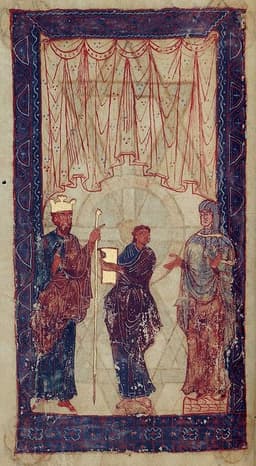
Ferdinand I of Leon
Emperor · Medieval
59.2Total
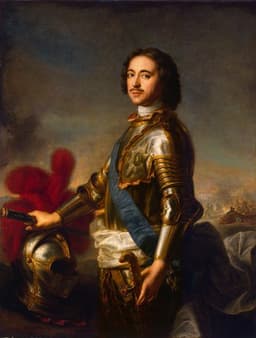
Peter the Great
Emperor · Modern
73.2Total
Basic Information
Born
1015
1672
Died
1065
1725
Era
Medieval
Modern
Nationality
Leon
Russia
Occupation
Emperor
Emperor
Civilization
Western
Western
Score Comparison
Military (10%)
70.0
75.0
Political (20%)
68.0
90.0
Influence (20%)
56.4
68.0
Legacy (20%)
49.2
65.0
Leadership (15%)
66.0
78.0
Strategy (15%)
57.5
72.0
TOTAL
59.2
73.2
Ferdinand I of Leon — Complete Timeline
1029 AD
Inheritance of the County of CastilePolitical Action◆ Major
Ferdinand I inherited the County of Castile from his father Sancho III of Navarre. He later expanded his territory through conquest and marriage, laying the foundation for the Kingdom of Castile.
Impact: regionalconstructive
1037 AD
Conquest of LeónWar◆ Major
Ferdinand I defeated and killed King Bermudo III of Le
Impact: regional
1056 AD
First Emperor of SpainPolitical Action◆ Major
Ferdinand I was crowned 'Imperator totius Hispaniae' (Emperor of all Spain) in 1056, claiming suzerainty over all Christian and Muslim rulers in Iberia. This title reflected his military dominance and political ambition.
Impact: regional
1065 AD
Division of the kingdomPolitical Action◆ Major
Upon his death, Ferdinand I divided his kingdom among his sons: Sancho II received Castile, Alfonso VI received Le
Impact: regionaldestructive
Peter the Great — Complete Timeline
1697 AD
Grand EmbassyPolitical Action◆ Major
Peter the Great traveled incognito to Western Europe as part of a diplomatic mission. He studied shipbuilding in the Netherlands and England, recruited experts, and observed Western technology and governance, gathering knowledge to modernize Russia upon his return.
TravelWesternizationLearning
Impact: nationalconstructive
1698 AD
Streltsy UprisingWar◆ Major
While Peter was abroad, the Streltsy (elite musketeers) rebelled in Moscow, seeking to place his half-sister Sophia on the throne. Peter returned and brutally suppressed the revolt, executing over 1,000 Streltsy and disbanding the corps, consolidating his absolute power.
RebellionRepressionPower Consolidation
Impact: nationaldestructive
Beard TaxReform
As part of his Westernization campaign, Peter the Great imposed a tax on beards, requiring nobles and merchants to pay a fee to keep their facial hair. Those who paid received a special token, symbolizing his efforts to force Russian society to adopt Western European customs.
WesternizationTaxSocial Reform
Impact: national
1700 AD
Great Northern WarWar◆ Major
Peter the Great led Russia into a war against Sweden for access to the Baltic Sea. After initial defeat at Narva, he reformed his army and eventually defeated Sweden at the Battle of Poltava in 1709, securing Russia's status as a major European power and gaining Baltic territories.
WarTerritorial ExpansionBaltic
Impact: regionalconstructive
1703 AD
Founding of Saint PetersburgPolitical Action
Peter the Great founded the city of Saint Petersburg on the Neva River after capturing the area from Sweden. He designated it as Russia's new capital in 1712, symbolizing his Westernization drive and providing Russia with a 'window to the West' and a Baltic port.
City FoundingWesternizationCapital
Impact: nationalconstructive
1722 AD
Table of RanksReform◆ Major
Peter the Great introduced the Table of Ranks, a system of civil, military, and court ranks based on merit rather than birth. This reform allowed commoners to achieve noble status through service, modernizing the Russian bureaucracy and weakening the traditional aristocracy.
BureaucracyMeritocracySocial Reform
Impact: nationalprogressive
Expert Analysis
Peter the Great vs Ferdinand I of Leon
# The Emperor’s Mirror: Peter the Great and Ferdinand I of Leon
In the winter of 1697, a giant of a man—six feet seven inches tall, with wild eyes and a restless energy that seemed to shake the very air around him—slipped incognito into the shipyards of the Dutch Republic. He called himself Peter Mikhailov, a simple carpenter eager to learn the craft of building boats. Across the centuries and a continent away, in the year 1056, another man stood in the cathedral of León as bishops placed a crown upon his head, proclaiming him “Imperator totius Hispaniae”—Emperor of all Spain. One ruler learned by doing, in the mud and salt of foreign docks; the other by claiming, with the weight of ancient Christian kingship. Both sought to forge empires, but their paths could not have diverged more sharply. What drove these two emperors, and why did one reshape a nation while the other saw his life’s work crumble within a generation?
Origins
Peter Alekseyevich Romanov was born in 1672, a boy in a kingdom still haunted by the shadow of the Mongol yoke, where boyars clung to fur-trimmed robes and long beards as symbols of Orthodox piety. His father, Tsar Alexis, had died when Peter was four, leaving the throne to a chaotic regency dominated by his half-sister Sophia. Peter grew up in the village of Preobrazhenskoye, far from the Kremlin’s intrigues, playing war games with peasant boys and foreign mercenaries. The smell of gunpowder and the feel of a ship’s timber became his earliest education. He was a child of a Russia that was both vast and backward, a landlocked giant with one foot in Asia and the other barely touching Europe.
Ferdinand I of León, born around 1015, emerged from a different world entirely. He was the second son of Sancho III of Navarre, a king who had united much of Christian Spain under his rule. The Reconquista was the great drama of his age—a grinding, centuries-long war against the Moorish taifa kingdoms of the south. Ferdinand inherited not a throne but a county: Castile, a rugged frontier land of warriors and castles. His was a world of oaths and blood feuds, where power was measured in the number of horsemen a lord could summon and the relics a cathedral could claim. While Peter looked to the future, Ferdinand looked to the past—to Visigothic kings and the dream of a unified Christian Spain.
Rise to Power
Peter’s ascent was violent and improbable. In 1689, at the age of seventeen, he overthrew his half-sister Sophia in a bloodless coup, but real power eluded him for years. His turning point came in 1697, when he launched the Grand Embassy—a diplomatic mission disguised as a learning journey. For eighteen months, Peter traveled through Prussia, Holland, England, and Austria, not as a tsar but as a student. He worked in shipyards, visited factories, studied anatomy, and even pulled teeth from willing subjects. This was not mere curiosity; it was a calculated act of transformation. He returned to Russia in 1698 to find the Streltsy—the elite musketeers—in revolt. Peter crushed them with savage efficiency, executing hundreds and displaying their bodies outside the Kremlin walls as a warning. The lesson was clear: the old order would not yield peacefully.
Ferdinand’s rise was more conventional, shaped by marriage and war. In 1029, he inherited Castile from his father, but his ambition reached farther. He married Sancha, sister of Bermudo III of León, a union that gave him a claim to that kingdom. In 1037, at the Battle of Tamarón, Ferdinand met Bermudo in the field. The Leonese king was killed—some say thrown from his horse in the chaos—and Ferdinand claimed León by right of conquest. He then spent the next two decades systematically pressing southward against the Moors, extracting tribute from the taifas of Toledo, Seville, and Zaragoza. His power grew not through innovation but through the traditional tools of medieval kingship: marriage, battle, and the careful manipulation of vassal loyalties.
Leadership & Governance
Peter’s rule was a revolution from above. He imposed a beard tax in 1698, forcing nobles to shave or pay a fee—a symbolic assault on old Russian identity. He founded St. Petersburg in 1703 on a swamp, a window to the West, and forced thousands of serfs to build it with their bare hands. He reformed the army along European lines, created a navy from nothing, and introduced the Table of Ranks in 1722, a system that promoted men based on merit rather than birth. His leadership was brutal, hands-on, and relentless. He personally led troops in battle, designed ships, and drafted laws. There was no distance between the tsar and his reforms; he was the hammer that broke the old Russia.
Ferdinand governed as a feudal lord writ large. He was crowned Emperor of Spain in 1056, a title that asserted supremacy over all Christian Iberian kings, but his authority rested on personal loyalty and military success. He did not create new institutions or reshape society. Instead, he expanded the borders of his realm, collected tribute from Moorish rulers, and strengthened the church. His governance was conservative, aimed at consolidating traditional power rather than transforming it. Where Peter saw a nation to be remade, Ferdinand saw a kingdom to be enlarged.
Triumph & Tragedy
Peter’s greatest triumph was the Great Northern War (1700–1721). After a crushing defeat at Narva in 1700, he rebuilt his army, learned from his mistakes, and finally crushed Sweden at Poltava in 1709. By the war’s end, Russia had gained access to the Baltic Sea and become a European power. But his tragedy was the human cost: serfs died by the thousands building St. Petersburg, and his own son Alexei was tortured to death for opposing his reforms. Peter created a modern state, but at the price of his own humanity.
Ferdinand’s triumph was his domination of the Moorish taifas, extracting vast sums of gold that funded his court and his wars. He was the first ruler to be called Emperor of Spain in centuries, a title that resonated with Christian pride. But his tragedy came at his death in 1065. Following the old custom, he divided his kingdom among his three sons: Sancho, Alfonso, and García. Within years, the brothers were at war, and the empire he had built shattered into fragments. His greatest achievement—unity—was undone by the very tradition he honored.
Character & Destiny
Peter was a force of nature: impulsive, curious, cruel, and visionary. His personality drove his decisions—he could not sit still, could not delegate, could not tolerate opposition. This made him a tyrant but also a reformer. He believed that Russia could be saved only by being broken and rebuilt. His destiny was to drag a reluctant nation into modernity, and he did so with a violence that left scars for centuries.
Ferdinand was a man of his time: pious, proud, and bound by the codes of his era. He saw himself as a defender of Christendom, not an innovator. His decisions were shaped by the expectations of his nobles and the logic of inheritance. He divided his kingdom not out of folly but because that was how medieval kings ensured peace among their sons. His tragedy was that the old ways no longer worked in a world where centralized power was becoming necessary.
Legacy
Peter the Great is remembered as the father of modern Russia. St. Petersburg stands as his monument, and the Table of Ranks became the foundation of the Russian bureaucracy. He is both admired and reviled—a figure who Westernized his country at immense cost. His legacy is the Russian Empire itself, which endured for two centuries after his death.
Ferdinand I is a footnote in most histories, remembered primarily as the father of Alfonso VI, who would later conquer Toledo. His title of Emperor of Spain faded quickly, and his divided kingdom plunged into civil war. He is a cautionary tale: that even great conquerors cannot escape the limits of their era.
Conclusion
Standing at the shipyard in Zaandam, Peter the Great learned to build a boat with his own hands. Ferdinand I, crowned in León, believed that a crown was enough. One man understood that power must be remade to survive; the other believed that tradition would sustain it. In the end, Peter’s Russia rose, and Ferdinand’s Spain fractured. The difference was not in ambition but in imagination—the willingness to see the world not as it was, but as it could be. That, perhaps, is the truest measure of an emperor.
Rankings
🥇
Peter the GreatLeader
Mil: 75.0Pol: 90.0Inf: 68.0
73.2
🥈
Ferdinand I of Leon
Mil: 70.0Pol: 68.0Inf: 56.4
59.2
+14.0 behind
How This Comparison Works
Algorithm
Each figure is scored on 6 dimensions (0—100 scale) based on structured historical data: Military (10%), Political (20%), Influence (20%), Legacy (20%), Leadership (15%), Strategy (15%). The weighted total produces the final ranking.
Data Sources
Scores are computed from structured sub-indicators in the database. Scale factors adjust for era (Ancient ×0.85, Modern ×1.0) and civilization size (Eastern ×1.05, Other ×0.80) to account for differences in population and military scale.
Maximum 3 Figures
Comparisons are limited to 2—3 figures to ensure readability and statistical meaningfulness.
Error Margins
±5 points per dimension — Sub-scores are derived from historical records with inherent uncertainty. Two figures within 5 points on a dimension should be considered roughly equivalent in that area.
Total Score Accuracy
±3 points overall — The weighted combination of 6 dimensions produces a total score with approximately ±3 points of uncertainty. Differences of less than 3 points are not statistically significant— the figures are effectively tied.
Known Limitations
- Historical records are incomplete and uneven across civilizations
- Figures from oral-tradition societies may be underrepresented
- Occupation labels can misclassify multi-role figures
- Scores measure capability and impact, not moral character
- Quantitative scoring is a comparison tool, not absolute truth
Capability Radar
Military (10%) — Battles & Warfare
Battles
55
85
Win Rate
60
80
Expansion
60
90
Political (20%) — Governance & Reform
Reform
50
95
Diplomacy
55
80
Economy
45
85
Influence (20%) — Cultural & Global Reach
Cultural
40
85
Global
30
85
Legacy (20%) — Historical Impact
Historical
45
90
Longevity
40
85
Leadership (15%) — Power & Stability
Tenure
65
90
Stability
50
70
Strategy (15%) — Tactics & Innovation
Strategy
55
85
Tactics
50
75
Reform
40
95
Similar Comparisons
Comments & Discussion
TSARWOOD6/16/2026
Peter learned carpentry in Zaandam; Ferdinand got crowned in León. One built a navy from nothing, the other inherited a title that evaporated. Peter’s Russia went from medieval backwater to European power—Ferdinand’s “empire” was a legal fiction on parchment. Give me the man who smells like ship tar over one draped in liturgical robes any day. The Leonese imperium didn’t survive his own funeral; Peter’s St. Petersburg still stands. That’s the difference between a blacksmith emperor and a coronat
木匠沙皇6/16/2026
彼得大帝六尺七寸的身高,在荷兰船厂里当学徒时,费迪南一世却在莱昂大教堂里戴着“全西班牙皇帝”的王冠。一个靠双手造船,一个靠血统装神。费迪南的帝国连一代人都没撑过去,彼得却把俄罗斯从沼泽拖进了欧洲。你说谁是真正的皇帝?我看那个满身木屑的巨人比穿金戴银的贵族强一万倍。历史从来只记得实干家。
NAVALIST6/16/2026
Comparing these two on any military metric is laughable. Peter crushed Sweden at Poltava (1709), built a Baltic fleet from scratch, and took on the Ottomans in the Sea of Azov. Ferdinand’s greatest “campaign” was extracting tribute from taifa kingdoms while his knights bickered. The Leonese “Empire” couldn’t even hold Toledo permanently. Peter’s navy had 28,000 men at its peak; Ferdinand’s army was a glorified posse. One forged a war machine; the other inherited a mirage.
零和舰队6/16/2026
海军?费迪南一世连艘像样的战船都没有,他所谓的“帝国”就是骑马踩一圈莱昂平原。彼得大帝从零建起波罗的海舰队,硬生生把瑞典打跪下。费迪南呢?靠分封和婚约玩过家家。1709年波尔塔瓦战役彼得彻底改变东欧力量平衡,费迪南的军事遗产就是一堆倒塌的城堡。别把骑士小说当真了。
DATAMANCER6/16/2026
The raw stats are damning. Peter expanded Russia from ~15 million to 20+ million square kilometers, created 200+ factories, and built a capital on swamp. Ferdinand inherited a rump kingdom and left behind... what? A few churches and a dead title. Per capita power projection? Peter’s tax revenue increased 6x during his reign; Ferdinand’s treasury probably couldn’t afford a decent cathedral renovation. The numbers don’t lie—one created measurable growth, the other created nostalgia.
数据铁匠6/16/2026
数字不会说谎。彼得大帝治下俄国人口从1500万飙到2000万以上,建了200多座工厂,税收