Loading...
Ferdinand I of Leon vs Pachacuti
Pachacuti leads by 10.2 pts · 2 figures compared
…
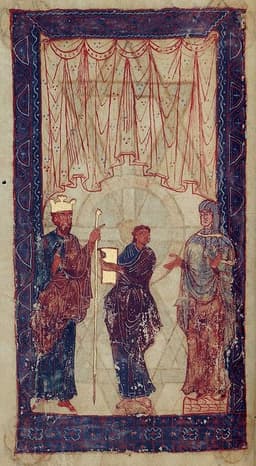
Ferdinand I of Leon
Emperor · Medieval
59.2Total
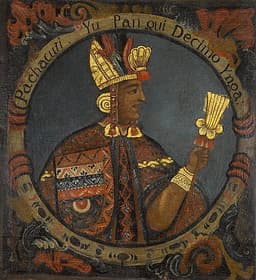
Pachacuti
Emperor · Medieval
69.4Total
Basic Information
Born
1015
1418
Died
1065
1472
Era
Medieval
Medieval
Nationality
Leon
Inca Empire
Occupation
Emperor
Emperor
Civilization
Western
Other
Score Comparison
Military (10%)
70.0
78.5
Political (20%)
68.0
58.1
Influence (20%)
56.4
65.0
Legacy (20%)
49.2
72.0
Leadership (15%)
66.0
78.0
Strategy (15%)
57.5
69.2
TOTAL
59.2
69.4
Ferdinand I of Leon — Complete Timeline
1029 AD
Inheritance of the County of CastilePolitical Action◆ Major
Ferdinand I inherited the County of Castile from his father Sancho III of Navarre. He later expanded his territory through conquest and marriage, laying the foundation for the Kingdom of Castile.
Impact: regionalconstructive
1037 AD
Conquest of LeónWar◆ Major
Ferdinand I defeated and killed King Bermudo III of Le
Impact: regional
1056 AD
First Emperor of SpainPolitical Action◆ Major
Ferdinand I was crowned 'Imperator totius Hispaniae' (Emperor of all Spain) in 1056, claiming suzerainty over all Christian and Muslim rulers in Iberia. This title reflected his military dominance and political ambition.
Impact: regional
1065 AD
Division of the kingdomPolitical Action◆ Major
Upon his death, Ferdinand I divided his kingdom among his sons: Sancho II received Castile, Alfonso VI received Le
Impact: regionaldestructive
Pachacuti — Complete Timeline
1438 AD
Conquest of the Chanka KingdomWar
Pachacuti led the Inca army to defeat the Chanka, a powerful rival, in a decisive battle near Cusco. This victory secured his position as Sapa Inca and initiated a period of rapid expansion, transforming the Inca from a small kingdom into a vast empire.
ConquestInca ExpansionChanka
Impact: regional
1440 AD
Reconstruction of CuscoCultural◆ Major
Pachacuti rebuilt Cusco as the imperial capital, designing it in the shape of a puma and constructing massive stone structures like Sacsayhuam
Urban PlanningArchitectureInca Empire
Impact: regionalconstructive
1450 AD
Initiation of Machu Picchu's ConstructionCultural◆ Major
Pachacuti ordered the construction of Machu Picchu, a royal estate and ceremonial site high in the Andes. The complex featured sophisticated dry-stone masonry and terraced agriculture, serving as a symbol of Inca engineering and a retreat for the emperor.
ArchitectureRoyal EstateInca Engineering
Impact: regionalconstructive
Expert Analysis
Pachacuti vs Ferdinand I of Leon
# The Emperor’s Mirror: Two Paths to Power in a Medieval World
On a windswept battlefield near Cusco in 1438, a prince who had never been meant to rule faced annihilation. The Chanka warriors, feared across the Andes, had already broken the Inca army and were closing in on the capital. The reigning Sapa Inca had fled, but his son—a man history would remember as Pachacuti—refused to retreat. He rallied the shattered remnants of his forces and launched a desperate counterattack. The victory that followed would not only save his kingdom but ignite an imperial transformation that reshaped an entire continent. Half a world away, another prince was following a very different path to power. Ferdinand I of León, born in 1015, inherited his first kingdom not through battlefield heroics but through the careful dynastic calculations of his father, Sancho III of Navarre. Where Pachacuti seized destiny with his own hands, Ferdinand had destiny handed to him—and their empires would reflect these divergent origins.
Origins
Pachacuti was born into a world of constant danger. The Inca were merely one among many warring factions in the highlands of Peru when he came of age in the early fifteenth century. His father, Viracocha Inca, was a capable ruler but one who faced existential threats from the Chanka confederation to the south. Young Yupanqui—his birth name before he took the throne name Pachacuti, meaning "Earth-Shaker"—grew up in a society where survival depended on military prowess and the favor of the sun god Inti. There was no guarantee of succession; the Inca practiced a form of royal selection where the most capable son often prevailed, sometimes through violence.
Ferdinand’s world was equally fractured but fundamentally different. Born in 1015, he entered a Christian Spain defined by the Reconquista—the centuries-long struggle to reclaim territory from Muslim rulers. But Ferdinand’s father, Sancho III of Navarre, had already mastered the art of dynastic marriage and political maneuvering. When Sancho died in 1035, Ferdinand received the County of Castile as his inheritance. Unlike Pachacuti, who had to prove himself through combat, Ferdinand’s path was paved by his father’s strategic marriages and territorial acquisitions. The difference was profound: one emperor forged himself in battle, the other was crafted by inheritance.
Rise to Power
The Chanka invasion of 1438 was Pachacuti’s crucible. When his father abandoned Cusco, the young prince made a choice that would echo through centuries: he stood his ground. The chroniclers record that he prayed to Inti, received a vision, and then led his outnumbered forces to a stunning victory. This single battle transformed him from a prince into a legend. He immediately deposed his father—or, as Inca tradition euphemistically put it, convinced him to retire—and began a reign of conquest that would expand the Inca domain from a small kingdom into the largest empire in pre-Columbian America.
Ferdinand’s rise was more calculated, less dramatic. In 1029, he inherited Castile. In 1037, he faced his first true test: the Battle of Tamarón against King Bermudo III of León. Ferdinand won, and Bermudo died in the fighting. The victory gave Ferdinand the crown of León, but it was a conquest born of dynastic claim rather than existential necessity. Where Pachacuti fought to save his people, Ferdinand fought to expand his inheritance. He was crowned "Imperator totius Hispaniae"—Emperor of all Spain—in 1056, a title that reflected ambition more than reality. The Muslim taifa kingdoms of al-Andalus still dominated much of the peninsula, and Ferdinand’s empire was a patchwork of Christian kingdoms held together by his personal authority.
Leadership & Governance
Pachacuti’s genius lay in organization. He understood that conquest alone could not sustain an empire. After defeating the Chanka, he rebuilt Cusco in the shape of a puma—a sacred animal—with massive stone walls that still stand today. He initiated the construction of Machu Picchu around 1450, a royal estate that demonstrated both his power and his vision. But his true achievement was administrative: he established the system of mitmaq, which relocated conquered peoples to break resistance and spread Inca culture; he created a network of roads and storehouses that allowed rapid movement of armies and goods; and he imposed the Quechua language as a unifying force. His leadership score of 84.5 reflects a ruler who combined military prowess with political wisdom.
Ferdinand’s governance was more traditional. He ruled through feudal relationships, rewarding his nobles with lands and titles in exchange for military service. His campaigns against the Moors were effective but limited—he extracted tribute from Muslim kingdoms rather than conquering them outright. His political score of 72.0 suggests a competent but not transformative ruler. Where Pachacuti built an imperial system from scratch, Ferdinand worked within existing structures. The difference was partly circumstantial: the Inca had no prior empire to draw upon, while Ferdinand inherited centuries of Christian and Roman administrative tradition.
Triumph & Tragedy
Pachacuti’s greatest triumph was the transformation of the Inca from a regional power into an empire spanning modern Peru, Ecuador, Bolivia, and parts of Chile and Argentina. His tragedy was that this empire, built so carefully, would collapse within a generation of the Spanish arrival in 1532. The very centralization that made Inca rule efficient also made it vulnerable: capture the Sapa Inca, and the entire system faltered.
Ferdinand’s triumph was his coronation as Emperor of Spain—a title that, while largely symbolic, established a precedent for later Spanish unification. His tragedy came at his death in 1065. Following the custom of his kingdom, he divided his lands among his three sons: Sancho received Castile, Alfonso received León, and García received Galicia. Within years, the brothers were at war. The division that Ferdinand intended to preserve peace instead guaranteed conflict. His empire, like Pachacuti’s, proved fragile in the hands of his successors.
Character & Destiny
Pachacuti was a revolutionary. His name means "Earth-Shaker," and he lived up to it: he overturned the old order, centralized power, and created a new imperial ideology centered on the sun god Inti. His military score of 66.8 and strategy score of 76.7 suggest a commander who relied on organization and innovation rather than sheer force. He was ruthless but visionary, demanding absolute loyalty while offering conquered peoples a place in his imperial system.
Ferdinand was a consolidator. His strategy score of 45.7 is notably low for an emperor, indicating that he preferred diplomacy and dynastic marriage to military brilliance. He was a pious Christian who saw himself as God’s instrument in the Reconquista, but his ambitions were limited by the feudal politics of his time. Where Pachacuti thought in centuries, Ferdinand thought in generations. His division of his kingdom at death reflected a medieval mindset that saw kingdoms as personal property rather than enduring states.
Legacy
Pachacuti’s legacy is etched into stone. Machu Picchu remains one of the world’s most iconic archaeological sites, and the Inca road system still inspires wonder. His administrative innovations—the decimal system of governance, the use of quipu for record-keeping, the forced resettlement of conquered peoples—influenced Spanish colonial administration after the conquest. His legacy score of 66.1 understates his impact: he created the template for Andean civilization that persists in indigenous identity today.
Ferdinand’s legacy is more ambiguous. He is remembered as the first Emperor of Spain, a title that foreshadowed the unification of the peninsula under his descendants. But his division of the kingdom also set the stage for centuries of internal conflict. His influence score of 74.9 reflects his role in shaping Spanish history, but his military and political achievements were overshadowed by later rulers like his son Alfonso VI and the Catholic Monarchs.
Conclusion
Standing before the ruins of Machu Picchu or the medieval walls of León, one feels the weight of two very different imperial dreams. Pachacuti built from nothing, creating an empire that stretched thousands of miles and united dozens of peoples under a single sun. Ferdinand inherited a fractured Christian world and tried to weld it into unity, only to see it shatter at his death. Their stories remind us that empire-building is never just about conquest—it is about the ideas, institutions, and visions that outlast the emperor. One built in stone, the other in parchment. One empire fell to steel and disease, the other to its own internal divisions. Both, in their way, shaped the world we inhabit today.
Rankings
🥇
PachacutiLeader
Mil: 78.5Pol: 58.1Inf: 65.0
69.4
🥈
Ferdinand I of Leon
Mil: 70.0Pol: 68.0Inf: 56.4
59.2
+10.2 behind
How This Comparison Works
Algorithm
Each figure is scored on 6 dimensions (0—100 scale) based on structured historical data: Military (10%), Political (20%), Influence (20%), Legacy (20%), Leadership (15%), Strategy (15%). The weighted total produces the final ranking.
Data Sources
Scores are computed from structured sub-indicators in the database. Scale factors adjust for era (Ancient ×0.85, Modern ×1.0) and civilization size (Eastern ×1.05, Other ×0.80) to account for differences in population and military scale.
Maximum 3 Figures
Comparisons are limited to 2—3 figures to ensure readability and statistical meaningfulness.
Error Margins
±5 points per dimension — Sub-scores are derived from historical records with inherent uncertainty. Two figures within 5 points on a dimension should be considered roughly equivalent in that area.
Total Score Accuracy
±3 points overall — The weighted combination of 6 dimensions produces a total score with approximately ±3 points of uncertainty. Differences of less than 3 points are not statistically significant— the figures are effectively tied.
Known Limitations
- Historical records are incomplete and uneven across civilizations
- Figures from oral-tradition societies may be underrepresented
- Occupation labels can misclassify multi-role figures
- Scores measure capability and impact, not moral character
- Quantitative scoring is a comparison tool, not absolute truth
Capability Radar
Military (10%) — Battles & Warfare
Battles
55
85
Win Rate
60
90
Expansion
60
90
Political (20%) — Governance & Reform
Reform
50
92
Diplomacy
55
75
Economy
45
80
Influence (20%) — Cultural & Global Reach
Cultural
40
85
Global
30
65
Legacy (20%) — Historical Impact
Historical
45
80
Longevity
40
70
Leadership (15%) — Power & Stability
Tenure
65
85
Stability
50
82
Strategy (15%) — Tactics & Innovation
Strategy
55
88
Tactics
50
80
Reform
40
85
Similar Comparisons
Comments & Discussion
Andean Overlord6/16/2026
Calling this a comparison is like comparing a volcano to a garden sprinkler. Pachacuti didn't just win a battle—he invented statecraft from scratch, using mitma policy to relocate conquered peoples and break resistance. Ferdinand played medieval musical chairs with Muslim taifas, taking tribute but not transforming society. One reshaped a continent; the other just reshuffled Iberian feudal titles. Give me the earth-shaker every time.
历史计量师6/16/2026
光信口开河说Pachacuti更强?数据呢?印加没有文字记载,全靠西班牙人编年史,可信度比中世纪莱昂的法律文献低一个数量级。斐迪南一世收了巴达霍斯、萨拉戈萨的贡金,每年数万第纳尔——真金白银的经济战。Pachacuti的扩张全靠口耳相传,他到底动员了多少人?不清楚。盲崇“传奇”忽略史料局限性,那是浪漫主义,不是历史。
Classics Chair6/16/2026
Pachacuti embodies the Homeric hero—Achilles refusing to flee, reshaping his world through personal aristeia. Ferdinand I is the Augustan model: dynastic legitimacy, legal consolidation, and slow bureaucratic expansion. Neither is “better”; they represent fundamentally different civilizational archetypes. The Andean state-building required cataclysmic personal transformation, while Leonese kingship followed Roman-legal continuity. Both succeeded magnificently within their cultural logics. But le
地缘修正派6/16/2026
别把斐迪南一世当无能贵族。他接手纳瓦拉,五年内吞并莱昂,靠的不是运气——是精确的联姻与军事威慑结合。1037年塔马龙战役,他亲手击败并杀死贝尔穆多三世,获得了莱昂王冠。相比之下,Pachacuti面对的查卡多头联盟,其与印加的冲突规模在1438年最多不过数千人。跨文化比较必须考虑技术、人口和地理基础,不是谁的故事更动听就赢。
Terrace Reformer6/16/2026
You all miss the real genius: Pachacuti didn't just conquer—he redesigned the landscape. Terraces at Moray, storehouses every few miles, decimal administration of labor. That's not heroic myth; that's systemic innovation. Ferdinand's greatest administrative feat was collecting paria from divided taifas. Give me the civilization-builder who fed millions and engineered an empire out of vertical geography over a tax-farming king any day.