Loading...
Ferdinand I of Leon vs Otto I the Great
Otto I the Great leads by 16.0 pts · 2 figures compared
…
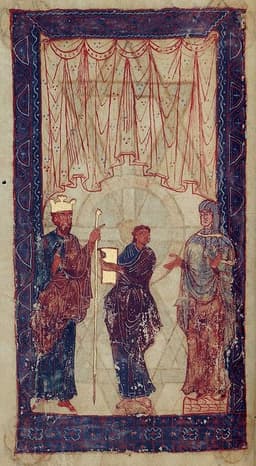
Ferdinand I of Leon
Emperor · Medieval
59.2Total
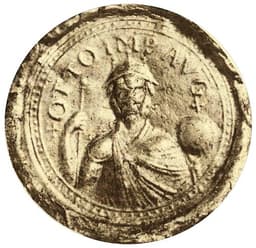
Otto I the Great
Emperor · Medieval
75.2Total
Basic Information
Born
1015
912
Died
1065
973
Era
Medieval
Medieval
Nationality
Leon
Holy Roman Empire
Occupation
Emperor
Emperor
Civilization
Western
Western
Score Comparison
Military (10%)
70.0
82.0
Political (20%)
68.0
70.0
Influence (20%)
56.4
88.0
Legacy (20%)
49.2
65.0
Leadership (15%)
66.0
78.0
Strategy (15%)
57.5
65.4
TOTAL
59.2
75.2
Ferdinand I of Leon — Complete Timeline
1029 AD
Inheritance of the County of CastilePolitical Action◆ Major
Ferdinand I inherited the County of Castile from his father Sancho III of Navarre. He later expanded his territory through conquest and marriage, laying the foundation for the Kingdom of Castile.
Impact: regionalconstructive
1037 AD
Conquest of LeónWar◆ Major
Ferdinand I defeated and killed King Bermudo III of Le
Impact: regional
1056 AD
First Emperor of SpainPolitical Action◆ Major
Ferdinand I was crowned 'Imperator totius Hispaniae' (Emperor of all Spain) in 1056, claiming suzerainty over all Christian and Muslim rulers in Iberia. This title reflected his military dominance and political ambition.
Impact: regional
1065 AD
Division of the kingdomPolitical Action◆ Major
Upon his death, Ferdinand I divided his kingdom among his sons: Sancho II received Castile, Alfonso VI received Le
Impact: regionaldestructive
Otto I the Great — Complete Timeline
951 AD
Diplomatic Marriage to Adelaide of ItalyPolitical Action◆ Major
Otto married Adelaide, the widowed queen of Italy, after intervening in Italian politics. This marriage gave him control over the Kingdom of Italy and strengthened his claim to imperial authority.
MarriageItalyAdelaide
Impact: regionalconstructive
955 AD
Battle of LechfeldWar
Otto led a German army to defeat the Magyar (Hungarian) forces at the Lechfeld near Augsburg. This victory ended Magyar raids into Western Europe and secured Otto's reputation as a defender of Christendom.
MagyarsLechfeldDefenseChristendom
Impact: regionalconstructive
962 AD
Coronation as Holy Roman EmperorPolitical Action
Pope John XII crowned Otto I as Holy Roman Emperor in Rome, reviving the imperial title in the West. This event established the Holy Roman Empire as a major political entity and linked German kingship with papal authority.
CoronationHoly Roman EmpirePapacy
Impact: globalconstructive
Expert Analysis
Ferdinand I of Leon vs Otto I the Great
# The Imperial Dream: Two Paths to Crown and Glory
On a February morning in 962, Otto I knelt before Pope John XII in St. Peter’s Basilica, rising as Holy Roman Emperor—a title that would shape European politics for a millennium. Less than a century later, in 1056, Ferdinand I placed a crown upon his own head in León, declaring himself "Imperator totius Hispaniae." Both men sought to revive an ancient dream of universal Christian empire, yet their paths diverged in ways that reveal the profound differences between the political landscapes of Germany and Spain. Why did one succeed in building an institution that lasted centuries, while the other’s imperial vision crumbled within a generation?
Origins
Otto I was born in 912 into a world still reeling from the collapse of Charlemagne’s empire. His father, Henry the Fowler, had forged the East Frankish kingdom from the chaos of tribal duchies, but the realm remained fragile, threatened by Magyar horsemen from the east and ambitious nobles within. Otto grew up in a court where power was earned through blood and iron, where the king was first among equals in a confederation of proud dukes.
Ferdinand I, born in 1015, inherited a different world. His father, Sancho III of Navarre, had manipulated marriages and alliances to become the most powerful Christian ruler in Iberia, but the Reconquista against Muslim taifas defined everything. Ferdinand’s inheritance of the County of Castile in 1029 was not a gift of stability but a launching pad for conquest. The frontier offered opportunities unknown in Germany—land to take, tribute to extract, and a religious crusade to justify expansion.
Rise to Power
Otto’s path was one of relentless consolidation. He crushed rebellious dukes, deposed a pope, and married Adelaide of Italy in 951, a diplomatic masterstroke that gave him control over the wealthy Lombard kingdom. Each step was a calculation in a chess game where the pieces were armed men and the board was fractured Christendom. His victory at the Battle of Lechfeld in 955 was the turning point: by annihilating the Magyar threat, Otto transformed himself from a German king into the defender of all Europe.
Ferdinand rose through conquest. In 1037, he defeated and killed King Bermudo III of León at the Battle of Tamarón, claiming the kingdom by right of marriage and sword. Unlike Otto, who had to negotiate with powerful dukes, Ferdinand simply eliminated rivals. The fragmented taifa kingdoms of Muslim Spain offered easy targets—he extracted tribute from Seville, Toledo, and Zaragoza, funding his wars with Moorish gold.
Leadership & Governance
Otto governed through a system of compromise and force. He appointed bishops and abbots as loyal administrators, creating a church-state alliance that bypassed the hereditary nobility. His military strategy was defensive and consolidating—the Lechfeld victory was a battle of survival, not expansion. He understood that empire required institutions, not just territory.
Ferdinand ruled as a conqueror. His military campaigns were aggressive and expansionist, pushing the frontier southward while extracting parias (tribute) from Muslim rulers. He was crowned emperor in 1056, but the title was more aspiration than reality—he never commanded the universal authority Otto claimed. His governance relied on personal loyalty and family ties, not institutional structures.
Triumph & Tragedy
Otto’s coronation in 962 was his crowning achievement, but it came at a cost. The alliance with the papacy would later entangle German kings in Italian adventures that drained their resources. Yet the Holy Roman Empire endured for eight centuries, a testament to his political architecture.
Ferdinand’s triumph was his imperial coronation, but his tragedy was his deathbed decision. In 1065, he divided his kingdom among his three sons, following the old Visigothic tradition of partible inheritance. This fragmentation undid everything he had built—within years, his sons were warring against each other, and the imperial title became meaningless.
Character & Destiny
Otto was a pragmatist who understood that power required patience. He waited years to strike against rebels, built alliances before battles, and never let ambition outrun capability. His personality was shaped by the need to hold together a realm that could easily shatter.
Ferdinand was a conqueror with a conqueror’s fatal flaw: he could not imagine that his legacy would not be preserved by his blood. His division of the kingdom reveals a man who thought in terms of family, not state. The very success that brought him the imperial crown also blinded him to the need for lasting institutions.
Legacy
Otto I is remembered as the founder of the Holy Roman Empire, a title that would be claimed by German kings until 1806. His system of church-state governance influenced European politics for centuries, and his victory at Lechfeld is celebrated as the birth of the German nation.
Ferdinand I is a footnote in Spanish history, remembered more for his conquests than his empire. The title "Emperor of Spain" died with his generation, and the Reconquista continued under different kings. His division of the kingdom became a cautionary tale about the dangers of inheritance customs.
Conclusion
The difference between these two imperial dreams lies not in ambition but in understanding. Otto built an empire on institutions that outlasted any single ruler; Ferdinand built one on conquest that crumbled upon his death. One created a structure that would house generations; the other raised a tent that collapsed when he left. In the end, the emperor’s crown is not forged from gold alone—it requires the iron of political wisdom to endure.
Rankings
🥇
Otto I the GreatLeader
Mil: 82.0Pol: 70.0Inf: 88.0
75.2
🥈
Ferdinand I of Leon
Mil: 70.0Pol: 68.0Inf: 56.4
59.2
+16.0 behind
How This Comparison Works
Algorithm
Each figure is scored on 6 dimensions (0—100 scale) based on structured historical data: Military (10%), Political (20%), Influence (20%), Legacy (20%), Leadership (15%), Strategy (15%). The weighted total produces the final ranking.
Data Sources
Scores are computed from structured sub-indicators in the database. Scale factors adjust for era (Ancient ×0.85, Modern ×1.0) and civilization size (Eastern ×1.05, Other ×0.80) to account for differences in population and military scale.
Maximum 3 Figures
Comparisons are limited to 2—3 figures to ensure readability and statistical meaningfulness.
Error Margins
±5 points per dimension — Sub-scores are derived from historical records with inherent uncertainty. Two figures within 5 points on a dimension should be considered roughly equivalent in that area.
Total Score Accuracy
±3 points overall — The weighted combination of 6 dimensions produces a total score with approximately ±3 points of uncertainty. Differences of less than 3 points are not statistically significant— the figures are effectively tied.
Known Limitations
- Historical records are incomplete and uneven across civilizations
- Figures from oral-tradition societies may be underrepresented
- Occupation labels can misclassify multi-role figures
- Scores measure capability and impact, not moral character
- Quantitative scoring is a comparison tool, not absolute truth
Capability Radar
Military (10%) — Battles & Warfare
Battles
55
75
Win Rate
60
80
Expansion
60
70
Political (20%) — Governance & Reform
Reform
50
80
Diplomacy
55
85
Economy
45
70
Influence (20%) — Cultural & Global Reach
Cultural
40
65
Global
30
70
Legacy (20%) — Historical Impact
Historical
45
80
Longevity
40
75
Leadership (15%) — Power & Stability
Tenure
65
85
Stability
50
75
Strategy (15%) — Tactics & Innovation
Strategy
55
75
Tactics
50
70
Reform
40
65
Similar Comparisons
Comments & Discussion
LEGACY_SCUTTLER6/16/2026
Otto had the luck of timing and geography—Pope John XII needed a strongman against Berengar II, so the imperial crown came as a transaction. Ferdinand’s self-coronation? That’s just a dramatic pose on a crumbling stage. León was a backwater kingdom fighting squabbling taifas, not shaping Europe’s destiny. Otto’s empire lasted 800 years; Ferdinand’s imperial delusion died with his son. The Leonese claim is historical vanity dressed in a crown.
经略都护6/16/2026
奥托的皇冠是教皇亲手戴上的,有法统背书;费迪南自己加冕,最多算皇帝cosplay。雷昂那点地盘,连托莱多都拿不下就敢称“全西班牙皇帝”?莱昂内斯法典里记载他的布告在边境一钱不值。奥托的帝国是全欧洲的骨架,费迪南的帝国只是卡斯蒂利亚征服前的预热小剧场。
DATA_MALLET6/16/2026
Fun fact: Otto’s chroniclers mention exactly two coronation ceremonies—Aachen (936) and Rome (962)—both externally validated. Ferdinand’s imperial title appears in only seven charters before his death, and not a single foreign ruler recognized it. That’s a 0% international recognition rate vs Otto’s near-universal acknowledgment by Christendom. Numbers don’t lie: one was emperor, the other was a king with a fancy signature.