Loading...
Ferdinand I of Leon vs Mao Zedong
Mao Zedong leads by 20.2 pts · 2 figures compared
…
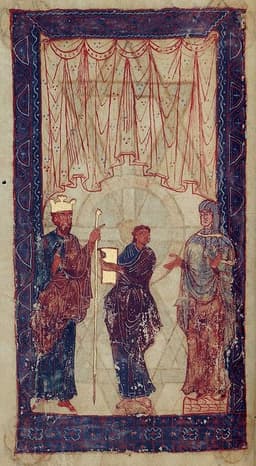
Ferdinand I of Leon
Emperor · Medieval
59.2Total
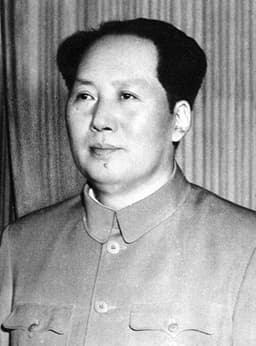
Mao Zedong
Politician · Modern
79.4Total
Basic Information
Born
1015
1893
Died
1065
1976
Era
Medieval
Modern
Nationality
Leon
China
Occupation
Emperor
Politician
Civilization
Western
Eastern
Score Comparison
Military (10%)
70.0
75.0
Political (20%)
68.0
88.0
Influence (20%)
56.4
85.0
Legacy (20%)
49.2
70.0
Leadership (15%)
66.0
85.0
Strategy (15%)
57.5
72.0
TOTAL
59.2
79.4
Ferdinand I of Leon — Complete Timeline
1029 AD
Inheritance of the County of CastilePolitical Action◆ Major
Ferdinand I inherited the County of Castile from his father Sancho III of Navarre. He later expanded his territory through conquest and marriage, laying the foundation for the Kingdom of Castile.
Impact: regionalconstructive
1037 AD
Conquest of LeónWar◆ Major
Ferdinand I defeated and killed King Bermudo III of Le
Impact: regional
1056 AD
First Emperor of SpainPolitical Action◆ Major
Ferdinand I was crowned 'Imperator totius Hispaniae' (Emperor of all Spain) in 1056, claiming suzerainty over all Christian and Muslim rulers in Iberia. This title reflected his military dominance and political ambition.
Impact: regional
1065 AD
Division of the kingdomPolitical Action◆ Major
Upon his death, Ferdinand I divided his kingdom among his sons: Sancho II received Castile, Alfonso VI received Le
Impact: regionaldestructive
Mao Zedong — Complete Timeline
1934 AD
Long MarchWar
Mao Zedong led the Chinese Red Army on a strategic retreat from Nationalist forces, covering approximately 6,000 miles over 370 days. The march solidified Mao's leadership within the Chinese Communist Party and became a foundational myth of the Communist revolution.
Chinese Civil WarCommunist RevolutionRetreat
Impact: national
1949 AD
Proclamation of the People's Republic of ChinaPolitical Action
Mao Zedong declared the founding of the People's Republic of China from Tiananmen Gate in Beijing. This ended the Chinese Civil War and established Communist rule over mainland China, with Mao as Chairman of the Central People's Government.
Founding of PRCCommunist VictoryRevolution
Impact: global
1958 AD
Great Leap ForwardReform◆ Major
Mao launched a campaign to rapidly industrialize China and collectivize agriculture. The policy led to widespread mismanagement, resulting in a famine that caused an estimated 15-45 million deaths between 1959 and 1961.
FamineIndustrializationCollectivization
Impact: nationaldestructive
1960 AD
Sino-Soviet SplitPolitical Action◆ Major
Mao's ideological differences with Soviet leader Nikita Khrushchev led to a breakdown in relations between China and the Soviet Union. The split ended the Sino-Soviet alliance and reshaped global Cold War dynamics, with China pursuing an independent path.
Cold WarIdeological ConflictAlliance Breakdown
Impact: global
1966 AD
Cultural RevolutionPolitical Action
Mao initiated a sociopolitical movement to purge capitalist and traditional elements from Chinese society. The Red Guard youth groups attacked intellectuals and officials, leading to widespread violence, destruction of cultural artifacts, and an estimated 1-2 million deaths.
Political PurgeSocial UpheavalRed Guard
Impact: nationaldestructive
1971 AD
Ping-Pong DiplomacyCultural◆ Major
Mao approved an invitation for the U.S. table tennis team to visit China, initiating a thaw in Sino-American relations. This cultural exchange paved the way for President Nixon's visit to China in 1972 and the eventual normalization of diplomatic ties.
DiplomacyU.S.-China RelationsCultural Exchange
Impact: globalconstructive
Expert Analysis
Mao Zedong vs Ferdinand I of Leon
# The Emperor and the Chairman: Two Visions of Unity
In the autumn of 1065, as Ferdinand I of León lay dying in the city of León, he performed an act that would haunt his kingdom for generations: he took his sword and broke it into three pieces, handing one to each of his sons. It was a symbolic gesture meant to convey unity, but it achieved the opposite—within years, his sons were at war with one another. Nine centuries later, in the summer of 1949, Mao Zedong stood atop the Gate of Heavenly Peace in Beijing and declared the founding of the People's Republic of China, a nation he would hold together through iron will and revolutionary terror until his death in 1976. Both men sought to unify fractured lands. One succeeded so completely that his legacy still shapes a global superpower; the other failed so thoroughly that his kingdom dissolved within a generation. What drove these two rulers to such different outcomes?
Origins
Ferdinand I was born in 1015 into the violent, fragmented world of medieval Iberia, where Christian kingdoms feuded among themselves even as they fought the Moors. He was the second son of Sancho III of Navarre, a king who understood that power came from land and marriage. When Sancho died, Ferdinand inherited the County of Castile—a modest territory, but one that placed him at the crossroads of Christian and Muslim Spain. His era was one of small armies, personal loyalties, and borders that shifted with every battle. Ferdinand learned early that survival meant playing the long game, consolidating power through alliance and conquest rather than ideology.
Mao Zedong was born in 1893 in Shaoshan, a village in Hunan province, into a China that was collapsing. The Qing Dynasty was dying, foreign powers carved up the country like a feast, and peasants starved in fields that belonged to landlords. Mao’s father was a prosperous farmer who beat him; his mother was a devout Buddhist who taught him compassion. He would later say that the contrast between his parents shaped his revolutionary consciousness—the cruelty of authority and the suffering of the weak. By the time he was a young man, China had become a laboratory for every political experiment imaginable: republicanism, warlordism, foreign imperialism. Mao’s generation did not have the luxury of slow consolidation; they had to remake the world overnight.
Rise to Power
Ferdinand’s path to power was a masterclass in opportunistic ambition. In 1029, he inherited the County of Castile from his father, but that was merely a stepping stone. Eight years later, in 1037, he faced King Bermudo III of León at the Battle of Tamarón. The clash was brutal and decisive: Ferdinand killed Bermudo with his own hands and claimed the kingdom. He did not conquer by revolutionary fervor but by marriage—he had wed Bermudo’s sister, Sancha, giving his claim a veneer of legitimacy. This was the politics of the medieval world: blood and law intertwined.
Mao’s rise was far more treacherous. He was a founding member of the Chinese Communist Party in 1921, but for years he was a marginal figure, dismissed by Moscow-trained rivals as a “peasant revolutionary” who did not understand Marxist theory. His turning point came in 1934, during the Long March. As the Red Army retreated from Nationalist forces, covering approximately 6,000 miles through some of China’s most unforgiving terrain, Mao emerged as a leader who understood that survival mattered more than dogma. By the time the march ended, he had outmaneuvered his rivals and taken control of the party. Where Ferdinand used marriage and battle, Mao used endurance and ideology.
Leadership & Governance
Ferdinand ruled as a medieval emperor should: through conquest, tribute, and careful administration. In 1056, he had himself crowned *Imperator totius Hispaniae*—Emperor of all Spain—a title that reflected ambition more than reality. He led campaigns against the Moors, extracting tribute from the taifa kingdoms of Toledo, Seville, and Zaragoza, but he did not seek to annihilate them. He understood that a living enemy who paid tribute was more useful than a dead one who cost soldiers. His political score of 72.0 reflects a ruler who knew how to manage nobles and clergy, but his strategy score of 45.7 suggests he lacked the long-term vision to build a lasting state.
Mao governed through total transformation. The Great Leap Forward of 1958 attempted to industrialize China overnight, collectivizing farms and demanding steel from backyard furnaces. The result was catastrophic: mismanagement led to widespread famine that killed tens of millions. Yet Mao did not stop. In 1966, he launched the Cultural Revolution, unleashing the Red Guard to purge “capitalist” and “traditional” elements from society. Schools closed, temples were destroyed, and millions were persecuted. Mao’s political score of 82.0 and leadership score of 80.6 reflect a man who could command absolute obedience, but his methods were devastating. Where Ferdinand extracted tribute, Mao extracted revolution.
Triumph & Tragedy
Ferdinand’s greatest moment was his coronation as Emperor of Spain—a symbolic triumph that unified Christian Spain under a single crown, at least in name. His tragedy came at his deathbed. By dividing his kingdom among his sons—Sancho II receiving Castile, Alfonso VI receiving León, and García receiving Galicia—he ensured that his life’s work would unravel. The division was not an accident; it was the custom of the age. But it revealed a fundamental limitation: Ferdinand could conquer, but he could not create institutions that outlasted him.
Mao’s greatest triumph was the proclamation of the People’s Republic of China in 1949, ending a century of humiliation and civil war. He had united a nation of hundreds of millions under a single government. His tragedy was that he could not stop destroying what he had built. The Sino-Soviet Split of 1960 isolated China from its only major ally; the Cultural Revolution tore apart families and communities. Yet Mao also showed flexibility: in 1971, he approved Ping-Pong Diplomacy, inviting an American table tennis team to China and initiating a thaw that would lead to Nixon’s visit. It was a small gesture from a man who had spent decades denouncing American imperialism—proof that even ideologues can adapt.
Character & Destiny
Ferdinand was a pragmatist. He fought when necessary, negotiated when profitable, and divided his kingdom because he could not imagine a different way. His personality was shaped by the feudal world: honor mattered, but survival mattered more. He died with his kingdom intact, but he planted the seeds of its destruction.
Mao was a revolutionary who believed that conflict was the engine of history. “Political power grows out of the barrel of a gun,” he once said, and he lived by that creed. His personality was shaped by the chaos of modern China: he saw destruction as creation, suffering as purification. He died with his nation intact, but scarred by his policies. Where Ferdinand’s flaw was shortsightedness, Mao’s was relentless certainty.
Legacy
Ferdinand is remembered today as a footnote—a medieval king who briefly united Spain before it shattered. His legacy is the division he created, which his son Alfonso VI would eventually overcome, but only after years of civil war. He scores 65.2 in legacy, a reflection of a ruler who mattered in his time but faded from memory.
Mao’s legacy is vast and contested. He is the founding father of modern China, a figure whose image still hangs in Tiananmen Square. Yet his policies caused the deaths of millions, and his name is whispered with both reverence and fear. He scores 69.9 in legacy, but numbers cannot capture the scale of his impact. He remade a civilization.
Conclusion
Standing at the end of their lives, Ferdinand and Mao faced the same question: what does it mean to unite a people? Ferdinand answered with a sword, a crown, and a broken kingdom. Mao answered with a revolution, a party, and a nation that endures. The difference was not in their ambition—both dreamed of unity—but in their tools. Ferdinand had custom and marriage; Mao had ideology and terror. One built for his sons; the other built for eternity. And in that difference lies the tragic arc of history: the emperor who tried to preserve, and the chairman who tried to destroy, both reaching for the same impossible thing.
Rankings
🥇
Mao ZedongLeader
Mil: 75.0Pol: 88.0Inf: 85.0
79.4
🥈
Ferdinand I of Leon
Mil: 70.0Pol: 68.0Inf: 56.4
59.2
+20.2 behind
How This Comparison Works
Algorithm
Each figure is scored on 6 dimensions (0—100 scale) based on structured historical data: Military (10%), Political (20%), Influence (20%), Legacy (20%), Leadership (15%), Strategy (15%). The weighted total produces the final ranking.
Data Sources
Scores are computed from structured sub-indicators in the database. Scale factors adjust for era (Ancient ×0.85, Modern ×1.0) and civilization size (Eastern ×1.05, Other ×0.80) to account for differences in population and military scale.
Maximum 3 Figures
Comparisons are limited to 2—3 figures to ensure readability and statistical meaningfulness.
Error Margins
±5 points per dimension — Sub-scores are derived from historical records with inherent uncertainty. Two figures within 5 points on a dimension should be considered roughly equivalent in that area.
Total Score Accuracy
±3 points overall — The weighted combination of 6 dimensions produces a total score with approximately ±3 points of uncertainty. Differences of less than 3 points are not statistically significant— the figures are effectively tied.
Known Limitations
- Historical records are incomplete and uneven across civilizations
- Figures from oral-tradition societies may be underrepresented
- Occupation labels can misclassify multi-role figures
- Scores measure capability and impact, not moral character
- Quantitative scoring is a comparison tool, not absolute truth
Capability Radar
Military (10%) — Battles & Warfare
Battles
55
85
Win Rate
60
80
Expansion
60
85
Political (20%) — Governance & Reform
Reform
50
95
Diplomacy
55
80
Economy
45
70
Influence (20%) — Cultural & Global Reach
Cultural
40
90
Global
30
90
Legacy (20%) — Historical Impact
Historical
45
95
Longevity
40
85
Leadership (15%) — Power & Stability
Tenure
65
95
Stability
50
60
Strategy (15%) — Tactics & Innovation
Strategy
55
85
Tactics
50
75
Reform
40
90
Similar Comparisons
Comments & Discussion
Terra-breaking_Sword6/16/2026
Ferdinand was a medieval fool playing with symbols while his kingdom burned. Breaking a sword into three? That's not unity—that's a recipe for civil war, which is exactly what happened. Mao understood that real unity requires crushing opposition, not poetic gestures. Ferdinand's weakness killed his legacy within a generation. Mao's strength built a nation that still stands. Medieval sentimentality loses to revolutionary ruthlessness every time.
华夏统御者6/16/2026
拿费迪南德跟毛主席比,简直是对历史的侮辱。费迪南德分裂王国,毛主席统一中国——这是天与地的差距。1065年那会儿,伊比利亚半岛一堆小国互相掐架,费迪南德连穆斯林都没彻底赶走。而1949年的中国,经历百年屈辱后,毛主席用铁腕整合了五亿人。费迪南德只会玩剑,毛主席玩的是革命。这对比,简直像拿蜡烛比太阳。
Numismatic_Nomad6/16/2026
You're ignoring the structural realities. Ferdinand ruled a patchwork of personal fiefdoms where loyalty was bought with land grants—of course his sons rebelled. That's feudalism 101. Mao had the advantage of modern state infrastructure, mass media, and a party apparatus. Give Ferdinand a standing army and ideological uniformity, and he'd have done just as well. This isn't about personal greatness; it's about the tools available. Context matters more than you admit.
史海沉舟客6/16/2026
费迪南德一世的悲剧在于,他活在封建制的枷锁里——土地分封必然导致分裂。他的"碎剑示好"实际上是对现实的妥协:不分,儿子们造反;分了,照样造反。而毛主席不一样,他摧毁了旧有的土地制度和官僚体系,建立了全新的党国体制。这不是个人能力的差距,而是制度创新的胜利。费迪南德最多是个优秀的封建领主,毛主席是旧世界的终结者。