Loading...
Ferdinand I of Leon vs Louis XI
Louis XI leads by 8.5 pts · 2 figures compared
…
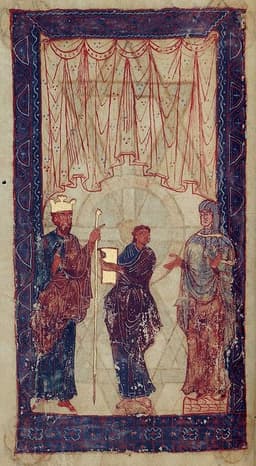
Ferdinand I of Leon
Emperor · Medieval
59.2Total
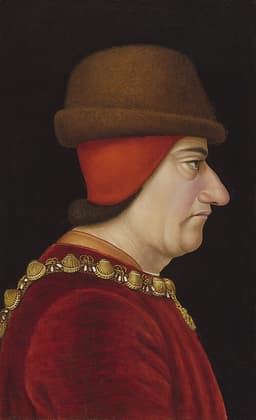
Louis XI
Emperor · Medieval
67.7Total
Basic Information
Born
1015
1423
Died
1065
1483
Era
Medieval
Medieval
Nationality
Leon
France
Occupation
Emperor
Emperor
Civilization
Western
Western
Score Comparison
Military (10%)
70.0
45.0
Political (20%)
68.0
78.0
Influence (20%)
56.4
68.0
Legacy (20%)
49.2
65.0
Leadership (15%)
66.0
85.0
Strategy (15%)
57.5
55.0
TOTAL
59.2
67.7
Ferdinand I of Leon — Complete Timeline
1029 AD
Inheritance of the County of CastilePolitical Action◆ Major
Ferdinand I inherited the County of Castile from his father Sancho III of Navarre. He later expanded his territory through conquest and marriage, laying the foundation for the Kingdom of Castile.
Impact: regionalconstructive
1037 AD
Conquest of LeónWar◆ Major
Ferdinand I defeated and killed King Bermudo III of Le
Impact: regional
1056 AD
First Emperor of SpainPolitical Action◆ Major
Ferdinand I was crowned 'Imperator totius Hispaniae' (Emperor of all Spain) in 1056, claiming suzerainty over all Christian and Muslim rulers in Iberia. This title reflected his military dominance and political ambition.
Impact: regional
1065 AD
Division of the kingdomPolitical Action◆ Major
Upon his death, Ferdinand I divided his kingdom among his sons: Sancho II received Castile, Alfonso VI received Le
Impact: regionaldestructive
Louis XI — Complete Timeline
1464 AD
Established the Postal SystemReform
Louis XI created a royal postal system with relay stations across France, enabling faster communication between the crown and provincial officials. This administrative reform improved governance and intelligence gathering.
AdministrationCommunicationReform
Impact: nationalconstructive
1465 AD
Defeated the League of the Public WealWar◆ Major
Louis XI faced a coalition of powerful nobles, the League of the Public Weal, led by Charles the Bold of Burgundy. Although the Battle of Montlh
Civil WarNoble RebellionBurgundy
Impact: national
1475 AD
Treaty of PicquignyPolitical Action◆ Major
Louis XI negotiated the Treaty of Picquigny with Edward IV of England, ending English military intervention in France. Louis paid a large pension to Edward in exchange for English withdrawal, avoiding a costly war and securing his northern border.
TreatyDiplomacyEngland
Impact: regionalconstructive
1477 AD
Acquired BurgundyPolitical Action
After Charles the Bold's death at the Battle of Nancy, Louis XI seized the Duchy of Burgundy and other Burgundian territories, including Picardy and the Somme towns. This expansion significantly increased royal domain and weakened the Burgundian state.
Territorial ExpansionBurgundyRoyal Domain
Impact: regionalconstructive
1481 AD
Annexed Anjou and MainePolitical Action
Louis XI annexed the counties of Anjou and Maine after the death of Charles of Anjou, incorporating them into the royal domain. This further consolidated French territory and reduced the power of the Angevin nobility.
Territorial ExpansionAnjouMaine
Impact: nationalconstructive
Expert Analysis
Ferdinand I of Leon vs Louis XI
### The Spider and the Emperor: Two Visions of Medieval Power
On a cold December morning in 1483, the most hated man in France lay dying in his fortress at Plessis-lèz-Tours. Louis XI, the “Universal Spider,” had spent three decades weaving a web of intrigue that would transform a fractured kingdom into the foundation of modern France. Across the Pyrenees, four centuries earlier, another king had been hailed as “Imperator totius Hispaniae” — Emperor of all Spain. Ferdinand I of León, a warrior-king of the Reconquista, had expanded his domains through blood and iron, only to see his empire shattered by the very sons he had raised to rule. Both men sought unity. One built a nation; the other built a tombstone for his own ambition. Why did their paths diverge so dramatically?
### Origins: The Heir and the Upstart
Ferdinand I was born into the golden age of Christian Spain. His father, Sancho III of Navarre, had forged a fragile hegemony over the northern Christian kingdoms, and Ferdinand inherited the County of Castile in 1029 at the age of fourteen. He was a product of the warrior aristocracy — a man who understood power as something won in battle, sealed with blood, and divided among sons as a father’s legacy. The era demanded piety, courage, and a sword. Ferdinand had all three.
Louis XI, by contrast, was born in 1423 into a France still bleeding from the Hundred Years’ War. His father, Charles VII, was a weak king who had been saved by Joan of Arc. Louis grew up watching the crown humiliated by English armies and Burgundian dukes. He learned early that power was not a birthright but a prize to be stolen, and that the surest way to lose a kingdom was to fight for it openly. Where Ferdinand saw glory, Louis saw danger. Where Ferdinand trusted in God, Louis trusted in spies.
### Rise to Power: The Sword and the Quill
Ferdinand’s path was straightforward. In 1037, at the Battle of Tamarón, he killed King Bermudo III of León and claimed that kingdom by right of conquest and marriage. By 1056, he had subdued the Moorish taifas, extorted tribute, and had himself crowned “Emperor of all Spain” in the city of León. It was a title that meant little beyond the Pyrenees, but in the Christian kingdoms of Iberia, it carried the weight of a dream: the unification of Spain under one cross.
Louis XI’s rise was more labyrinthine. He rebelled against his own father twice, was exiled to the court of Burgundy, and learned statecraft from his enemies. When he finally inherited the throne in 1461, he found a kingdom where the great nobles — the dukes of Burgundy, Brittany, and Bourbon — wielded more power than the king. Louis did not charge into battle. Instead, in 1465, when the League of the Public Weal rose against him, he fought a brief, inconclusive war and then negotiated. He lost the battle but won the war, buying time with concessions he never intended to keep.
### Leadership & Governance: The Warrior and the Weaver
Ferdinand ruled as a medieval emperor should. He led armies personally, besieged Moorish fortresses, and extracted tribute from the taifa kings of Toledo and Seville. His political wisdom lay in his ability to balance the ambitions of his nobles and the Church, but his strategy was limited to the battlefield. He never created institutions, never reformed administration, and never thought beyond the horizon of his own lifetime.
Louis XI was the opposite. He was a terrible general — his military score of 14.5 reflects a man who lost more battles than he won. But his political score of 69.6 tells the true story. He created a royal postal system in 1464, with relay stations that allowed him to communicate across France faster than any enemy. He bribed English kings, outmaneuvered Burgundian dukes, and patiently dismantled the great feudal lordships one by one. In 1475, the Treaty of Picquigny ended English intervention in France not with a sword but with a pension. In 1477, after Charles the Bold fell at Nancy, Louis seized Burgundy not by conquest but by legal chicanery. He was a weaver, not a warrior.
### Triumph & Tragedy: Unity and Fragmentation
Ferdinand’s greatest triumph was his coronation as Emperor of Spain in 1056. For a moment, the dream of a unified Christian Iberia seemed within reach. But his greatest tragedy came with his death in 1065. Like so many medieval kings, he divided his kingdom among his three sons: Sancho received Castile, Alfonso received León, and García received Galicia. Within a decade, the brothers were at war. The empire he had built with a lifetime of bloodshed collapsed in a single generation.
Louis XI’s triumph was more subtle but more lasting. By the time of his death in 1483, he had broken the power of the great nobles, annexed Burgundy, Anjou, and Maine, and consolidated the royal domain into something approaching a modern state. His tragedy was personal: he died in paranoid isolation, surrounded by astrologers and doctors, terrified of poison and betrayal. He had sacrificed every human relationship to the altar of the state.
### Character & Destiny: The Honest Warrior and the Cunning Spider
Ferdinand was a man of his time. He believed in honor, lineage, and the right of conquest. He treated his sons as heirs to a dynasty, not as threats to a kingdom. His character was shaped by the chivalric ideals of the Reconquista, where glory was won in open battle and power was a gift from God.
Louis XI was a man ahead of his time. He believed in nothing but power. He wore shabby clothes, ate simple food, and surrounded himself with commoners and lowborn officials. He trusted no one — not his wife, not his son, not his closest advisors. His character was shaped by the brutal lessons of the Hundred Years’ War, where loyalty was a commodity and betrayal was the only constant. As he himself said, “He who does not know how to dissimulate does not know how to rule.”
### Legacy: The Fragile Crown and the Lasting State
Ferdinand’s legacy is a cautionary tale. His empire was divided, his sons fought, and the dream of a unified Spain would wait another four centuries. Today, he is remembered as a minor figure in the Reconquista, a footnote between the great Caliphate of Córdoba and the later unification under Ferdinand and Isabella. His total score of 67.0 reflects a competent but limited ruler.
Louis XI’s legacy is the modern French state. He laid the foundations for the absolute monarchy that would reach its peak under Louis XIV. His political cunning, his administrative reforms, and his ruthless centralization transformed a medieval patchwork into a nation. His total score of 64.4 — lower than Ferdinand’s — belies his true impact. He is remembered as the Spider, but also as the father of France.
### Conclusion: Two Paths to Power
Ferdinand I of León and Louis XI of France both sought unity, but they understood it differently. For Ferdinand, unity was a crown to be worn, a title to be inherited, a dream to be passed down. For Louis, unity was a web to be woven, a machine to be built, a state to be managed. One trusted in God and his sons; the other trusted in himself and his spies. One built an empire that shattered; the other built a kingdom that endured. In the end, the difference was not in their goals but in their understanding of power itself. Ferdinand thought power was a gift. Louis knew it was a craft. And history, as always, favors the craftsman.
Rankings
🥇
Louis XILeader
Mil: 45.0Pol: 78.0Inf: 68.0
67.7
🥈
Ferdinand I of Leon
Mil: 70.0Pol: 68.0Inf: 56.4
59.2
+8.5 behind
How This Comparison Works
Algorithm
Each figure is scored on 6 dimensions (0—100 scale) based on structured historical data: Military (10%), Political (20%), Influence (20%), Legacy (20%), Leadership (15%), Strategy (15%). The weighted total produces the final ranking.
Data Sources
Scores are computed from structured sub-indicators in the database. Scale factors adjust for era (Ancient ×0.85, Modern ×1.0) and civilization size (Eastern ×1.05, Other ×0.80) to account for differences in population and military scale.
Maximum 3 Figures
Comparisons are limited to 2—3 figures to ensure readability and statistical meaningfulness.
Error Margins
±5 points per dimension — Sub-scores are derived from historical records with inherent uncertainty. Two figures within 5 points on a dimension should be considered roughly equivalent in that area.
Total Score Accuracy
±3 points overall — The weighted combination of 6 dimensions produces a total score with approximately ±3 points of uncertainty. Differences of less than 3 points are not statistically significant— the figures are effectively tied.
Known Limitations
- Historical records are incomplete and uneven across civilizations
- Figures from oral-tradition societies may be underrepresented
- Occupation labels can misclassify multi-role figures
- Scores measure capability and impact, not moral character
- Quantitative scoring is a comparison tool, not absolute truth
Capability Radar
Military (10%) — Battles & Warfare
Battles
55
45
Win Rate
60
40
Expansion
60
65
Political (20%) — Governance & Reform
Reform
50
80
Diplomacy
55
95
Economy
45
70
Influence (20%) — Cultural & Global Reach
Cultural
40
55
Global
30
60
Legacy (20%) — Historical Impact
Historical
45
75
Longevity
40
70
Leadership (15%) — Power & Stability
Tenure
65
75
Stability
50
65
Strategy (15%) — Tactics & Innovation
Strategy
55
70
Tactics
50
55
Reform
40
60
Similar Comparisons
Comments & Discussion
Spider-Web Skeptic6/16/2026
Louis XI didn't weave France together — he just got lucky with surviving heirs. Ferdinand I's "empire" fragmented precisely because he split it among sons, a common medieval practice. Louis benefited from a freak accident: Charles the Bold died childless at Nancy in 1477. Give Ferdinand that luck, and León would have dwarfed Valois France. The "Spider" was a gambler who hit the jackpot.