Loading...
Ferdinand I of Leon vs Li Cunxu
Li Cunxu leads by 7.3 pts · 2 figures compared
…
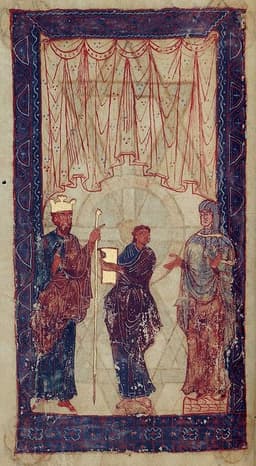
Ferdinand I of Leon
Emperor · Medieval
59.2Total
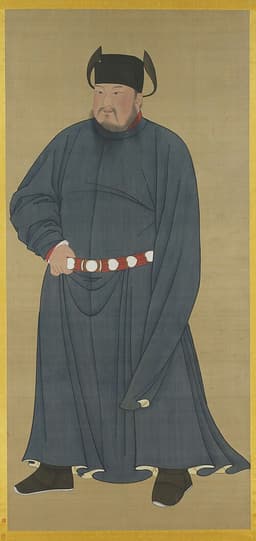
Li Cunxu
Emperor · Medieval
66.5Total
Basic Information
Born
1015
885
Died
1065
926
Era
Medieval
Medieval
Nationality
Leon
China
Occupation
Emperor
Emperor
Civilization
Western
Eastern
Score Comparison
Military (10%)
70.0
76.0
Political (20%)
68.0
68.0
Influence (20%)
56.4
62.0
Legacy (20%)
49.2
58.0
Leadership (15%)
66.0
80.0
Strategy (15%)
57.5
67.2
TOTAL
59.2
66.5
Ferdinand I of Leon — Complete Timeline
1029 AD
Inheritance of the County of CastilePolitical Action◆ Major
Ferdinand I inherited the County of Castile from his father Sancho III of Navarre. He later expanded his territory through conquest and marriage, laying the foundation for the Kingdom of Castile.
Impact: regionalconstructive
1037 AD
Conquest of LeónWar◆ Major
Ferdinand I defeated and killed King Bermudo III of Le
Impact: regional
1056 AD
First Emperor of SpainPolitical Action◆ Major
Ferdinand I was crowned 'Imperator totius Hispaniae' (Emperor of all Spain) in 1056, claiming suzerainty over all Christian and Muslim rulers in Iberia. This title reflected his military dominance and political ambition.
Impact: regional
1065 AD
Division of the kingdomPolitical Action◆ Major
Upon his death, Ferdinand I divided his kingdom among his sons: Sancho II received Castile, Alfonso VI received Le
Impact: regionaldestructive
Li Cunxu — Complete Timeline
908 AD
Succeeded as Prince of JinPolitical Action◆ Major
Li Cunxu inherited the title Prince of Jin from his father Li Keyong. He continued the struggle against Later Liang, consolidating the Jin state as a major power in northern China.
JinSuccessionFive Dynasties
Impact: regional
910 AD
Battle of BaixiangWar◆ Major
Li Cunxu's Jin army defeated the Later Liang forces under Zhu Wen at Baixiang. This victory established Jin as the dominant military power in the north and marked a turning point in the war.
JinLater LiangBattle
Impact: regionalconstructive
923 AD
Conquered Later LiangWar
Li Cunxu led a successful campaign against Later Liang, capturing its capital Kaifeng and ending the dynasty. He then proclaimed himself emperor, founding the Later Tang dynasty.
Later TangConquestDynastic Change
Impact: nationalconstructive
Founded Later Tang DynastyPolitical Action
Li Cunxu declared himself emperor of the Later Tang dynasty, claiming legitimacy as the restorer of the Tang lineage. He established his capital at Luoyang and reunified much of northern China.
Later TangDynasty FoundingReunification
Impact: nationalconstructive
926 AD
Killed in mutiny at XingyuanWar◆ Major
Li Cunxu faced a mutiny by his own troops at Xingyuan during a campaign against the Khitans. He was killed in the fighting, leading to the collapse of Later Tang and the rise of Later Jin.
Later TangMutinyDeath
Impact: nationaltragic
Expert Analysis
Ferdinand I of Leon vs Li Cunxu
### The Emperor Who Lost It All, and the Emperor Who Divided It All
On a dusty battlefield in 926, the mighty Li Cunxu, the man who had united northern China under the Later Tang dynasty, died not at the hands of a rival emperor, but in a chaotic mutiny by his own troops. Just sixty years earlier, in 1065, another emperor, Ferdinand I of Leon, lay on his deathbed in a grand palace, not from a soldier’s blade, but from old age, having just performed his final, fateful act of statecraft: dividing his hard-won kingdom among his sons. Why did one emperor’s life end in a blaze of betrayal, while the other’s concluded with a calculated, if disastrous, partition? The answer lies not merely in their times, but in the very fabric of their characters and the worlds they sought to command.
### Origins: The Blood of Warriors and the Weight of a Crown
Li Cunxu was born into a world of shattered empires. His father, Li Keyong, was a Shatuo Turkic chieftain who had been granted the title Prince of Jin by the dying Tang dynasty. From his earliest memories, Li Cunxu knew only war, vengeance, and the sacred duty to restore the Tang name. He was a warrior’s son, raised in the saddle, his lullabies the clash of steel. In contrast, Ferdinand I was a prince of the blood, born in 1015 into the complex web of Christian kingdoms in northern Iberia. His father, Sancho III of Navarre, was the most powerful Christian ruler in Spain, a man who understood diplomacy as much as warfare. Ferdinand inherited the County of Castile in 1029, a piece of a larger puzzle, not a burning desire for revenge. Where Li Cunxu’s world was one of total war, Ferdinand’s was one of dynastic chess.
### Rise to Power: The Sword vs. The Marriage Bed
Li Cunxu’s path was forged in fire. When he succeeded his father in 908, the Later Liang dynasty, founded by the usurper Zhu Wen, was the dominant power. The young prince’s legitimacy was not proclaimed; it was won. At the Battle of Baixiang in 910, his Jin army shattered the forces of the Later Liang, proving that the son was a greater warrior than the father. Every step of his rise was a military campaign, a brutal, relentless march toward Kaifeng.
Ferdinand’s rise was quieter, but no less decisive. He did not conquer Castile; he inherited it. His great leap came not through a single, epic battle, but through a marriage. He wed Sancha, the sister of King Bermudo III of Leon, and when the king died at the Battle of Tamarón in 1037—a battle Ferdinand himself fought and won—he claimed the entire kingdom through his wife’s right. His power was built on a foundation of bloodlines, law, and strategic marriage, a stark contrast to Li Cunxu’s foundation of blood, iron, and personal charisma.
### Leadership & Governance: The General and the King
As a ruler, Li Cunxu was the consummate general. He led from the front, inspiring his Shatuo and Chinese troops with a personal bravery that bordered on recklessness. His military score of 76.5 reflects a commander who could win battles, but his political score of 62.0 reveals a man who could not govern the peace he won. After founding the Later Tang in 923, he claimed to be the restorer of the Tang lineage, but he ruled like a warlord, suspicious of his own officials and more comfortable in a tent than a throne.
Ferdinand was the opposite. His military score of 60.1 suggests a competent commander, but his political score of 72.0 and leadership score of 78.0 highlight a master of statecraft. He was crowned “Imperator totius Hispaniae” (Emperor of all Spain) in 1056, a title that was more a claim of suzerainty than of direct rule. He expanded his territory through *parias*, the tribute payments extracted from Moorish taifa kingdoms, a form of economic warfare that required no pitched battles. He was a king who thought in dynasties, not decades.
### Triumph & Tragedy: The Conquest and the Division
Li Cunxu’s triumph was absolute: the conquest of the Later Liang in 923. He captured Kaifeng, ended a dynasty, and fulfilled his father’s dying wish. For a brief moment, he was the master of northern China. But his tragedy was immediate. In 926, while campaigning against the Khitans, his own troops mutinied at Xingyuan. He was killed in the fighting, his empire left to a usurper. His greatness was a flash of lightning, brilliant and gone.
Ferdinand’s triumph was more gradual: the steady expansion of his realm, the recognition of his imperial title, and the security of his borders. His tragedy was not in death, but in his final act. In 1065, he divided his kingdom among his sons: Sancho II received Castile, Alfonso VI received Leon. This was the standard practice of the time, but it sowed the seeds of civil war. He died believing he had secured his legacy, when in truth he had fractured it.
### Character & Destiny: The Fire and the Ice
Li Cunxu’s character was a forge of fire. He was brave, impulsive, and trusting of his soldiers but suspicious of his ministers. His destiny was to burn bright and fast. He could not adapt his warrior ethos to the patient, subtle arts of empire-building. He died because he was still a prince of Jin when he should have been an emperor of Tang.
Ferdinand was ice. He was calculating, patient, and a master of the long game. His destiny was to consolidate, to build, and to pass on a structure that could survive. But his very caution, his adherence to tradition, led him to divide his kingdom, a decision that would undo much of his life’s work. He died believing he had been wise, when he had simply been conventional.
### Legacy: The Ghost and the Map
Li Cunxu is remembered as a tragic hero, a man of immense martial prowess who could not hold what he won. The Later Tang dynasty he founded collapsed within a decade. His legacy is one of potential unfulfilled, a cautionary tale of a conqueror who could not become a king. His influence score of 74.2 is a testament to the power of his story, not the durability of his state.
Ferdinand’s legacy is written on the map of Spain. The division of his kingdom led to decades of fratricidal war, but it also created the political units that would eventually be reunited under his grandson, Alfonso VI. He is remembered as the first Emperor of Spain, a title that, while grandiose, laid the groundwork for the Reconquista. His legacy score of 65.2 is modest, but his influence score of 74.9 shows that his idea of a unified Christian Spain outlived his flawed execution.
### Conclusion: Two Mirrors of Medieval Power
In the end, Li Cunxu and Ferdinand I are two mirrors held up to the face of medieval power. One shows the glory and ruin of the warrior-emperor, whose life is a single, brilliant arc of conquest and collapse. The other shows the slow, grinding work of the king-diplomat, whose greatest error was a decision made in peace, not war. One died in the mud, betrayed by the men he led. The other died in his bed, betrayed only by his own foresight. Their stories remind us that the greatest threat to an empire is often not the enemy at the gates, but the character of the man who sits on the throne.
Rankings
🥇
Li CunxuLeader
Mil: 76.0Pol: 68.0Inf: 62.0
66.5
🥈
Ferdinand I of Leon
Mil: 70.0Pol: 68.0Inf: 56.4
59.2
+7.3 behind
How This Comparison Works
Algorithm
Each figure is scored on 6 dimensions (0—100 scale) based on structured historical data: Military (10%), Political (20%), Influence (20%), Legacy (20%), Leadership (15%), Strategy (15%). The weighted total produces the final ranking.
Data Sources
Scores are computed from structured sub-indicators in the database. Scale factors adjust for era (Ancient ×0.85, Modern ×1.0) and civilization size (Eastern ×1.05, Other ×0.80) to account for differences in population and military scale.
Maximum 3 Figures
Comparisons are limited to 2—3 figures to ensure readability and statistical meaningfulness.
Error Margins
±5 points per dimension — Sub-scores are derived from historical records with inherent uncertainty. Two figures within 5 points on a dimension should be considered roughly equivalent in that area.
Total Score Accuracy
±3 points overall — The weighted combination of 6 dimensions produces a total score with approximately ±3 points of uncertainty. Differences of less than 3 points are not statistically significant— the figures are effectively tied.
Known Limitations
- Historical records are incomplete and uneven across civilizations
- Figures from oral-tradition societies may be underrepresented
- Occupation labels can misclassify multi-role figures
- Scores measure capability and impact, not moral character
- Quantitative scoring is a comparison tool, not absolute truth
Capability Radar
Military (10%) — Battles & Warfare
Battles
55
85
Win Rate
60
80
Expansion
60
75
Political (20%) — Governance & Reform
Reform
50
50
Diplomacy
55
60
Economy
45
45
Influence (20%) — Cultural & Global Reach
Cultural
40
55
Global
30
45
Legacy (20%) — Historical Impact
Historical
45
65
Longevity
40
50
Leadership (15%) — Power & Stability
Tenure
65
55
Stability
50
40
Strategy (15%) — Tactics & Innovation
Strategy
55
78
Tactics
50
82
Reform
40
60
Similar Comparisons
Comments & Discussion
**MUTINY_MAXIMUS**6/16/2026
Li Cunxu's downfall proves that even the greatest general can't outrun a regime built on loyalty of the sword alone. He conquered like a whirlwind but governed like a fool. Ferdinand’s partition at least bought his sons a generation of squabbling instead of immediate collapse. One died screaming in a camp, the other in a bed. Pick your legacy.
**数字考古学家**6/16/2026
数据上说,李存勖在位仅三年便因兵变而死,而斐迪南一世统治了三十年才自然离世,还把王国拆成三份。表面看斐迪南更“成功”,但分裂反而削弱了莱昂,为后来卡斯蒂利亚霸权埋下伏笔。李存勖的死亡虽是败笔,却让后唐残存势力凝聚。历史从不算简单账。
**THE SCEPTICAL SPARTAN**6/16/2026
The comparison misses the key point: Li Cunxu’s death was a military revolution, Ferdinand’s a political negotiation. One empire ended because the soldiers stopped believing; the other ended because the king couldn’t stop believing in inheritance. In 926, a mutiny ended a dynasty; in 1065, a will started a civil war. Different instruments, same result: collapse.
**经典修正主义者**6/16/2026
说斐迪南一世是“分裂者”太偏颇。他分割王国是贯彻基督教统治传统,而非短视。李存勖的失败则是个人野心与官僚体制的对抗——他推崇唐制却不懂平衡。斐迪南至少让儿子们各得一份地,而李存勖连太子都没立就死了。一个死得犹豫,一个死得狼狈,都不值得神话。
**RUSTED LANCE**6/16/2026
They’re both overrated. Ferdinand’s “hard-won kingdom” was mostly absorbing minor Christian counties and fighting Muslims who were already fracturing. Li Cunxu? He rode his father’s residual Shatuo loyalty into a short-lived dynasty. Neither built anything that lasted. One died in a mutiny, the other in a bed, but both their “empires” were dust within a generation. Fame is cheap when the timeline’s short.