Loading...
Ferdinand I of Leon vs Kublai Khan
Kublai Khan leads by 15.1 pts · 2 figures compared
…
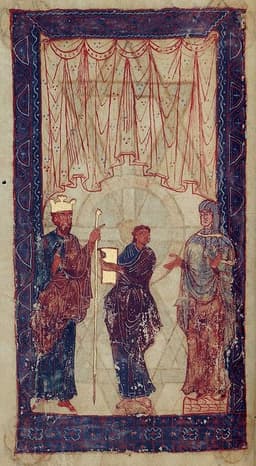
Ferdinand I of Leon
Emperor · Medieval
59.2Total
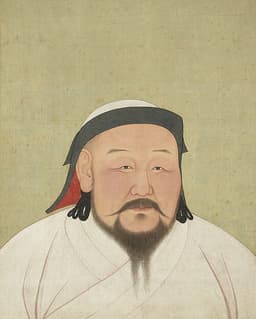
Kublai Khan
Emperor · Medieval
74.3Total
Basic Information
Born
1015
1215
Died
1065
1294
Era
Medieval
Medieval
Nationality
Leon
Mongolia
Occupation
Emperor
Emperor
Civilization
Western
Eastern
Score Comparison
Military (10%)
70.0
77.5
Political (20%)
68.0
79.2
Influence (20%)
56.4
75.0
Legacy (20%)
49.2
70.0
Leadership (15%)
66.0
72.0
Strategy (15%)
57.5
76.0
TOTAL
59.2
74.3
Ferdinand I of Leon — Complete Timeline
1029 AD
Inheritance of the County of CastilePolitical Action◆ Major
Ferdinand I inherited the County of Castile from his father Sancho III of Navarre. He later expanded his territory through conquest and marriage, laying the foundation for the Kingdom of Castile.
Impact: regionalconstructive
1037 AD
Conquest of LeónWar◆ Major
Ferdinand I defeated and killed King Bermudo III of Le
Impact: regional
1056 AD
First Emperor of SpainPolitical Action◆ Major
Ferdinand I was crowned 'Imperator totius Hispaniae' (Emperor of all Spain) in 1056, claiming suzerainty over all Christian and Muslim rulers in Iberia. This title reflected his military dominance and political ambition.
Impact: regional
1065 AD
Division of the kingdomPolitical Action◆ Major
Upon his death, Ferdinand I divided his kingdom among his sons: Sancho II received Castile, Alfonso VI received Le
Impact: regionaldestructive
Kublai Khan — Complete Timeline
1260 AD
Adoption of Tibetan Buddhism as State ReligionCultural◆ Major
Kublai Khan appointed the Tibetan lama Drog
Tibetan BuddhismReligionMongol-Tibet Relations
Impact: regional
1271 AD
Proclamation of the Yuan DynastyPolitical Action◆ Major
Kublai Khan officially proclaimed the Yuan dynasty, adopting a Chinese-style dynastic name. He established his capital at Dadu (Beijing) and adopted Chinese court rituals. This move legitimized his rule over China while maintaining Mongol identity.
Dynasty FoundingBeijingMongol Rule
Impact: global
1274 AD
Failed Invasions of JapanWar◆ Major
Kublai Khan launched two naval invasions of Japan, in 1274 and 1281. Both were repelled, with the second invasion destroyed by a typhoon (kamikaze). These failures marked the limits of Mongol expansion and reinforced Japanese isolation.
Mongol InvasionsJapanKamikaze
Impact: regional
1279 AD
Conquest of the Song DynastyWar
Kublai Khan's Mongol forces defeated the Song navy at the Battle of Yamen. The last Song emperor drowned, ending the Song dynasty. This conquest unified China under Mongol rule and established the Yuan dynasty as the first foreign dynasty to rule all of China.
Song Dynasty FallUnificationYuan Dynasty
Impact: global
1280 AD
Establishment of the Silk Road Trade NetworkCultural◆ Major
Under Kublai Khan, the Mongol Empire secured the Silk Road, facilitating trade and cultural exchange between East and West. Marco Polo visited his court. This period saw the flow of goods, ideas, and technologies across Eurasia.
Silk RoadTradeCultural Exchange
Impact: globalconstructive
Expert Analysis
Kublai Khan vs Ferdinand I of Leon
### The Emperor and the King: Two Paths to Power in a Divided World
In the winter of 1274, a fleet of nearly nine hundred ships, carrying perhaps 40,000 men, sailed from the Korean coast toward the islands of Japan. It was the largest naval invasion the world had ever seen, ordered by a man who already ruled more of the earth’s surface than any living monarch. Half a world away and two centuries earlier, another ruler—crowned with a simpler title in a smaller kingdom—led his knights against the Moorish fortresses of Iberia, fighting not to conquer an ocean but to claim a dusty patch of Spain. Kublai Khan and Ferdinand I of León never met, never corresponded, and their empires never touched. Yet their stories, set side by side, reveal how two men from the same era—the medieval age—could walk such vastly different paths to power, and why one would be remembered as a world-shaping emperor while the other remains a footnote in European history.
### Origins
Kublai Khan was born in 1215, the grandson of the legendary Genghis Khan, into a world of horsemen and felt tents. The Mongol Empire was still young, a storm gathering on the steppes, and Kublai grew up in its shadow—learning to ride, to shoot, and to command. But unlike his warrior uncles and brothers, Kublai was drawn to something else: the settled, civilized world of China. His mother, Sorghaghtani Beki, a Nestorian Christian princess, ensured he received a broad education, including lessons in Chinese governance and culture. This dual inheritance—the raw military power of the steppe and the sophisticated bureaucracy of the East—would define his life.
Ferdinand I, born in 1015, came from a very different world. He was the second son of Sancho III of Navarre, a Christian king in the fractured, warring patchwork of medieval Iberia. The Reconquista—the centuries-long struggle to drive Muslim Moors from the peninsula—was the defining reality of his time. Ferdinand inherited not an empire but a county, Castile, from his father in 1029. His world was local, feudal, and deeply religious. There was no grand vision of uniting continents; there was only the daily grind of border raids, oaths of vassalage, and the slow, grinding expansion of Christian territory.
### Rise to Power
Kublai’s rise was a brutal contest among brothers. After the death of the Great Khan Möngke in 1259, Kublai fought his younger brother, Ariq Böke, in a civil war for the title of Great Khan. It was a struggle between two visions: Kublai, the cosmopolitan who admired Chinese civilization; Ariq Böke, the traditionalist who wanted to preserve the old steppe ways. Kublai won, but at a cost. He never fully controlled the western parts of the Mongol Empire, and his legitimacy was always contested. In 1271, he made a decisive move: he proclaimed the Yuan Dynasty, adopting a Chinese-style name and establishing his capital at what is now Beijing. He was no longer just a Mongol khan; he was the Son of Heaven.
Ferdinand’s path was simpler, but no less bloody. In 1037, he defeated and killed King Bermudo III of León at the Battle of Tamarón, claiming that kingdom through his wife, Sancha. He then spent decades fighting the Moors, pushing southward into the taifa kingdoms—fractured Muslim states that paid tribute to avoid annihilation. In 1056, he had himself crowned "Imperator totius Hispaniae"—Emperor of all Spain. It was a title heavy with ambition but light on real power. Ferdinand’s "empire" was a collection of Christian kingdoms and tribute-paying Muslim states, held together by his personal authority and military might.
### Leadership & Governance
Kublai ruled as an emperor, not a khan. He adopted the Chinese bureaucratic system, established a centralized government, and promoted trade along the Silk Road, which he secured by 1280. He patronized the arts, built canals, and reformed the calendar. But he also maintained Mongol privilege, dividing society into four classes, with Mongols at the top and southern Chinese at the bottom. He made Tibetan Buddhism the state religion in 1260, appointing the lama Drogön Chögyal Phagpa as his imperial preceptor—a move that tied his dynasty to a spiritual authority far from the Confucian scholars he distrusted. His reign was a constant negotiation between two worlds, and he managed it with remarkable skill.
Ferdinand ruled as a medieval king, his power based on personal loyalty and military success. He was a capable commander—his military score of 60.1 is modest but workable—and a shrewd politician. He used tribute from the Moors to fund his campaigns and reward his followers. He reformed the coinage and strengthened the Church. But his leadership was limited by the feudal system. He could not command his nobles; he had to persuade them. And his "empire" was a fragile construct, dependent on his own strength. In 1065, on his deathbed, he made a fateful decision: he divided his kingdom among his three sons, Sancho, Alfonso, and García. It was a common practice in medieval Europe, but it ensured that his life’s work would be undone by civil war.
### Triumph & Tragedy
Kublai’s greatest triumph was the conquest of the Song Dynasty in 1279. At the Battle of Yamen, his forces destroyed the Song navy, and the last Song emperor drowned, ending a dynasty that had ruled southern China for three centuries. For the first time in 300 years, all of China was united under one ruler. It was a staggering achievement. But Kublai’s ambition overreached. In 1274 and again in 1281, he launched invasions of Japan. Both failed disastrously. The second invasion was destroyed by a typhoon—the famous *kamikaze*, or "divine wind"—that sank hundreds of ships and drowned thousands of men. The cost in treasure and lives was immense, and it marked the beginning of the Yuan Dynasty’s decline.
Ferdinand’s triumphs were smaller but more durable. He expanded Christian territory in Iberia, forced Muslim taifas to pay tribute, and claimed the title of emperor. But his greatest failure was his deathbed decision to divide his kingdom. Within years, his sons were at war. The dream of a unified Christian Spain was shattered, and it would take another 400 years for Ferdinand and Isabella to finally achieve it. Ferdinand I’s "empire" lasted only as long as he did.
### Character & Destiny
Kublai was a pragmatist and a visionary. He understood that to rule China, he had to become Chinese, at least in part. He was curious about the world—he welcomed Marco Polo to his court, listened to Buddhist monks, and experimented with paper money. But he was also ruthless, capable of ordering the execution of entire cities. His character was a blend of steppe toughness and civilized refinement, and it was this very duality that allowed him to build a dynasty that lasted nearly a century. Yet his destiny was shaped by his limitations. He could not conquer Japan; he could not control the western Mongol khanates; he could not fully win the trust of his Chinese subjects. He died in 1294, a great emperor in a fragile empire.
Ferdinand was a warrior-king, pious and ambitious. He saw himself as a defender of Christendom, a leader of the Reconquista. But he was also a product of his time, bound by the feudal logic of inheritance and division. He could not imagine a unified Spain; he could only imagine his sons ruling their separate kingdoms. His destiny was to be a stepping stone, not a destination. He died in 1065, his kingdom divided, his title of emperor a memory.
### Legacy
Kublai Khan’s legacy is immense. He founded the Yuan Dynasty, which ruled China for nearly a century and left a lasting mark on Chinese culture, art, and trade. The Silk Road flourished under his rule, connecting East and West as never before. He is remembered as a unifier, a builder, and a conqueror. His total score of 79.6 reflects a life of profound achievement, tempered by failure.
Ferdinand I’s legacy is more modest. He is remembered as a key figure in the Reconquista, a king who expanded Christian territory and claimed the title of Emperor of Spain. But his division of the kingdom ensured that his name would be overshadowed by later rulers. His total score of 67.0 reflects a life of competent but limited accomplishment.
### Conclusion
What drove these two men to such different outcomes? It was not simply talent or luck. Kublai inherited a world empire and the vision to transform it; Ferdinand inherited a county and the ambition to expand it. Kublai ruled from the center of the world, where the Silk Road carried goods and ideas across continents; Ferdinand ruled from the edge of Europe, where the Reconquista was a local war. Kublai could imagine a unified China; Ferdinand could only imagine a divided Spain. In the end, their stories remind us that history is not just about the choices individuals make, but about the worlds that shape those choices. One emperor conquered an ocean; the other could not hold his own kingdom together. Both were men of their time—but what different times they were.
Rankings
🥇
Kublai KhanLeader
Mil: 77.5Pol: 79.2Inf: 75.0
74.3
🥈
Ferdinand I of Leon
Mil: 70.0Pol: 68.0Inf: 56.4
59.2
+15.1 behind
How This Comparison Works
Algorithm
Each figure is scored on 6 dimensions (0—100 scale) based on structured historical data: Military (10%), Political (20%), Influence (20%), Legacy (20%), Leadership (15%), Strategy (15%). The weighted total produces the final ranking.
Data Sources
Scores are computed from structured sub-indicators in the database. Scale factors adjust for era (Ancient ×0.85, Modern ×1.0) and civilization size (Eastern ×1.05, Other ×0.80) to account for differences in population and military scale.
Maximum 3 Figures
Comparisons are limited to 2—3 figures to ensure readability and statistical meaningfulness.
Error Margins
±5 points per dimension — Sub-scores are derived from historical records with inherent uncertainty. Two figures within 5 points on a dimension should be considered roughly equivalent in that area.
Total Score Accuracy
±3 points overall — The weighted combination of 6 dimensions produces a total score with approximately ±3 points of uncertainty. Differences of less than 3 points are not statistically significant— the figures are effectively tied.
Known Limitations
- Historical records are incomplete and uneven across civilizations
- Figures from oral-tradition societies may be underrepresented
- Occupation labels can misclassify multi-role figures
- Scores measure capability and impact, not moral character
- Quantitative scoring is a comparison tool, not absolute truth
Capability Radar
Military (10%) — Battles & Warfare
Battles
55
95
Win Rate
60
90
Expansion
60
95
Political (20%) — Governance & Reform
Reform
50
88
Diplomacy
55
85
Economy
45
90
Influence (20%) — Cultural & Global Reach
Cultural
40
85
Global
30
85
Legacy (20%) — Historical Impact
Historical
45
90
Longevity
40
80
Leadership (15%) — Power & Stability
Tenure
65
90
Stability
50
80
Strategy (15%) — Tactics & Innovation
Strategy
55
92
Tactics
50
85
Reform
40
88
Similar Comparisons
Comments & Discussion
SteppeBureaucrat6/16/2026
Look, Ferdinand was a medieval warlord fighting over hill forts. Kublai managed the logistics of a 900-ship invasion while governing half of Eurasia through tax bureaucrats. Ferdinand couldn't even conquer all of Iberia; Kublai's civil service exams were more sophisticated than anything León produced. There's no comparison—Kublai was the only emperor who could invade Japan and still run a census the same year.
铁骑书生6/16/2026
忽必烈征服南宋时用了多少年?整整四十五年!费迪南一世打摩尔人那些小城堡,三年就拿下莱昂。什么世界征服者?忽必烈不过是继承爷爷遗产,连日本都打不下来。费迪南是白手起家,每寸土地都是自己拼出来的。帝国大有什么了不起?关键看你是不是真刀真枪赢的。
MongolMismanager6/16/2026
The 1274 invasion of Japan is the perfect example of why Kublai fails the comparison. He sent 40,000 men and 900 ships against samurai who had no unified command, and still lost—partly because he couldn't control his own supply chain. Ferdinand's siege of Coimbra in 1064 used far fewer resources and achieved lasting territorial gains. Bigger isn't better when you can't close the deal.
半岛剑客6/16/2026
文化?忽必烈有文化?他搞四等人制把汉人当奴隶,还引入什么喇嘛教把蒙古人惯坏。费迪南一世重建了圣地亚哥大教堂,把莱昂打造成基督教文明前沿。你看谁更有品位?蒙古人只会破坏,莱昂国王建立的是能延续千年的文化传统。别拿游牧暴发户跟欧洲文明奠基者相提并论。