Loading...
Ferdinand I of Leon vs Julius Caesar
Julius Caesar leads by 23.6 pts · 2 figures compared
…
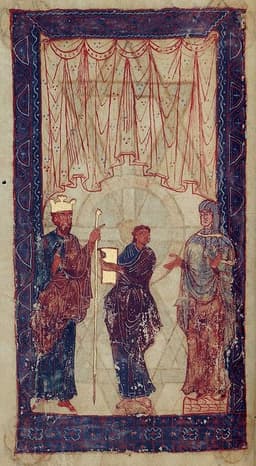
Ferdinand I of Leon
Emperor · Medieval
59.2Total

Julius Caesar
General · Ancient
82.8Total
Basic Information
Born
1015
-100
Died
1065
-44
Era
Medieval
Ancient
Nationality
Leon
Roman Republic
Occupation
Emperor
General
Civilization
Western
Western
Score Comparison
Military (10%)
70.0
88.0
Political (20%)
68.0
78.0
Influence (20%)
56.4
85.0
Legacy (20%)
49.2
82.0
Leadership (15%)
66.0
80.0
Strategy (15%)
57.5
85.0
TOTAL
59.2
82.8
Ferdinand I of Leon — Complete Timeline
1029 AD
Inheritance of the County of CastilePolitical Action◆ Major
Ferdinand I inherited the County of Castile from his father Sancho III of Navarre. He later expanded his territory through conquest and marriage, laying the foundation for the Kingdom of Castile.
Impact: regionalconstructive
1037 AD
Conquest of LeónWar◆ Major
Ferdinand I defeated and killed King Bermudo III of Le
Impact: regional
1056 AD
First Emperor of SpainPolitical Action◆ Major
Ferdinand I was crowned 'Imperator totius Hispaniae' (Emperor of all Spain) in 1056, claiming suzerainty over all Christian and Muslim rulers in Iberia. This title reflected his military dominance and political ambition.
Impact: regional
1065 AD
Division of the kingdomPolitical Action◆ Major
Upon his death, Ferdinand I divided his kingdom among his sons: Sancho II received Castile, Alfonso VI received Le
Impact: regionaldestructive
Julius Caesar — Complete Timeline
58 BC
Gallic WarsWar◆ Major
Caesar, as proconsul of Gaul, launched a series of campaigns that conquered all of Gaul (modern France, Belgium, and parts of Switzerland). He fought numerous battles, including against the Helvetii, the Belgae, and the Gallic chieftain Vercingetorix. The wars brought immense wealth and a loyal army to Caesar.
Gallic WarsConquestRoman Expansion
Impact: regional
49 BC
Crossing the RubiconPolitical Action◆ Major
Caesar led Legio XIII across the Rubicon River into Italy, defying the Roman Senate's order to disband his army. This act triggered a civil war against Pompey and the Optimates, ultimately leading to Caesar's dictatorship and the end of the Roman Republic.
Roman Civil WarEnd of RepublicPower Struggle
Impact: global
48 BC
Battle of PharsalusWar◆ Major
Caesar's outnumbered army defeated the larger forces of Pompey the Great at Pharsalus in Greece. Caesar's tactical use of a reserve line to counter Pompey's cavalry charge proved decisive. Pompey fled to Egypt, where he was assassinated, leaving Caesar as the undisputed master of the Roman world.
Roman Civil WarBattleDecisive Victory
Impact: regional
44 BC
Appointment as Dictator for LifePolitical Action◆ Major
The Roman Senate appointed Caesar dictator perpetuo (dictator for life), granting him unprecedented personal power. This move concentrated military, legislative, and judicial authority in one person, effectively ending the Roman Republic's traditional system of checks and balances and alarming many senators.
DictatorshipEnd of RepublicPower Consolidation
Impact: regionaldestructive
Assassination on the Ides of MarchPolitical Action◆ Major
A group of Roman senators, led by Marcus Junius Brutus and Gaius Cassius Longinus, stabbed Caesar to death at a meeting of the Senate in the Theatre of Pompey. The assassination was intended to restore the Republic, but instead triggered another civil war that led to the rise of the Roman Empire.
AssassinationRoman PoliticsEnd of Republic
Impact: globaldestructive
Expert Analysis
Julius Caesar vs Ferdinand I of Leon
# The Ides of March and the Dying Embers of Empire
On a winter morning in 49 BCE, Julius Caesar stood at the banks of the Rubicon, a small river that marked the boundary between his province and Rome itself. To cross was treason, to turn back was political oblivion. He hesitated only a moment before uttering the words that would echo through millennia: "The die is cast." Across the centuries, on a dusty plain in northern Spain in 1037, Ferdinand I of León watched his rival King Bermudo III fall from his horse at the Battle of Tamarón. Where Caesar saw a gamble for supreme power, Ferdinand saw the fulfillment of a divine inheritance. Both men reshaped their worlds, but their paths reveal a profound truth about ambition and the limits of human will.
Origins
Caesar was born into the twilight of the Roman Republic, a world of senatorial intrigue, civil wars, and a political system straining under the weight of empire. His family, the Julii, claimed descent from the goddess Venus, but their wealth and influence had waned. From childhood, Caesar absorbed the brutal logic of Roman politics: power belonged to those who could seize it, and the Republic was a game where the stakes were life and death. He learned early that eloquence, charm, and ruthlessness were the tools of survival.
Ferdinand I emerged from a very different world—the fractious Christian kingdoms of medieval Iberia, where the Reconquista against Moorish rule gave every war a holy purpose. Born in 1015, he was the second son of Sancho III of Navarre, a king who carved out a short-lived empire through marriage and warfare. Unlike Caesar, who had to claw his way upward, Ferdinand inherited the County of Castile in 1029 from his father, a gift that came with expectations of piety and expansion. The Christian kingdoms were not a republic but a patchwork of feudal loyalties, where legitimacy flowed from blood and the blessing of the Church.
Rise to Power
Caesar’s ascent was a masterpiece of calculated risk. He climbed the Roman political ladder—quaestor, aedile, praetor—borrowing fortunes to fund games and bribes that bought popular favor. His real breakthrough came with the governorship of Gaul, where between 58 and 50 BCE he unleashed a military campaign of breathtaking scope, conquering a territory larger than Italy itself. The Gallic Wars made him a hero to his legions and a threat to his enemies in Rome. When the Senate ordered him to disband his army and return alone, he chose war.
Ferdinand’s rise was more straightforward, rooted in the dynastic logic of medieval kingship. After inheriting Castile, he spent years consolidating his power through strategic marriages and alliances. The decisive moment came in 1037 at Tamarón, where he defeated and killed Bermudo III, absorbing León into his domains. Unlike Caesar, who crossed the Rubicon in open defiance of the law, Ferdinand’s conquest was framed as a righteous claim—Bermudo had died in battle, and Ferdinand simply took what God had ordained. By 1056, he had himself crowned "Imperator totius Hispaniae," Emperor of all Spain, a title that reflected ambition but also the fragmented reality of a land still divided between Christian and Muslim rulers.
Leadership & Governance
Caesar governed through sheer force of personality and military genius. His soldiers adored him not because he was gentle—he was notoriously demanding—but because he led from the front, sharing their rations and dangers. His political reforms after seizing Rome were sweeping: he reorganized the calendar, granted citizenship to provincial elites, and launched massive public works. But his military strategy was his greatest gift. At Alesia in 52 BCE, he besieged a Gallic stronghold while simultaneously building defenses against a massive relief army—a feat of engineering and tactical brilliance that left his enemies trapped between two walls of Roman steel.
Ferdinand ruled as a medieval Christian king, his authority sanctified by the Church. His military campaigns against the Moors were not blitzkriegs of conquest but systematic expansions, seizing border fortresses and exacting tribute from Muslim taifa kingdoms. His strategic score of 45.7—low by Caesar's standards—reflects a different kind of warfare: slow, religiously motivated, and constrained by feudal logistics. Ferdinand was more politician than general, a king who understood that the Reconquista was as much about diplomacy as battle. He divided his conquered lands among his sons, a decision that would later tear his kingdom apart.
Triumph & Tragedy
Caesar’s greatest triumph was his own dictatorship. By 44 BCE, he had defeated all rivals, been named dictator for life, and was planning a campaign against Parthia. Rome lay at his feet. But his tragedy was that he could not stop. He refused to restore the Republic, alienated the Senate, and ignored warnings of conspiracy. On the Ides of March, 44 BCE, he was stabbed twenty-three times by senators he had pardoned. His last words, according to legend, were "Et tu, Brute?"—a cry of betrayal that would define the end of the Republic.
Ferdinand’s triumph was the unification of León and Castile under a single crown, a foundation for the future Spain. His coronation as Emperor of Spain in 1056 was a symbolic high point, claiming authority over all Christian Iberia. But his tragedy was the division of his kingdom upon his death in 1065. Following Visigothic tradition, he split his realm among his three sons—Sancho, Alfonso, and García—unleashing a generation of fratricidal war that undid much of his work. Where Caesar’s death led to the rise of Augustus and the Empire, Ferdinand’s death led to chaos and decline.
Character & Destiny
Caesar was a man of impossible ambition and cold calculation. He forgave enemies not out of mercy but strategy, believing that clemency would bind them to him. Yet his arrogance blinded him: he dismissed the omens, rejected a crown offered by Mark Antony, and believed his popularity would protect him. His destiny was to be both the destroyer and the midwife of Rome—the man who killed the Republic and made the Empire possible.
Ferdinand was a man of piety and pragmatism, a king who saw himself as an instrument of God’s will. He did not seek to destroy the old order but to fulfill it, claiming the title of emperor as a legacy of Visigothic kingship. His tragedy was that his devotion to tradition—the division of lands among sons—was his undoing. He could not imagine a unified Spain because he could not imagine breaking the sacred bonds of inheritance.
Legacy
Caesar’s legacy is immortal. His name became synonymous with imperial power—Kaiser, Tsar—and his writings, the *Commentaries on the Gallic War*, remain classics of military literature. He transformed Rome from a republic into an empire, and his assassination set the stage for Augustus to establish a system that would last five centuries. His influence score of 85.0 reflects a man who not only changed his world but defined the very concept of dictatorship.
Ferdinand’s legacy is quieter but no less significant. He laid the groundwork for the unification of Spain, a process that would culminate under Isabella and Ferdinand V centuries later. His military score of 60.1 and legacy score of 65.2 suggest a capable but not exceptional ruler, a king who mattered more for what he started than what he finished. Today, he is remembered by historians as a transitional figure—the man who first claimed the title Emperor of Spain, even if the reality would take four hundred years to achieve.
Conclusion
Standing at the Rubicon, Caesar saw a river that divided his past from his future. He crossed it knowing he could never go back. Ferdinand, watching his rival fall at Tamarón, saw a plain that had been won by God’s will. Both men reshaped their worlds, but their differences reveal the chasm between two ages. Caesar was a man of the Republic, where power was a prize to be seized by the bold. Ferdinand was a man of the Middle Ages, where power was a trust to be inherited by the pious. One died betrayed by his friends, the other died betrayed by his own traditions. Yet both left behind empires that would outlast them—one that conquered the world, and one that would one day discover it.
Rankings
🥇
Julius CaesarLeader
Mil: 88.0Pol: 78.0Inf: 85.0
82.8
🥈
Ferdinand I of Leon
Mil: 70.0Pol: 68.0Inf: 56.4
59.2
+23.6 behind
How This Comparison Works
Algorithm
Each figure is scored on 6 dimensions (0—100 scale) based on structured historical data: Military (10%), Political (20%), Influence (20%), Legacy (20%), Leadership (15%), Strategy (15%). The weighted total produces the final ranking.
Data Sources
Scores are computed from structured sub-indicators in the database. Scale factors adjust for era (Ancient ×0.85, Modern ×1.0) and civilization size (Eastern ×1.05, Other ×0.80) to account for differences in population and military scale.
Maximum 3 Figures
Comparisons are limited to 2—3 figures to ensure readability and statistical meaningfulness.
Error Margins
±5 points per dimension — Sub-scores are derived from historical records with inherent uncertainty. Two figures within 5 points on a dimension should be considered roughly equivalent in that area.
Total Score Accuracy
±3 points overall — The weighted combination of 6 dimensions produces a total score with approximately ±3 points of uncertainty. Differences of less than 3 points are not statistically significant— the figures are effectively tied.
Known Limitations
- Historical records are incomplete and uneven across civilizations
- Figures from oral-tradition societies may be underrepresented
- Occupation labels can misclassify multi-role figures
- Scores measure capability and impact, not moral character
- Quantitative scoring is a comparison tool, not absolute truth
Capability Radar
Military (10%) — Battles & Warfare
Battles
55
95
Win Rate
60
92
Expansion
60
97
Political (20%) — Governance & Reform
Reform
50
90
Diplomacy
55
85
Economy
45
82
Influence (20%) — Cultural & Global Reach
Cultural
40
88
Global
30
94
Legacy (20%) — Historical Impact
Historical
45
95
Longevity
40
96
Leadership (15%) — Power & Stability
Tenure
65
75
Stability
50
60
Strategy (15%) — Tactics & Innovation
Strategy
55
94
Tactics
50
96
Reform
40
88
Similar Comparisons
Comments & Discussion
IDES-SHANK6/16/2026
Caesar crossing the Rubicon wasn't a "gamble" for supreme power—it was a calculated escalation by a man who already controlled Gaul's legions and had the Senate's moderates in his pocket. The civil war was inevitable the moment the Optimates refused his triumph. Meanwhile, Ferdinand's "divine inheritance" is just church propaganda to whitewash the fact that he murdered his own brother-in-law at Tamarón to grab León. Both were thugs with good PR teams.
数据刀锋6/16/2026
两人生前都被吹成天选之人,但把他们的战利品清单摊开——恺撒在高卢杀了100万高卢人,卖了同等数量为奴;费迪南一世则靠着给摩尔人当十年藩属攒够兵力再翻脸。这叫神性?这叫基本人性缺失。历史把大规模屠杀包装成史诗,我只看数字。
RUBICON-GAMBIT6/16/2026
Let's get this straight: Caesar didn't "utter words that echo through millennia" on a whim. He quoted Menander's comedy, "The die is cast," in Greek—a knowing literary wink to educated Romans. Compare that to Ferdinand, who probably didn't even read Latin, just relied on bishops to spin his fratricide as God's will. One's a sophisticated political operator; the other's a glorified warlord with a chaplain. That's the real contrast.
圣徒与剑6/16/2026
经典错误:把费迪南一世比作恺撒,简直是强行拉郎配。1042年费迪南吞并卡斯蒂利亚靠的不是战略天才,而是他老婆桑查公主的嫁妆——那是莱昂王位合法血统。恺撒能拿庞培女儿当筹码,但绝不等公主的冠冕。费迪南一辈子没写过战记,恺撒写了《高卢战记》。一个靠笔杆子和剑杆子封神,一个靠教皇和联姻混成圣徒。
MAP-PAINTER6/16/2026
别提神圣使命了,费迪南的"统一"其实就是把西班牙画成自己的颜色。他分割王国给三个儿子,直接埋下了兄弟相残的种子——恺撒至少知道罗马不能分,还在遗嘱里留给民众花园和钱财。论格局,费迪南就是个封建王爷,为了死后不闹事把国家切豆腐块;恺撒虽死,元首制活了五百年。这不叫对比,叫降维打击。