Loading...
Ferdinand I of Leon vs J. B. M. Hertzog
Ferdinand I of Leon leads by 3.1 pts · 2 figures compared
…
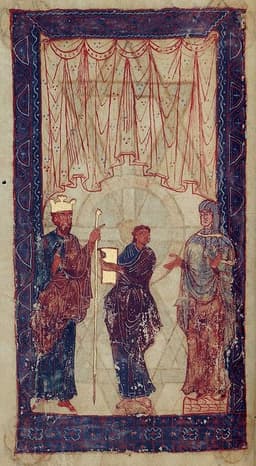
Ferdinand I of Leon
Emperor · Medieval
59.2Total
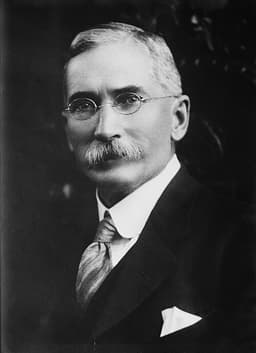
J. B. M. Hertzog
General · Modern
56.1Total
Basic Information
Born
1015
1866
Died
1065
1942
Era
Medieval
Modern
Nationality
Leon
South Africa
Occupation
Emperor
General
Civilization
Western
Other
Score Comparison
Military (10%)
70.0
25.0
Political (20%)
68.0
60.0
Influence (20%)
56.4
56.7
Legacy (20%)
49.2
50.0
Leadership (15%)
66.0
79.8
Strategy (15%)
57.5
60.0
TOTAL
59.2
56.1
Ferdinand I of Leon — Complete Timeline
1029 AD
Inheritance of the County of CastilePolitical Action◆ Major
Ferdinand I inherited the County of Castile from his father Sancho III of Navarre. He later expanded his territory through conquest and marriage, laying the foundation for the Kingdom of Castile.
Impact: regionalconstructive
1037 AD
Conquest of LeónWar◆ Major
Ferdinand I defeated and killed King Bermudo III of Le
Impact: regional
1056 AD
First Emperor of SpainPolitical Action◆ Major
Ferdinand I was crowned 'Imperator totius Hispaniae' (Emperor of all Spain) in 1056, claiming suzerainty over all Christian and Muslim rulers in Iberia. This title reflected his military dominance and political ambition.
Impact: regional
1065 AD
Division of the kingdomPolitical Action◆ Major
Upon his death, Ferdinand I divided his kingdom among his sons: Sancho II received Castile, Alfonso VI received Le
Impact: regionaldestructive
J. B. M. Hertzog — Complete Timeline
1899 AD
Boer War GeneralWar◆ Major
Hertzog served as a Boer general in the Second Boer War, commanding forces in the Orange Free State. He participated in several battles and became a prominent Afrikaner military leader.
Second Boer WarGeneralMilitary
Impact: regional
1914 AD
Founded the National PartyPolitical Action
Hertzog broke away from the South African Party and founded the National Party, which championed Afrikaner nationalism and opposed British imperial influence. The party would later implement apartheid.
National PartyAfrikaner NationalismFounding
Impact: nationalconstructive
1924 AD
Prime Minister of South AfricaPolitical Action◆ Major
Hertzog became Prime Minister after his National Party won the general election in coalition with the Labour Party. His government implemented policies to protect white workers and promote Afrikaner interests, including the 'civilized labour' policy.
Prime MinisterAfrikaner RightsLabour Policy
Impact: national
1934 AD
Merged with Smuts to Form United PartyPolitical Action◆ Major
Hertzog merged his National Party with Jan Smuts' South African Party to form the United Party. The coalition aimed to address the economic crisis of the Great Depression and promote national unity, but it alienated hardline Afrikaner nationalists.
United PartyCoalitionNational Unity
Impact: nationalconstructive
1936 AD
Passed the Representation of Natives ActReform◆ Major
Hertzog's government passed the Representation of Natives Act, which removed Black voters from the common voters' roll in the Cape Province and allowed them to elect white representatives instead. This further entrenched racial segregation.
SegregationDisenfranchisementLegislation
Impact: nationaldestructive
1939 AD
Resigned Over Neutrality in WWIIPolitical Action◆ Major
Hertzog advocated for South African neutrality in World War II, but his cabinet voted to enter the war on the Allied side. He resigned as Prime Minister and was succeeded by Jan Smuts, splitting the United Party.
World War IINeutralityResignation
Impact: national
Expert Analysis
Ferdinand I of Leon vs J. B. M. Hertzog
# The Emperor and the General: Two Paths to Power in Divided Lands
In the year 1056, a king knelt before an altar in León, receiving a crown that declared him "Imperator totius Hispaniae"—Emperor of all Spain. Eight centuries later, in 1939, another leader stood before his cabinet in Pretoria, arguing passionately that his country should remain neutral in a world war that would decide the fate of millions. Ferdinand I of León and J.B.M. Hertzog of South Africa never met, never shared a language, never breathed the same air. Yet both men faced the same fundamental challenge: how to rule a fractured land where identity, blood, and ambition pulled in opposing directions. Their answers—and their fates—could not have been more different.
Origins
Ferdinand I was born into the violent, fluid world of 11th-century Iberia, where Christian kingdoms and Moorish taifas fought and traded in an endless dance of war and diplomacy. His father, Sancho III of Navarre, had forged a短暂 empire through conquest and marriage, and Ferdinand inherited the County of Castile in 1029 as a young man of fourteen. The medieval world demanded piety, ruthlessness, and a keen sense of when to strike—qualities Ferdinand would cultivate with care.
James Barry Munnik Hertzog entered a different world entirely. Born in 1866 on a farm in the Cape Colony, he grew up in the shadow of the British Empire, a world where English was the language of power and Afrikaners were second-class citizens in their own land. The Boer republics to the north offered a vision of independence, but the discovery of gold and diamonds had turned that vision into a target. Hertzog studied law in the Netherlands and returned to practice in Pretoria, a man of learning and principle in a society hardening for conflict.
Rise to Power
Ferdinand’s path was carved by the sword. In 1037, at the Battle of Tamarón, he faced King Bermudo III of León, a rival who claimed the lands Ferdinand held. The battle was brutal and decisive: Bermudo fell, and Ferdinand claimed his kingdom not through inheritance but through conquest. He was now king of León and Castile, a double crown that made him the most powerful Christian ruler in Iberia. But power in medieval Spain came with a price: the constant threat of rebellion, the need to reward followers, and the ever-present Moors to the south.
Hertzog’s rise was slower, more political, and marked by a different kind of war. During the Second Boer War of 1899, he served as a general in the Orange Free State, commanding men who fought with rifles and horses against the might of the British Empire. The war ended in defeat, and the Boer republics were absorbed into a British South Africa. But Hertzog did not lay down his arms—he simply changed his weapon. In 1914, he broke away from the South African Party to found the National Party, a movement dedicated to Afrikaner nationalism and the protection of Afrikaans language and culture. It was a declaration of independence written not in blood but in ballots.
Leadership & Governance
Ferdinand I ruled as a medieval emperor should: through war, marriage, and the careful distribution of land. He launched campaigns against the Moorish taifas of Badajoz, Seville, and Zaragoza, extracting tribute and expanding his territory with methodical precision. His military score of 60.1 and strategy of 45.7 suggest a commander who was competent rather than brilliant, but his political score of 72.0 reveals a ruler who understood that power was as much about alliances as battles. He was crowned Emperor in 1056, a title that carried more prestige than practical authority, but it signaled his ambition to unite all Christian Spain under his rule.
Hertzog governed in a very different key. As Prime Minister from 1924, he pursued policies that elevated Afrikaner farmers and workers, protected South African industry, and insisted on the primacy of Afrikaans in public life. His leadership score of 79.9 reflects a man who could command loyalty and forge coalitions. In 1934, he merged his National Party with Jan Smuts’ South African Party to form the United Party, a grand coalition aimed at national unity. But unity came at a cost: in 1936, his government passed the Representation of Natives Act, stripping Black South Africans of the right to vote. It was a decision that would poison the country’s future for generations.
Triumph & Tragedy
Ferdinand’s greatest triumph was his coronation as Emperor of Spain, a moment that seemed to fulfill the dream of a unified Christian kingdom. But his greatest failure came with his death. In 1065, following the custom of his Navarrese ancestors, he divided his kingdom among his three sons: Sancho II received Castile, Alfonso VI received León, and García received Galicia. The division was a catastrophe. Within years, the brothers were at war, and the empire Ferdinand had built collapsed into fratricidal chaos. His legacy score of 65.2 reflects this tragic ending—a ruler who achieved so much only to see it undone by his own hand.
Hertzog’s tragedy was different. In 1939, as World War II engulfed Europe, he argued that South Africa should remain neutral, fearing that entry into war would divide the Afrikaner community and serve British interests. But his cabinet voted against him, choosing to join the Allied cause. Hertzog resigned, his political career ended not by defeat but by principle. He died in 1942, a figure of immense influence who had shaped Afrikaner nationalism but who had also overseen the legal entrenchment of racial segregation. His triumph—the creation of a unified Afrikaner identity—was inseparable from his tragedy.
Character & Destiny
Ferdinand was a man of his age: pious, ambitious, and bound by the customs of inheritance that he could not transcend. He could conquer a kingdom but could not imagine a form of succession that would preserve it. His division of the realm was not a failure of will but a failure of vision—he saw Spain as a family possession, not a nation.
Hertzog was also a man of his age, but his age was one of nationalism, democracy, and racial hierarchy. He believed deeply in the rights of Afrikaners, but those rights came at the expense of others. His character was shaped by the Boer War’s trauma and the struggle for recognition, and that struggle made him both a champion of his people and an architect of injustice.
Legacy
Ferdinand I is remembered today as the first Emperor of Spain, a figure who laid the groundwork for the unified kingdom that would emerge under his grandson, Alfonso VI. But his name is not widely known outside of medieval history, and his divided kingdom stands as a warning to rulers who trust too much in bloodlines.
Hertzog’s legacy is far more contested. He is honored by Afrikaner nationalists as a founding father, but his role in passing the laws that led to apartheid makes him a figure of deep controversy. His influence score of 74.8 and legacy of 66.8 capture this ambiguity—a leader who shaped a nation but also helped create its darkest chapters.
Conclusion
The emperor and the general both sought to unite their divided lands. Ferdinand tried to build a Christian Spain through conquest and dynastic marriage; Hertzog tried to build an Afrikaner South Africa through politics and law. Both succeeded in their own time, and both saw their work undone. Ferdinand’s kingdom fractured at his death; Hertzog’s policies led to a system that would eventually collapse under the weight of its own injustice. What drove their different outcomes was not luck or skill, but the nature of the worlds they inhabited. Ferdinand lived in an age where kingdoms rose and fell with the sword, and the only unity he could imagine was the unity of family. Hertzog lived in an age of nations and parliaments, where unity required the exclusion of others. Both men did what they thought was right. History, as always, had the final word.
Rankings
🥇
Ferdinand I of LeonLeader
Mil: 70.0Pol: 68.0Inf: 56.4
59.2
🥈
J. B. M. Hertzog
Mil: 25.0Pol: 60.0Inf: 56.7
56.1
+3.1 behind
How This Comparison Works
Algorithm
Each figure is scored on 6 dimensions (0—100 scale) based on structured historical data: Military (10%), Political (20%), Influence (20%), Legacy (20%), Leadership (15%), Strategy (15%). The weighted total produces the final ranking.
Data Sources
Scores are computed from structured sub-indicators in the database. Scale factors adjust for era (Ancient ×0.85, Modern ×1.0) and civilization size (Eastern ×1.05, Other ×0.80) to account for differences in population and military scale.
Maximum 3 Figures
Comparisons are limited to 2—3 figures to ensure readability and statistical meaningfulness.
Error Margins
±5 points per dimension — Sub-scores are derived from historical records with inherent uncertainty. Two figures within 5 points on a dimension should be considered roughly equivalent in that area.
Total Score Accuracy
±3 points overall — The weighted combination of 6 dimensions produces a total score with approximately ±3 points of uncertainty. Differences of less than 3 points are not statistically significant— the figures are effectively tied.
Known Limitations
- Historical records are incomplete and uneven across civilizations
- Figures from oral-tradition societies may be underrepresented
- Occupation labels can misclassify multi-role figures
- Scores measure capability and impact, not moral character
- Quantitative scoring is a comparison tool, not absolute truth
Capability Radar
Military (10%) — Battles & Warfare
Battles
55
45
Win Rate
60
40
Expansion
60
20
Political (20%) — Governance & Reform
Reform
50
60
Diplomacy
55
55
Economy
45
50
Influence (20%) — Cultural & Global Reach
Cultural
40
50
Global
30
45
Legacy (20%) — Historical Impact
Historical
45
55
Longevity
40
40
Leadership (15%) — Power & Stability
Tenure
65
65
Stability
50
45
Strategy (15%) — Tactics & Innovation
Strategy
55
50
Tactics
50
45
Reform
40
30
Similar Comparisons
Comments & Discussion
Iron Imperator6/16/2026
Calling Ferdinand "Emperor of all Spain" is laughable when he never controlled Muslim Al-Andalus or even all Christian territories. His real claim to fame was better at family murder—he carved up his kingdom among sons after making them swear loyalty, then watched them tear it apart. Hertzog at least understood coalitions, securing South African neutrality in 1939 by the skin of his teeth. Ferdinand's "empire" collapsed within a generation.|
数据拆解人6/16/2026
SA neutrality myth needs unpacking. Hertzog lost that 1939 vote 80-67 in parliament—he couldn't even keep his own United Party together. Ferdinand's real achievement was economic: he shifted tribute from taifa kingdoms (parias) into gold coinage that stabilized León for decades. Show me Hertzog's monetary reform that lasted. Both failed politically but one left fiscal bones.|
Veldt & Steppe6/16/2026
You romantics ignore the core: Ferdinand was a feudal warlord who stole land from dying taifas; Hertzog was a democrat who stole land from living Africans through the 1913 Natives Land Act. Both were ethno-nationalists building "pure" nations. The difference is that Hertzog's toolkit included parliamentary racism, not just swords. Neither deserves a statue.|
羊皮卷侦探6/16/2026
Ferdinand's 1054 Battle of Atapuerca was fratricide, not statecraft—he killed his own brother García of Navarre to grab border towns. Hertzog at least resigned in 1939 rather than split his country with a coup. For all Smuts's complaints, the general kept his loser's dignity. One man built a crown on blood kin; the other lost power without breaking the constitution. Choose your poison.|
Last Liberal Standing6/16/2026
Here's what both missed: Hertzog could have ended segregation in the 1920s when he had power, but chose white labor laws instead (1925 Wage Act). Ferdinand could have unified Spain through marriage alliances with taifa kings, but preferred crusade rhetoric. Both had moments of genuine opportunity and chose narrow nationalism. History's verdict is right: ambitious men who shrunk their horizons.