Loading...
Ferdinand I of Leon vs Isabella I of Castile
Isabella I of Castile leads by 18.0 pts · 2 figures compared
…
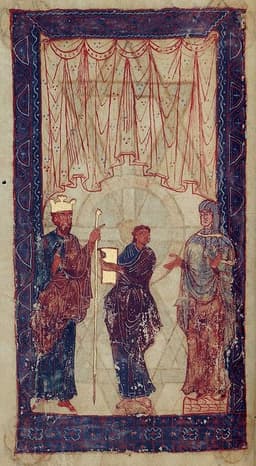
Ferdinand I of Leon
Emperor · Medieval
59.2Total
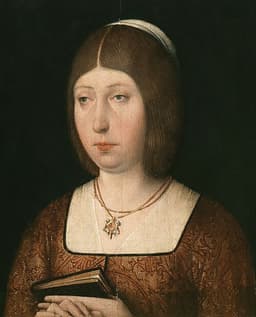
Isabella I of Castile
Emperor · Medieval
77.2Total
Basic Information
Born
1015
1451
Died
1065
1504
Era
Medieval
Medieval
Nationality
Leon
Spain
Occupation
Emperor
Emperor
Civilization
Western
Western
Score Comparison
Military (10%)
70.0
76.0
Political (20%)
68.0
78.0
Influence (20%)
56.4
80.0
Legacy (20%)
49.2
75.0
Leadership (15%)
66.0
78.0
Strategy (15%)
57.5
75.0
TOTAL
59.2
77.2
Ferdinand I of Leon — Complete Timeline
1029 AD
Inheritance of the County of CastilePolitical Action◆ Major
Ferdinand I inherited the County of Castile from his father Sancho III of Navarre. He later expanded his territory through conquest and marriage, laying the foundation for the Kingdom of Castile.
Impact: regionalconstructive
1037 AD
Conquest of LeónWar◆ Major
Ferdinand I defeated and killed King Bermudo III of Le
Impact: regional
1056 AD
First Emperor of SpainPolitical Action◆ Major
Ferdinand I was crowned 'Imperator totius Hispaniae' (Emperor of all Spain) in 1056, claiming suzerainty over all Christian and Muslim rulers in Iberia. This title reflected his military dominance and political ambition.
Impact: regional
1065 AD
Division of the kingdomPolitical Action◆ Major
Upon his death, Ferdinand I divided his kingdom among his sons: Sancho II received Castile, Alfonso VI received Le
Impact: regionaldestructive
Isabella I of Castile — Complete Timeline
1469 AD
Marriage to Ferdinand of AragonPolitical Action
Isabella married Ferdinand II of Aragon in Valladolid, uniting the kingdoms of Castile and Aragon. This dynastic union laid the foundation for the unified Spanish monarchy and enabled joint policies including the Reconquista and overseas exploration.
Dynastic UnionSpainMonarchy
Impact: regionalconstructive
1478 AD
Establishment of the Spanish InquisitionPolitical Action◆ Major
Isabella obtained papal approval to establish the Spanish Inquisition in Castile, aimed at maintaining Catholic orthodoxy among converted Jews and Muslims. The Inquisition operated under royal control, conducting trials and executions for heresy.
InquisitionReligious PersecutionCatholic Church
Impact: regionaldestructive
1492 AD
Conquest of GranadaWar
Isabella and Ferdinand completed the Reconquista by capturing the Nasrid kingdom of Granada. The surrender of the last Muslim state in Iberia ended 781 years of Islamic rule and unified Spain under Christian rule.
ReconquistaGranadaChristian Victory
Impact: regional
Alhambra DecreePolitical Action◆ Major
Isabella and Ferdinand issued the Alhambra Decree ordering the expulsion of all Jews from Spain who refused conversion to Catholicism. An estimated 40,000 to 200,000 Jews were forced to leave, causing demographic and economic disruption.
ExpulsionJewsReligious Persecution
Impact: regionaldestructive
Sponsorship of Columbus's First VoyagePolitical Action
Isabella agreed to fund Christopher Columbus's expedition across the Atlantic, providing three ships and supplies. Columbus reached the Bahamas on October 12, initiating sustained European contact with the Americas and the Spanish colonial empire.
ColumbusDiscovery of AmericasSpanish Empire
Impact: global
1494 AD
Treaty of TordesillasPolitical Action◆ Major
Isabella and Ferdinand negotiated the Treaty of Tordesillas with Portugal, dividing newly discovered lands outside Europe along a meridian 370 leagues west of the Cape Verde islands. This agreement shaped colonial claims in the Americas and Africa.
Colonial DivisionSpainPortugal
Impact: global
Expert Analysis
Ferdinand I of Leon vs Isabella I of Castile
### The Unifiers of Spain: Two Monarchs, Two Destinies
Imagine a throne room, not of gilded splendor, but of raw, unfinished power. In one corner, a woman of 23, her eyes sharp as Toledo steel, signs a marriage contract that will bind two kingdoms. In another, a man nearing 50, his crown heavy with the title "Emperor of All Spain," divides his hard-won lands among sons who will tear them apart. These are the images of Isabella I of Castile and Ferdinand I of Leon—two rulers who dreamed of a unified Spain, yet walked radically different paths to very different ends. What drove one to build a lasting empire, and the other to sow the seeds of its destruction?
**Origins**
Ferdinand I was born in 1015, a prince of Navarre in an age when Christian Spain was a patchwork of squabbling kingdoms, all bleeding from the slow, grinding war against the Moors. His father, Sancho III of Navarre, was a master of political chess, but when he died, he divided his realm as if it were a private estate. Ferdinand inherited the County of Castile in 1029, a land of hard men and harder frontiers. He was a product of this world: a warrior who believed that unity was forged in blood and iron.
Isabella, born in 1451, came of age in a Spain even more fractured—a land of rival nobles, a weak king, and a Castile teetering on anarchy. Her childhood was a crucible of uncertainty. Her half-brother, King Henry IV, was a disaster, and the court seethed with plots. Yet Isabella learned the arts of survival: patience, piety, and the ruthless calculation of political alliances. Where Ferdinand I saw a kingdom to be conquered, Isabella saw a nation to be built.
**Rise to Power**
Ferdinand’s ascent was a brutal military campaign. In 1037, at the Battle of Tamarón, he killed King Bermudo III of León and claimed that kingdom through conquest and a dubious claim through his wife. He did not negotiate; he annihilated. By 1056, he had himself crowned *Imperator totius Hispaniae*—Emperor of all Spain—a title that was more a boast than a reality. His power was the power of the sword, held by one man’s strength.
Isabella’s rise was a masterpiece of political maneuvering. In 1469, she married Ferdinand of Aragon without her brother’s consent, a secret act of defiance that united the two most powerful kingdoms in Spain. She did not seize the throne; she outmaneuvered her rivals, securing recognition from the nobles and the Church. When she finally became queen in 1474, it was through a civil war that she won not by slaughter alone, but by building a coalition. Her power was the power of a contract, held by a partnership.
**Leadership & Governance**
Ferdinand I ruled as a medieval warlord. His strategy was simple: raid the Moors for tribute and land, then divide the spoils among his sons. He was a competent commander—his military score of 60.1 reflects steady success—but his political score of 72.0 reveals a fatal flaw: he thought of his kingdom as a personal inheritance, not a state. When he died in 1065, he split his realm among Sancho, Alfonso, and García, a decision that plunged Spain into fratricidal war for generations. His greatest triumph—the conquest of León—was undone by his own hand.
Isabella, with a political score of 86.6, understood governance as architecture. She and Ferdinand created a joint monarchy, the *Reyes Católicos*, that centralized power. In 1478, she established the Spanish Inquisition—a dark, brutal tool, but one designed to enforce religious and political unity. In 1492, she completed the Reconquista by capturing Granada, not just by siege but by negotiation, accepting the surrender of the last Moorish king. That same year, she issued the Alhambra Decree, expelling the Jews—a catastrophic moral failure, but one that she saw as necessary for a unified Catholic state. And crucially, she funded Christopher Columbus’s voyage, a gamble that transformed Spain into a global empire. Her leadership score of 80.9 was not just about commanding armies; it was about commanding the future.
**Triumph & Tragedy**
Ferdinand’s greatest moment was his coronation as Emperor in 1056, a fleeting peak. His tragedy was the division of his kingdom, a decision that erased his life’s work. Within a decade, his sons were at war.
Isabella’s triumph was 1492—a year that saw the fall of Granada, the expulsion of the Jews, and the launch of Columbus. It was a dizzying, contradictory moment of glory and horror. Her tragedy was personal: the deaths of her children, the madness of her daughter Juana, and the knowledge that her beloved husband Ferdinand would outlive her, their joint legacy already fraying. She died in 1504, exhausted by a life of ceaseless labor.
**Character & Destiny**
Ferdinand I was a man of his time—hard, ambitious, but ultimately shortsighted. He saw Spain as a collection of lands to be owned, not a people to be led. His character was that of a conqueror, not a builder. Destiny, in his case, was a trap: he could win battles, but he could not escape the feudal logic that turned victory into division.
Isabella was a woman of her time, but also ahead of it. She was deeply religious, even fanatical, but her piety was married to a cold pragmatism. She saw that unity required not just swords but institutions—a central treasury, a reformed Church, a foreign policy. Her character was that of a queen who believed she was God’s instrument. Destiny, for her, was a mission. She did not just conquer; she created.
**Legacy**
Ferdinand I is a footnote in history, remembered mostly by scholars. His title of “Emperor” died with him. His legacy score of 65.2 reflects a life that was impressive but ultimately undone by his own choices.
Isabella of Castile is a titan. Her legacy score of 67.4 is lower than her influence score of 84.5 because her actions—the Inquisition, the expulsion—cast a long, dark shadow. Yet the Spain she forged endured for centuries. Her marriage to Ferdinand created the basis for a unified Spanish state. Her sponsorship of Columbus opened the door to the Americas. She is remembered as both a saint and a sinner, a unifier and a persecutor.
**Conclusion**
Standing at the edge of history, we see two monarchs who both wanted the same thing: a Spain united under one crown. Ferdinand I tried to build it with a sword, and it crumbled in his hands. Isabella tried to build it with a sword and a pen, and it outlasted her. The difference was not in their courage or their faith, but in their vision. Ferdinand saw a kingdom. Isabella saw a nation. And in that difference lies the lesson for all who would lead: it is not enough to conquer. You must also build.
Rankings
🥇
Isabella I of CastileLeader
Mil: 76.0Pol: 78.0Inf: 80.0
77.2
🥈
Ferdinand I of Leon
Mil: 70.0Pol: 68.0Inf: 56.4
59.2
+18.0 behind
How This Comparison Works
Algorithm
Each figure is scored on 6 dimensions (0—100 scale) based on structured historical data: Military (10%), Political (20%), Influence (20%), Legacy (20%), Leadership (15%), Strategy (15%). The weighted total produces the final ranking.
Data Sources
Scores are computed from structured sub-indicators in the database. Scale factors adjust for era (Ancient ×0.85, Modern ×1.0) and civilization size (Eastern ×1.05, Other ×0.80) to account for differences in population and military scale.
Maximum 3 Figures
Comparisons are limited to 2—3 figures to ensure readability and statistical meaningfulness.
Error Margins
±5 points per dimension — Sub-scores are derived from historical records with inherent uncertainty. Two figures within 5 points on a dimension should be considered roughly equivalent in that area.
Total Score Accuracy
±3 points overall — The weighted combination of 6 dimensions produces a total score with approximately ±3 points of uncertainty. Differences of less than 3 points are not statistically significant— the figures are effectively tied.
Known Limitations
- Historical records are incomplete and uneven across civilizations
- Figures from oral-tradition societies may be underrepresented
- Occupation labels can misclassify multi-role figures
- Scores measure capability and impact, not moral character
- Quantitative scoring is a comparison tool, not absolute truth
Capability Radar
Military (10%) — Battles & Warfare
Battles
55
75
Win Rate
60
80
Expansion
60
85
Political (20%) — Governance & Reform
Reform
50
90
Diplomacy
55
80
Economy
45
75
Influence (20%) — Cultural & Global Reach
Cultural
40
85
Global
30
95
Legacy (20%) — Historical Impact
Historical
45
95
Longevity
40
90
Leadership (15%) — Power & Stability
Tenure
65
85
Stability
50
70
Strategy (15%) — Tactics & Innovation
Strategy
55
85
Tactics
50
70
Reform
40
90
Similar Comparisons
Comments & Discussion
WarsawPigeon6/16/2026
As a military historian, I’d take Isabella’s iron will over Ferdinand’s naive generalship. Ferdinand won battles but lost the war—splitting his kingdom between Sancho II and Alfonso VI was a tactical blunder that undid his life’s work. Isabella, by contrast, weaponized the marriage contract with Ferdinand of Aragon to create a unified command structure for the Reconquista. That’s not romance; it’s strategic genius. She understood that a throne needs continuity, not just conquest.
老王战史迷6/16/2026
数据派要说实话:费迪南一世统一莱昂和卡斯蒂利亚靠的是吞并,但土地分配导致兄弟内战,继承率暴跌。伊莎贝拉一世虽然也打仗,但她通过联姻和宗教统一把两个王国粘成一个国家。从统计上看,她的统治期内叛乱率更低,而费迪南那套“分家产”相当于给自己埋雷。别跟我扯圣君传说,数字不会撒谎。
**LatinScribe6/16/2026
Classics scholar here: Ferdinand I’s imperial style echoes Charlemagne’s division of empire, but with none of the cultural legacy. He called himself “Emperor of All Spain” to impress the Pope, yet his realm fractured within decades. Isabella, far shrewder, revived Roman legal codes from the *Siete Partidas* to centralize power, not just conquer. She built a state, not a trophy case. Ferdinand’s dream was a medieval fantasy; Isabella’s was the blueprint for early modern Europe.
马德里铁粉6/16/2026
历史爱好者站出来:费迪南一世生得早,活得糙,死前把国土像分饼干一样切了,害得后代打来打去。伊莎贝拉一世,咱们女王,嫁了阿拉贡的费迪南,还把摩尔人在格拉纳达彻底KO。别跟我扯他“统一者”头衔,他那破局面对比女王的收尾,差得远。费迪南就是个起点,伊莎贝拉才叫终点。
**Impaler’sQuill6/16/2026
Revisionist critic says: stop romanticizing Ferdinand I as a unifier. He was a Navarrese prince who stole Castile by inheritance fraud, then called himself emperor. His “empire” was a fratricidal mess—his own son Sancho II killed in battle by brother Alfonso VI? That’s not unity; that’s toxic family drama. Isabella, despite her religious purges, at least ended the Reconquista with a clean victory. One built a house of cards; the other, a cathedral of iron.