Loading...
Ferdinand I of Leon vs Hugh Capet
Hugh Capet leads by 6.2 pts · 2 figures compared
…
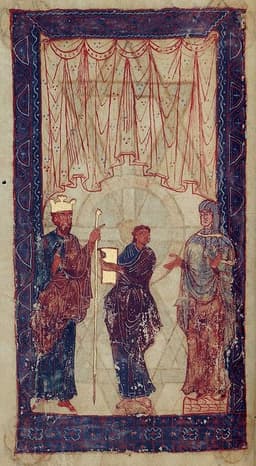
Ferdinand I of Leon
Emperor · Medieval
59.2Total
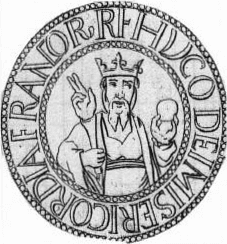
Hugh Capet
Emperor · Medieval
65.4Total
Basic Information
Born
1015
941
Died
1065
996
Era
Medieval
Medieval
Nationality
Leon
France
Occupation
Emperor
Emperor
Civilization
Western
Western
Score Comparison
Military (10%)
70.0
50.0
Political (20%)
68.0
68.0
Influence (20%)
56.4
68.0
Legacy (20%)
49.2
82.0
Leadership (15%)
66.0
68.0
Strategy (15%)
57.5
25.0
TOTAL
59.2
65.4
Ferdinand I of Leon — Complete Timeline
1029 AD
Inheritance of the County of CastilePolitical Action◆ Major
Ferdinand I inherited the County of Castile from his father Sancho III of Navarre. He later expanded his territory through conquest and marriage, laying the foundation for the Kingdom of Castile.
Impact: regionalconstructive
1037 AD
Conquest of LeónWar◆ Major
Ferdinand I defeated and killed King Bermudo III of Le
Impact: regional
1056 AD
First Emperor of SpainPolitical Action◆ Major
Ferdinand I was crowned 'Imperator totius Hispaniae' (Emperor of all Spain) in 1056, claiming suzerainty over all Christian and Muslim rulers in Iberia. This title reflected his military dominance and political ambition.
Impact: regional
1065 AD
Division of the kingdomPolitical Action◆ Major
Upon his death, Ferdinand I divided his kingdom among his sons: Sancho II received Castile, Alfonso VI received Le
Impact: regionaldestructive
Hugh Capet — Complete Timeline
987 AD
Election as King of the FranksPolitical Action◆ Major
Hugh Capet was elected King of the Franks by the nobility after the death of Louis V, the last Carolingian king. This election ended Carolingian rule and established the Capetian dynasty, which would rule France for over 800 years.
ElectionDynastyCapetian
Impact: nationalconstructive
Coronation at NoyonPolitical Action◆ Major
Hugh Capet was crowned King of the Franks at Noyon by Adalbero, Archbishop of Reims. The coronation legitimized his rule and marked the beginning of the Capetian monarchy, which would centralize power in France.
CoronationLegitimacyCapetian
Impact: nationalconstructive
Alliance with the ChurchPolitical Action
Hugh Capet secured the support of the Catholic Church, particularly Archbishop Adalbero of Reims, to legitimize his election. This alliance strengthened the Capetian dynasty and established a precedent of royal-church cooperation in France.
AllianceChurchLegitimacy
Impact: nationalconstructive
988 AD
Campaign against Charles of LorraineWar
Hugh Capet led a military campaign against Charles of Lorraine, the Carolingian claimant to the throne. Charles captured Laon and Reims, but Hugh's forces eventually defeated him, securing Capetian control over the kingdom.
WarCarolingianSuccession
Impact: regional
Expert Analysis
Ferdinand I of Leon vs Hugh Capet
### The Crown and the Cross: Two Paths to Medieval Power
In the autumn of 987, a duke with a name that would echo for centuries knelt before the archbishop of Reims. Hugh Capet, a man whose ancestors had never worn a crown, rose as King of the Franks—not through bloodright, but by the will of the nobles who had tired of Carolingian incompetence. Half a century later and a thousand miles south, another king, Ferdinand of León, stood in a cathedral and accepted a title that had not existed for centuries: Emperor of all Spain. Both men seized a moment of chaos and built something that would outlast them. But their roads to power reveal a profound truth about medieval Europe—that legitimacy could be forged in many crucibles, and that the crown, like the cross, could be a weapon or a shield.
Origins
Hugh Capet was born in 941 into the world of the West Frankish kingdom, a realm fractured by Viking raids and the decay of Carolingian authority. His father, Hugh the Great, was the most powerful noble in the land—Duke of the Franks, Count of Paris, and the man who made and unmade kings. But for all his power, Hugh the Great never dared to take the throne himself. He was a kingmaker, not a king. His son inherited this caution, along with a domain that stretched from the Seine to the Loire, but also a deep understanding that in a world where loyalty was measured in land and oaths, a king was only as strong as his alliances.
Ferdinand I of León, born in 1015, inhabited a different world. The Christian kingdoms of northern Spain were not fragments of a fallen empire but frontier states forged in the crucible of the Reconquista. His father, Sancho III of Navarre, had united much of Christian Spain under his rule, even styling himself "King of the Spains." Ferdinand inherited the County of Castile in 1029, a land of hard men and harder borders, where every hilltop held a watchtower and every valley was a battlefield. Here, kingship was earned with a sword, not a coronation oath.
Rise to Power
Hugh Capet’s ascent was a masterpiece of political patience. When King Louis V died in 987 without an heir, the Frankish nobility gathered at Senlis. The Carolingian claimant, Charles of Lorraine, was a duke with a reputation for arrogance and a wife from a disreputable family. Hugh, by contrast, had cultivated the Church. Archbishop Adalbero of Reims, the most powerful ecclesiastic in the realm, argued that the throne should go not to the man with the best blood, but to the man with the best character. The nobles agreed, and on July 3, 987, Hugh was elected king. He was crowned at Noyon, a ceremony that transformed a duke into a monarch by the grace of God and the consent of men.
Ferdinand’s rise was more brutal. In 1037, his brother-in-law, King Bermudo III of León, challenged his control of Castile. At the Battle of Tamarón, Ferdinand not only defeated Bermudo’s army but killed the king himself. He then marched into León and claimed the crown by right of conquest—a right he strengthened by marrying Bermudo’s sister. Where Hugh had negotiated his way to power, Ferdinand had fought his way.
Leadership & Governance
Hugh Capet ruled as a king who knew his limits. His military scores were low—a modest thirty—because he rarely fought. Instead, he governed through alliances, granting lands and titles to secure loyalty, and ensuring his son Robert was crowned co-king during his own lifetime, a practice that would become a Capetian tradition. He could not command the great dukes of Aquitaine or Burgundy, but he made the crown hereditary, turning an elected office into a dynasty.
Ferdinand I governed with a warrior’s pragmatism. His military score of sixty reflects a king who led campaigns against the Moors, extracting tribute from the taifa kingdoms of Toledo and Seville. But he was also a political strategist: in 1056, he had himself crowned "Emperor of all Spain," a title that claimed suzerainty over both Christian and Muslim rulers. He reformed the coinage, patronized the Church, and expanded the pilgrimage route to Santiago de Compostela. Yet his greatest act of governance was also his greatest failure: on his deathbed in 1065, he divided his kingdom among his three sons, a decision that plunged his realm into civil war.
Triumph & Tragedy
Hugh Capet’s triumph was not a battlefield victory but the survival of his dynasty. He died in 996, leaving a kingdom that was still weak, but a crown that was now unquestionably his family’s. His tragedy was that he never truly ruled the lands he claimed—the great lords of France were his equals, not his subjects.
Ferdinand’s triumph came in 1056, when he stood as the first king in centuries to claim the imperial title of Spain. He had pushed the frontier south, filled his coffers with Moorish gold, and united León, Castile, and Galicia under one scepter. His tragedy was the division of his kingdom, a decision born of paternal love or political miscalculation—historians still debate it—that destroyed everything he had built.
Character & Destiny
Hugh Capet was cautious, patient, and deeply aware of the fragility of power. He was a man who understood that in a world without standing armies, influence was the only currency that mattered. His strategy score of forty-five reflects a mind that preferred diplomacy to battle, consensus to command. He was not a great king by medieval standards—he did not conquer or reform—but he was a great founder.
Ferdinand I was a man of iron will and ambition. He saw himself as the heir to the Visigothic kings who had ruled all of Spain, and he pursued that vision with relentless energy. His strategy score, nearly identical to Hugh’s at forty-six, was applied to warfare rather than politics. He believed that a king’s duty was to fight, to expand, and to leave a legacy carved in stone and blood. That belief brought him glory, but also the seeds of destruction.
Legacy
Hugh Capet’s legacy is the Capetian dynasty, which ruled France for over eight centuries—through the Hundred Years’ War, the Renaissance, and the French Revolution. Every king of France from 987 to 1792, except for the Bonapartes and the Valois, was his direct descendant. His influence score of seventy reflects a man who changed the course of European history not by what he did, but by what he began.
Ferdinand I’s legacy is more complex. His imperial title faded after his death, and his kingdom fractured. But his son Alfonso VI would reunite the realm and conquer Toledo, and the idea of a unified Spain—of an emperor ruling all its peoples—would echo through the centuries. Ferdinand’s legacy score of sixty-five is lower, but it is a legacy of vision, of a king who saw what Spain could become.
Conclusion
Hugh Capet and Ferdinand I of León were both founders, but they built different things. One built a dynasty by bending with the wind; the other built an empire by charging into it. Hugh understood that power in a fractured world came from patience, from making yourself indispensable to those who held the real authority. Ferdinand believed that power came from conquest, from imposing your will on the world. Both were right, in their own way, and both were wrong. Hugh’s France was a patchwork of semi-independent duchies for centuries; Ferdinand’s Spain was torn apart by civil war a generation after his death. Yet both men left something that outlasted them: a crown, a name, and a story that would be told for a thousand years. In the end, the difference between them is the difference between building a house and building a fortress—one shelters generations, the other stands defiant against the storm, until the storm finally breaks it.
Rankings
🥇
Hugh CapetLeader
Mil: 50.0Pol: 68.0Inf: 68.0
65.4
🥈
Ferdinand I of Leon
Mil: 70.0Pol: 68.0Inf: 56.4
59.2
+6.2 behind
How This Comparison Works
Algorithm
Each figure is scored on 6 dimensions (0—100 scale) based on structured historical data: Military (10%), Political (20%), Influence (20%), Legacy (20%), Leadership (15%), Strategy (15%). The weighted total produces the final ranking.
Data Sources
Scores are computed from structured sub-indicators in the database. Scale factors adjust for era (Ancient ×0.85, Modern ×1.0) and civilization size (Eastern ×1.05, Other ×0.80) to account for differences in population and military scale.
Maximum 3 Figures
Comparisons are limited to 2—3 figures to ensure readability and statistical meaningfulness.
Error Margins
±5 points per dimension — Sub-scores are derived from historical records with inherent uncertainty. Two figures within 5 points on a dimension should be considered roughly equivalent in that area.
Total Score Accuracy
±3 points overall — The weighted combination of 6 dimensions produces a total score with approximately ±3 points of uncertainty. Differences of less than 3 points are not statistically significant— the figures are effectively tied.
Known Limitations
- Historical records are incomplete and uneven across civilizations
- Figures from oral-tradition societies may be underrepresented
- Occupation labels can misclassify multi-role figures
- Scores measure capability and impact, not moral character
- Quantitative scoring is a comparison tool, not absolute truth
Capability Radar
Military (10%) — Battles & Warfare
Battles
55
15
Win Rate
60
20
Expansion
60
15
Political (20%) — Governance & Reform
Reform
50
60
Diplomacy
55
65
Economy
45
50
Influence (20%) — Cultural & Global Reach
Cultural
40
60
Global
30
70
Legacy (20%) — Historical Impact
Historical
45
85
Longevity
40
90
Leadership (15%) — Power & Stability
Tenure
65
70
Stability
50
55
Strategy (15%) — Tactics & Innovation
Strategy
55
15
Tactics
50
10
Reform
40
10
Similar Comparisons
Comments & Discussion
Election vs. Conquest6/16/2026
"Let's not romanticize this. Hugh Capet's 'election' was a coup by the landed elite who got tired of playing nice with Carolingian figureheads. The archbishop of Reims didn't crown him on a whim—the nobles wanted a king who'd serve their interests, not rule them. Ferdinand, meanwhile, actually conquered his empire through steel and siege, not a velvet-glove vote. Give me a king who earns his crown with blood over one who inherits a backroom deal any day."
铁十字与银皇冠6/16/2026
"费迪南一世在莱昂大教堂接受‘全西班牙皇帝’称号时,手里攥着的是从摩尔人那儿夺来的宝剑,和从圣雅各墓中挖出的十字架。而于格·卡佩呢?他只是贵族们在兰斯大教堂里达成的一个妥协方案。别搞错了:卡佩王朝能延续三百年,靠的不是神圣的选举,而是精明的政治联姻和地缘勒索。真正的王冠永远在剑尖上闪烁,而不是在选票箱里腐烂。"
Clio's Chronicle6/16/2026
"Both paths worked, but let's not gloss over the irony. Hugh inherited a kingdom that didn't exist a generation before—a fragile patchwork of loyalties held together by the Church and bribes. Ferdinand, on the other hand, was crowned emperor of a Spain that had always been a dream, not a reality. Hugh's rise created the modern French state; Ferdinand's ambition fractured his empire the moment he died, splitting it between his sons. Sacre bleu, lads—never divide your conquests among heirs."
典籍里的叛徒6/16/2026
"好吧,历史书上说于格·卡佩是‘国王选举’的先驱?别被教会文书骗了。959年,于格的父亲‘伟大的于格’差点把洛泰尔的王冠摘下来,但对教皇的敬畏和贵族压力让他缩回去了。费迪南一世倒好,1054年他在科英布拉自封‘皇帝’时,连教皇都没点头。这两位都一样:他们的王冠不是天赐的,是抢来的。区别只在借口——一个说‘上帝指定我’,一个说‘贵族选了我’。虚伪总是披着正统的外衣。"
Tactical Turtle6/16/2026
"Objectively, Hugh built the better machine. Ferdinand's empire was a flash in the pan—impressive, sure, but after his death his sons tore it apart in a civil war that made the fragmentation of Hugh's realm look like a family squabble. Hugh's Capetian dynasty lasted until 1328, germinating the seeds of a centralized French monarchy. Ferdinand's grand ‘Empire of Spain’ collapsed into fratricidal chaos by 1065. Judges score: Hugh wins on long-term impact, Ferdinand gets style points for the