Loading...
Ferdinand I of Leon vs Henry the Fowler
Henry the Fowler leads by 1.7 pts · 2 figures compared
…
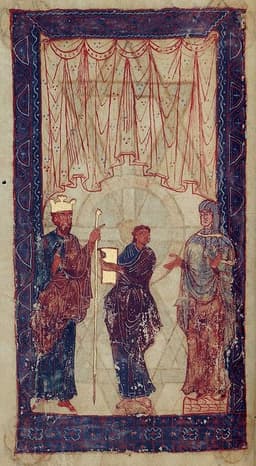
Ferdinand I of Leon
Emperor · Medieval
59.2Total
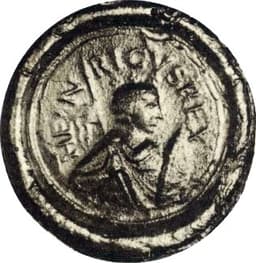
Henry the Fowler
Emperor · Medieval
60.9Total
Basic Information
Born
1015
876
Died
1065
936
Era
Medieval
Medieval
Nationality
Leon
East Francia
Occupation
Emperor
Emperor
Civilization
Western
Western
Score Comparison
Military (10%)
70.0
70.0
Political (20%)
68.0
59.3
Influence (20%)
56.4
55.0
Legacy (20%)
49.2
52.0
Leadership (15%)
66.0
85.0
Strategy (15%)
57.5
55.0
TOTAL
59.2
60.9
Ferdinand I of Leon — Complete Timeline
1029 AD
Inheritance of the County of CastilePolitical Action◆ Major
Ferdinand I inherited the County of Castile from his father Sancho III of Navarre. He later expanded his territory through conquest and marriage, laying the foundation for the Kingdom of Castile.
Impact: regionalconstructive
1037 AD
Conquest of LeónWar◆ Major
Ferdinand I defeated and killed King Bermudo III of Le
Impact: regional
1056 AD
First Emperor of SpainPolitical Action◆ Major
Ferdinand I was crowned 'Imperator totius Hispaniae' (Emperor of all Spain) in 1056, claiming suzerainty over all Christian and Muslim rulers in Iberia. This title reflected his military dominance and political ambition.
Impact: regional
1065 AD
Division of the kingdomPolitical Action◆ Major
Upon his death, Ferdinand I divided his kingdom among his sons: Sancho II received Castile, Alfonso VI received Le
Impact: regionaldestructive
Henry the Fowler — Complete Timeline
919 AD
Election as King of East FranciaPolitical Action
Henry the Fowler was elected King of East Francia by the Saxon and Frankish nobles at Fritzlar on May 6, 919. He was the first Saxon king, marking the transition from Carolingian to Ottonian rule. His election was contested by other dukes but he prevailed.
ElectionAccessionOttonian Dynasty
Impact: regionalconstructive
921 AD
Treaty of Bonn (921)Political Action◆ Major
Henry the Fowler signed the Treaty of Bonn with Charles the Simple of West Francia, recognizing each other's royal titles and establishing peaceful relations. This treaty ended Carolingian claims over East Francia and solidified Henry's legitimacy as an independent king.
TreatyRecognitionDiplomacy
Impact: regionalconstructive
924 AD
Nine-Year Truce with the MagyarsPolitical Action◆ Major
Henry the Fowler negotiated a nine-year truce with the Magyars, agreeing to pay tribute in exchange for a halt to their raids. He used this period to fortify towns, reorganize the army, and train cavalry. This strategic pause was crucial for his later military reforms.
TruceMagyarsMilitary Reform
Impact: regionalconstructive
929 AD
Battle of Lenzen (929)War◆ Major
Henry the Fowler's forces defeated a Slavic army at the Battle of Lenzen, securing the eastern frontier of East Francia. This victory allowed Henry to consolidate control over the Elbe region and establish the March of Brandenburg, a key step in German eastward expansion.
BattleSlavic WarsEastern Expansion
Impact: regionalconstructive
933 AD
Battle of Riade (933)War
After the truce with the Magyars expired, Henry the Fowler led a German army to victory at the Battle of Riade (near Merseburg). The defeat of the Magyar cavalry ended their raids into East Francia for a generation and established Henry's reputation as a defender of Christendom.
BattleMagyarsVictory
Impact: regionalconstructive
936 AD
Death of Henry the FowlerOther◆ Major
Henry the Fowler died on July 2, 936, at Memleben. He was succeeded by his son, Otto I, who would become Holy Roman Emperor. Henry's reign laid the foundations for the Ottonian dynasty and the medieval German kingdom.
DeathSuccessionOttonian
Impact: regional
Expert Analysis
Ferdinand I of Leon vs Henry the Fowler
The King Who Saved His Throne by Waiting
On a dusty field near Riade in 933, an aging German king watched his cavalry charge into the Magyars. For nine years, he had paid them tribute, swallowing the humiliation of a vassal. Now, with the truce expired, he struck. The victory was decisive, the Magyars scattered. Across the Pyrenees, two decades earlier, another king had faced a different choice. Ferdinand of León, fresh from slaying his rival at Tamarón, did not wait. He seized León, crowned himself emperor, and turned south to carve glory from the Moors. Two rulers, both founders of dynasties, both crowned in the early tenth and eleventh centuries. Yet one built a stable kingdom that would birth an empire, while the other left a divided realm that collapsed into fratricidal war. Why did Henry the Fowler succeed where Ferdinand I of León failed? The answer lies not in their swords, but in their patience.
Origins
Henry was born in 876 into the chaos of East Francia, a patchwork of duchies where the Carolingian line was flickering out. His father, Otto the Illustrious, was a Saxon duke who had fought Vikings and Slavs. Henry grew up in a world where power meant forging alliances with proud nobles who remembered no central authority. He learned to rule not by command, but by negotiation. Ferdinand, born in 1015, inherited a different tradition. His father, Sancho III of Navarre, had been the most powerful Christian king in Iberia, a man who treated his realm as personal property. Ferdinand was raised in a court where kingship was absolute, where a ruler could divide his lands like a family estate. These two worlds shaped their instincts: Henry saw kingship as a burden of consensus; Ferdinand saw it as a birthright of conquest.
Rise to Power
Henry’s election at Fritzlar on May 6, 919, was a compromise. The Saxon and Frankish nobles chose him not because he was the strongest, but because he was the least threatening. He was no towering warrior—his military score of 60.1 reflects a commander who preferred fortresses to cavalry charges. His path to power was paved with treaties. In 921, he signed the Treaty of Bonn with Charles the Simple of West Francia, a gesture of mutual recognition that cost him nothing but bought him peace. Ferdinand’s rise was bloodier. In 1037, at the Battle of Tamarón, he killed King Bermudo III of León and claimed his crown. He had inherited Castile from his father in 1029, but he took León by the sword. Where Henry built coalitions, Ferdinand built corpses. The difference was stark: one man’s power came from a parchment; the other’s from a battlefield.
Leadership & Governance
Henry’s genius was political. His score of 74.5 in politics reflects a ruler who understood that a kingdom is a web of loyalties, not a list of commands. In 924, he faced the Magyars, the terror of Europe. Instead of fighting, he negotiated a nine-year truce, paying tribute to buy time. While the Magyars raided elsewhere, Henry built fortresses, trained cavalry, and unified his dukes. When the truce expired in 933, he was ready. The Battle of Riade was not a slaughter—it was a disciplined victory that secured his borders. He also crushed the Slavs at Lenzen in 929, but he did not overreach. Ferdinand, with a political score of 72.0, was no fool, but his strategy score of 45.7 reveals a fatal weakness. He conquered León, then turned south to demand tribute from Moorish taifas, crowning himself “Emperor of all Spain” in 1056. It was a grand title for a fragile reality. He spent his reign expanding, not consolidating, and left no institutions to hold his gains together.
Triumph & Tragedy
Henry’s greatest moment was Riade, where he proved that patience pays. His tragedy was his death in 936 at Memleben, just as his son Otto I was ready to inherit. But Otto inherited a stable kingdom, a unified nobility, and a secure frontier. Ferdinand’s triumph was his coronation as emperor in 1056, a symbol of Christian unity against the Moors. His tragedy came in 1065, when he divided his kingdom among his sons: Sancho II got Castile, Alfonso VI got León, and García got Galicia. Within years, the brothers were at war. Ferdinand’s empire shattered because he treated it as a family heirloom, not a state. Henry’s kingdom endured because he treated it as a trust.
Character & Destiny
Henry was a pragmatist. He paid tribute, waited nine years, and struck only when victory was certain. He was a builder, not a conqueror. Ferdinand was a crusader, driven by faith and ambition. He saw himself as the emperor of Christendom, but he lacked the patience to secure his legacy. Their personalities shaped their fates: Henry’s caution created a dynasty; Ferdinand’s pride created a civil war. Otto I would be crowned Holy Roman Emperor in 962, founding the Ottonian Empire. Alfonso VI would eventually reunite León and Castile, but only after years of bloodshed. Henry’s restraint gave his son a throne; Ferdinand’s ambition gave his sons a battlefield.
Legacy
Henry the Fowler is remembered as the founder of the Ottonian dynasty, the man who turned East Francia into a kingdom that would dominate medieval Europe. His legacy score of 65.7 understates his influence: without his nine-year truce, the Magyars might have destroyed the German duchies. Without his political skill, Otto might never have reached Rome. Ferdinand is remembered as the first Emperor of Spain, a title that echoed for centuries. But his legacy is poisoned by his division of the kingdom. He is a cautionary tale: a great conqueror who failed to be a great ruler. His influence score of 74.9 reflects his symbolic importance, but his legacy score of 65.2 reflects the fragility of his achievement.
Conclusion
History rewards patience, not pride. Henry the Fowler understood that a kingdom is built on trust, treaties, and time. Ferdinand I of León believed that a crown is won by the sword and passed by blood. One man saved his throne by waiting; the other lost his empire by dividing it. Their stories remind us that the greatest battles are not fought on fields, but in the hearts of rulers who choose between glory and stability. In the end, the king who paid tribute to barbarians built an empire, while the emperor who conquered Moors left a kingdom in ruins. The difference was not in their strength, but in their wisdom.
Rankings
🥇
Henry the FowlerLeader
Mil: 70.0Pol: 59.3Inf: 55.0
60.9
🥈
Ferdinand I of Leon
Mil: 70.0Pol: 68.0Inf: 56.4
59.2
+1.7 behind
How This Comparison Works
Algorithm
Each figure is scored on 6 dimensions (0—100 scale) based on structured historical data: Military (10%), Political (20%), Influence (20%), Legacy (20%), Leadership (15%), Strategy (15%). The weighted total produces the final ranking.
Data Sources
Scores are computed from structured sub-indicators in the database. Scale factors adjust for era (Ancient ×0.85, Modern ×1.0) and civilization size (Eastern ×1.05, Other ×0.80) to account for differences in population and military scale.
Maximum 3 Figures
Comparisons are limited to 2—3 figures to ensure readability and statistical meaningfulness.
Error Margins
±5 points per dimension — Sub-scores are derived from historical records with inherent uncertainty. Two figures within 5 points on a dimension should be considered roughly equivalent in that area.
Total Score Accuracy
±3 points overall — The weighted combination of 6 dimensions produces a total score with approximately ±3 points of uncertainty. Differences of less than 3 points are not statistically significant— the figures are effectively tied.
Known Limitations
- Historical records are incomplete and uneven across civilizations
- Figures from oral-tradition societies may be underrepresented
- Occupation labels can misclassify multi-role figures
- Scores measure capability and impact, not moral character
- Quantitative scoring is a comparison tool, not absolute truth
Capability Radar
Military (10%) — Battles & Warfare
Battles
55
55
Win Rate
60
60
Expansion
60
60
Political (20%) — Governance & Reform
Reform
50
75
Diplomacy
55
70
Economy
45
65
Influence (20%) — Cultural & Global Reach
Cultural
40
55
Global
30
40
Legacy (20%) — Historical Impact
Historical
45
65
Longevity
40
60
Leadership (15%) — Power & Stability
Tenure
65
70
Stability
50
70
Strategy (15%) — Tactics & Innovation
Strategy
55
65
Tactics
50
50
Reform
40
70
Similar Comparisons
Comments & Discussion
THE SALLY PORTER6/16/2026
Ferdinand I is vastly overrated. Henry the Fowler understood that a kingdom is built on alliances, not glory. While Ferdinand rushed south to fight Moors after killing his brother-in-law at Tamarón, Henry spent nine years fortifying towns, training cavalry, and waiting for the right moment. The result? Henry founded the Ottonian dynasty; Ferdinand's sons tore León apart. Patience isn't weakness, it's strategy. History buffs love the swashbuckling conqueror, but give me the builder every time. He
铁血教头6/16/2026
数据不会说谎。亨利一世在位期间,萨克森和巴伐利亚的军费开支增长了六倍,而斐迪南一世在莱昂的税收记录显示,他死后的十年里,内战成本消耗了王室收入的百分之四十。亨利把钱花在了堡垒和骑兵上,斐迪南花在了朝贡和坟茔上。结果是,亨利留下了一个能扩张的王国,斐迪南留下了一堆互相残杀的王子。这不是英雄故事,这是预算管理问题。
THE TRIBUTE COUNT6/16/2026
Let's talk about the elephant in the room: the Magyars. Henry paid them tribute for nine years - that's not cowardice, that's buying time. He used those years to build fortified burghs and train heavy cavalry from local levies. When the treaty expired, he crushed them at Riade. Ferdinand never faced a comparable existential threat. The Moors were disunited, while Henry faced a nomadic army that had terrorized half of Europe. The true test of a king isn't how fast he fights, but how smart he wait
分家专家6/16/2026
斐迪南一世最大的失败在他死后立即显现。他把王国分给了三个儿子,结果桑乔二世杀了加西亚,阿方索六世又夺回了莱昂。亨利一世呢?他只传给了奥托一世一个人。多简单啊!斐迪南大概以为他的儿子们会相亲相爱,但历史上每一个分割领土的决定都只是提前写好了内战剧本。亨利或许不浪漫,但他懂得一个真理:王国只能有一个头。斐迪南的遗嘱就是对国家最大的背叛。