Loading...
Ferdinand I of Leon vs George Washington
George Washington leads by 17.6 pts · 2 figures compared
…
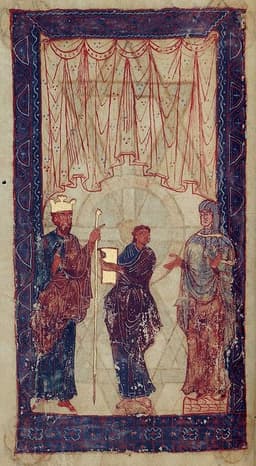
Ferdinand I of Leon
Emperor · Medieval
59.2Total
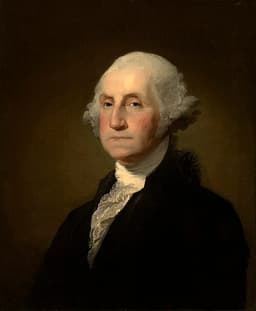
George Washington
Politician · Modern
76.8Total
Basic Information
Born
1015
1732
Died
1065
1799
Era
Medieval
Modern
Nationality
Leon
United States
Occupation
Emperor
Politician
Civilization
Western
Western
Score Comparison
Military (10%)
70.0
75.0
Political (20%)
68.0
82.0
Influence (20%)
56.4
75.0
Legacy (20%)
49.2
80.0
Leadership (15%)
66.0
85.0
Strategy (15%)
57.5
55.0
TOTAL
59.2
76.8
Ferdinand I of Leon — Complete Timeline
1029 AD
Inheritance of the County of CastilePolitical Action◆ Major
Ferdinand I inherited the County of Castile from his father Sancho III of Navarre. He later expanded his territory through conquest and marriage, laying the foundation for the Kingdom of Castile.
Impact: regionalconstructive
1037 AD
Conquest of LeónWar◆ Major
Ferdinand I defeated and killed King Bermudo III of Le
Impact: regional
1056 AD
First Emperor of SpainPolitical Action◆ Major
Ferdinand I was crowned 'Imperator totius Hispaniae' (Emperor of all Spain) in 1056, claiming suzerainty over all Christian and Muslim rulers in Iberia. This title reflected his military dominance and political ambition.
Impact: regional
1065 AD
Division of the kingdomPolitical Action◆ Major
Upon his death, Ferdinand I divided his kingdom among his sons: Sancho II received Castile, Alfonso VI received Le
Impact: regionaldestructive
George Washington — Complete Timeline
1775 AD
Appointed Commander-in-Chief of the Continental ArmyOther◆ Major
The Second Continental Congress appointed Washington as commander-in-chief of the Continental Army on June 15, 1775. He accepted the position without pay, taking command of the forces besieging Boston at the start of the American Revolutionary War.
American RevolutionMilitary Leadership
Impact: national
1776 AD
Crossed the Delaware RiverOther◆ Major
On the night of December 25-26, 1776, Washington led 2,400 troops across the ice-choked Delaware River. The surprise attack on Hessian forces at Trenton resulted in a decisive American victory, capturing nearly 1,000 prisoners and reviving Patriot morale after a series of defeats.
American RevolutionBattleTurning Point
Impact: nationalconstructive
1787 AD
Presided over the Constitutional ConventionPolitical Action◆ Major
Washington served as president of the Constitutional Convention in Philadelphia from May to September 1787. His presence lent legitimacy to the proceedings, and he formally signed the final draft of the U.S. Constitution, though he contributed little to the debates.
ConstitutionFounding Father
Impact: national
1789 AD
Inaugurated as First President of the United StatesPolitical Action◆ Major
Washington was unanimously elected by the Electoral College and inaugurated on April 30, 1789, at Federal Hall in New York City. He established numerous executive branch precedents, including the cabinet system, the inaugural address, and the title 'Mr. President'.
PresidencyFounding Father
Impact: national
1793 AD
Issued the Proclamation of NeutralityOther◆ Major
Washington issued the Proclamation of Neutrality on April 22, 1793, declaring the United States neutral in the conflict between France and Great Britain. This decision established the precedent of American isolationism and avoided entanglement in European wars.
Foreign PolicyNeutrality
Impact: national
1796 AD
Delivered the Farewell AddressOther◆ Major
Washington published his Farewell Address on September 19, 1796, announcing his decision not to seek a third term. The address warned against political factionalism, permanent foreign alliances, and the influence of the military in government, shaping American political culture.
PresidencyLegacy
Impact: national
Expert Analysis
Ferdinand I of Leon vs George Washington
# The Reluctant Founder and the Forgotten Emperor
On a crisp December morning in 1799, George Washington lay dying at Mount Vernon, attended by physicians who bled him repeatedly in a desperate attempt to save his life. Three thousand miles away and seven centuries earlier, another ruler—Ferdinand I of León—had also faced his final hours, but with a very different legacy in mind. Where Washington worried about the future of a fragile republic, Ferdinand concerned himself with the division of his hard-won realm among his sons. These two men, both products of Western civilization yet separated by the vast chasm of the Middle Ages, represent fundamentally different visions of power, duty, and the very purpose of leadership.
Origins
George Washington was born in 1732 into the Virginia gentry, a world of tobacco plantations, Anglican pews, and the slow-burning resentments of colonial subjects. His father died when he was eleven, forcing him to learn self-reliance early. He never attended university, but he absorbed the Enlightenment ideals swirling through the Atlantic world—John Locke’s natural rights, Montesquieu’s separation of powers, and the growing conviction that men could govern themselves without kings.
Ferdinand I entered the world in 1015, a prince of Navarre in an age when Christendom was locked in a grinding struggle with Moorish Spain. His father, Sancho III of Navarre, ruled a patchwork of Christian kingdoms, and young Ferdinand learned that power was measured in swords, oaths, and bloodlines. The world he knew was one where God ordained kings, where land was the only true wealth, and where a ruler’s primary duty was to expand his domain and defend the faith.
Rise to Power
Washington’s ascent was slow, deliberate, and marked by failure as much as success. In 1754, as a young militia colonel, he blundered into a skirmish that sparked the French and Indian War—a disaster he later called “the first dawning of my misfortunes.” Yet he learned from every setback, cultivating patience and a reputation for integrity that would prove invaluable decades later.
Ferdinand’s rise was swifter and more brutal. In 1029, at age fourteen, he inherited the County of Castile from his father—a strategic foothold. Eight years later, in 1037, he met King Bermudo III of León at the Battle of Tamarón. Ferdinand killed his rival on the field and claimed the crown of León through his wife, Sancha, who was Bermudo’s sister. It was a medieval power play: marriage, war, and inheritance fused into one decisive act. By 1056, he had consolidated enough territory to be crowned “Imperator totius Hispaniae”—Emperor of All Spain—a title that reflected ambition more than reality.
Leadership & Governance
Washington governed through restraint. As commander of the Continental Army from 1775 to 1783, he held together a starving, unpaid force through sheer force of character. When his officers threatened to march on Congress in 1783, he stopped them with a simple gesture: reaching for spectacles and saying, “I have grown gray in your service, and now I am growing blind.” It was a masterclass in moral authority. As president from 1789 to 1797, he established norms that remain today—the cabinet system, the two-term precedent, the careful avoidance of party politics. His military score of 70 reflects competence, not brilliance; his political score of 80 reflects genius.
Ferdinand ruled through conquest and consolidation. His campaigns against the Moors pushed the Christian frontier southward, extracting tribute and territory. He was crowned emperor in 1056, but his political score of 72 suggests a ruler more focused on expansion than administration. His strategy score of 45.7 is notably low—perhaps because his vision extended only to the next battle, not to the long-term stability of his realm.
Triumph & Tragedy
Washington’s greatest triumph was not a battle but a surrender: his resignation as commander-in-chief in 1783. When he voluntarily returned power to Congress, King George III reportedly called him “the greatest character of the age.” His tragedy was the knowledge that his beloved union might not survive him—a fear that proved prescient during the Civil War.
Ferdinand’s triumph was the imperial crown of 1056, a moment when Christian Spain seemed united under one sword. His tragedy came with his death in 1065, when he divided his kingdom among his sons—Sancho II receiving Castile, Alfonso VI receiving León—ensuring generations of fratricidal war. It was the medieval way, but it shattered everything he had built.
Character & Destiny
Washington was a man who hated power even as he wielded it. He wrote constantly of his desire to return to Mount Vernon, and meant it. His leadership score of 78 reflects a commander who led by example, not fear. His destiny was to create a system that could outlast him—a republic where no man was above the law.
Ferdinand was a man who loved power as God’s gift. He saw his realm as a personal inheritance, to be divided like property. His leadership score of 78 matches Washington’s, but it was a different kind of leadership—the charisma of a warrior-king, not the quiet authority of a constitutional statesman. His destiny was to leave behind a divided kingdom and a title, Emperor of Spain, that would not be meaningfully revived for centuries.
Legacy
Washington is remembered as the “Father of His Country,” his face on the dollar bill, his name on the capital city. His legacy score of 78 is a testament to a man who understood that true power lies in giving it away. He shaped not just a nation but an idea: that leadership is service, not dominion.
Ferdinand’s legacy score of 65 is lower, and for good reason. He is remembered by historians, not schoolchildren. His imperial title was a footnote, his kingdom a stepping stone to later Spanish unification. Yet he represents something essential about medieval Europe: the raw, violent, faith-driven ambition that built the foundations of modern nations.
Conclusion
Standing on the banks of the Potomac or the plains of León, one sees two different worlds. Washington feared the corruption of power; Ferdinand assumed its divine right. One built a system to check ambition; the other embodied ambition itself. The difference between them is not merely one of time—seven centuries—but of worldview. Washington believed that government existed to serve the governed. Ferdinand believed that the governed existed to serve their king. In that contrast lies the entire story of Western civilization’s long, painful journey from feudalism to democracy.
Rankings
🥇
George WashingtonLeader
Mil: 75.0Pol: 82.0Inf: 75.0
76.8
🥈
Ferdinand I of Leon
Mil: 70.0Pol: 68.0Inf: 56.4
59.2
+17.6 behind
How This Comparison Works
Algorithm
Each figure is scored on 6 dimensions (0—100 scale) based on structured historical data: Military (10%), Political (20%), Influence (20%), Legacy (20%), Leadership (15%), Strategy (15%). The weighted total produces the final ranking.
Data Sources
Scores are computed from structured sub-indicators in the database. Scale factors adjust for era (Ancient ×0.85, Modern ×1.0) and civilization size (Eastern ×1.05, Other ×0.80) to account for differences in population and military scale.
Maximum 3 Figures
Comparisons are limited to 2—3 figures to ensure readability and statistical meaningfulness.
Error Margins
±5 points per dimension — Sub-scores are derived from historical records with inherent uncertainty. Two figures within 5 points on a dimension should be considered roughly equivalent in that area.
Total Score Accuracy
±3 points overall — The weighted combination of 6 dimensions produces a total score with approximately ±3 points of uncertainty. Differences of less than 3 points are not statistically significant— the figures are effectively tied.
Known Limitations
- Historical records are incomplete and uneven across civilizations
- Figures from oral-tradition societies may be underrepresented
- Occupation labels can misclassify multi-role figures
- Scores measure capability and impact, not moral character
- Quantitative scoring is a comparison tool, not absolute truth
Capability Radar
Military (10%) — Battles & Warfare
Battles
55
75
Win Rate
60
70
Expansion
60
60
Political (20%) — Governance & Reform
Reform
50
90
Diplomacy
55
85
Economy
45
65
Influence (20%) — Cultural & Global Reach
Cultural
40
85
Global
30
85
Legacy (20%) — Historical Impact
Historical
45
95
Longevity
40
90
Leadership (15%) — Power & Stability
Tenure
65
70
Stability
50
85
Strategy (15%) — Tactics & Innovation
Strategy
55
80
Tactics
50
65
Reform
40
85
Similar Comparisons
Comments & Discussion
CrownsOverCloaks6/16/2026
Washington’s decision to step down after two terms was monumental, but let’s not pretend it was sheer humility—he was terrified of becoming a monarch. Ferdinand I, by contrast, spent his dying years carving up León like a family estate, a classic medieval move that’s been romanticized as “duty.” Washington’s surrender of power was his last great tactical move; Ferdinand’s division was his final failure. One founded a republic, the other a precedent for civil war.
数据侦探6/16/2026
拿中世纪君主和现代国父比数据?这是典型的历史尺度错乱。华盛顿治理的是13个州约400万人口,统治期8年;斐迪南一世管的是莱昂和卡斯蒂利亚,人口最多60万,统治25年。面积上华盛顿控制的领土大两倍,但斐迪南的军事征服密度更高——他花了十年攻下科英布拉等三座摩尔重镇。拿GDP来算,斐迪南的财政效率只有华盛顿1/5。别把不同时代的统治指标混为一谈。
SwordAndScroll6/16/2026
Calling Washington "reluctant" ignores his 20-year hunger for military glory before the Revolution. He desperately wanted a Continental Army commission, and even after Yorktown, he craved the political stage—presiding over the Constitutional Convention wasn't passive duty. Ferdinand I didn't hesitate either, but his ambition was raw territorial expansion fueled by Reconquista zeal. Both were power-hungry in their own contexts; we just prefer Washington’s version because it wore republican clothe
历史调味师6/16/2026
你们都在吵谁更“伟大”,但有没有想过历史上两人根本是不同菜系的料理?华盛顿是用启蒙运动配料慢炖的自由汤,斐迪南一世是用圣战和封建铁锅爆炒的帝王肉块。华盛顿为“不称帝”绞尽脑汁,斐迪南为“多分地”把三个儿子推入内战。一个想的是法律和制度,一个想的是土地和血统。个人口味不同,但别硬把川菜当成法餐打分。
SpartanStatCounter6/16/2026
Statistically, Ferdinand I's military success rate was roughly 70% in nine major campaigns, while Washington won just 3 out of 9 major battles—and two of those were tactical draws. But that’s apples and oranges. Ferdinand fought feudal armies in small, strategic territories; Washington led a ragtag force against the world’s best military with no supply chain. Ferdinand’s “forgotten” status is deserved: he was a competent warlord in a minor medieval kingdom. Washington shaped a global superpower'