Loading...
Ferdinand I of Leon vs Francisco Morazan
Ferdinand I of Leon leads by 1.2 pts · 2 figures compared
…
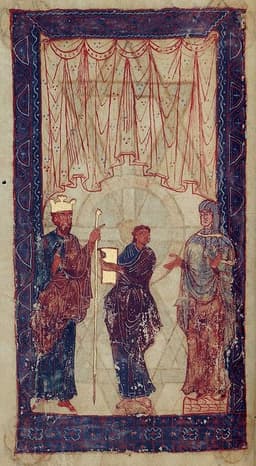
Ferdinand I of Leon
Emperor · Medieval
59.2Total
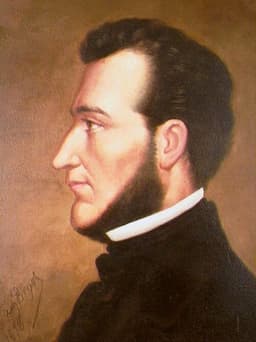
Francisco Morazan
General · Modern
58.0Total
Basic Information
Born
1015
1792
Died
1065
1842
Era
Medieval
Modern
Nationality
Leon
Honduras
Occupation
Emperor
General
Civilization
Western
Western
Score Comparison
Military (10%)
70.0
52.5
Political (20%)
68.0
60.0
Influence (20%)
56.4
62.0
Legacy (20%)
49.2
50.0
Leadership (15%)
66.0
68.0
Strategy (15%)
57.5
55.0
TOTAL
59.2
58.0
Ferdinand I of Leon — Complete Timeline
1029 AD
Inheritance of the County of CastilePolitical Action◆ Major
Ferdinand I inherited the County of Castile from his father Sancho III of Navarre. He later expanded his territory through conquest and marriage, laying the foundation for the Kingdom of Castile.
Impact: regionalconstructive
1037 AD
Conquest of LeónWar◆ Major
Ferdinand I defeated and killed King Bermudo III of Le
Impact: regional
1056 AD
First Emperor of SpainPolitical Action◆ Major
Ferdinand I was crowned 'Imperator totius Hispaniae' (Emperor of all Spain) in 1056, claiming suzerainty over all Christian and Muslim rulers in Iberia. This title reflected his military dominance and political ambition.
Impact: regional
1065 AD
Division of the kingdomPolitical Action◆ Major
Upon his death, Ferdinand I divided his kingdom among his sons: Sancho II received Castile, Alfonso VI received Le
Impact: regionaldestructive
Francisco Morazan — Complete Timeline
1824 AD
Abolition of slavery in Central AmericaReform◆ Major
As a key leader in the liberal movement, Moraz
AbolitionSlaveryLiberal Reform
Impact: regionalprogressive
1827 AD
Battle of La TrinidadWar◆ Major
Morazán led a liberal army to victory against conservative forces at La Trinidad, Honduras. This battle was a key turning point in the Central American civil war, allowing Morazán to consolidate power and eventually become president of the federation.
BattleLiberal VictoryCivil War
Impact: regional
1830 AD
Presidency of the Federal Republic of Central AmericaPolitical Action
Morazán was elected president of the Federal Republic of Central America, a union of Guatemala, El Salvador, Honduras, Nicaragua, and Costa Rica. He pursued liberal reforms including separation of church and state, free trade, and land reform, facing opposition from conservatives.
Federal RepublicLiberal ReformsCentral America
Impact: regionalconstructive
1842 AD
Execution by firing squadPolitical Action
After a failed attempt to restore the Federal Republic, Moraz
ExecutionEnd of FederationLiberal Defeat
Impact: regionaltragic
Expert Analysis
Ferdinand I of Leon vs Francisco Morazan
### The Emperor and the Reformer: Two Visions of Unity, One Tragic Fate
In the year 1056, a Christian king knelt in the ancient city of León, receiving a crown that proclaimed him "Imperator totius Hispaniae"—Emperor of all Spain. Seven centuries later, on a dusty morning in San José, Costa Rica, a general in a threadbare uniform faced a firing squad, his dream of a united Central America dying with him. Ferdinand I of León and Francisco Morazán never shared a continent, let alone a century. Yet both men were haunted by the same ghost: the impossible dream of forging a single nation from a fractured land. Why did one succeed, however briefly, while the other perished in failure? The answer lies not in their goals, but in the worlds that shaped them.
### Origins
Ferdinand I was born into a world of iron and faith. The year was 1015, and the Iberian Peninsula was a patchwork of Christian kingdoms and Moorish taifas—petty Muslim states perpetually at war with one another and themselves. His father, Sancho III of Navarre, was a master of dynastic politics who had united much of Christian Spain under his rule. Ferdinand inherited not a kingdom, but a county—Castile—in 1029, when he was just fourteen. His was a world where legitimacy came from blood, power from the sword, and unity from the will of a single ruler.
Francisco Morazán, born in 1792, inhabited a world in convulsion. The Spanish Empire was collapsing, and the former Captaincy General of Guatemala—a region stretching from Chiapas to Costa Rica—had declared independence in 1821. Unlike Ferdinand’s medieval order, Morazán’s Central America was a laboratory of Enlightenment ideals: republicanism, federalism, and the abolition of slavery. Morazán, a Honduran of modest Creole origins, was a child of the liberal revolutions sweeping the Atlantic world. His father was a merchant, not a king; his education came from books, not battlefields. Where Ferdinand inherited power, Morazán had to seize it.
### Rise to Power
Ferdinand’s ascent was swift and brutal. In 1037, at the Battle of Tamarón, he faced King Bermudo III of León, his own cousin. Ferdinand killed him, claimed his kingdom, and united León and Castile under a single crown. This was not politics as negotiation; it was politics as bloodsport, sanctioned by a Church that saw Christian unity as a divine mandate. Within two decades, Ferdinand had pushed his borders south, extracting tribute from the Moorish taifas of Toledo, Seville, and Zaragoza. His power grew not through elections, but through marriage, inheritance, and the point of a lance.
Morazán’s rise was no less dramatic, but fundamentally different. In 1827, he was a little-known liberal officer when he led a ragtag army to victory at the Battle of La Trinidad in Honduras. The battle was a turning point in a civil war between Central America’s liberal federalists and conservative centralists. Morazán’s victory propelled him into the presidency of the Federal Republic of Central America in 1830. He was thirty-eight years old—a self-made general in a republic that had no kings. His authority rested on constitutions, congresses, and the fragile consent of provinces that had never truly been a nation.
### Leadership & Governance
Ferdinand governed as a medieval emperor should: through personal authority, military might, and the careful distribution of lands and titles. He did not reform society; he expanded it. His campaigns against the Moors were not wars of ideology but of tribute and territory. He forced the taifa kings to pay him annual sums, filling his treasury without the burden of occupation. His greatest political act was his coronation as Emperor of Spain in 1056—a title that carried no administrative reality but immense symbolic weight. It asserted that all Christian Spain, from the Pyrenees to the Atlantic, owed him fealty. It was a claim that would echo for centuries.
Morazán, by contrast, tried to build a modern state. As president, he abolished slavery in 1824, promoted public education, separated church and state, and sought to create a unified legal code. His enemies were not Moorish emirs but conservative landowners and the Catholic clergy, who saw his reforms as an assault on tradition. Morazán’s vision was noble but fragile. The Federal Republic had no standing army, no national treasury, and no shared identity. Each province—Guatemala, El Salvador, Honduras, Nicaragua, Costa Rica—jealously guarded its autonomy. Morazán could win battles, but he could not win hearts.
### Triumph & Tragedy
Ferdinand’s greatest triumph was his deathbed. In 1065, after decades of conquest, he divided his kingdom among his three sons: Sancho received Castile, Alfonso received León, and García received Galicia. This was not a failure but a deliberate act, rooted in the Visigothic tradition of partible inheritance. Ferdinand believed his sons would continue his work, perhaps even reunite the realm. Instead, they fought each other for years. Yet his legacy endured: the idea of a unified Spain, crowned by an emperor, was planted. It would take centuries to bloom, but the seed was his.
Morazán’s tragedy was his final battle. In 1839, the Federal Republic collapsed into civil war. Morazán was exiled, but he could not let go. In 1842, he returned from South America to lead a desperate attempt to restore the union. He landed in Costa Rica, rallied supporters, and seized power briefly. But his army was small, his support thin. Betrayed by a former ally, he was captured and sentenced to death. On September 15, 1842—the anniversary of Central American independence—he faced the firing squad. His last words, according to legend, were: "I die with the sorrow of seeing my country in ruins, but I die content because I have done my duty."
### Character & Destiny
Ferdinand was a pragmatist who understood the limits of power. He knew that medieval kingship was personal, not institutional. He did not try to create a bureaucracy or a constitution; he conquered, married, and bequeathed. His division of the kingdom was not a mistake but a reflection of his world, where loyalty flowed to a man, not an idea. His unity was a crown, not a nation.
Morazán was a romantic who believed in the power of ideas. He thought that constitutions and reforms could bind people together, that reason could overcome tradition. But Central America was not ready for his vision. The provinces had no common language, no common economy, no common enemy. Morazán’s unity was a dream, not a reality. His character—bold, idealistic, stubborn—made him a hero but also a martyr.
### Legacy
Ferdinand I is remembered as a founder. His title of Emperor of Spain was claimed by later kings, and his conquests laid the groundwork for the Reconquista. He is a figure of medieval chronicles, a symbol of Christian unity in a divided age.
Francisco Morazán is remembered as a martyr. His face appears on Honduran currency; his name adorns streets and schools across Central America. But his dream—a united Central America—remains unrealized. The nations he tried to unite are still separate, still struggling with the same divisions he fought against.
### Conclusion
Two men, seven centuries apart, each tried to unite what history had broken. Ferdinand succeeded because he worked within the logic of his age—blood, faith, and steel. Morazán failed because he tried to impose a logic that did not yet exist—republicanism, federalism, and reason. Yet both were, in their own ways, emperors of impossible dreams. Ferdinand’s crown was a promise of what Spain would become; Morazán’s execution was a warning of what Central America could not be. The difference between triumph and tragedy is not always effort or vision. Sometimes, it is simply the age into which you are born.
Rankings
🥇
Ferdinand I of LeonLeader
Mil: 70.0Pol: 68.0Inf: 56.4
59.2
🥈
Francisco Morazan
Mil: 52.5Pol: 60.0Inf: 62.0
58.0
+1.2 behind
How This Comparison Works
Algorithm
Each figure is scored on 6 dimensions (0—100 scale) based on structured historical data: Military (10%), Political (20%), Influence (20%), Legacy (20%), Leadership (15%), Strategy (15%). The weighted total produces the final ranking.
Data Sources
Scores are computed from structured sub-indicators in the database. Scale factors adjust for era (Ancient ×0.85, Modern ×1.0) and civilization size (Eastern ×1.05, Other ×0.80) to account for differences in population and military scale.
Maximum 3 Figures
Comparisons are limited to 2—3 figures to ensure readability and statistical meaningfulness.
Error Margins
±5 points per dimension — Sub-scores are derived from historical records with inherent uncertainty. Two figures within 5 points on a dimension should be considered roughly equivalent in that area.
Total Score Accuracy
±3 points overall — The weighted combination of 6 dimensions produces a total score with approximately ±3 points of uncertainty. Differences of less than 3 points are not statistically significant— the figures are effectively tied.
Known Limitations
- Historical records are incomplete and uneven across civilizations
- Figures from oral-tradition societies may be underrepresented
- Occupation labels can misclassify multi-role figures
- Scores measure capability and impact, not moral character
- Quantitative scoring is a comparison tool, not absolute truth
Capability Radar
Military (10%) — Battles & Warfare
Battles
55
55
Win Rate
60
60
Expansion
60
40
Political (20%) — Governance & Reform
Reform
50
70
Diplomacy
55
45
Economy
45
50
Influence (20%) — Cultural & Global Reach
Cultural
40
45
Global
30
35
Legacy (20%) — Historical Impact
Historical
45
50
Longevity
40
40
Leadership (15%) — Power & Stability
Tenure
65
55
Stability
50
30
Strategy (15%) — Tactics & Innovation
Strategy
55
55
Tactics
50
50
Reform
40
45
Similar Comparisons
Comments & Discussion
El Cid's Echo6/16/2026
Ferdinand I built his "empire" on Visigothic legitimacy and Reconquista momentum, not popular will. By 1056, he'd leveraged dynastic marriages and battlefield victories against the taifas to claim hegemony. Morazán's Central American Federation had no such unifying myth—just liberal reforms that alienated the Church and local caudillos. Ferdinand ruled through medieval hierarchy; Morazán tried to govern through Enlightenment ideas. One built on tradition, the other on paper constitutions. No con
数据猎手6/16/2026
别被"统一者"的光环骗了,斐迪南一世的所谓帝国就是个封建拼盘——他死后立刻把国土分给三个儿子,这算哪门子统一?莫拉桑至少真在1835年推动了联邦宪法,统一了法律和度量衡。斐迪南的功绩不过是中世纪国王的领土扩张,拿皇帝头衔唬人。要论统一理想,莫拉桑的败亡比斐迪南的碎尸继承更有悲剧色彩。
Manus Militans6/16/2026
Military context is everything. Ferdinand I fought fragmented taifas that paid parias (tribute) after his 1057 victory at the Battle of the Côa. He never had to govern a single administrative system—just extract wealth. Morazán, by contrast, faced organized armies from Guatemala, Honduras, and Costa Rica simultaneously. His 1842 execution followed a doomed campaign to restore the federation. Ferdinand died in his bed, his realm intact for a generation. Morazán died by rifle fire, his dream alrea
古典学究6/16/2026
斐迪南一世知道罗马-西哥特传统的重量,他刻意在莱昂加冕,用"全西班牙皇帝"头衔呼应古人——这招在公元11世纪管用,因为人心还向着旧秩序。莫拉桑呢?他1830年代在洪都拉斯推行教育改革,效仿法国启蒙,但在中美洲小地主眼里,巴黎哲学不如本地神父的话有分量。斐迪南利用历史,莫拉桑对抗历史。结果?前者被铭记为奠基人,后者成了教科书上的烈士。历史不奖励理想主义。
Chronicler50186/16/2026
Here's the uncomfortable truth: Ferdinand I won because he ruled a coherent kingdom with a clear enemy (the Moors). Morazán inherited a bureaucratic fiction—the Central American Federation—where "national" identity barely existed outside San Salvador. Ferdinand could rally his knights with crusade rhetoric; Morazán's federal troops often fought for coffee planters, not a unified nation. One built on shared hatred, the other on borrowed liberalism. I know which foundation I'd bet on in a crisis.