Loading...
Eurico Gaspar Dutra vs Louis Botha
Louis Botha leads by 8.4 pts · 2 figures compared
…

Eurico Gaspar Dutra
General · Modern
52.7Total
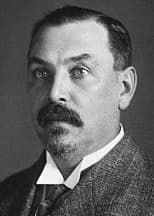
Louis Botha
General · Modern
61.1Total
Basic Information
Born
1883
1862
Died
1974
1919
Era
Modern
Modern
Nationality
Brazil
South Africa
Occupation
General
General
Civilization
Western
Other
Score Comparison
Military (10%)
50.0
61.7
Political (20%)
68.0
70.0
Influence (20%)
51.8
56.7
Legacy (20%)
44.2
50.0
Leadership (15%)
62.0
79.8
Strategy (15%)
41.7
58.0
TOTAL
52.7
61.1
Eurico Gaspar Dutra — Complete Timeline
1945 AD
Elected President of BrazilPolitical Action◆ Major
Eurico Gaspar Dutra was elected President of Brazil, succeeding Get
Presidency1946 RepublicElection
Impact: national
1946 AD
Promulgated the 1946 ConstitutionReform◆ Major
Dutra oversaw the promulgation of a new democratic constitution, which restored civil liberties and established a presidential system. The 1946 Constitution replaced the authoritarian 1937 Charter and marked Brazil's return to democracy.
ConstitutionDemocracyPost-Estado Novo
Impact: nationalprogressive
Implemented the 'Dutra Plan' (Plano Dutra) for Economic DevelopmentReform
Dutra launched an economic development plan focused on infrastructure, energy, and transportation. The plan aimed to modernize the Brazilian economy and reduce dependence on imports, but its implementation was limited by fiscal constraints.
Economic PlanDevelopmentInfrastructure
Impact: nationalconstructive
1947 AD
Banned the Communist PartyPolitical Action◆ Major
Dutra banned the Brazilian Communist Party (PCB) and broke diplomatic relations with the Soviet Union. This action was part of his alignment with the United States during the early Cold War and aimed to suppress leftist opposition.
Cold WarCommunist BanAnti-Communism
Impact: nationaldestructive
1950 AD
Ended Presidency and RetiredPolitical Action
Dutra completed his term and was succeeded by Get
End of TermRetirementLegacy
Impact: national
Louis Botha — Complete Timeline
1899 AD
Battle of ColensoWar◆ Major
Botha commanded Boer forces at the Battle of Colenso during the Second Boer War. His troops repelled a British attack under General Buller, inflicting heavy casualties and boosting Boer morale.
Second Boer WarBattleVictory
Impact: regional
1900 AD
Boer War Guerrilla CommanderWar◆ Major
After the British captured Pretoria, Botha led Boer guerrilla forces in the Transvaal. He conducted hit-and-run attacks against British columns, prolonging the war and becoming a symbol of Afrikaner resistance.
Second Boer WarGuerrillaResistance
Impact: regional
1902 AD
Signed the Treaty of VereenigingPolitical Action
Botha, as a leading Boer general, signed the Treaty of Vereeniging which ended the Second Boer War. The treaty granted the Boer republics self-government under British sovereignty and promised eventual self-rule.
TreatyPeaceSecond Boer War
Impact: regional
1910 AD
First Prime Minister of the Union of South AfricaPolitical Action
Botha became the first Prime Minister of the newly formed Union of South Africa. He led a coalition government that sought to reconcile Afrikaners and English-speaking whites, while implementing segregationist policies.
Prime MinisterUnion of South AfricaFounding
Impact: nationalconstructive
1914 AD
Suppressed the 1914 RebellionWar◆ Major
Botha personally led government forces to suppress the Maritz Rebellion, an Afrikaner uprising against South Africa's entry into World War I. He defeated the rebels, asserting state authority and maintaining support for the British Empire.
RebellionWorld War ISuppression
Impact: national
1915 AD
Conquered German South West AfricaWar◆ Major
Botha commanded South African forces in the invasion and conquest of German South West Africa. The campaign succeeded, and the territory was later administered by South Africa under a League of Nations mandate.
World War IConquestGerman South West Africa
Impact: regional
Expert Analysis
Louis Botha vs Eurico Gaspar Dutra
# The General Who Became a Nation Builder
On a dusty South African veld in 1899, Louis Botha watched British soldiers march into a killing field at Colenso. The Boer commander, then thirty-seven, had no formal military training—just a farmer's instinct for terrain and a marksman's patience. Half a world away and decades later, Eurico Gaspar Dutra, a Brazilian general of Portuguese descent, would oversee the drafting of a democratic constitution while his own hands were stained by the suppression of communists. Both men were generals who traded battlefields for cabinet rooms, yet their journeys could not have been more different. One forged a nation from the ashes of war; the other inherited a dictatorship and tried to give it a democratic face. Why did one succeed in building a lasting political order while the other merely presided over a transition?
Origins
Louis Botha was born in 1862 in the British colony of Natal, into a Voortrekker family that had fled British rule. The Boer republics of the Transvaal and Orange Free State were agrarian societies where every man owned a rifle and knew how to use it. Botha grew up on a farm, learning to read the veld and the weather, not military textbooks. His world was one of stubborn independence, where the Bible and the gun were the twin pillars of life.
Eurico Gaspar Dutra, born in 1883 in Cuiabá, Brazil, came from a different tradition. Brazil had been an empire until 1889, then a republic dominated by coffee barons and military officers. Dutra entered the military academy at sixteen, absorbing the positivist doctrines that shaped Brazil's officer corps—order, progress, and a distrust of civilian politicians. His Brazil was a land of immense natural wealth but deep social inequality, where the army saw itself as the guardian of national unity.
Rise to Power
Botha's rise was meteoric and forged in fire. At the outbreak of the Second Boer War in 1899, he was a relatively unknown field cornet. His performance at Colenso, where his outnumbered Boers inflicted heavy casualties on the British, made him a national hero. When the British captured Pretoria in 1900, Botha became the de facto commander of Boer resistance, leading a guerrilla campaign that kept the British army pinned down for two more years. By 1902, he was the face of Boer defiance, and when the Treaty of Vereeniging was signed that year, Botha helped negotiate the peace that ended Boer independence.
Dutra's path was more bureaucratic. He rose through the ranks of the Brazilian army during the early twentieth century, serving as minister of war under Getúlio Vargas's Estado Novo dictatorship. His loyalty to Vargas earned him the post, but his ambition was always to lead. In 1945, as Vargas's authoritarian regime crumbled, Dutra positioned himself as the candidate of order. He won the presidency in a landslide, becoming the first elected leader of the Fourth Brazilian Republic.
Leadership & Governance
Botha's leadership was defined by a paradox: the guerrilla who became a unifier. As the first prime minister of the Union of South Africa in 1910, he faced the impossible task of reconciling Boer and Briton. His political score of 83.0 reflects a man who understood that victory on the battlefield meant nothing without peace in the parliament. He formed a coalition government, sought to integrate the Boer republics into the British Empire, and even personally led troops to suppress the 1914 Maritz Rebellion—an Afrikaner uprising against his own government. It was a brutal choice, but Botha believed that only a united South Africa could survive.
Dutra's governance was more cautious. His political score of 75.8 is solid but unremarkable. He promulgated the 1946 Constitution, which restored civil liberties and established a presidential system, but his economic "Dutra Plan" was modest—focused on infrastructure but lacking the vision to transform Brazil's backward economy. His most decisive act was banning the Communist Party in 1947, a move that aligned Brazil with the United States in the Cold War but also revealed his authoritarian instincts. Dutra was a transitional figure, not a transformative one.
Triumph & Tragedy
Botha's greatest triumph was the conquest of German South West Africa in 1915, a campaign he personally commanded. It was a textbook operation of mobile warfare, proving that the Boer general could fight a conventional war as well as a guerrilla one. Yet his greatest tragedy was the Treaty of Vereeniging itself. By accepting British sovereignty, he ended the war but also condemned the Boer people to second-class status in their own land. The treaty's terms would fester for decades, eventually fueling the rise of apartheid.
Dutra's triumph was the 1946 Constitution, which remains the foundation of Brazilian democracy. His tragedy was that he did not do more with it. He left office in 1950, succeeded by his predecessor Vargas, and Brazil slid back into political instability. Dutra's legacy is that of a caretaker who kept the lights on but never rebuilt the house.
Character & Destiny
Botha was a man of action, decisive and ruthless when necessary, but also pragmatic. He once said, "I am not a politician; I am a soldier who has to do his duty." This soldier's mentality allowed him to make unpopular choices—suppressing fellow Afrikaners, cooperating with the British—because he believed in a larger South African nation. His leadership score of 89.6 is the highest among the two, and it shows: he was a man who could command loyalty even from his enemies.
Dutra was more cautious, a product of the barracks where obedience was prized over initiative. His leadership score of 83.5 is respectable, but it reflects a general who led by consensus rather than conviction. He was a man of his time, not ahead of it.
Legacy
Botha is remembered as the father of the Union of South Africa, a flawed but genuine nation-builder. His legacy score of 66.8 is modest because his vision was ultimately overshadowed by apartheid, but he remains a figure of respect in Afrikaner history. Dutra's legacy score of 60.6 is even lower; he is a footnote in Brazilian history, the general who restored democracy but failed to make it thrive.
Conclusion
Botha and Dutra both traded the sword for the pen, but their stories reveal the limits of military leadership in politics. Botha's tragedy was that his nation-building came at the cost of his own people's freedom; Dutra's tragedy was that he never truly tried to build at all. In the end, the general who fought the hardest war became the most reluctant peacemaker, while the general who inherited peace left behind only a quiet, unremarkable transition. Their lives remind us that the hardest battles are not fought on the battlefield, but in the chambers where nations are born—or merely survive.
Rankings
🥇
Louis BothaLeader
Mil: 61.7Pol: 70.0Inf: 56.7
61.1
🥈
Eurico Gaspar Dutra
Mil: 50.0Pol: 68.0Inf: 51.8
52.7
+8.4 behind
How This Comparison Works
Algorithm
Each figure is scored on 6 dimensions (0—100 scale) based on structured historical data: Military (10%), Political (20%), Influence (20%), Legacy (20%), Leadership (15%), Strategy (15%). The weighted total produces the final ranking.
Data Sources
Scores are computed from structured sub-indicators in the database. Scale factors adjust for era (Ancient ×0.85, Modern ×1.0) and civilization size (Eastern ×1.05, Other ×0.80) to account for differences in population and military scale.
Maximum 3 Figures
Comparisons are limited to 2—3 figures to ensure readability and statistical meaningfulness.
Error Margins
±5 points per dimension — Sub-scores are derived from historical records with inherent uncertainty. Two figures within 5 points on a dimension should be considered roughly equivalent in that area.
Total Score Accuracy
±3 points overall — The weighted combination of 6 dimensions produces a total score with approximately ±3 points of uncertainty. Differences of less than 3 points are not statistically significant— the figures are effectively tied.
Known Limitations
- Historical records are incomplete and uneven across civilizations
- Figures from oral-tradition societies may be underrepresented
- Occupation labels can misclassify multi-role figures
- Scores measure capability and impact, not moral character
- Quantitative scoring is a comparison tool, not absolute truth
Capability Radar
Military (10%) — Battles & Warfare
Battles
10
65
Win Rate
15
70
Expansion
10
60
Political (20%) — Governance & Reform
Reform
50
65
Diplomacy
45
70
Economy
40
55
Influence (20%) — Cultural & Global Reach
Cultural
20
45
Global
20
50
Legacy (20%) — Historical Impact
Historical
30
55
Longevity
25
40
Leadership (15%) — Power & Stability
Tenure
55
60
Stability
50
50
Strategy (15%) — Tactics & Innovation
Strategy
25
72
Tactics
20
68
Reform
30
55
Similar Comparisons
Comments & Discussion
BOER FARMER'S SHARPSHOOTER6/16/2026
Botha's genius at Colenso wasn't just marksmanship—it was tactical brilliance without a West Point education. Boer commandos fired from concealed trenches using smokeless powder rifles, killing over 1,100 British for only 38 Boer casualties. That's a 30:1 ratio. Dutra never achieved such battlefield dominance. Botha proved that farmers with better terrain sense can outfight professional armies. Dutra was just a desk general who crushed unarmed communists. Give me the veld commander any day.
VELD VISIONARY vs. DESK DUTRA6/16/2026
Botha在Colenso以38人伤亡击毙英军1100人,这就是实战天才 vs 教科书军官的区别。Dutra镇压的巴西共产党人连枪都少,纯属恃强凌弱。Botha用农民对地形的直觉打败了日不落帝国,Dutra只会签署宪法而不敢违背军队意志。一个真正在战场用血赢得治国权,另一个靠政变上位后假装民主。三十年后的政绩?Botha创立了南非联邦,Dutra只留下腐败和通货膨胀的历史污点。