Loading...
Eurico Gaspar Dutra vs Francisco Morazan
Francisco Morazan leads by 5.3 pts · 2 figures compared
…

Eurico Gaspar Dutra
General · Modern
52.7Total
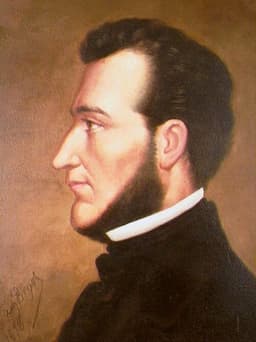
Francisco Morazan
General · Modern
58.0Total
Basic Information
Born
1883
1792
Died
1974
1842
Era
Modern
Modern
Nationality
Brazil
Honduras
Occupation
General
General
Civilization
Western
Western
Score Comparison
Military (10%)
50.0
52.5
Political (20%)
68.0
60.0
Influence (20%)
51.8
62.0
Legacy (20%)
44.2
50.0
Leadership (15%)
62.0
68.0
Strategy (15%)
41.7
55.0
TOTAL
52.7
58.0
Eurico Gaspar Dutra — Complete Timeline
1945 AD
Elected President of BrazilPolitical Action◆ Major
Eurico Gaspar Dutra was elected President of Brazil, succeeding Get
Presidency1946 RepublicElection
Impact: national
1946 AD
Promulgated the 1946 ConstitutionReform◆ Major
Dutra oversaw the promulgation of a new democratic constitution, which restored civil liberties and established a presidential system. The 1946 Constitution replaced the authoritarian 1937 Charter and marked Brazil's return to democracy.
ConstitutionDemocracyPost-Estado Novo
Impact: nationalprogressive
Implemented the 'Dutra Plan' (Plano Dutra) for Economic DevelopmentReform
Dutra launched an economic development plan focused on infrastructure, energy, and transportation. The plan aimed to modernize the Brazilian economy and reduce dependence on imports, but its implementation was limited by fiscal constraints.
Economic PlanDevelopmentInfrastructure
Impact: nationalconstructive
1947 AD
Banned the Communist PartyPolitical Action◆ Major
Dutra banned the Brazilian Communist Party (PCB) and broke diplomatic relations with the Soviet Union. This action was part of his alignment with the United States during the early Cold War and aimed to suppress leftist opposition.
Cold WarCommunist BanAnti-Communism
Impact: nationaldestructive
1950 AD
Ended Presidency and RetiredPolitical Action
Dutra completed his term and was succeeded by Get
End of TermRetirementLegacy
Impact: national
Francisco Morazan — Complete Timeline
1824 AD
Abolition of slavery in Central AmericaReform◆ Major
As a key leader in the liberal movement, Moraz
AbolitionSlaveryLiberal Reform
Impact: regionalprogressive
1827 AD
Battle of La TrinidadWar◆ Major
Morazán led a liberal army to victory against conservative forces at La Trinidad, Honduras. This battle was a key turning point in the Central American civil war, allowing Morazán to consolidate power and eventually become president of the federation.
BattleLiberal VictoryCivil War
Impact: regional
1830 AD
Presidency of the Federal Republic of Central AmericaPolitical Action
Morazán was elected president of the Federal Republic of Central America, a union of Guatemala, El Salvador, Honduras, Nicaragua, and Costa Rica. He pursued liberal reforms including separation of church and state, free trade, and land reform, facing opposition from conservatives.
Federal RepublicLiberal ReformsCentral America
Impact: regionalconstructive
1842 AD
Execution by firing squadPolitical Action
After a failed attempt to restore the Federal Republic, Moraz
ExecutionEnd of FederationLiberal Defeat
Impact: regionaltragic
Expert Analysis
Francisco Morazan vs Eurico Gaspar Dutra
# The General as Reformer: Two Paths from the Battlefield to the Capitol
On a humid morning in September 1842, Francisco Morazán stood before a firing squad in San José, Costa Rica, his last words reportedly a plea for unity that would go unheeded for generations. Just over a century later, in January 1946, Eurico Gaspar Dutra took the oath of office in Rio de Janeiro, assuming the presidency of a Brazil emerging from dictatorship into democracy. Both men were generals. Both sought to reshape their nations through reform. One ended before a wall of rifles; the other died in his bed at ninety-one, a respected elder statesman. The difference between their fates is not merely a matter of luck, but of circumstance, strategy, and the very nature of the worlds they tried to change.
Origins
Francisco Morazán was born in 1792 in Tegucigalpa, Honduras, into the twilight of Spanish colonial rule. His family was of modest means—his father a merchant of Corsican descent, his mother a Creole woman of local standing. The air of Central America in his youth was thick with the ferment of Enlightenment ideas, smuggled books, and the distant roar of revolutions in North America and France. Morazán absorbed these currents like a sponge, becoming a self-taught lawyer and a passionate believer in liberalism: free trade, secular education, the abolition of slavery, and a unified Central American republic. His world was small, fractured, and volatile, a patchwork of provinces ripe for either union or disintegration.
Eurico Gaspar Dutra, born in 1883 in Cuiabá, Brazil, came of age in a very different nation. Brazil was an empire until 1889, then a republic—but always a massive, continental power with a coherent identity. Dutra’s family were ranchers and military men; his path was the army academy, not the smuggled pamphlet. He rose through the ranks during a period when the Brazilian military increasingly saw itself as the arbiter of national order. By the 1930s, he had become a key figure in Getúlio Vargas’s Estado Novo dictatorship, serving as Minister of War. Where Morazán was a revolutionary intellectual in uniform, Dutra was an institutional man, a general who believed in hierarchy, discipline, and the state as the engine of progress.
Rise to Power
Morazán’s rise was forged in civil war. In 1827, at the Battle of La Trinidad in Honduras, he led a small liberal army to a stunning victory over conservative forces. The battle was not large by global standards—a few thousand men—but its consequences were immense. It made Morazán the military champion of the liberal faction in Central America, and by 1830, at age thirty-eight, he was elected president of the Federal Republic of Central America. His power rested on the sword and on the fragile consensus of provincial elites who shared his vision of a modern, unified nation. But that consensus was always brittle, and his enemies—conservative landowners, the Catholic Church, regional caudillos—never stopped plotting.
Dutra’s ascent was quieter, more bureaucratic. He did not win a famous battle; he won the trust of Getúlio Vargas. When Vargas was overthrown in 1945, the military high command, including Dutra, orchestrated a transition to democracy. Dutra ran for president as the candidate of the Social Democratic Party, a coalition of former Vargas allies and conservative interests. He won easily, not because he was a charismatic reformer, but because he was a safe pair of hands. Brazil’s path to power was through the institution, not the insurrection.
Leadership & Governance
Morazán governed as he fought: with audacity and a sweeping vision. He abolished slavery in 1824, even before the Federal Republic was fully consolidated. He promoted public education, curtailed church privileges, and attempted to create a unified legal code for Central America. His military score of 65.4 reflects a capable commander, but his political score of 72.0 and leadership score of 76.7 reveal a man who understood that reform required both force and persuasion. Yet his governance was perpetually unstable. He spent much of his presidency suppressing uprisings, and his reforms alienated the very elites whose cooperation he needed to sustain the union.
Dutra governed with a different calculus. His 1946 Constitution restored civil liberties and established a democratic framework, but it was a conservative document that preserved the power of landowners and the military. His economic “Plano Dutra” focused on infrastructure and energy, but it was cautious, state-directed, and avoided the radical redistribution that Morazán might have attempted. His most controversial act—banning the Communist Party in 1947 and breaking relations with the Soviet Union—was a Cold War move that pleased the United States and Brazil’s conservative establishment. Dutra’s political score of 75.8 and leadership score of 83.5 reflect a man who knew how to navigate institutions, not how to shatter them.
Triumph & Tragedy
Morazán’s greatest moment was the abolition of slavery—a moral triumph that placed him ahead of most of the Americas. But his greatest failure was the collapse of the Federal Republic. By 1838, the union had dissolved into warring states, and Morazán was driven into exile. He returned in 1842, attempting to restore the federation by invading Costa Rica. It was a desperate gamble, and it failed. Captured, he was executed by firing squad at age forty-nine. His tragedy was not that he lacked vision, but that his vision exceeded the capacity of his fractured world to sustain it.
Dutra’s triumph was more modest but more durable. He presided over the peaceful transition from dictatorship to democracy, a feat that many Latin American nations failed to achieve in the twentieth century. His tragedy, if it can be called that, was the ban on the Communist Party—a repressive act that stained his democratic credentials. Yet he completed his term, handed power back to Vargas in a free election, and retired to a life of quiet respect. He died in 1974, at age ninety-one, having outlived nearly all his contemporaries.
Character & Destiny
Morazán was a man of principle, but principle without pragmatism can become a kind of blindness. He believed that Central America could be united by force of will and liberal ideas, but he underestimated the power of local loyalties, conservative resistance, and the sheer difficulty of governing a region with no tradition of central authority. His personality was magnetic, his courage undeniable, but his strategic score of 55.6 suggests a man who was better at winning battles than at building the political coalitions necessary to sustain peace.
Dutra was the opposite: pragmatic, cautious, and deeply aware of limits. He was not a visionary; he was a manager. His military score of 43.8 is low, but that is almost irrelevant—he never needed to be a great general. What he needed was the patience to let democracy take root slowly, and the wisdom to know when to act and when to wait. His character was suited to his era: a time when Brazil needed stability, not revolution.
Legacy
Morazán is remembered as a martyr of Central American unity, a figure whose name adorns streets, schools, and currency across Honduras, El Salvador, and Guatemala. His legacy score of 68.9 reflects a man who inspired more than he achieved. He is the patron saint of a dream that never died but never fully lived.
Dutra’s legacy is quieter. His score of 60.6 is lower, but his impact was arguably more concrete: he helped establish Brazil’s postwar democracy, which, despite its flaws, endured for nearly two decades. He is remembered, if at all, as a transitional figure, the general who gave way to civilians.
Conclusion
The difference between Morazán and Dutra is not a matter of courage or intelligence, but of context and temperament. Morazán tried to build a new world from the ruins of an old one, and the ruins crushed him. Dutra tried to preserve a world that was already standing, and he succeeded. One died for a dream; the other lived for a system. Both were generals who became reformers, but they faced different enemies—Morazán fought the past, Dutra managed the present. In the end, history remembers the dreamer more vividly, but it is the manager who often builds the roads and writes the constitutions that the dreamer imagines.
Rankings
🥇
Francisco MorazanLeader
Mil: 52.5Pol: 60.0Inf: 62.0
58.0
🥈
Eurico Gaspar Dutra
Mil: 50.0Pol: 68.0Inf: 51.8
52.7
+5.3 behind
How This Comparison Works
Algorithm
Each figure is scored on 6 dimensions (0—100 scale) based on structured historical data: Military (10%), Political (20%), Influence (20%), Legacy (20%), Leadership (15%), Strategy (15%). The weighted total produces the final ranking.
Data Sources
Scores are computed from structured sub-indicators in the database. Scale factors adjust for era (Ancient ×0.85, Modern ×1.0) and civilization size (Eastern ×1.05, Other ×0.80) to account for differences in population and military scale.
Maximum 3 Figures
Comparisons are limited to 2—3 figures to ensure readability and statistical meaningfulness.
Error Margins
±5 points per dimension — Sub-scores are derived from historical records with inherent uncertainty. Two figures within 5 points on a dimension should be considered roughly equivalent in that area.
Total Score Accuracy
±3 points overall — The weighted combination of 6 dimensions produces a total score with approximately ±3 points of uncertainty. Differences of less than 3 points are not statistically significant— the figures are effectively tied.
Known Limitations
- Historical records are incomplete and uneven across civilizations
- Figures from oral-tradition societies may be underrepresented
- Occupation labels can misclassify multi-role figures
- Scores measure capability and impact, not moral character
- Quantitative scoring is a comparison tool, not absolute truth
Capability Radar
Military (10%) — Battles & Warfare
Battles
10
55
Win Rate
15
60
Expansion
10
40
Political (20%) — Governance & Reform
Reform
50
70
Diplomacy
45
45
Economy
40
50
Influence (20%) — Cultural & Global Reach
Cultural
20
45
Global
20
35
Legacy (20%) — Historical Impact
Historical
30
50
Longevity
25
40
Leadership (15%) — Power & Stability
Tenure
55
55
Stability
50
30
Strategy (15%) — Tactics & Innovation
Strategy
25
55
Tactics
20
50
Reform
30
45
Similar Comparisons
Comments & Discussion
FiringSquadHistorian6/16/2026
Morazán’s fatal flaw wasn’t his liberal zeal—it was his military inability to read the political terrain. He won battles but lost the war for legitimacy because he never cultivated a loyal officer corps or civilian base outside his inner circle. Dutra, by contrast, understood that post-war Brazil needed quiet consolidation, not radical upheaval. Morazán died abandoned by his troops; Dutra died a statesman because he knew when to holster the sword.
怀疑数据6/16/2026
历史把两人硬拉来比,但数据根本不支持这种“将军变改革家”的叙事。Morazán统治中美洲联邦时GDP跌得比雨林里的泥石流还快,联邦十年就散架。Dutra的巴西年增长7%,通胀压到个位数——这不是改革家对决,这是成功外交和失败理想的差距。别拿情怀当事实。
ClassicsConvert6/16/2026
Reading the speeches of both men is like comparing Cicero to a provincial magistrate. Morazán’s final address to the Central American Congress crackles with the rhetoric of a true republican—compromises, legalities, the defense of federative liberty. Dutra’s policy statements are bland technocratic laundry lists. Yet one ended up dead at forty-nine, the other lived to collect pensions until ninety-one. Coincidence? The moral: in politics, elegance of thought is poison; efficiency of administrati
历史书虫6/16/2026
别看Dutra当过兵,他那“改革”顶多是把瓦加斯的旧衣服翻新穿。工业化和修路?那是二战余波逼出来的。Morazán呢?他在1830年代就敢废除奴隶制、推行公共教育、搞土地改革——比巴西早一百年!死在枪口下不是因为他错,是因为对手太狠。Dutra的成功就是平庸的胜利,Morazán的失败是理想的刺伤。
RevisionistGun6/16/2026
The canonical narrative paints Morazán as a martyr for Central American unity and Dutra as a pragmatic democrat. Nonsense. Morazán was a centralizing autocrat who crushed provincial autonomy with brutal military campaigns—sound familiar? Dutra was simply lucky enough to preside over a boom cycle and a compliant congress. Both were authoritarian reformers. The only real difference? One lost his wars, the other won his peacetime bureaucracy. History’s verdict is just inertia, not justice.