Loading...
Emperor Yang of Sui vs Yuwen Yong
Yuwen Yong leads by 7.1 pts · 2 figures compared
…
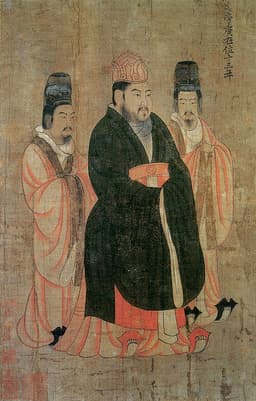
Emperor Yang of Sui
Emperor · Medieval
60.1Total
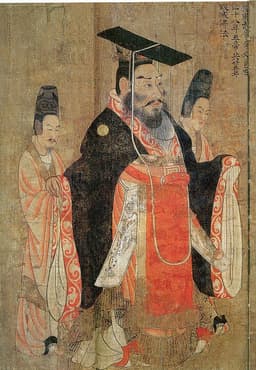
Yuwen Yong
Emperor · Medieval
67.2Total
Basic Information
Born
569
543
Died
618
578
Era
Medieval
Medieval
Nationality
China
China
Occupation
Emperor
Emperor
Civilization
Eastern
Eastern
Score Comparison
Military (10%)
52.5
78.0
Political (20%)
45.0
78.0
Influence (20%)
65.0
58.0
Legacy (20%)
72.0
54.0
Leadership (15%)
58.8
85.0
Strategy (15%)
50.0
69.1
TOTAL
60.1
67.2
Emperor Yang of Sui — Complete Timeline
605 AD
Construction of the Grand CanalCultural
Emperor Yang ordered the construction of the Grand Canal, linking the Yellow River and Yangtze River basins. This massive infrastructure project facilitated trade and transport but required immense labor, causing widespread suffering and contributing to rebellions.
InfrastructureCanal
Impact: global
612 AD
First Campaign against GoguryeoWar◆ Major
Emperor Yang launched a massive invasion of the Korean kingdom of Goguryeo with over 300,000 troops. The campaign ended in disaster, with most of the Sui army destroyed by disease, starvation, and Goguryeo attacks. This defeat severely weakened the Sui dynasty.
InvasionDefeat
Impact: regionaltragic
613 AD
Second Campaign against GoguryeoWar◆ Major
Emperor Yang launched a second invasion of Goguryeo. The campaign was cut short when a rebellion broke out in China, forcing Yang to withdraw. This further drained the dynasty's resources and morale.
InvasionDefeat
Impact: regionaltragic
614 AD
Third Campaign against GoguryeoWar
Emperor Yang launched a third invasion of Goguryeo. Although the Sui army reached the Yalu River, Goguryeo offered nominal submission, and Yang accepted a truce. This campaign further exhausted the Sui treasury and military.
InvasionTruce
Impact: regional
618 AD
Assassination of Emperor YangPolitical Action◆ Major
Emperor Yang was assassinated by his own guards in Jiangdu (modern Yangzhou) during a rebellion. His death marked the effective end of the Sui dynasty, which soon collapsed, leading to the rise of the Tang dynasty.
AssassinationDynasty Collapse
Impact: regionaltragic
Yuwen Yong — Complete Timeline
574 AD
Suppression of Buddhism in Northern ZhouReform◆ Major
Emperor Wu of Northern Zhou (Yuwen Yong) ordered the suppression of Buddhism, confiscating monastic lands, forcing monks and nuns to return to lay life, and destroying temples. He aimed to increase state revenue and military manpower, strengthening the state.
Northern ZhouBuddhist PersecutionReform
Impact: nationaldestructive
577 AD
Conquest of Northern QiWar
Emperor Wu led a successful campaign against the rival Northern Qi dynasty, conquering its territory and unifying northern China under Northern Zhou. This victory ended the division of the north and set the stage for the Sui dynasty's unification of all China.
Northern ZhouUnificationNorthern Qi
Impact: regionalconstructive
578 AD
Death during campaign against the TurksWar◆ Major
Emperor Wu died of illness while leading a campaign against the G
Northern ZhouMilitary CampaignDeath
Impact: regionaltragic
Expert Analysis
Yuwen Yong vs Emperor Yang of Sui
### The Builder and the Destroyer: Two Paths to Power in Medieval China
In the sweltering summer of 618, a desperate emperor watched his own guards turn their swords on him. Emperor Yang of Sui, the man who had ordered the digging of a canal that would span half a continent, died in a palace coup, his grand dreams drowned in the blood of his own bodyguard. Just forty years earlier, another emperor—Yuwen Yong of Northern Zhou—had died in his tent while campaigning against the Turks, his conquests unfinished but his realm intact. Both men ruled during China’s tumultuous medieval period, both sought to unify a fractured land, yet one left a canal that still functions and a dynasty that collapsed within a generation, while the other left a unified north and a legacy of pragmatic power. Why did their fates diverge so sharply?
### Origins
Emperor Yang of Sui, born in 569, was the second son of Emperor Wen, the founder of the Sui dynasty. He grew up in a world of courtly intrigue, where his older brother was the designated heir. Yang was ambitious, cultured, and ruthless—he orchestrated his brother’s downfall to secure the throne. His upbringing was steeped in the Confucian ideals of a unified empire, but also in the brutal reality that power was taken, not given. He was a man of grand visions, but his vision was always larger than his grasp.
Yuwen Yong, born in 543, came from a warrior clan that had seized power during the chaotic Northern Dynasties period. His father was a general, and Yuwen Yong himself was raised in a military camp, learning strategy and command before he could read. When he became emperor of Northern Zhou in 560, he inherited a state that was still consolidating after decades of civil war. His world was one of survival, not splendor. He knew that a ruler’s first duty was to keep his army loyal and his treasury full.
### Rise to Power
Yang’s path to the throne was a masterclass in political maneuvering. He cultivated the favor of his father’s ministers, spread rumors about his brother, and waited for the right moment. In 604, after his father’s suspicious death, Yang seized power. He immediately began to remake the empire in his image: moving the capital to Luoyang, ordering the construction of the Grand Canal, and launching ambitious public works.
Yuwen Yong’s rise was more direct. He became emperor at 17, but real power lay with his cousin, Yuwen Hu, a regent who had murdered two previous emperors. For twelve years, Yuwen Yong played the role of a weak, pleasure-loving ruler, lulling his cousin into complacency. Then, in 572, he struck. In a single, swift coup, he killed Yuwen Hu and his entire faction. It was a lesson in patience and cold efficiency that would define his reign.
### Leadership & Governance
Emperor Yang governed through grandiosity. The Grand Canal, begun in 605, was a staggering feat of engineering that linked the Yellow and Yangtze rivers, moving grain and troops across the empire. But it cost hundreds of thousands of lives, and the conscripted laborers who died in the marshes were never forgotten. Yang also rebuilt the Great Wall and expanded the palace complex at Luoyang—each project a monument to his ambition, each one draining the treasury and the people’s goodwill.
Yuwen Yong governed through calculation. In 574, he ordered the suppression of Buddhism, a radical move that shocked the pious. He confiscated monastic lands, forced monks and nuns back into lay life, and seized their wealth for the state. It was not religious hatred but political necessity: the Buddhist monasteries had become vast, tax-exempt landowners, draining the state’s revenue. Yuwen Yong’s reforms were unpopular but effective. He used the money to build a professional army and stockpile grain.
On the battlefield, the contrast is even starker. Yang launched three massive campaigns against the Korean kingdom of Goguryeo—in 612, 613, and 614. The first campaign, with over 300,000 troops, ended in disaster when the Sui army was ambushed and annihilated. The second was cut short by a rebellion at home. The third achieved little more than a nominal surrender. Yang’s strategy was brute force, and it failed.
Yuwen Yong, by contrast, was a master of timing. In 577, he led a campaign against the rival Northern Qi dynasty. He did not rush. He spent years building alliances, stockpiling resources, and waiting for his enemy to weaken. When he finally struck, his army moved like a blade: swift, precise, and devastating. He conquered Northern Qi in a single, decisive campaign, unifying northern China under his rule. His strategy score of 81.8 reflects a mind that understood war as a chess game, not a sledgehammer.
### Triumph & Tragedy
Yang’s greatest triumph was the Grand Canal, a waterway that would connect China for centuries. His greatest tragedy was that he could not stop. He pushed his people too hard, too fast. By 613, rebellions were breaking out across the empire. In 618, his own guards, tired of his endless wars and endless demands, killed him in Jiangdu. The Sui dynasty died with him.
Yuwen Yong’s triumph was the conquest of Northern Qi, a feat that brought stability to a fractured land. His tragedy was his death, in 578, at the age of 35, while campaigning against the Göktürks. He died of illness, not battle, and with him died the chance to push further south. His dynasty, Northern Zhou, would be overthrown within three years by his own general, Yang Jian—who would go on to found the Sui dynasty and become the father of Emperor Yang.
### Character & Destiny
Emperor Yang was a man of grand ideas who lacked the patience to execute them. He was a builder, but he built on the backs of a people he never understood. Yuwen Yong was a man of cold calculation who knew that power required restraint. He was a destroyer—of Buddhism, of rival states, of his own cousin—but he destroyed only what needed to be destroyed.
Their personalities shaped their fates. Yang’s arrogance led him to believe he could command the world into submission. Yuwen Yong’s pragmatism taught him that a ruler must sometimes bend. Yang’s total score of 68.0 reflects a life of ambition without wisdom. Yuwen Yong’s score of 74.0 reflects a life of discipline without excess.
### Legacy
Emperor Yang is remembered as a tyrant who bankrupted his empire. But the Grand Canal, the great waterway he ordered built, would become the economic spine of China for over a thousand years. His failure was not in his vision, but in his execution. Yuwen Yong is remembered as a reformer who unified the north and weakened the Buddhist monasteries, but his legacy was cut short by his early death. His conquests paved the way for the Sui and Tang dynasties, but he himself was forgotten by all but historians.
### Conclusion
Standing on the banks of the Grand Canal today, one can see the ghost of Emperor Yang, a man who dreamed of a unified China but could not bear the weight of his own ambition. And in the ruins of the Northern Zhou palaces, one can sense Yuwen Yong, the emperor who knew that the hardest part of power is knowing when to stop. Both men sought to shape their world. One built a canal that still flows. The other built a state that did not last. Their stories remind us that history is not written by those who dream the largest, but by those who understand the limits of their own power.
Rankings
🥇
Yuwen YongLeader
Mil: 78.0Pol: 78.0Inf: 58.0
67.2
🥈
Emperor Yang of Sui
Mil: 52.5Pol: 45.0Inf: 65.0
60.1
+7.1 behind
How This Comparison Works
Algorithm
Each figure is scored on 6 dimensions (0—100 scale) based on structured historical data: Military (10%), Political (20%), Influence (20%), Legacy (20%), Leadership (15%), Strategy (15%). The weighted total produces the final ranking.
Data Sources
Scores are computed from structured sub-indicators in the database. Scale factors adjust for era (Ancient ×0.85, Modern ×1.0) and civilization size (Eastern ×1.05, Other ×0.80) to account for differences in population and military scale.
Maximum 3 Figures
Comparisons are limited to 2—3 figures to ensure readability and statistical meaningfulness.
Error Margins
±5 points per dimension — Sub-scores are derived from historical records with inherent uncertainty. Two figures within 5 points on a dimension should be considered roughly equivalent in that area.
Total Score Accuracy
±3 points overall — The weighted combination of 6 dimensions produces a total score with approximately ±3 points of uncertainty. Differences of less than 3 points are not statistically significant— the figures are effectively tied.
Known Limitations
- Historical records are incomplete and uneven across civilizations
- Figures from oral-tradition societies may be underrepresented
- Occupation labels can misclassify multi-role figures
- Scores measure capability and impact, not moral character
- Quantitative scoring is a comparison tool, not absolute truth
Capability Radar
Military (10%) — Battles & Warfare
Battles
65
75
Win Rate
30
80
Expansion
70
80
Political (20%) — Governance & Reform
Reform
85
85
Diplomacy
40
70
Economy
70
75
Influence (20%) — Cultural & Global Reach
Cultural
75
40
Global
65
40
Legacy (20%) — Historical Impact
Historical
80
65
Longevity
70
50
Leadership (15%) — Power & Stability
Tenure
55
60
Stability
20
70
Strategy (15%) — Tactics & Innovation
Strategy
60
75
Tactics
55
70
Reform
50
85
Similar Comparisons
Comments & Discussion
北周武帝宇文邕6/16/2026
历史爱好者角度来看,这两位君主简直是“实干家”与“空想家”的鲜明对照。宇文邕在位时玩的是低调发育、积蓄力量,等时机一到就出手干掉权臣宇文护,再一举吞并北齐,终结北方分裂。反观杨广,一上台就搞运河、征高句丽,大饼画得比天还大,结果吃不下噎死了自己。宇文邕死后北周便宜了杨坚,杨广死后隋朝直接暴毙——一个留遗产,一个留烂摊子。宇文邕才是幕后英雄,杨广纯粹是自嗨狂魔。
The Canal Cynic6/16/2026
People romanticize Emperor Yang's Grand Canal like it's some engineering marvel, but let's be real—it was a resource-sucking vanity project built on mass exploitation. Historical records suggest up to 5 million laborers were conscripted, with mortality estimates ranging from 20-40% per section. That's not development, that's genocide by infrastructure. Meanwhile, Yuwen Yong consolidated power without bankrupting his state. He conquered Northern Qi in 577 using focused military campaigns, not meg
隋唐数据师6/16/2026
横向对比两人的统治数据就清楚了:宇文邕在位19年,北周人口从约900万增至1200万(按《周书》估算),而杨广在位14年,隋朝人口从5000万暴跌到唐初不足2000万(《通典》数据)。宇文邕打北齐只用了两年,每次役民不超过20万;杨广三征高句丽,单次征发就超300万。效率差距不是个人魅力问题,是赤裸裸的治理智商问题。宇文是精准外科手术,杨是狂用核弹炸蚂蚁窝。
The Pragmatist's Ghost6/16/2026
Here's what the Sui apologists never tell you: Emperor Yang inherited a state that was already unified and prosperous thanks to his father's reforms. All he had to do was not screw it up. Instead, he launched five military campaigns against Goguryeo between 612-614, losing an estimated 300,000 soldiers per attempt. Yuwen Yong, by contrast, unified the north in a single decisive campaign. He understood the principle of economy of force. Yang treated warfare like tourism—grand, expensive, and ulti
骑墙终结者6/16/2026
我就直说了,杨广被吹成“丝绸之路的开拓者”是典型的历史滤镜。他实际推行的是“三征高句丽”式的劳民伤财,而宇文邕在位期间北周与突厥的博弈堪称经典以