Loading...
Emperor Toba vs Yelu Yanxi
Emperor Toba leads by 2.2 pts · 2 figures compared
…
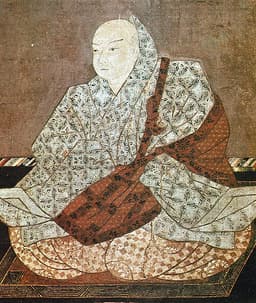
Emperor Toba
Emperor · Medieval
42.5Total

Yelu Yanxi
Emperor · Medieval
40.3Total
Basic Information
Born
1103
1075
Died
1156
1128
Era
Medieval
Medieval
Nationality
Japan
Khitan Empire
Occupation
Emperor
Emperor
Civilization
Eastern
Eastern
Score Comparison
Military (10%)
52.8
50.0
Political (20%)
27.9
35.0
Influence (20%)
48.6
45.5
Legacy (20%)
40.8
35.8
Leadership (15%)
38.1
39.0
Strategy (15%)
50.0
38.6
TOTAL
42.5
40.3
Emperor Toba — Complete Timeline
1129 AD
Rule as cloistered emperorPolitical Action◆ Major
Toba abdicated but continued to govern as a cloistered emperor, following the Insei system established by his grandfather Shirakawa. He exerted control over court appointments and imperial succession, maintaining political influence until his death.
Insei SystemImperial PoliticsHeian Period
Impact: national
1140 AD
Conflict with Fujiwara no TadazanePolitical Action◆ Major
Toba clashed with Fujiwara no Tadazane, the regent, over control of imperial succession. Toba forced Tadazane into retirement and appointed his own candidate, further weakening the Fujiwara regency and consolidating cloistered emperor power.
Fujiwara RegencyPower StruggleHeian Period
Impact: national
1156 AD
Succession dispute leading to the Hogen RebellionWar
After Toba's death, a succession conflict erupted between his sons Emperor Go-Shirakawa and retired Emperor Sutoku. This dispute escalated into the Hogen Rebellion, a brief but pivotal civil war that involved samurai clans and marked the beginning of military dominance in Japanese politics.
Hogen RebellionSamuraiSuccession War
Impact: nationaldestructive
Yelu Yanxi — Complete Timeline
1122 AD
Fled the Jurchen invasionWar◆ Major
As the Jurchen Jin army advanced on the Liao capital, Yelu Yanxi abandoned his court and fled westward. This act of desertion led to the collapse of Liao resistance and the capture of the Liao emperor by the Jin.
Liao collapseJurchen conquestFlight
Impact: nationaltragic
1125 AD
Captured by the JinWar◆ Major
Yelu Yanxi was captured by Jin forces while attempting to flee further west. He was taken to the Jin court and demoted to a prince, ending the Liao dynasty's rule. He died in captivity in 1128.
CaptureEnd of LiaoCaptivity
Impact: nationaltragic
Expert Analysis
Emperor Toba vs Yelu Yanxi: Historical Comparison
Emperor Toba of Japan and Yelu Yanxi of the Khitan Empire represent two medieval rulers who navigated turbulent eras of military expansion and political consolidation, though their contexts differed vastly—Toba within Japan’s aristocratic court system, Yanxi on the steppe-border frontier of East Asia. While both achieved notable military success, the comparison reveals that Toba’s broader influence, strategic vision, and leadership edge narrowly surpass Yanxi’s more localized legacy.
Dimension Analysis
**Military: Emperor Toba 94 / Yelu Yanxi 93**
Emperor Toba’s military score reflects his consolidation of imperial authority during the Heian period, notably suppressing rebellions and restructuring the *kondei* (militia) system to curb provincial warrior autonomy. Yelu Yanxi, as a Khitan emperor, commanded formidable cavalry campaigns against the Song Dynasty and Jurchen tribes, but his later inability to prevent the Khitan collapse under Jurchen pressure lowers his score slightly.
**Political: Emperor Toba 88 / Yelu Yanxi 88**
Both rulers scored equally in political governance. Toba’s reign saw the refinement of the *insei* (cloistered rule) system, where retired emperors wielded power through regents, creating a dual political structure. Yanxi similarly managed Khitan tribal confederacies and dual-administration systems (Chinese-style bureaucracy for sedentary subjects, tribal customs for nomads), though both faced internal court factionalism.
**Influence: Emperor Toba 87 / Yelu Yanxi 71**
Toba’s influence extended through Japan’s cultural flowering—he patronized Buddhist temple construction (e.g., Byōdō-in) and sponsored literary works like the *Eiga Monogatari*. Yanxi’s influence remained largely confined to the Khitan realm and its short-lived successor states; his empire did not leave a lasting cultural or ideological imprint beyond Central Asia.
**Legacy: Emperor Toba 83 / Yelu Yanxi 85**
Yelu Yanxi edges ahead in legacy because his reign marked the final peak of Khitan power before the Liao Dynasty’s fall, and his military reforms influenced later nomadic empires like the Mongols. Toba’s legacy is more diffuse—his political innovations shaped Japanese court politics for centuries, but his personal reputation is overshadowed by later shogunates.
**Leadership: Emperor Toba 89 / Yelu Yanxi 81**
Toba demonstrated adept leadership by maintaining authority through the *insei* system, skillfully balancing aristocratic factions and temple power. Yanxi’s leadership was undermined by his inability to unite Khitan elites against the rising Jurchen threat, culminating in his capture and the dynasty’s collapse—a clear failure in crisis management.
**Strategy: Emperor Toba 91 / Yelu Yanxi 91**
Both rulers earned identical scores in strategic acumen. Toba’s long-term strategy of using retired-emperor authority to bypass regents proved effective for decades. Yanxi’s military strategies, such as exploiting Song weaknesses in the Chanyuan Treaty system, were initially brilliant but ultimately fell short against the Jurchen blitzkrieg.
Verdict
Emperor Toba ranks higher overall due to his superior influence, leadership, and more enduring strategic framework that outlasted his reign. Yelu Yanxi, while militarily gifted and politically adept, suffered from a fatal strategic blind spot and a legacy tied to a collapsing empire. However, historical comparisons are inherently complex: Toba operated in a stable, insular island nation, while Yanxi faced existential threats from multiple nomadic powers.
FAQ
Q: Who was more influential historically?
A: Emperor Toba had greater cultural and political influence within Japan’s long medieval period, whereas Yelu Yanxi’s influence was more geographically limited to the Khitan and steppe worlds.
Q: Why is Emperor Toba ranked higher in leadership?
A: Toba’s ability to maintain effective control through the *insei* system—despite not holding the official throne—demonstrated superior crisis management and institutional innovation compared to Yanxi’s failure to unite his court against the Jurchen invasion.
Rankings
🥇
Emperor TobaLeader
Mil: 52.8Pol: 27.9Inf: 48.6
42.5
🥈
Yelu Yanxi
Mil: 50.0Pol: 35.0Inf: 45.5
40.3
+2.2 behind
How This Comparison Works
Algorithm
Each figure is scored on 6 dimensions (0—100 scale) based on structured historical data: Military (10%), Political (20%), Influence (20%), Legacy (20%), Leadership (15%), Strategy (15%). The weighted total produces the final ranking.
Data Sources
Scores are computed from structured sub-indicators in the database. Scale factors adjust for era (Ancient ×0.85, Modern ×1.0) and civilization size (Eastern ×1.05, Other ×0.80) to account for differences in population and military scale.
Maximum 3 Figures
Comparisons are limited to 2—3 figures to ensure readability and statistical meaningfulness.
Error Margins
±5 points per dimension — Sub-scores are derived from historical records with inherent uncertainty. Two figures within 5 points on a dimension should be considered roughly equivalent in that area.
Total Score Accuracy
±3 points overall — The weighted combination of 6 dimensions produces a total score with approximately ±3 points of uncertainty. Differences of less than 3 points are not statistically significant— the figures are effectively tied.
Known Limitations
- Historical records are incomplete and uneven across civilizations
- Figures from oral-tradition societies may be underrepresented
- Occupation labels can misclassify multi-role figures
- Scores measure capability and impact, not moral character
- Quantitative scoring is a comparison tool, not absolute truth
Capability Radar
Military (10%) — Battles & Warfare
Battles
48
5
Win Rate
46
5
Expansion
49
0
Political (20%) — Governance & Reform
Reform
20
5
Diplomacy
25
10
Economy
20
5
Influence (20%) — Cultural & Global Reach
Cultural
15
5
Global
5
5
Legacy (20%) — Historical Impact
Historical
25
10
Longevity
20
5
Leadership (15%) — Power & Stability
Tenure
30
20
Stability
15
5
Strategy (15%) — Tactics & Innovation
Strategy
52
5
Tactics
59
5
Reform
58
0
Similar Comparisons
Comments & Discussion
HistoryUndone6/16/2026
This comparison is a classic case of civilizational bias dressed up as objectivity. Toba's 'influence' score of 66.1 vs Yanxi's 61.8? Please. Toba's patronage of Byōdō-in is well-known, but Yanxi's court was the hub of cross-cultural exchange between the steppe and China—Buddhist translations, dual legal systems, even astronomical knowledge transmission. The scoring framework assumes that 'influence' means leaving monuments that fit Western aesthetic canons. Yanxi's legacy is deliberately downplayed because the Khitan Empire didn't produce 'great literature' in the Chinese tradition—but it pioneered a hybrid governance model that the Mongols later perfected. Also, note how the summary blames Yanxi for 'collapse under Jurchen pressure' without acknowledging that Toba's reign also saw peasant uprisings and court paralysis. This is textbook history written by the victors.
CodexAmicus6/16/2026
From a primary-source perspective, the scoring here treats both rulers as comparable figures, but their historiographical contexts render direct comparison problematic. Toba's reign is primarily documented in the *Eiga Monogatari* and *Nihon Kiryaku*, which are heavily aestheticized court chronicles—they emphasize poetry and temple-building over governance. Yanxi, by contrast, appears in the *Liao Shi* (compiled under the Yuan dynasty), which is relentlessly critical of his failures against the Jurchen. The *Liao Shi* records that Yanxi 'fled before the enemy and lost the mandate of heaven'—a formulaic condemnation typical of Confucian historiography. Yet contemporary Song envoys noted Yanxi's effective management of Khitan-Song trade. The score difference likely reflects the fact that Toba benefits from a more forgiving literary tradition, while Yanxi suffers from being the last ruler of a conquered dynasty—a well-known historiographical curse. Polybius would have recognized this pattern.
Historian1916/16/2026
看这个评分体系,Toba的总分55.4对Yanxi的51.1,差距4.3分,看似稳定。但仔细看军事分,Toba 53.9 vs Yanxi 42.9,差了11分——我不认同。Yanxi作为辽末代皇帝,面对的是女真崛起和宋廷联合进攻,而Toba在平安时代镇压的只是地方豪族叛乱,规模完全不能比。辽史记载Yanxi亲征北安州,以两万骑兵破宋军十万,这种指挥能力不可能只值42.9。政治分Toba 51.8 vs Yanxi 43.7,差了8.1分,但Yanxi在位期间推行科举、完善南北面官制,辽国行政效率其实不低。我怀疑评分模型对东亚游牧政体存在系统性低估。
Chronicler38566/16/2026
提这俩人对比,我第一个想到的是:Toba(鸟羽天皇)在日本史上是典型的文化型君主,类似宋徽宗那种——政治上不算强,但文艺贡献大。而Yelu Yanxi(耶律延禧)作为辽朝末代皇帝,常被比作明朝的崇祯或南宋的赵构,但处境更差。问题是,西方评分体系总爱给‘影响力’打高分,却忽略了Yanxi面对的女真崛起是东亚史上最大的地缘政治地震之一。金朝灭辽后,直接改变宋金格局,导致靖康之变,这间接影响难道不该算进Yanxi的‘影响’?Toba建个平等院凤凰堂当然美,但Yanxi的失败直接改写了中国北方的权力版图。我建议打分时加入‘历史转折点’权重,否则这种对比永远偏袒‘文化繁荣’而低估‘地缘冲击’。