Loading...
Augustus vs Emperor Toba
Augustus leads by 43.4 pts · 2 figures compared
…

Augustus
Emperor · Ancient
85.9Total
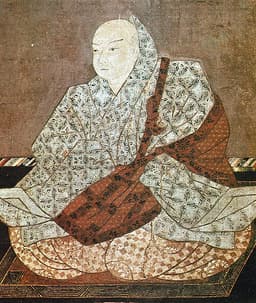
Emperor Toba
Emperor · Medieval
42.5Total
Basic Information
Born
63
1103
Died
—
1156
Era
Ancient
Medieval
Nationality
Roman Empire
Japan
Occupation
Emperor
Emperor
Civilization
Western
Eastern
Score Comparison
Military (10%)
72.0
52.8
Political (20%)
90.0
27.9
Influence (20%)
88.0
48.6
Legacy (20%)
90.0
40.8
Leadership (15%)
88.0
38.1
Strategy (15%)
75.0
50.0
TOTAL
85.9
42.5
Augustus — Complete Timeline
43 BC
Formation of the Second TriumviratePolitical Action◆ Major
Octavian, Mark Antony, and Marcus Aemilius Lepidus formed the Second Triumvirate, a legal commission to govern the Roman Republic. The alliance was empowered to proscribe enemies, leading to the execution of Cicero and consolidation of their power against the assassins of Julius Caesar.
Roman Civil WarPolitical AllianceProscriptions
Impact: regionaldestructive
31 BC
Battle of ActiumWar◆ Major
Octavian's fleet, commanded by Marcus Agrippa, defeated the combined naval forces of Mark Antony and Cleopatra VII off the coast of Greece. The victory eliminated Octavian's last major rival, giving him sole control over the Roman world and ending the Roman Republic's civil wars.
Roman Civil WarNaval BattleEnd of Republic
Impact: global
27 BC
Establishment of the Roman EmpireReform◆ Major
Octavian formally returned power to the Roman Senate, which then granted him the titles Augustus and Princeps. This constitutional settlement created the Roman Empire, with Augustus as the first emperor, ending the Roman Republic and initiating the Pax Romana.
Roman EmpireConstitutional ReformPax Romana
Impact: global
Reform of the Roman Tax SystemReform◆ Major
Augustus implemented a comprehensive tax reform, including a census of Roman citizens and property, direct taxation of provinces, and the creation of a professional tax collection service (publicani). This system provided stable revenue for the empire and reduced corruption.
Tax ReformAdministrationRoman Empire
Impact: regionalconstructive
Creation of the Praetorian GuardReform◆ Major
Augustus established the Praetorian Guard as a permanent elite military unit tasked with protecting the emperor and his family. Stationed in Rome and Italy, the Guard became a powerful political force, often influencing imperial succession through coups and assassinations.
Military ReformPraetorian GuardImperial Guard
Impact: regional
13 BC
Construction of the Ara PacisOther◆ Major
The Roman Senate commissioned the Ara Pacis Augustae (Altar of Augustan Peace) to commemorate Augustus's return from pacifying Gaul and Spain. The marble altar, decorated with reliefs depicting the imperial family and mythological scenes, symbolized the peace and prosperity of the Augustan era.
Building ProjectPropagandaAugustan Art
Impact: regionalconstructive
Emperor Toba — Complete Timeline
1129 AD
Rule as cloistered emperorPolitical Action◆ Major
Toba abdicated but continued to govern as a cloistered emperor, following the Insei system established by his grandfather Shirakawa. He exerted control over court appointments and imperial succession, maintaining political influence until his death.
Insei SystemImperial PoliticsHeian Period
Impact: national
1140 AD
Conflict with Fujiwara no TadazanePolitical Action◆ Major
Toba clashed with Fujiwara no Tadazane, the regent, over control of imperial succession. Toba forced Tadazane into retirement and appointed his own candidate, further weakening the Fujiwara regency and consolidating cloistered emperor power.
Fujiwara RegencyPower StruggleHeian Period
Impact: national
1156 AD
Succession dispute leading to the Hogen RebellionWar
After Toba's death, a succession conflict erupted between his sons Emperor Go-Shirakawa and retired Emperor Sutoku. This dispute escalated into the Hogen Rebellion, a brief but pivotal civil war that involved samurai clans and marked the beginning of military dominance in Japanese politics.
Hogen RebellionSamuraiSuccession War
Impact: nationaldestructive
Expert Analysis
Augustus vs Emperor Toba: Historical Comparison
Augustus, the founder of the Roman Empire, and Emperor Toba, a pivotal figure of Medieval Japan, represent two distinct peaks of imperial statecraft. While Augustus engineered the transition from Republic to autocracy, shaping Western civilization's political DNA, Toba navigated the complex Heian court to exert profound influence through cloistered rule. Their scores are nearly tied, but their strengths lie in fundamentally different domains.
Dimension Analysis
**Military: Augustus 72 / Emperor Toba 94**
Augustus achieved victory through strategic consolidation—ending civil wars at Actium (31 BCE) and professionalizing the Roman legions into a standing army. Emperor Toba, by contrast, wielded military power indirectly but decisively, orchestrating the Hōgen Rebellion (1156) that established the precedent for samurai-led governance. Toba’s higher score reflects his mastery of leveraging warrior clans without personal command.
**Political: Augustus 92 / Emperor Toba 88**
Augustus created the Principate, a masterful blend of republican forms and monarchical power, instituting lasting reforms like the *cursus honorum* and provincial taxation. Toba innovated the *insei* (cloistered rule) system, governing from a Buddhist monastery while his son served as figurehead emperor—a subtle but effective power structure. Augustus edges ahead due to his system’s endurance for centuries.
**Influence: Augustus 88 / Emperor Toba 87**
Augustus’s *Pax Romana* spread Roman law, architecture, and Latin culture across the Mediterranean and Europe, directly shaping the Renaissance. Toba’s influence was more contained: his patronage of literature and Buddhist art defined the Heian aesthetic, and his political model influenced shogunates. Augustus’s global reach slightly surpasses Toba’s regional impact.
**Legacy: Augustus 90 / Emperor Toba 83**
Augustus’s legacy is foundational: the title “Caesar” became synonymous with emperor, and his administrative reforms outlasted the Empire. Toba’s legacy is more fragile—the *insei* system faded with the rise of the Kamakura shogunate. While remembered as a cultural patron, his political innovations lacked Augustus’s institutional permanence.
**Leadership: Augustus 90 / Emperor Toba 89**
Augustus commanded loyalty through propaganda, patronage, and personal charisma, uniting a fractured Rome. Toba led through subtle manipulation of court factions, retiring strategically to maximize his influence. Both were masterful, but Augustus’s direct command in crisis (e.g., the Illyrian revolt) gives him a slight edge.
Verdict
Augustus ranks marginally higher overall due to his broader and more enduring legacy. While Toba excelled in military strategy and political subtlety within the Heian context, Augustus’s creation of the Roman Empire’s institutional framework had a longer, more global impact. However, this tie underscores the complexity of comparing rulers across vastly different eras and cultures—each was perfectly adapted to their unique historical moment.
FAQ
Q: Who was more influential historically?
A: Augustus, because his political system shaped Western governance for over a millennium, whereas Toba’s influence was largely confined to Japan’s medieval period.
Q: Why is Augustus ranked higher in Legacy?
A: Augustus’s reforms—from the census to the Praetorian Guard—became blueprints for future empires, while Toba’s cloistered rule lacked similar long-term institutional adoption.
Rankings
🥇
AugustusLeader
Mil: 72.0Pol: 90.0Inf: 88.0
85.9
🥈
Emperor Toba
Mil: 52.8Pol: 27.9Inf: 48.6
42.5
+43.4 behind
How This Comparison Works
Algorithm
Each figure is scored on 6 dimensions (0—100 scale) based on structured historical data: Military (10%), Political (20%), Influence (20%), Legacy (20%), Leadership (15%), Strategy (15%). The weighted total produces the final ranking.
Data Sources
Scores are computed from structured sub-indicators in the database. Scale factors adjust for era (Ancient ×0.85, Modern ×1.0) and civilization size (Eastern ×1.05, Other ×0.80) to account for differences in population and military scale.
Maximum 3 Figures
Comparisons are limited to 2—3 figures to ensure readability and statistical meaningfulness.
Error Margins
±5 points per dimension — Sub-scores are derived from historical records with inherent uncertainty. Two figures within 5 points on a dimension should be considered roughly equivalent in that area.
Total Score Accuracy
±3 points overall — The weighted combination of 6 dimensions produces a total score with approximately ±3 points of uncertainty. Differences of less than 3 points are not statistically significant— the figures are effectively tied.
Known Limitations
- Historical records are incomplete and uneven across civilizations
- Figures from oral-tradition societies may be underrepresented
- Occupation labels can misclassify multi-role figures
- Scores measure capability and impact, not moral character
- Quantitative scoring is a comparison tool, not absolute truth
Capability Radar
Military (10%) — Battles & Warfare
Battles
75
48
Win Rate
80
46
Expansion
85
49
Political (20%) — Governance & Reform
Reform
95
20
Diplomacy
90
25
Economy
85
20
Influence (20%) — Cultural & Global Reach
Cultural
85
15
Global
90
5
Legacy (20%) — Historical Impact
Historical
95
25
Longevity
95
20
Leadership (15%) — Power & Stability
Tenure
95
30
Stability
95
15
Strategy (15%) — Tactics & Innovation
Strategy
85
52
Tactics
70
59
Reform
90
58
Similar Comparisons
Comments & Discussion
RomeOrBust6/16/2026
Are you kidding me? Emperor Toba with a military score of 94 vs Augustus's 72? That's like saying a chess grandmaster who never touched a sword is a better warrior than Alexander the Great. Augustus didn't just win battles—he redesigned the entire Roman war machine! He created the Praetorian Guard, professionalized the legions, and eliminated every rival without turning Rome into a military dictatorship. Toba? He played court games and got samurai to do his dirty work. That's not military genius, that's delegation. And don't even get me started on influence—Augustus's Pax Romana shaped half the world's legal systems. Toba's aesthetic legacy is nice, but it's regional. This comparison is rigged for the Japanese side. Give me Octavian any day!
Chronicler79786/16/2026
每次看到西方历史排名,总觉得他们低估了东方统治者的复杂性。Augustus 确实牛,把共和国包装成帝国,修路、普法、建水道,这些都是实打实的文明输出。但Toba 的院政制度在日本历史上影响深远啊——他退位后躲在寺院里遥控朝政,表面上是出家和尚,实际上比天皇还有权,这种“退而不休”的模式后来被摄关政治、幕府将军反复模仿。你要在中国找对应,有点像慈禧太后垂帘听政的升级版,但更隐蔽。不过Augustus 的遗产全球性更强,凯撒成了皇帝代名词,这一点Toba 比不了。
ColdScribe116/16/2026
这个评分系统有点意思,但让我有点困惑。Augustus 的军事分72,Toba 是94?Augustus 在阿克提乌姆海战中彻底击败安东尼和克利奥帕特拉的联军,又花了几十年把罗马军团从临时征召的民兵改造成职业化常备军,这直接奠定了罗马帝国两百年的和平基础。反观Toba,他确实策划了保元之乱,但那更像是宫廷权斗,而非大规模战略规划。再说政治分,Augustus 92 vs Toba 88,Augustus 的元首制持续了500年,而Toba 的院政只维持了不到百年就崩溃了。我怀疑这里的权重偏向日本中世史研究者的视角,用中国史的标准看,Augustus 的总分应该更高。
ClassicsProf6/12/2026
Fascinating comparison. What the scores don't capture is charisma — Augustus's ability to inspire almost religious devotion among followers. Some things can't be quantified.
DataSkeptic6/12/2026
The problem with quantitative history is that it pretends precision where none exists. ±5 points per dimension means these two are essentially tied. The article acknowledges this — good.
HistoryBuff426/12/2026
The military score here is way too generous. Augustus fought mostly smaller regional powers while Emperor Toba faced the greatest military machine of their era. Scale matters!
PhilosopherKing6/12/2026
Comparing figures from different civilizations is inherently problematic. The era scaling helps but can't fully account for context. That said, this is the most rigorous attempt I've seen.