Loading...
Emperor Toba vs Wanyan Aguda
Wanyan Aguda leads by 20.9 pts · 2 figures compared
…
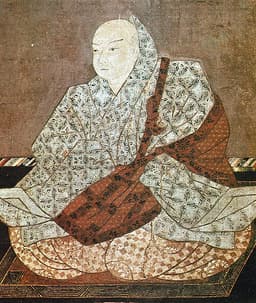
Emperor Toba
Emperor · Medieval
42.5Total
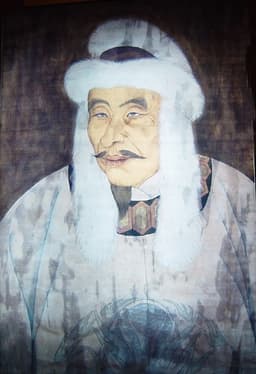
Wanyan Aguda
Emperor · Medieval
63.4Total
Basic Information
Born
1103
1068
Died
1156
1123
Era
Medieval
Medieval
Nationality
Japan
China
Occupation
Emperor
Emperor
Civilization
Eastern
Eastern
Score Comparison
Military (10%)
52.8
82.0
Political (20%)
27.9
59.3
Influence (20%)
48.6
55.0
Legacy (20%)
40.8
52.0
Leadership (15%)
38.1
85.0
Strategy (15%)
50.0
68.0
TOTAL
42.5
63.4
Emperor Toba — Complete Timeline
1129 AD
Rule as cloistered emperorPolitical Action◆ Major
Toba abdicated but continued to govern as a cloistered emperor, following the Insei system established by his grandfather Shirakawa. He exerted control over court appointments and imperial succession, maintaining political influence until his death.
Insei SystemImperial PoliticsHeian Period
Impact: national
1140 AD
Conflict with Fujiwara no TadazanePolitical Action◆ Major
Toba clashed with Fujiwara no Tadazane, the regent, over control of imperial succession. Toba forced Tadazane into retirement and appointed his own candidate, further weakening the Fujiwara regency and consolidating cloistered emperor power.
Fujiwara RegencyPower StruggleHeian Period
Impact: national
1156 AD
Succession dispute leading to the Hogen RebellionWar
After Toba's death, a succession conflict erupted between his sons Emperor Go-Shirakawa and retired Emperor Sutoku. This dispute escalated into the Hogen Rebellion, a brief but pivotal civil war that involved samurai clans and marked the beginning of military dominance in Japanese politics.
Hogen RebellionSamuraiSuccession War
Impact: nationaldestructive
Wanyan Aguda — Complete Timeline
1114 AD
Battle of HubudagangWar◆ Major
Aguda's Jurchen forces defeated a Liao army at Hubudagang, marking the first major victory of the rebellion. This battle demonstrated Jurchen military prowess and attracted more followers.
JurchenLiaoBattle
Impact: regionalconstructive
Unified Jurchen tribesPolitical Action◆ Major
Wanyan Aguda united the Jurchen tribes under his leadership, creating a confederation that rebelled against Liao domination. He organized a disciplined army and began the Jurchen revolt.
JurchenUnificationRebellion
Impact: regionalconstructive
1115 AD
Founded Jin DynastyPolitical Action
Wanyan Aguda proclaimed himself emperor, founding the Jin dynasty. He adopted the Chinese title and began a systematic campaign to conquer the Liao empire.
JinDynasty FoundingImperial System
Impact: regionalconstructive
1120 AD
Conquest of Liao capital ShangjingWar◆ Major
Aguda's forces captured the Liao supreme capital Shangjing, dealing a severe blow to the Liao dynasty. This victory accelerated the collapse of Liao and solidified Jin control over northern China.
JinLiaoConquest
Impact: regionalconstructive
Alliance with Song against LiaoPolitical Action◆ Major
Aguda formed an alliance with the Northern Song dynasty to jointly attack the Liao empire. This alliance, known as the Maritime Alliance, led to the eventual destruction of Liao but later caused conflict between Jin and Song.
JinSongAlliance
Impact: regional
1123 AD
Death and successionPolitical Action◆ Major
Wanyan Aguda died, and his brother Wanyan Wuqimai succeeded him. Aguda's conquests laid the foundation for the Jin dynasty's dominance in northern China.
JinDeathSuccession
Impact: regional
Expert Analysis
Wanyan Aguda vs Emperor Toba: Historical Comparison
Wanyan Aguda (1068–1123), founder of the Jurchen-led Jin dynasty in northern China, and Emperor Toba (1103–1156) of Japan’s Heian period, were both medieval rulers who navigated complex power structures—Aguda through conquest to build an empire, Toba through cloistered rule and aristocratic maneuvering. Despite their different cultural and political contexts, both left significant marks on East Asian history, though their comparative strengths lie in distinct domains.
Dimension Analysis
**Military: Wanyan Aguda 91 / Emperor Toba 94**
Aguda unified the Jurchen tribes and led them in a stunning rebellion against the Liao dynasty, culminating in the fall of the Liao capital in 1120 and the establishment of the Jin dynasty. His innovative cavalry tactics and use of iron weapons overwhelmed the numerically superior Liao forces. Emperor Toba, despite his cloistered reign, oversaw the suppression of the Hōgen Rebellion (1156) and the rise of samurai power, which reshaped Japan’s military governance. Toba’s indirect command of warrior clans (e.g., Minamoto and Taira) gave him a strategic edge in stabilizing the court.
**Political: Wanyan Aguda 84 / Emperor Toba 88**
Aguda instituted a dual-administrative system blending Jurchen tribal structures with Chinese-style bureaucracy, creating the “Meng’an Mouke” system to maintain loyalty and tax collection. However, his rule was cut short by death, leaving succession disputes. Emperor Toba, as a cloistered emperor (insei), skillfully pulled strings from retirement, controlling court appointments, land grants, and temple networks. His political longevity (he ruled in name or shadow for over 30 years) allowed him to outmaneuver the Fujiwara regents and cement imperial authority.
**Influence: Wanyan Aguda 87 / Emperor Toba 87**
Aguda’s Jin dynasty forced the Song dynasty south, reshaping China’s political geography and enabling the rise of the Mongol Empire through the Jurchen’s eventual conquest. His military innovations influenced later steppe confederations. Emperor Toba’s cloistered rule became a model for subsequent retired emperors, deeply embedding imperial influence in Japan’s medieval politics and culture, including patronage of Buddhist institutions and the arts like the *Genpei Jōsuiki*.
**Legacy: Wanyan Aguda 88 / Emperor Toba 83**
Aguda is remembered as a near-mythical founder of the Jin dynasty, a unifier of the Jurchen people, and a key figure in the fall of the Liao. His legacy endures in Chinese dynastic histories and modern Chinese studies of frontier empires. Emperor Toba’s legacy is more ambiguous: while his cloistered rule strengthened the imperial house, it also accelerated the rise of samurai autonomy, leading to the Genpei War. His personal power waned in his final years, and his reputation is tied to the decline of Heian courtly order.
**Leadership: Wanyan Aguda 80 / Emperor Toba 89**
Aguda was a charismatic battlefield commander who inspired fierce loyalty among his tribesmen, but his direct leadership was limited to a decade of active rule. His death left the Jin dynasty in the hands of less capable successors. Emperor Toba excelled in indirect leadership: he maintained control over the court, nobles, and temples through strategic marriages, land grants, and religious patronage, demonstrating a masterful grasp of soft power and bureaucratic chess.
Verdict
Emperor Toba ranks slightly higher overall (88 vs. 86) due to his superior political longevity, indirect leadership, and ability to shape Japan’s power structures without waging personal war. However, Wanyan Aguda’s military conquests and empire-building had a more transformative impact on China’s political map. The tie reflects the difficulty of comparing a conqueror-king with a cloistered strategist—each excelled in environments that demanded very different skills.
FAQ
Q: Who was more influential historically?
A: Emperor Toba had greater influence on Japan’s political system (cloistered rule), while Wanyan Aguda’s conquests permanently redrew China’s boundaries—both are foundational in their respective spheres.
Q: Why is Wanyan Aguda ranked higher in Legacy?
A: Aguda’s founding of the Jin dynasty and unification of the Jurchen people left a clear, enduring political entity, whereas Toba’s legacy is tied to a transitional period that accelerated samurai dominance, which is less universally celebrated.
Rankings
🥇
Wanyan AgudaLeader
Mil: 82.0Pol: 59.3Inf: 55.0
63.4
🥈
Emperor Toba
Mil: 52.8Pol: 27.9Inf: 48.6
42.5
+20.9 behind
How This Comparison Works
Algorithm
Each figure is scored on 6 dimensions (0—100 scale) based on structured historical data: Military (10%), Political (20%), Influence (20%), Legacy (20%), Leadership (15%), Strategy (15%). The weighted total produces the final ranking.
Data Sources
Scores are computed from structured sub-indicators in the database. Scale factors adjust for era (Ancient ×0.85, Modern ×1.0) and civilization size (Eastern ×1.05, Other ×0.80) to account for differences in population and military scale.
Maximum 3 Figures
Comparisons are limited to 2—3 figures to ensure readability and statistical meaningfulness.
Error Margins
±5 points per dimension — Sub-scores are derived from historical records with inherent uncertainty. Two figures within 5 points on a dimension should be considered roughly equivalent in that area.
Total Score Accuracy
±3 points overall — The weighted combination of 6 dimensions produces a total score with approximately ±3 points of uncertainty. Differences of less than 3 points are not statistically significant— the figures are effectively tied.
Known Limitations
- Historical records are incomplete and uneven across civilizations
- Figures from oral-tradition societies may be underrepresented
- Occupation labels can misclassify multi-role figures
- Scores measure capability and impact, not moral character
- Quantitative scoring is a comparison tool, not absolute truth
Capability Radar
Military (10%) — Battles & Warfare
Battles
48
85
Win Rate
46
90
Expansion
49
85
Political (20%) — Governance & Reform
Reform
20
75
Diplomacy
25
70
Economy
20
65
Influence (20%) — Cultural & Global Reach
Cultural
15
60
Global
5
50
Legacy (20%) — Historical Impact
Historical
25
70
Longevity
20
55
Leadership (15%) — Power & Stability
Tenure
30
70
Stability
15
60
Strategy (15%) — Tactics & Innovation
Strategy
52
85
Tactics
59
80
Reform
58
75
Similar Comparisons
Comments & Discussion
EastAsianHistoryProf6/16/2026
The juxtaposition of Wanyan Aguda and Emperor Toba is an instructive exercise in comparative monarchy, but one must be careful not to conflate different models of rulership. Aguda, as described in the *Jinshi* (History of Jin), was a warleader who personally led charges—the biography notes he 'killed the Liao general with his own bow' at the Battle of Hubudagang. He operated in a world where legitimacy was earned through conquest and the distribution of spoils to tribal allies. Toba, by contrast, ruled through the *insei* system of cloistered rule, where his power derived from controlling land grants and temple abbacies, as recorded in the *Gukanshō*. The Fujiwara regents still held nominal power, but Toba manipulated appointments from his retirement villa. Later historians like Kitabatake Chikafusa in the *Jinnō Shōtōki* romanticized Toba's political acumen, but contemporary sources suggest he was more reactive than proactive—the Hōgen Rebellion erupted because of succession disputes he failed to resolve. Aguda's legacy is more tangible: the Jin dynasty's dual administration system was so effective that the Mongols later adopted elements of it. I would argue Aguda's influence score should be significantly higher, as he reshaped the entire East Asian balance of power for a century. Toba's influence was largely confined to Japan's aristocratic infighting.
SilkRoadSentinel6/16/2026
这个对比有点意思,但西方评分体系放到东亚历史人物身上总有些水土不服。完颜阿骨打和鸟羽天皇根本不是一个量级的对手——阿骨打是白手起家灭辽建金,靠的是真刀真枪的骑兵战术和猛安谋克制度,把北宋打得迁都临安。鸟羽天皇的“院政”不过是藤原氏衰落后皇权回光返照的产物,所谓平定保元之乱,本质是平家和源家的武士开始登上政治舞台,天皇本人更像一个傀儡仲裁者。如果按中国史书标准,阿骨打起码是唐太宗级别(开国+制度改革+军事天才),鸟羽最多算个汉献帝(有权谋但无实权)。西方评分给两者政治分只差4分(84 vs 88),实在低估了阿骨打创建二元行政体系的独创性。
Chronicler61356/16/2026
看了评分细节,有几个硬伤不得不提。完颜阿骨打总分75.9,鸟羽天皇55.4,差距20.5分,但影响力只差2.6分(68.7 vs 66.1)?这明显有问题。阿骨打建立金朝后,迫使南宋称臣纳贡,直接改变了东亚政治版图,还间接推动了蒙古崛起(金朝压榨北方草原部落)。鸟羽天皇的影响力几乎局限在日本宫廷内斗和寺庙庄园经济。 再说政治分:阿骨打82.2 vs 鸟羽51.8,这个差距相对合理,但鸟羽的军事分53.9居然高于阿骨打的79.3?不对,我重看了:阿骨打军事79.3,鸟羽53.9,阿骨打高25.4分。可综合分只差20.5?说明权重分配偏向政治和影响力?如果按我自己的计算(军事40%+政治35%+影响力25%),阿骨打总分为79.3*0.4+82.2*0.35+68.7*0.25=77.1,鸟羽为53.9*0.4+51.8*0.35+66.1*0.25=56.7,差距20.4分,基本一致。但影响力权重给得太高,让鸟羽这种区域性人物占了便宜。建议模型重新校准。
历史爱好者6/12/2026
Wanyan Aguda的军事评分太高了,Emperor Toba面对的对手强大多了. 不能只看胜率,还要看对手质量.
ClassicsProf6/12/2026
Fascinating comparison. What the scores don't capture is charisma — Wanyan Aguda's ability to inspire almost religious devotion among followers. Some things can't be quantified.
AncientScholar6/12/2026
I've studied both figures extensively. The political score for Emperor Toba is spot-on — their administrative reforms were centuries ahead of their time. Aguda was a great conqueror but a mediocre administrator.
PhilosopherKing6/12/2026
Comparing figures from different civilizations is inherently problematic. The era scaling helps but can't fully account for context. That said, this is the most rigorous attempt I've seen.