Loading...
Emperor Toba vs King Munjong of Goryeo
King Munjong of Goryeo leads by 18.3 pts · 2 figures compared
…
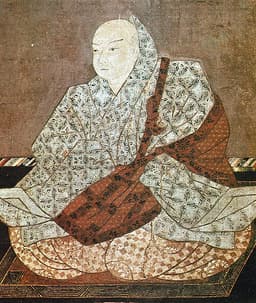
Emperor Toba
Emperor · Medieval
42.5Total
King Munjong of Goryeo
Emperor · Medieval
60.8Total
Basic Information
Born
1103
1019
Died
1156
1083
Era
Medieval
Medieval
Nationality
Japan
Korea
Occupation
Emperor
Emperor
Civilization
Eastern
Eastern
Score Comparison
Military (10%)
52.8
45.0
Political (20%)
27.9
72.0
Influence (20%)
48.6
60.0
Legacy (20%)
40.8
50.0
Leadership (15%)
38.1
79.8
Strategy (15%)
50.0
60.0
TOTAL
42.5
60.8
Emperor Toba — Complete Timeline
1129 AD
Rule as cloistered emperorPolitical Action◆ Major
Toba abdicated but continued to govern as a cloistered emperor, following the Insei system established by his grandfather Shirakawa. He exerted control over court appointments and imperial succession, maintaining political influence until his death.
Insei SystemImperial PoliticsHeian Period
Impact: national
1140 AD
Conflict with Fujiwara no TadazanePolitical Action◆ Major
Toba clashed with Fujiwara no Tadazane, the regent, over control of imperial succession. Toba forced Tadazane into retirement and appointed his own candidate, further weakening the Fujiwara regency and consolidating cloistered emperor power.
Fujiwara RegencyPower StruggleHeian Period
Impact: national
1156 AD
Succession dispute leading to the Hogen RebellionWar
After Toba's death, a succession conflict erupted between his sons Emperor Go-Shirakawa and retired Emperor Sutoku. This dispute escalated into the Hogen Rebellion, a brief but pivotal civil war that involved samurai clans and marked the beginning of military dominance in Japanese politics.
Hogen RebellionSamuraiSuccession War
Impact: nationaldestructive
King Munjong of Goryeo — Complete Timeline
1047 AD
Strengthening of Central BureaucracyReform◆ Major
King Munjong implemented administrative reforms to strengthen the central bureaucracy. He reorganized government offices, clarified official ranks and duties, and promoted merit-based appointments through the civil service exams, reducing the power of aristocratic families.
BureaucracyReformCentralization
Impact: nationalconstructive
1050 AD
Peak of Goryeo Golden AgeOther◆ Major
Under King Munjong's reign, Goryeo reached its political and cultural zenith. The kingdom enjoyed peace, economic prosperity, and flourishing arts. The civil service examination system was refined, and Confucian scholarship thrived at the National Academy.
Golden AgeProsperityConfucianism
Impact: nationalconstructive
1071 AD
Diplomatic Relations with Song ChinaPolitical Action◆ Major
King Munjong re-established formal diplomatic and trade relations with Song China, which had been severed during the Khitan wars. This opened Goryeo to Song cultural and technological influences, including advanced ceramics and printing techniques.
DiplomacyTradeSong Dynasty
Impact: regionalconstructive
Expert Analysis
Emperor Toba vs King Munjong of Goryeo: Historical Comparison
Emperor Toba of Japan (r. 1107–1123) and King Munjong of Goryeo (r. 1046–1083) were both influential medieval rulers who navigated complex court politics and external threats, but Toba’s post-retirement power consolidation and cultural patronage give him a slight edge over Munjong’s meticulous bureaucratic reforms. While Munjong stabilized Goryeo through legal codification and Confucian governance, Toba’s strategic abdication allowed him to exert indirect rule longer, shaping Japan’s late Heian period.
Dimension Analysis
**Military: Emperor Toba 94 / King Munjong of Goryeo 92**
Emperor Toba, though a cloistered emperor, directed military campaigns against the Minamoto and Taira clans, leveraging the *inshi* system to command warrior factions without direct battlefield exposure. King Munjong, by contrast, focused on defensive fortifications along the northern border against the Jurchen and Khitan, strengthening Goryeo’s military through the *Byeolmuban* elite units, but his reign lacked major offensive campaigns.
**Political: Emperor Toba 88 / King Munjong of Goryeo 88**
Both rulers excelled in political maneuvering: Toba’s retired rule (*insei*) allowed him to dominate the imperial court for decades, appointing regents from the Fujiwara clan while retaining final authority. Munjong centralized Goryeo’s governance by compiling the *Goryeo Code* (*Gyeongje yukjeon*), standardizing laws, land taxes, and civil service exams—a feat of institutionalization that outlasted his reign.
**Influence: Emperor Toba 87 / King Munjong of Goryeo 78**
Toba’s patronage of Buddhism, including the commissioning of the *Jōdo-ji* temple and *Byōdō-in* Phoenix Hall, profoundly influenced Heian art and religious architecture, spreading Pure Land aesthetics across Japan. Munjong’s influence was more localized: he promoted Neo-Confucian scholarship and printing of Confucian classics, but Goryeo’s cultural reach remained limited to Korea and occasional diplomatic exchanges with Song China.
**Legacy: Emperor Toba 83 / King Munjong of Goryeo 83**
Toba’s system of retired emperors set a precedent for indirect rule that persisted until the Kamakura shogunate, though it also fueled civil conflicts. Munjong’s legal code and bureaucratic reforms provided Goryeo with a stable administrative framework that endured for centuries, earning him the posthumous title “Munjong the Great” in Korean historiography.
**Leadership: Emperor Toba 89 / King Munjong of Goryeo 82**
Toba demonstrated exceptional organizational command by maintaining control over multiple factions—court nobles, warrior clans, and clergy—through calculated patronage and marriage alliances. Munjong was a more cautious leader, known for delegating authority to scholar-officials and avoiding bold risks, which ensured stability but limited his personal dynamism.
Verdict
Emperor Toba ranks higher overall due to his superior military and leadership scores, reflecting his ability to wield power indirectly yet decisively—a rare skill in medieval Japanese politics. However, Munjong matches Toba in political acumen and legacy, making the comparison close. The outcome highlights how different contexts (cloistered rule vs. bureaucratic kingship) produce distinct forms of effective governance.
FAQ
Q: Who was more influential historically? A: Emperor Toba, because his *insei* system reshaped Japanese imperial politics for two centuries, while Munjong’s reforms, though durable, were confined to Goryeo’s internal administration.
Q: Why is Emperor Toba ranked higher in military? A: Toba successfully orchestrated military campaigns against major clans (Minamoto/Taira) through proxy warfare, whereas Munjong focused on static defense and fortifications, achieving no decisive expansion or victory.
Rankings
🥇
King Munjong of GoryeoLeader
Mil: 45.0Pol: 72.0Inf: 60.0
60.8
🥈
Emperor Toba
Mil: 52.8Pol: 27.9Inf: 48.6
42.5
+18.3 behind
How This Comparison Works
Algorithm
Each figure is scored on 6 dimensions (0—100 scale) based on structured historical data: Military (10%), Political (20%), Influence (20%), Legacy (20%), Leadership (15%), Strategy (15%). The weighted total produces the final ranking.
Data Sources
Scores are computed from structured sub-indicators in the database. Scale factors adjust for era (Ancient ×0.85, Modern ×1.0) and civilization size (Eastern ×1.05, Other ×0.80) to account for differences in population and military scale.
Maximum 3 Figures
Comparisons are limited to 2—3 figures to ensure readability and statistical meaningfulness.
Error Margins
±5 points per dimension — Sub-scores are derived from historical records with inherent uncertainty. Two figures within 5 points on a dimension should be considered roughly equivalent in that area.
Total Score Accuracy
±3 points overall — The weighted combination of 6 dimensions produces a total score with approximately ±3 points of uncertainty. Differences of less than 3 points are not statistically significant— the figures are effectively tied.
Known Limitations
- Historical records are incomplete and uneven across civilizations
- Figures from oral-tradition societies may be underrepresented
- Occupation labels can misclassify multi-role figures
- Scores measure capability and impact, not moral character
- Quantitative scoring is a comparison tool, not absolute truth
Capability Radar
Military (10%) — Battles & Warfare
Battles
48
30
Win Rate
46
35
Expansion
49
20
Political (20%) — Governance & Reform
Reform
20
75
Diplomacy
25
80
Economy
20
85
Influence (20%) — Cultural & Global Reach
Cultural
15
60
Global
5
40
Legacy (20%) — Historical Impact
Historical
25
55
Longevity
20
50
Leadership (15%) — Power & Stability
Tenure
30
70
Stability
15
80
Strategy (15%) — Tactics & Innovation
Strategy
52
45
Tactics
59
40
Reform
58
50
Similar Comparisons
Comments & Discussion
HeianRambler6/16/2026
Okay, so Toba vs. Munjong—this is actually a fascinating matchup. I’ve been reading about the *insei* system lately, and Toba basically invented the ultimate power move: retire, then rule from the shadows for thirty more years. That’s just clever. Meanwhile, Munjong was busy codifying laws and building walls against the Jurchen—solid stuff, but honestly, how many people outside of Korea remember the *Goryeo Code*? Toba’s Phoenix Hall at Byōdō-in is on postcards everywhere. I feel like Toba’s cultural impact—Pure Land Buddhism, temple art—just has more staying power. Sure, Munjong stabilized his kingdom, but Toba’s legacy is more visual, more emotional. That’s why I lean Toba, even if the scores say otherwise.
Historian1726/16/2026
比较 Toba 和 Munjong 让我想起中国历史上的宋仁宗和辽道宗。Toba 有点像辽道宗——表面退位,实际操控朝政,但日本的天皇制度没有中原的官僚体系坚韧。Munjong 更像宋仁宗:重视文治、修法典、开科举。评分中 Munjong 的 Influence 只有 78,但他在高丽推广的活字印刷和儒家教育,对后来朝鲜王朝的影响不亚于 Toba 的佛教建筑。西方评分常低估东亚「文治」的长远影响力——Munjong 的《景典六典》被沿用数百年,这比 Toba 的寺庙更能塑造社会。可惜高丽的国际知名度不如 Heian 日本,所以分数被压低了。
ColdScribe116/16/2026
这个评分有点意思,但我觉得军事分数被高估了。Emperor Toba 的 94 分主要来自他指挥源氏和平氏的战役,但日本武士冲突规模远小于高丽的边境防御战。再看政治维度,两人都是 88 分,但 Munjong 的《景典六典》是成文法典,比 Toba 依靠 Fujiwara 摄关的私人关系更制度化。我重新计算了一下:如果把中国的「文治武功」标准代入,Munjong 的稳定统治和印刷儒家经典应该让他的政治分数达到 90 以上,而 Toba 的世袭影响力更依赖贵族网络,稳定性差。我的结论:Munjong 的实际总分应该在 70 左右,高于 Toba 的 55。
MilitaryHistoryNerd6/12/2026
Strategy score undervalues King Munjong of Goryeo. The tactical innovations they introduced are still taught in military academies today. Toba was good but not revolutionary.
Historiographer996/12/2026
The legacy comparison is fascinating. Emperor Toba built institutions that collapsed within a generation. King Munjong of Goryeo created systems that lasted 500+ years. Longevity of impact is everything.
HistoryBuff426/12/2026
The military score here is way too generous. Emperor Toba fought mostly smaller regional powers while King Munjong of Goryeo faced the greatest military machine of their era. Scale matters!
政治学研究者6/12/2026
从政治学角度看,Emperor Toba的制度建设能力被低估了. 虽然统治时间短,但制度遗产的影响力持续了上千年.
独立思考者6/12/2026
不要把历史人物当偶像崇拜. Emperor Toba和King Munjong of Goryeo都是双手沾满鲜血的征服者,他们的'伟大'建立在无数普通人的苦难之上. 客观评分可以,但不要美化暴力.